As a branch of biomedical engineering, rehabilitation robots integrate multiple disciplines such as life sciences, engineering, computer science, psychology, and rehabilitation medicine, with a particular focus on clinical practicality in their development.

Rehabilitation robots refer to artificial devices that can automatically perform tasks to replace or assist certain functions of the human body, thereby playing a role in the rehabilitation medical process. The main development goals in the field of rehabilitation robots include: developing rehabilitation devices that are convenient for both practitioners and patients, promoting clinical rehabilitation treatment effects, and providing convenience for patients in their daily lives.
“Born in Due Time” Rehabilitation Robots
Traditional rehabilitation programs rely on the experience and manual skills of therapists. As the number of patients rapidly increases, saving treatment time has become an increasingly important concern. In recent years, many studies have involved the role of robots in assisting the rehabilitation training of individuals with disabilities. Rehabilitation robots represent a new clinical intervention method that stimulates and rebuilds the nervous system controlling limb movement through thousands of repetitive movements driven by machines, thereby restoring limb functional movement.
Rehabilitation robots are primarily used to help individuals who suffer from hemiplegia due to illness or have mobility impairments resulting from accidental injuries to regain and improve their motor abilities. For patients with cerebral thrombosis, in addition to early surgical treatment and necessary medication, rehabilitation training plays a very important role in the recovery and improvement of limb motor functions. As an automated device, rehabilitation robots can assist patients in scientific and effective rehabilitation training, allowing for better recovery of motor functions.
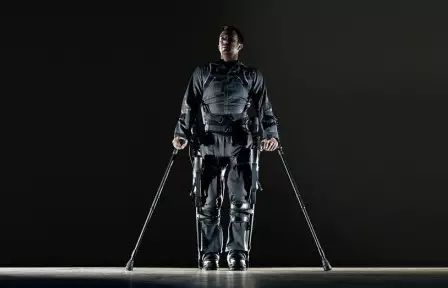
The field of medical rehabilitation is increasingly leaning towards natural and precise interactions between humans and machines. In recent years, technological breakthroughs represented by the combination of human intelligence and machine intelligence, as well as human-computer interaction, have made the integration between humans and machines more intimate. Utilizing human-computer interaction technologies and methods to combine human intelligence with machine intelligence will complement each other’s strengths and work collaboratively, which will inevitably lead to significant theoretical innovations and breakthroughs in technical methods in medical rehabilitation.
Social demand, technological innovation, and the integration of human and machine intelligence have greatly promoted the development of medical rehabilitation robots. Medical rehabilitation robots involve a special field related to human life and health, which has a potential economic market and has been designated as a strategic emerging industry by several countries. China also needs to further vigorously carry out research and development of medical rehabilitation robots to promote the development of this strategic emerging industry in response to the country’s demand for health services (medical care, rehabilitation, and aging).
Classification of Rehabilitation Robots
Existing rehabilitation robots can be classified from different perspectives: by functional purpose, they can be roughly divided into assistive/replacement types and training/therapeutic types; by the targeted body part, they can be divided into upper limb robots, lower limb robots, and hand robots; by the method of human-machine integration, they can be divided into exoskeleton and embedded types; and by their mode of movement, they can be classified as fixed or mobile.

Assistive/Replacement Robots

This type of robot helps patients complete daily activities by assisting or directly replacing the functions of the affected limbs. Its functions cover a wide range, including eating, drinking, personal hygiene, work and entertainment, movement, and reaching for objects. Depending on the type of carrier, they can be divided into: fixed robots, mobile robots, and intelligent prosthetics and braces.
Training/Therapeutic Robots
Robot-assisted exercise training has become one of the fastest-growing topics in the field of stroke rehabilitation in recent years. Existing rehabilitation robots not only can replace some of the work of therapists but also can accomplish many tasks that are beyond human capability, some even have diagnostic and assessment functions.
Current Research Status of Rehabilitation Robots
The use of robots in the rehabilitation field, including assisting the disabled and elderly care, is an effective technological means to improve the quality of life for people with disabilities and the elderly, enabling them to live independently without relying on others. Research in this field mainly includes rehabilitation robotic hands, intelligent wheelchairs, service robots, and interactive devices and intelligent control interfaces between homes and workplaces.
Rehabilitation Robotic Hands
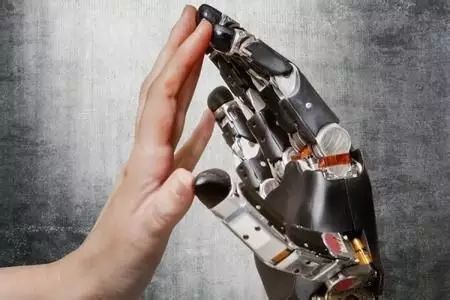
The purpose of developing rehabilitation robotic hands is to utilize robotic arms to complete the arm functions of individuals with disabilities. The robotic hand must have sufficient degrees of freedom to meet the needs of each user. Depending on the level of development of robotic technology, there are generally three types of structures:
(1) A fully structured control platform, similar to a desktop workstation, where the robotic hand is mounted on a fixed control platform to perform operations within a fixed workspace. This method has already been put into practical use.
(2) The robotic hand is mounted on a wheelchair, allowing it to be used in any location; however, this leads to a decrease in the rigidity of the robotic hand, and the precision of grasping often fails to meet requirements. Moreover, this method is only suitable for those who can use a wheelchair.
(3) The robotic hand is mounted on autonomous or semi-autonomous vehicles.

Intelligent Wheelchairs

Wheelchairs are the main mode of transportation for elderly individuals with lower limb disabilities and loss of walking ability. They have evolved from relying solely on manual operation to now include intelligent wheelchairs. The application of various sensors and efficient information processing and control technologies has transformed wheelchairs into highly automated intelligent mobile robots.
Service Robots
Hospital service robots may be a solution to some of the existing problems in hospital services, replacing humans in performing heavy tasks such as lifting patients to the restroom or changing bed linens for incontinent patients. In recent years, progress has been made in these tasks and assisting nurses with food and medication deliveries.

Intelligent Control Interfaces
Due to the need to fully consider the potential for these special users to apply robotic control interfaces in their environments, as well as the operability of the system under conditions where users lose or have declining limb functions, even with advanced sensors and power systems, users may be unable to respond to external information. Therefore, comprehensive control interfaces, effective control strategies, and interactive devices between homes and workplaces are also key research focuses in rehabilitation robots.
Summary
Rehabilitation robots can assist patients in scientifically and effectively conducting rehabilitation therapy, promoting the reorganization, compensation, and regeneration of the nervous system, effectively delaying muscle atrophy and joint contractures, improving patients’ limb motor capabilities, allowing disabled individuals to walk without relying on wheelchairs. They also free up some physical labor for rehabilitation therapists, optimizing medical resources, enabling therapists to focus more on patients, and better utilizing their clinical skills to provide higher quality care.
References:
Du Zhijiang, Sun Chuanjie, Chen Yanning. Current Research Status of Rehabilitation Robots. Chinese Journal of Rehabilitation Medicine, 2003, Vol. 18, No. 5
Zhou Yuan, Wang Ninghua. Overview of Rehabilitation Robots. Chinese Journal of Rehabilitation Medicine, 2015, Vol. 30, No. 5
This issue’s editor: Samara
This article is original to the WeChat public platform Kangfu Hui and is prohibited from reproduction without permission.
Submissions can be sent to: [email protected]