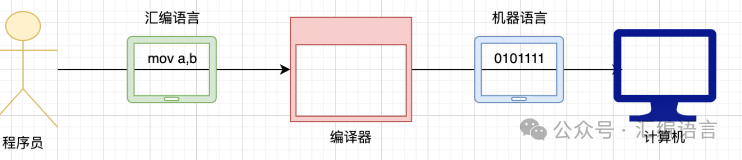
In most modern programming environments, the main function is the entry point of the program, as dictated by the operating system or runtime environment. However, in assembly language, the situation is different because it runs directly on the hardware without the support of an operating system or high-level runtime environment.
Assembly language programs typically start execution from a specific location known as the program’s entry point. On many systems, this location is set by the linker and is usually associated with a specific segment of the file, such as the .text segment. The program begins execution from this location and executes in the order of assembly instructions until it encounters a termination instruction, such as ret or hlt.
For example, in the real mode of the x86 architecture, you might write an assembly program like this:
asm

section .text
global start

start:
; Your code starts here
mov ax, 0x4c00
int 0x21
In this example, the start label defines the program’s entry point. The program then executes the mov and int instructions, which will terminate the program in a DOS environment.
However, note that such programs can only run on bare metal without an operating system or in simple operating system environments like DOS. In modern operating systems like Windows, Linux, or macOS, you cannot run such programs directly because the operating system requires more information to correctly load and execute your program. In these systems, you typically use a higher-level language (like C or C++) to write your programs and let the compiler and linker handle the details of interacting with the operating system. Then, you can use inline assembly or call assembly libraries to perform specific low-level tasks in these high-level languages.
Additionally, even in modern operating systems, there are specific scenarios and purposes that require the direct use of assembly language, such as boot loaders, operating system kernels, device drivers, or embedded system development. In these cases, you need to have a deep understanding of the target system and assembly language, and you may need to follow specific programming conventions and standards.