This article is authorized for reprint from the public account: Mind Support Group, author Wang Yifan
Creativity is a unique gift of humanity and one of the most important activities of humans. Currently, intense social changes pose a severe test to human creativity.People often need to maintain creative vitality under stress to generate creative problem-solving solutions.Multiple evidence from behavioral science and neuroscience shows that stress can stifle individual creativity.Stress not only affects the performance output of individuals and organizations but also increases the risk of physical and mental illnesses in vulnerable populations. Therefore, exploring brain intervention methods to enhance creativity under stress has practical guiding significance for cultivating high-quality innovative talents and enhancing organizational creativity, and it also has important scientific value for optimizing clinical intervention methods related to stress-related disorders.

Recently, Professor Duan Haijun’s team from the Key Laboratory of Modern Teaching Technology of the Ministry of Education at Shaanxi Normal University published an article titled “Preventing prefrontal dysfunction by tDCS modulates stress-induced creativity impairment in women: an fNIRS study” in the internationally renowned neuroimaging journal Cerebral Cortex. This study first explored the alleviating effect of transcranial direct current stimulation (tDCS) induced left lateralized activation of the dorsolateral prefrontal cortex (dlPFC) on creativity impairment under stress, and revealed the underlying neural mechanisms using functional near-infrared spectroscopy (fNIRS).
90 participants were randomly divided into three groups, receiving sham stimulation stress induction, true stimulation stress induction (anodal stimulation of the left dlPFC/cathodal stimulation of the right dlPFC), and sham stimulation control conditions. They first completed the Alternate Uses Task (AUT) to measure baseline creativity levels, then underwent stress induction or control tasks after tDCS stimulation, and finally completed the AUT post-task.
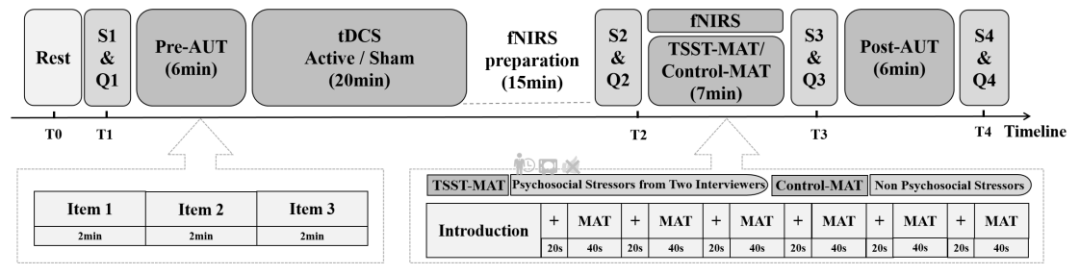
Figure 1 Experimental flowchart
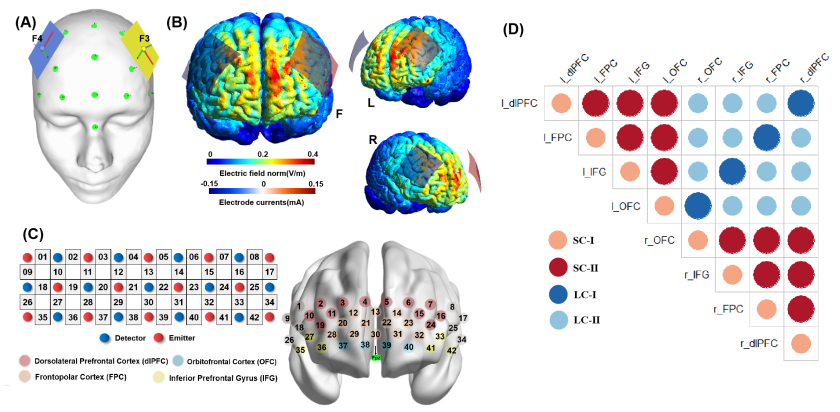
Figure 2 tDCS operation and fNIRS optical electrode position diagram

Behavioral results showed that stress conditions significantly increased stress-related physiological responses and negative emotional states, while weakening creativity performance. Through pre-stress intervention with tDCS, participants showed significantly reduced stress response levels in heart rate and anxiety, demonstrating higher creativity scores in fluency, flexibility, and originality across three dimensions.
 Figure 3 Creativity task results
fNIRS results showed that compared to the control group, the stress sham stimulation group exhibited a deactivation state of the PFC under stress. In contrast, the tDCS stimulation group showed stronger activation in both the bilateral dlPFC and PFC regions compared to the normal stress state, with no difference in activation levels compared to the non-stress control group.
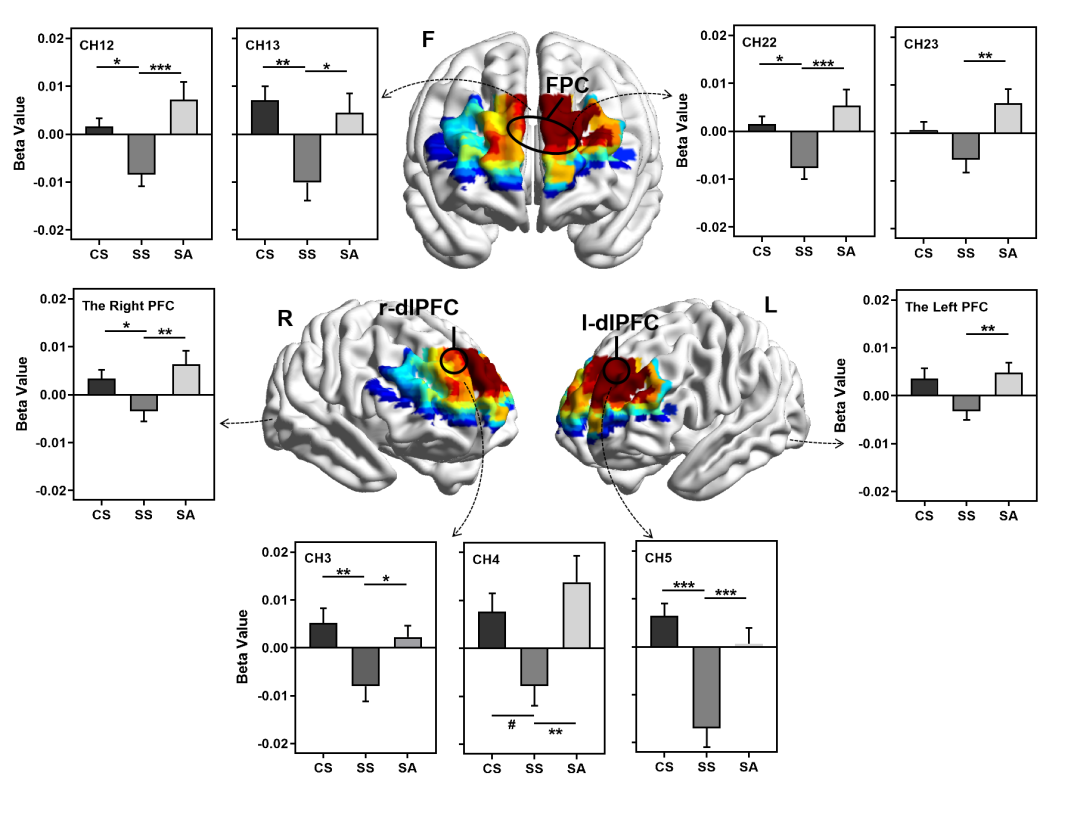
Figure 4 fNIRS activation results

Functional connectivity results indicated that compared to the control group, the stress sham stimulation group exhibited weaker short-distance (SC) and long-distance (LC) connections within or between subregions of the PFC under stress. The functional connectivity strength within the PFC of the tDCS stimulation group showed no significant difference from the control group and was significantly higher than that of the normal stress group.
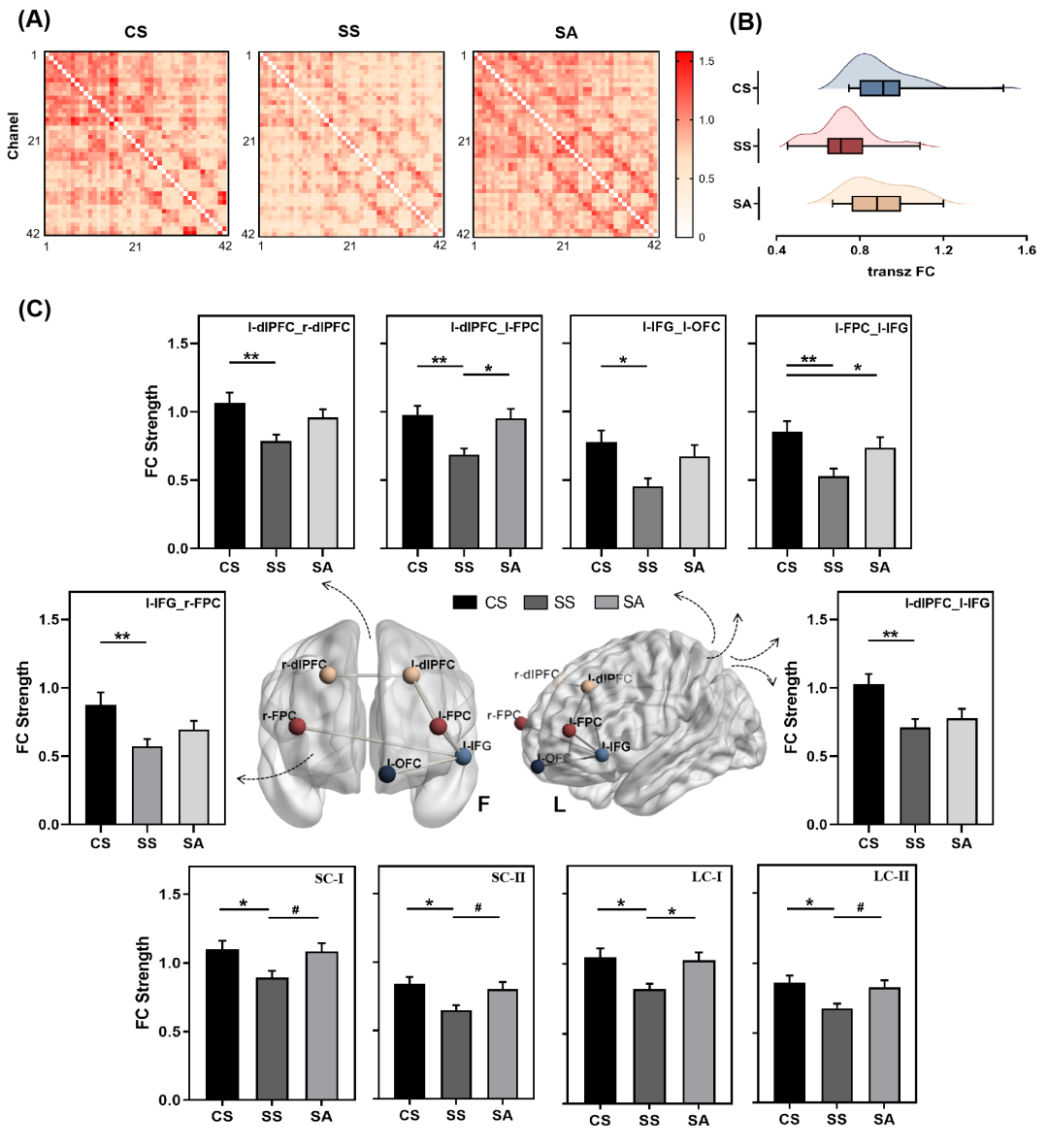
Figure 5 fNIRS functional connectivity results

The enhancement of PFC activation levels and functional connectivity indicators regulated by tDCS helps individuals re-establish a new steady state under stress, quickly reorganizing and mobilizing neural resources for creative cognitive processing, thereby improving creativity impairment under stress. Further analysis confirmed that the improvement of PFC dysfunction status mediates the effect of tDCS on creativity under stress.
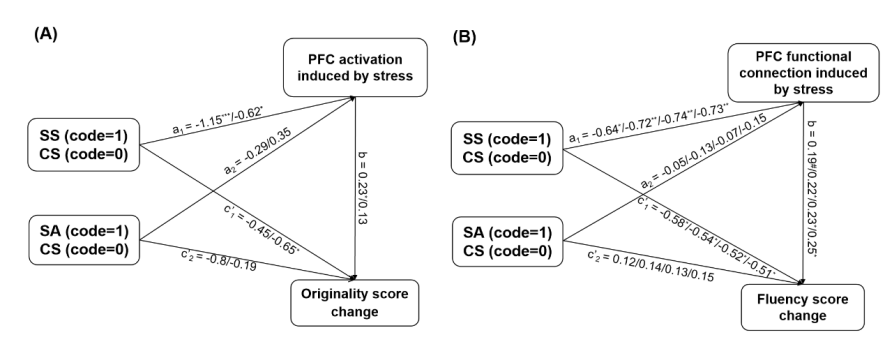
Figure6 Mediation results

 The research results reveal that PFC dysfunction under stress is an important reason affecting creative cognitive processing, providing direct causal evidence for the neurophysiological mechanisms of stress affecting creativity. On the other hand, the results confirm the important regulatory role of the left dlPFC in stress responses, supporting the hypothesis of hemispheric imbalance induced by stress responses, deepening our understanding of the etiology of mental disorders. By guiding the selection of tDCS stimulation targets and parameters, this study provides empirical evidence and theoretical basis for the improvement of creativity and clinical intervention for stress-related mental disorders.
 The study was published online on August 16, 2023. The first author is Wang Yifan, a doctoral student from the 2022 cohort, with Professor Duan Haijun as the corresponding author, and co-authors including Associate Researcher Li Yadan, Associate Researcher Qi Senqing, Professor Zhang Fengqing from Drexel University in the USA, and Professor Linden J. Ball from the University of Central Lancashire in the UK. The research was funded by the National Natural Science Foundation (32071078), the Excellent Youth Innovation Team of Central Universities (GK202201016), and the Youth Innovation Team of Shaanxi Universities.
Paper Information:
Wang, Y., Zhang, J., Li, Y., Qi, S., Zhang, F., Ball, L., & Duan, H. (2023). Preventing prefrontal dysfunction by tDCS modulates stress-induced creativity impairment in women: an fNIRS study. Cerebral Cortex, bhad301. https://doi.org/10.1093/cercor/bhad301.
Full text link:
https://academic.oup.com/cercor/advance-article-abstract/doi/10.1093/cercor/bhad301/7243020?utm_source=advanceaccess&utm_campaign=cercor&utm_medium=email

Source: Mind Support Group
Editor: Wu Huimin
Review: Jin Zhuoming