1. Force Sensors
Force sensors can be classified into one-dimensional, three-dimensional, and six-dimensional types. Six-dimensional force sensors are suitable for high-precision applications such as robotics. A torque sensor, as the name suggests, is a sensor that perceives and measures force.
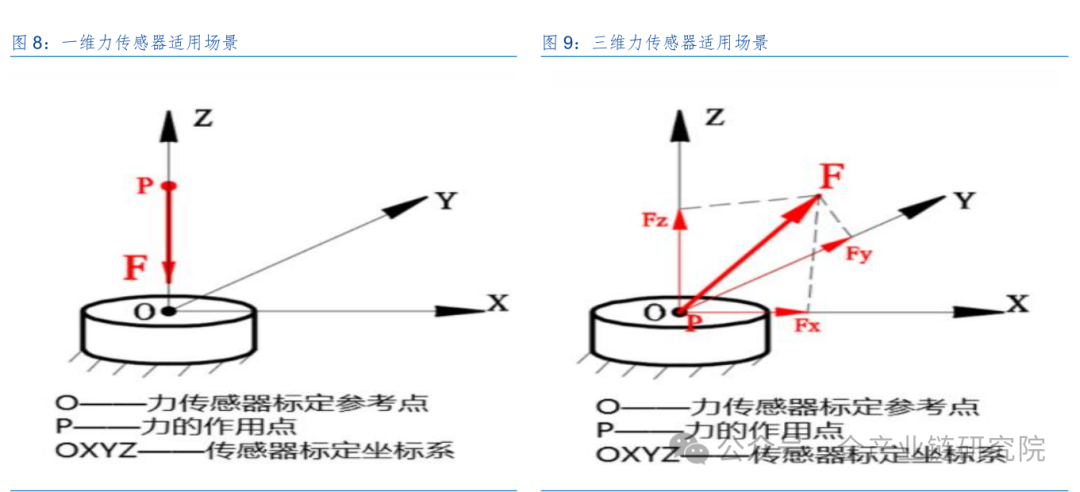
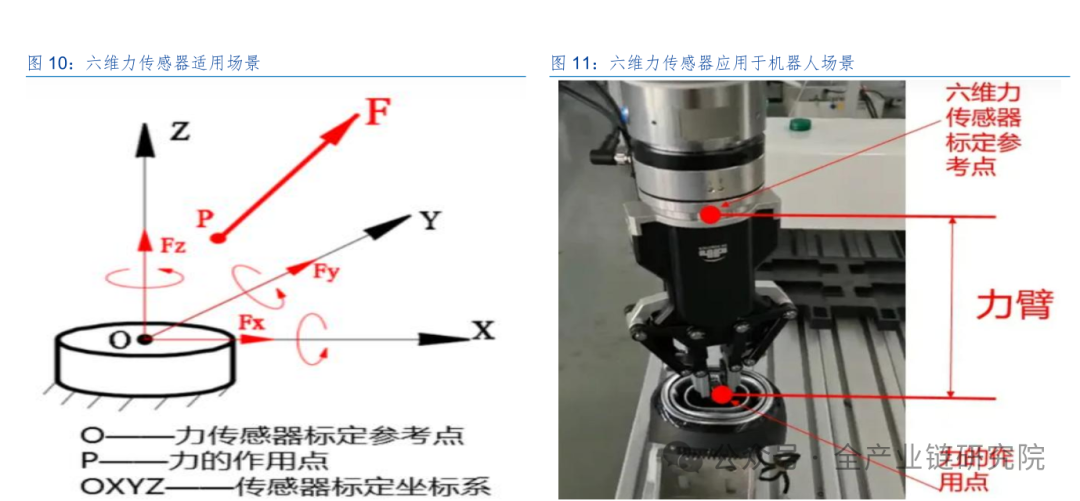
Force sensors can be categorized into three types based on measurement dimensions: one-dimensional force sensors, three-dimensional force sensors, and six-dimensional force sensors.
One-dimensional force sensors are suitable for scenarios where the axis and direction of the force completely coincide;
Three-dimensional force sensors are suitable for scenarios where the point of force application is fixed and coincides with a calibration reference point, but the direction of the force varies randomly.
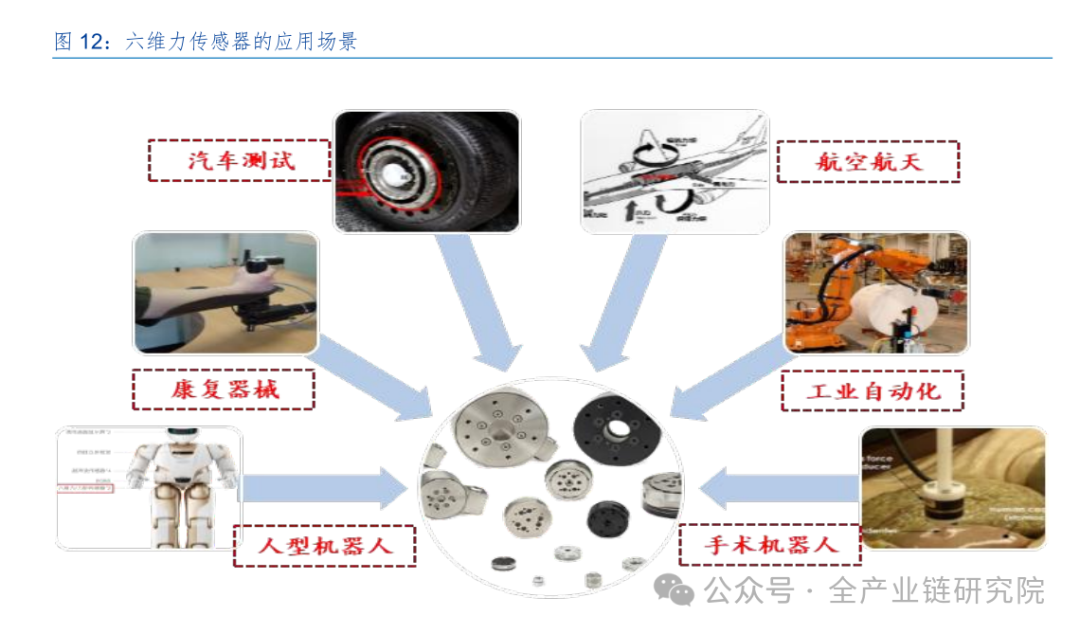
Six-dimensional force sensors are suitable for scenarios where both the point and direction of force application vary randomly, such as in robotic end-effector joint control.
Six-dimensional torque sensors use internal algorithms to decouple forces and torques in various directions, deducing the posture of components with the highest measurement accuracy. They can also effectively protect the sensor and components based on the magnitude of the torque.
2. Technical Routes
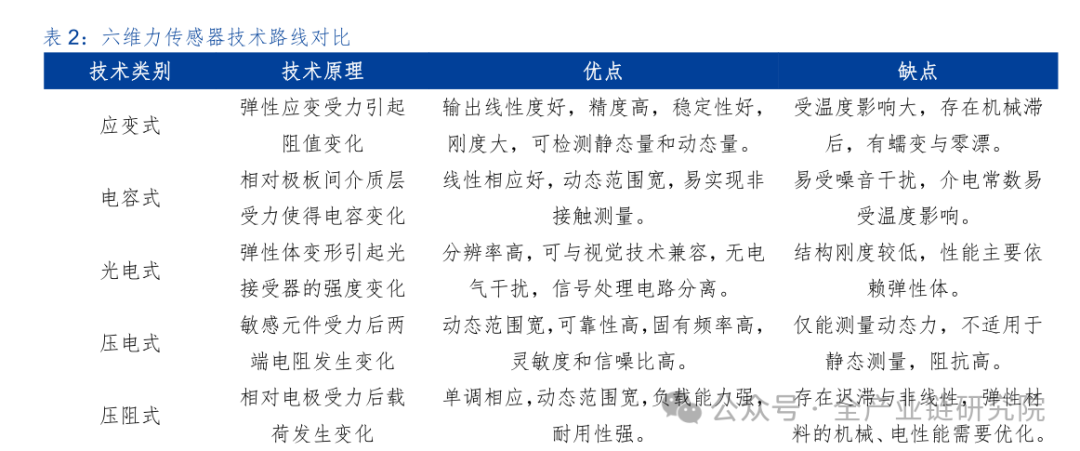
Strain gauge sensors excel in stability, stiffness, and accuracy, making them the current mainstream technology route. Based on working principles, six-dimensional force sensors can be divided into three categories:
1) Strain gauge force sensors, which use materials such as silicon or metal to change resistance through deformation, thereby reflecting force signals;
2) Optical force sensors, which respond to deformation through gratings, converting it into force;
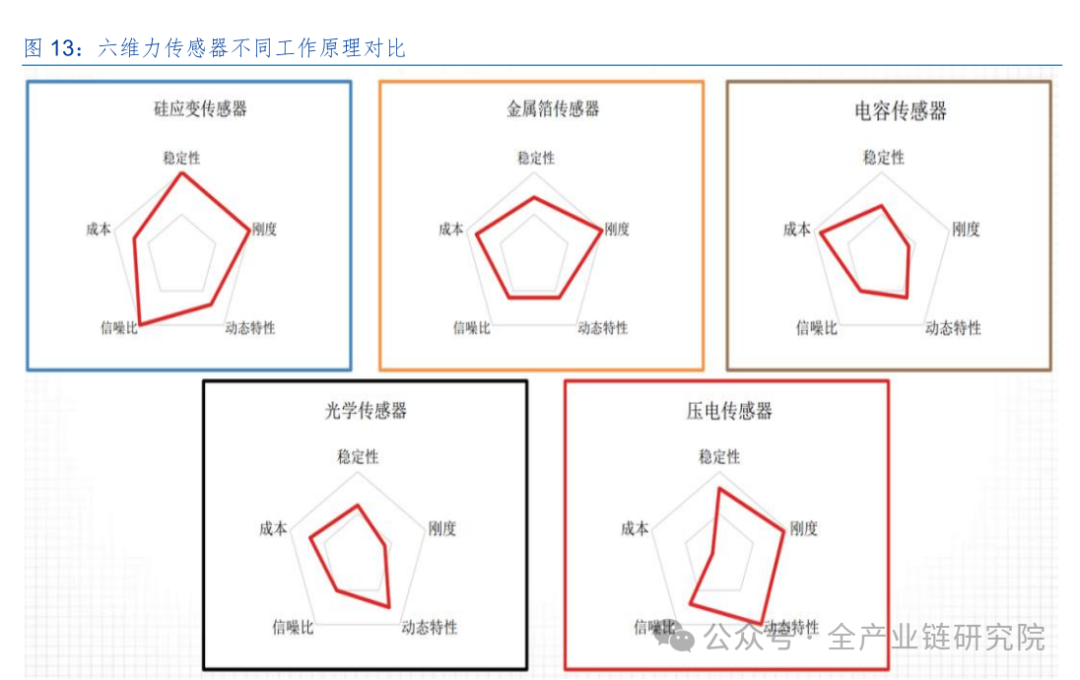
3) Piezoelectric force sensors, which are divided into capacitive and piezoelectric types. Capacitive sensors change voltage through distance variation, while piezoelectric sensors change charge through deformation. Leading international companies like ATI have adopted silicon strain gauge solutions. By comparing stability, stiffness, dynamic characteristics, cost, and signal-to-noise ratio, silicon strain sensors show significant advantages in stability, stiffness, and signal-to-noise ratio. With improvements in technology, costs are expected to decrease further.
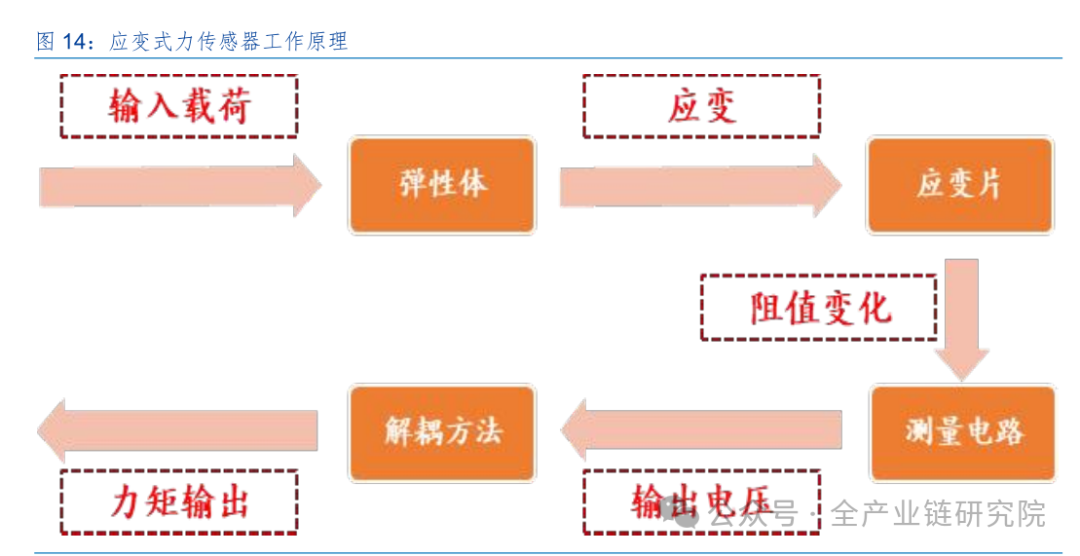
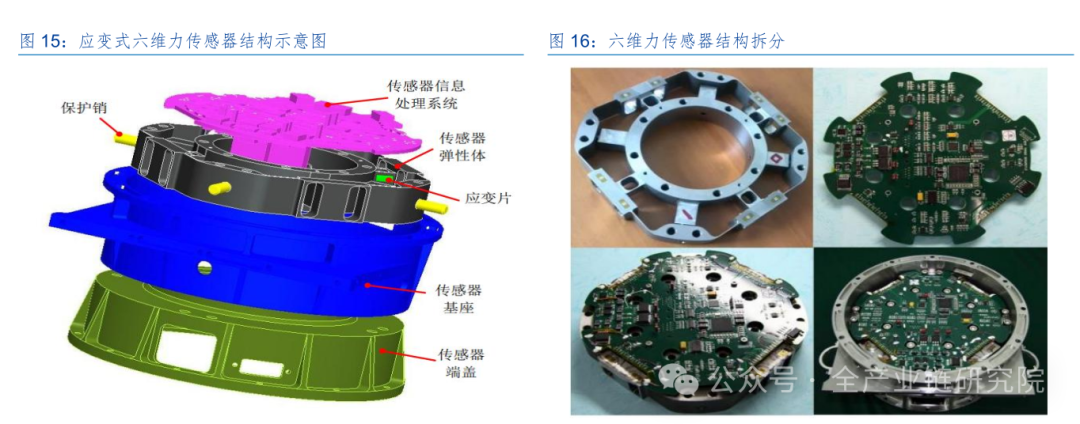
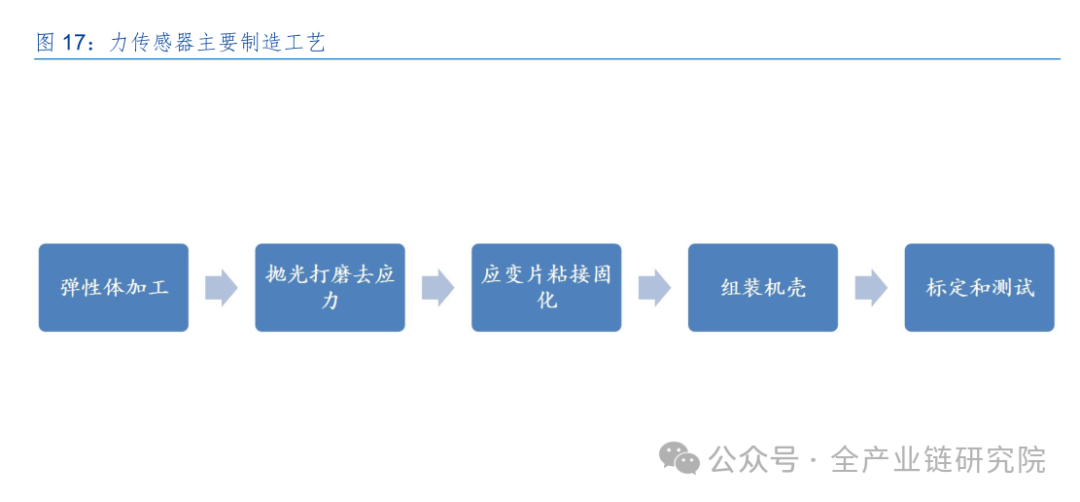
The six-dimensional force sensor mainly consists of strain gauges, elastic bodies, information processors, protective pins, sensor bases, and sensor end caps. The measured component first transmits the force and torque to the sensitive element, which then processes the signals through modulation, demodulation, attenuation, and computation, converting the force signal into voltage or current signals. Finally, software is used to decouple the signals into forces and torques in three directions. The strain gauge is the core component of the force sensor, and both material selection and the distribution of its position on the elastic body determine the final performance of the sensor.
3. Three Major Technical Barriers of Six-Dimensional Force Sensors
1) The structural design of the elastic body directly affects the sensor’s sensitivity, dynamic performance, and inter-dimensional coupling;
2) The complexity of the production process. Taking the most mature strain gauge technology route as an example, one of the production characteristics of strain gauges is that large-scale production is required to cover the startup costs. Additionally, processes such as bonding, temperature compensation, and testing require a large number of specialized engineers to participate.
3) Calibration and testing technology of the sensor. Calibration refers to solving the interference problem of multi-channel signals during transmission through hardware or software methods (i.e., decoupling). The calibration sample space of six-dimensional force sensors contains 531,441 sample points, which is the sixth power of the difficulty of one-dimensional force sensors. Calibration equipment is needed to use decoupling algorithms to minimize crosstalk and improve accuracy and precision.
4. Market Potential of Six-Dimensional Torque Sensors
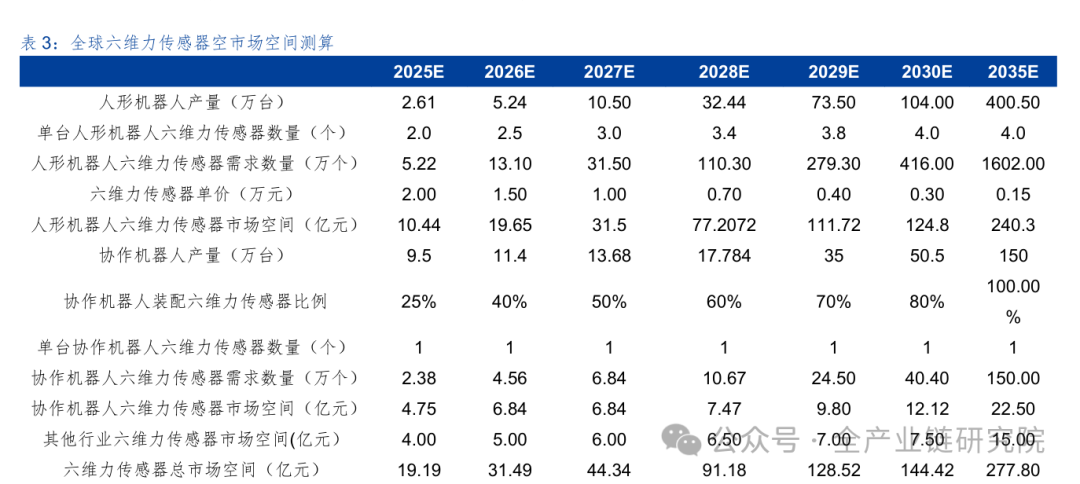
The market for six-dimensional sensors is entering a phase of rapid development, with the humanoid robot industry contributing significant growth. We believe that as the industrialization process of humanoid robots accelerates, it will drive rapid cost reductions in the components industry. The decreasing costs of six-dimensional sensors will further stimulate the industry to adopt more six-dimensional sensors, with humanoid robots contributing the main growth. By 2030, the market potential for six-dimensional sensors is expected to reach 14.442 billion yuan, with a CAGR of 49.73%; by 2035, it is expected to reach 27.780 billion yuan, with a CAGR of 30.6%.
The unit price of six-dimensional sensors is relatively high, with significant cost reduction potential. Currently, the total sales volume of six-dimensional sensors remains low, and production costs are high. According to Gaogong Robotics, the cost of the four six-dimensional sensors used in Tesla’s Optimus Gen2 accounts for approximately 24.4% of the total cost, with the cost of a single six-dimensional sensor approaching $3,400.
According to UBTECH’s prospectus, the unit price of the six-dimensional sensors used in their humanoid robots exceeds 15,000 yuan, while imported AT six-dimensional sensors range from 10,000 to 120,000 yuan. We expect significant cost reduction potential for six-dimensional sensors, mainly reflected in: 1) Reducing the amount of strain gauges used through structural optimization; 2) Achieving economies of scale through mass production; 3) Continuous improvement of process technology, leading to lower costs of high-precision components.
Domestic brands have started late but are gradually narrowing the technological gap with foreign brands. According to statistics from Gaogong Robotics, in 2022, domestic brands accounted for less than 30% of the Chinese sensor market. In the field of six-dimensional sensors, the United States and Japan started earlier and occupy the majority of the high-end market. In recent years, domestic brands have also begun to make strides, gradually closing the gap with foreign brands in measurement accuracy and overload resistance.
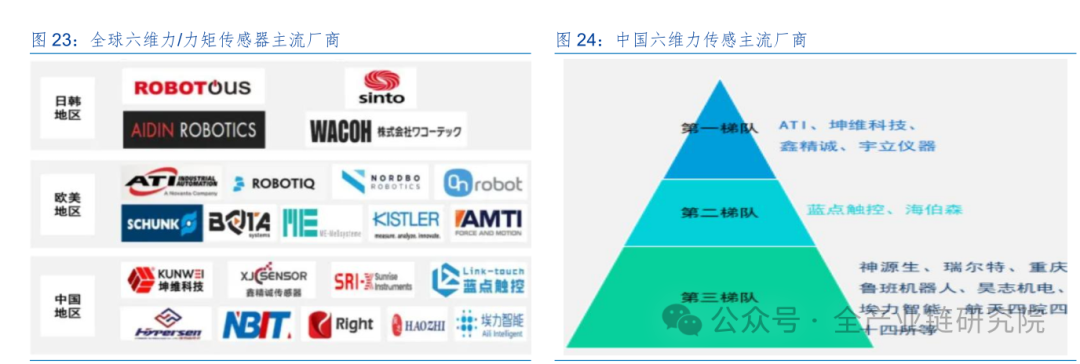
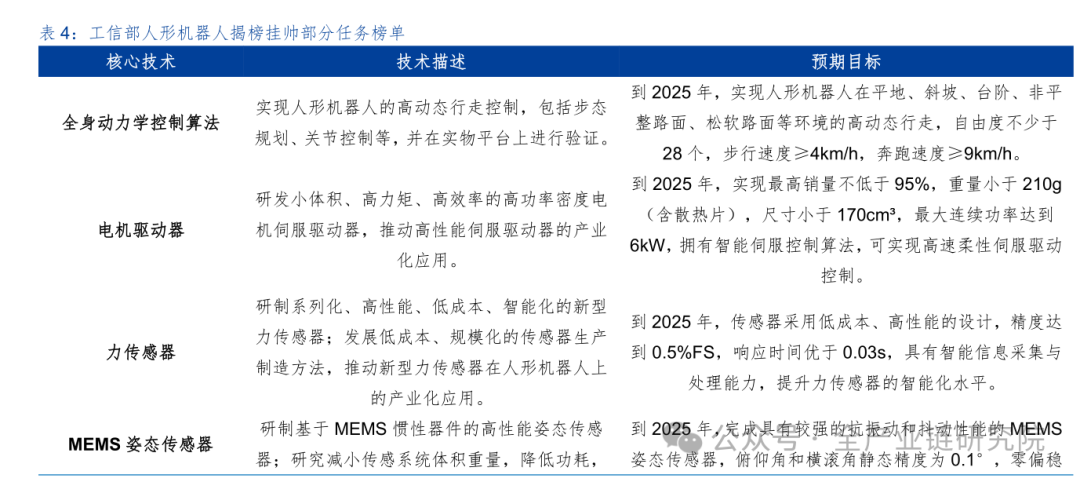
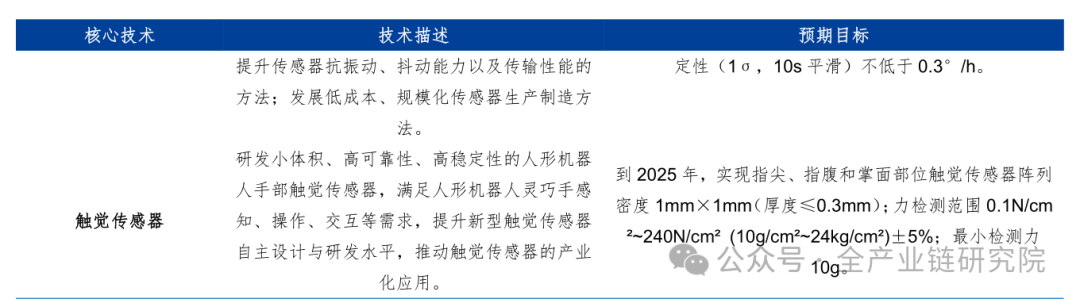
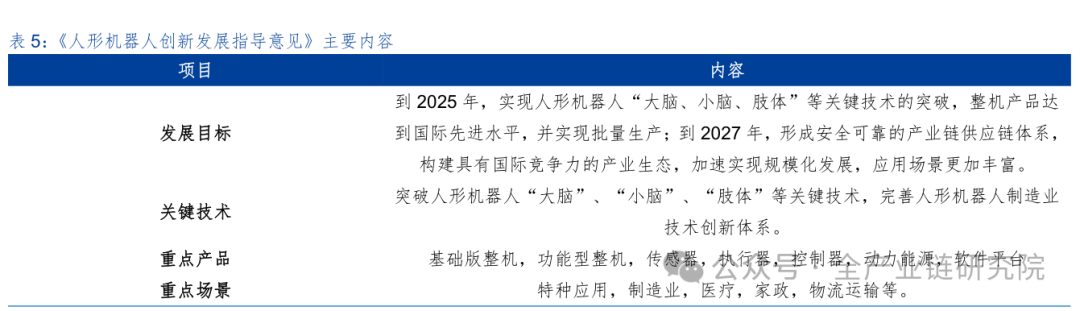
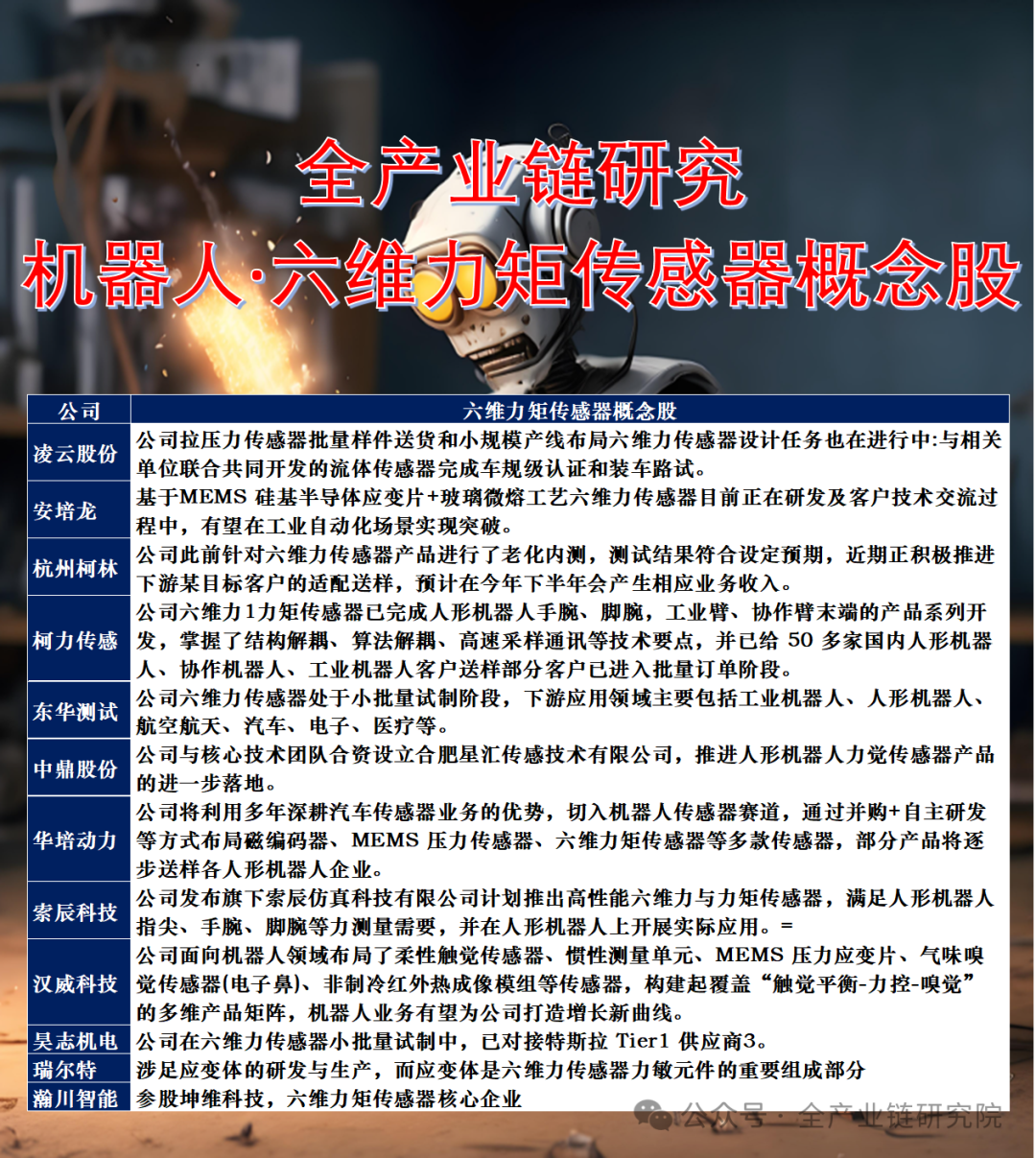
Domestic brands are accelerating their entry into the market, and their market share is expected to further increase. Kunwei Technology, Xinjingcheng, and Yuli Instruments have entered the first tier of sales in the domestic market, showing significant advantages in collaborative robots, automotive crash testing, and medical rehabilitation. Additionally, other sensor manufacturers are also beginning to enter the six-dimensional sensor market, such as Lingyun Co., Ampere, Hangzhou Colin, Keli Sensor, and Donghua Testing. Among them, Lingyun Co. has collaborated with the Hefei Institute of Physical Science, Chinese Academy of Sciences, and the China National Intelligent Innovation Research Institute to undertake the national Ministry of Industry and Information Technology’s 2023 future industry humanoid robot direction force sensor innovation task. Domestic brands have a cost advantage and are expected to accelerate the localization process.