Deeply grasp recursive thinking and unlock the magical world of programming
1. What is Recursion? An Old Story Tells You
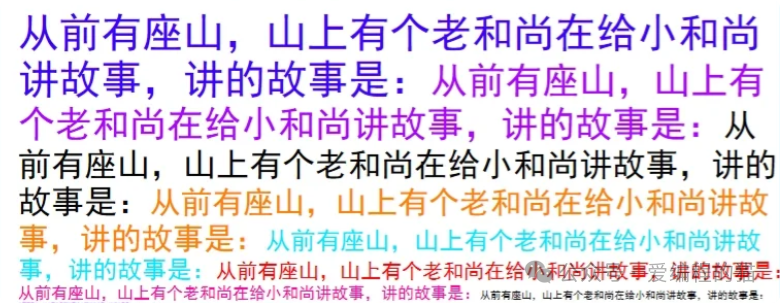
“Once upon a time, there was a mountain, and on the mountain, there was an old monk telling a story to a young monk, and the story was: once upon a time, there was a mountain, and on the mountain, there was an old monk telling a story to a young monk…”
This infinite loop of a story is a perfect metaphor for recursion! In programming, recursion is the process of a function calling itself, just like the continuously nested plot in the story.
What is recursion?
It is essentially like a Russian doll.

2. Recursion vs Loop: Different Personalities of Twins
# Loop example
for i in range(100):
    print(f"This is the {i}th loop")
# Recursion example
def recursive_func(n):
    if n > 0:
        print(f"This is the {n}th recursive call")
        recursive_func(n-1)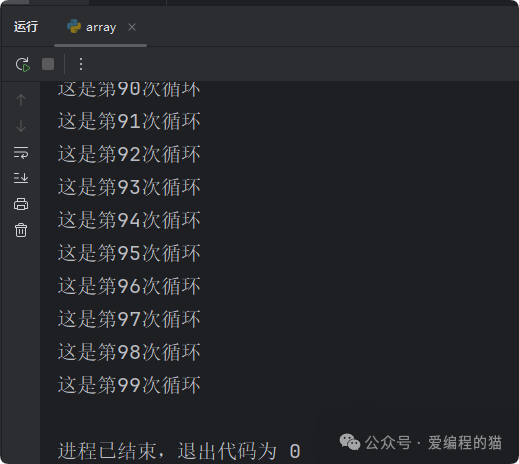
Key differences:
-
Loop: Variable changes, executing the same code block
-
Recursion: Function self-calls, each time with different parameters, forming a call stack
3. Core Thinking of Recursion: Three Steps to Build a Recursive Function
def recursive_function(parameters):
    if condition_to_stop:  # Must exist! Otherwise, infinite recursion
        return termination_result
    process_current_layer_logic
    recursive_call(modified_parameters)  # Move towards a smaller problem size
    assemble_result_return
The thinking of recursion is somewhat similar to loops, but unlike loops: in loops, the parameter variable changes while the code executed remains the same;
for i in range(10): # i increases by 1 each loopWhereas recursion is when a function is “calling itself”, and within that “self”, there is another “self”, just like a Russian doll. As long as the condition is met, it can continuously call “itself”, and the parameter variable can be different each time.
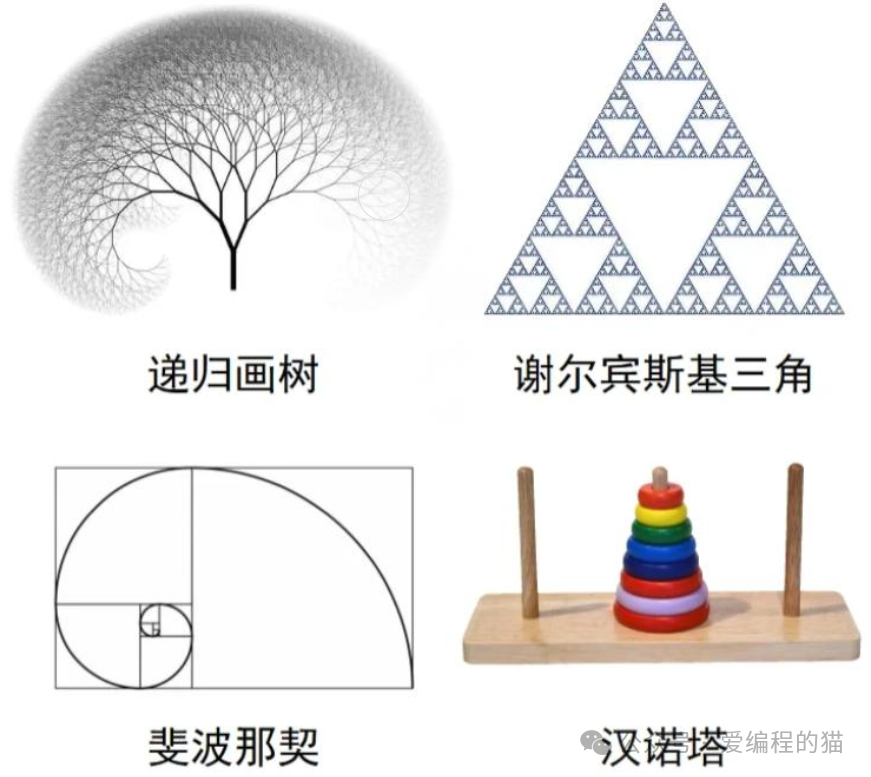
4. Classic Recursion Case Collection
| Case Name | Feature Description | Application Scenario |
|---|---|---|
| Fibonacci Sequence | F(n)=F(n-1)+F(n-2) | Algorithm problems, mathematical models |
| Tower of Hanoi | Moving disks via an intermediary pole | Teaching divide and conquer algorithms |
| Recursive Tree Drawing | Self-similarity of branch bifurcation | Computer graphics |
| Sierpiński Triangle | Infinitely self-similar fractal structure | Fractal geometry visualization |
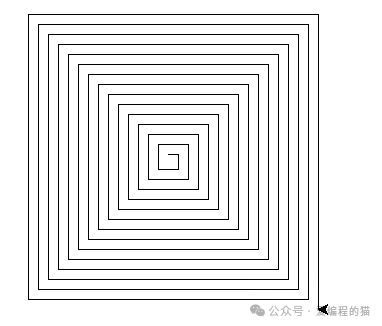
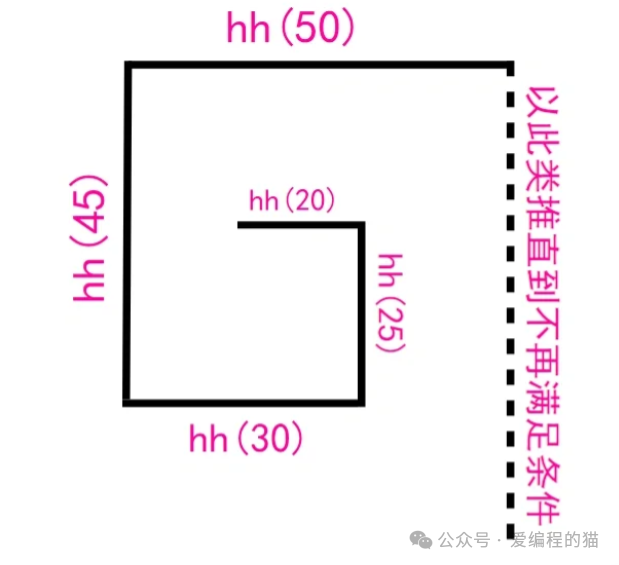
5. Practical: Drawing a Magical Spiral with Recursion (Turtle Version)
from turtle import *

def draw_spiral(L):
    if L < 300:  # Termination condition
        forward(L)
        right(90)
        draw_spiral(L+5)  # Recursive call, increasing length

draw_spiral(10)  # Initial length
done()
Running result:
The specific process of this example:
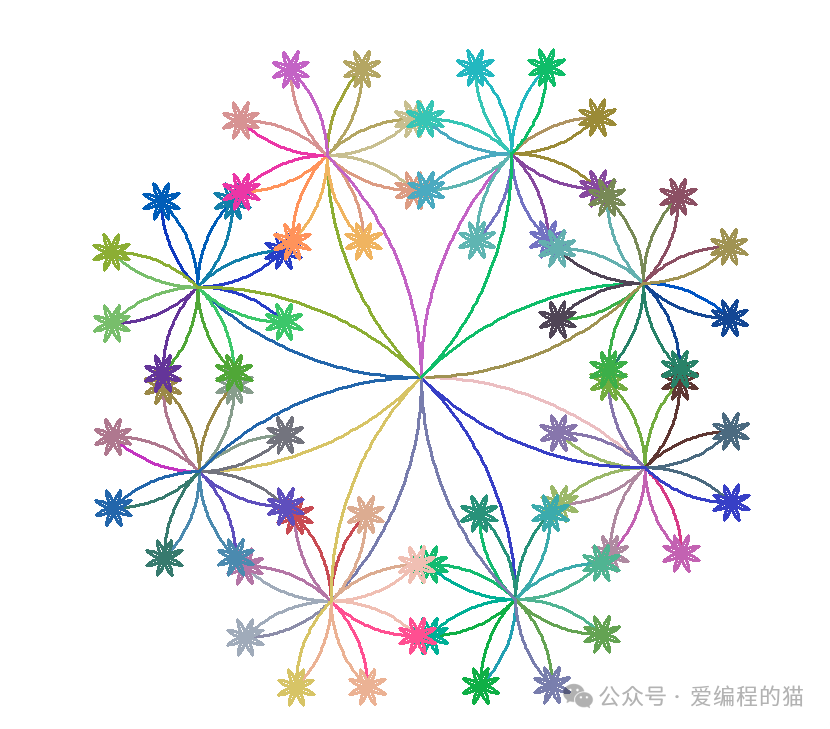
6. Advanced Recursion: Colorful Fractal Art
from random import randrange
from turtle import *

colormode(255)
color(0, 0, 0)
x = 0
ax = 20
hideturtle()
pensize(3)
tracer(5)
penup()
goto(0, 0)
pendown()

def a(l):
    global x, ax
    if l > 0:
        x = x + ax
        if x > 255:
            ax = -20
            x = 255
        elif x < 0:
            ax = 20
            x = 0
        color(255 - x, randrange(50, 200), randrange(50, 200))
        for j in range(8):
            for i in range(45):
                forward(l / 4)
                right(1)
            a((l - 5) / 2)  # Maintain original recursive parameter calculation
            right(135)
            for i in range(45):
                forward(l / 4)
                right(1)
            right(135 + 45)

a(22)
done()
Running result:
7. Precautions for Recursion
-
There must be a termination condition – Otherwise, it becomes a “dead loop of nesting”
-
Each recursion should reduce the problem size – For example, n→n-1
-
Be aware of call stack depth – Python’s default recursion depth is about 1000 layers
-
Important tool: Use
<span>sys.setrecursionlimit()</span>to adjust depth
Conclusion: The Power of Recursive Thinking
Recursion is not just a programming skill, but a way of thinking to decompose complex problems. Just like dismantling a Russian doll, breaking down a big problem into similar smaller problems and tackling them one by one. Mastering recursion will empower you with strong problem-solving abilities in fields like algorithms, AI, and graphics!

To understand recursion, you need to first understand recursion, then understand recursion… until you can understand recursion.