Remembering Master Yinguang
Master Da’an Tells a Story
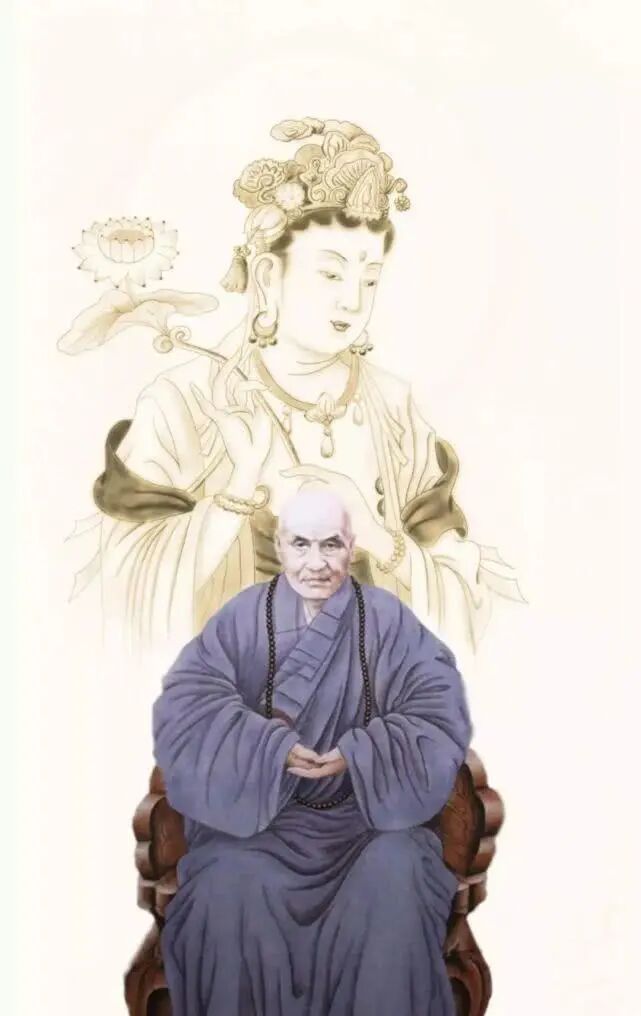
It is truly remarkable, and we find it difficult to know what identity the Bodhisattva of Great Strength has manifested to guide us back to the Pure Land. However, I can introduce Master Yinguang to everyone here. After his passing, many disciples wanted to create a “Memorial of Master Yinguang,” and they invited the four groups of disciples who had a connection with him to write articles. One of them, layperson Yang Xinfang, wrote a piece titled “Remembering Master Yinguang,” which contains some unique insights.
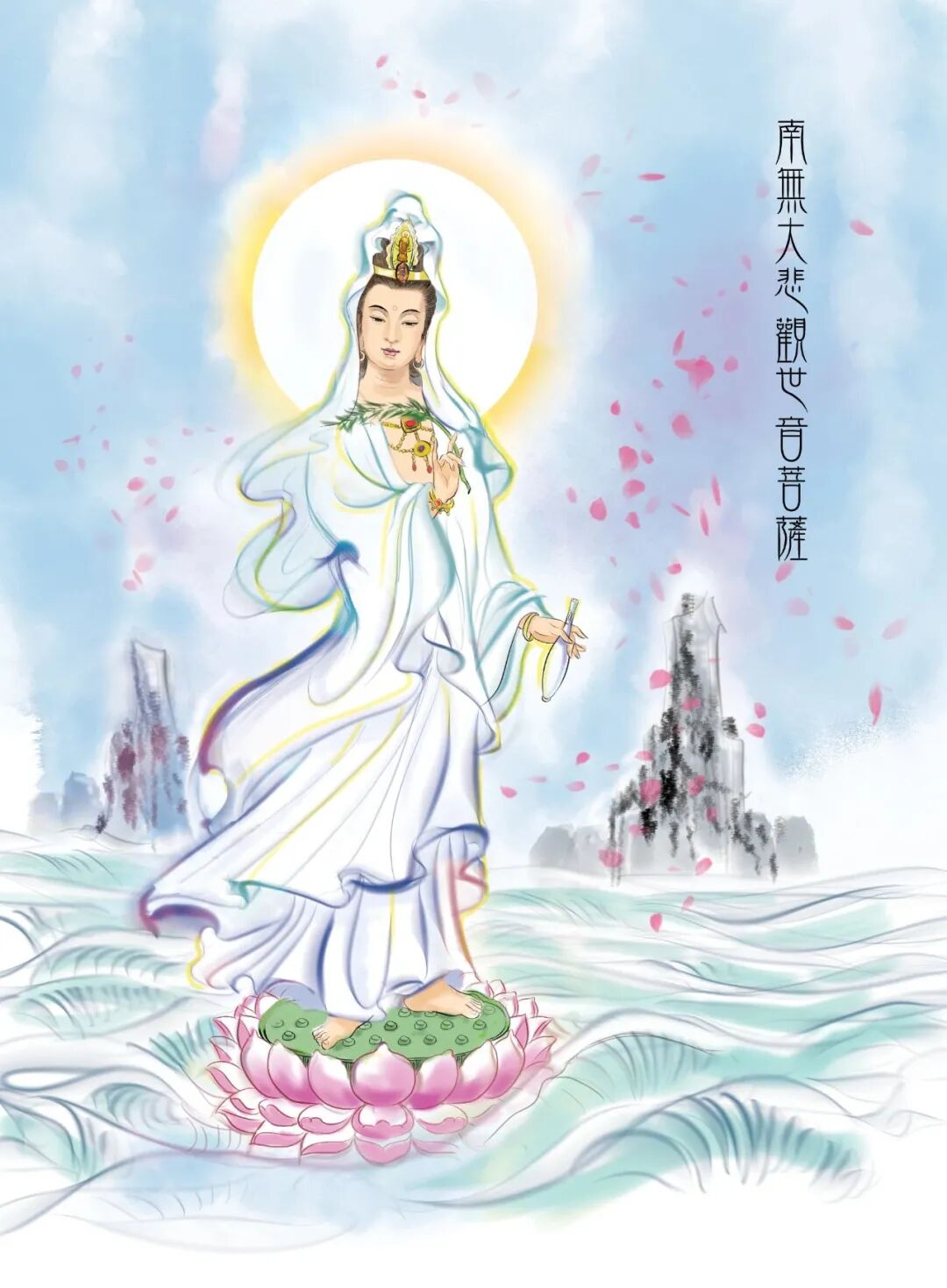
Ms. Yang Xinfang said that when she was eighteen, she attended a girls’ high school in Shanghai, and her classmate was Zhang Xiaojuan, with whom she was very close. Since she was not from Shanghai, she stayed at her classmate’s home, and Zhang’s mother, Mrs. Zhang, also cherished Yang Xinfang, treating her like her own daughter, so she called her “Mother.” One day, Yang Xinfang had a very vivid dream. She dreamed that she was on an island surrounded by the sea, where she saw the Bodhisattva Avalokiteshvara, who was holding a willow branch and a pure vase; she herself was in a small boat, sailing towards the island. At that moment, the Bodhisattva spoke to her, saying, “The Bodhisattva of Great Strength is teaching sentient beings in Shanghai; why are you so confused and not listening to the Dharma?” This dream occurred in the 25th year of the Republic of China—1936. The Bodhisattva continued, “Master Yinguang is the incarnation of the Bodhisattva of Great Strength, and his alms-gathering will end after four years.” At this point, she felt a huge wave and suddenly woke up.
For an eighteen-year-old high school student who was not a Buddhist, she had never even heard of the Bodhisattva of Great Strength, let alone Master Yinguang. She told her classmate about the dream, and her classmate just smiled, not understanding it either. The next day, she asked Mrs. Zhang, “Is there a Bodhisattva named the Bodhisattva of Great Strength?” Mrs. Zhang, being a Buddhist, replied, “Yes! He is one of the Three Saints of the Western Paradise!” She then asked, “Is there a monk named Master Yinguang?” Mrs. Zhang said, “I have heard of Master Yinguang; he is said to be a highly accomplished monk from Putuo Mountain.” Yang Xinfang asked, “Is he in Shanghai now?” Mrs. Zhang replied, “I don’t know if he is in Shanghai.” The next day, they happened to read the newspaper and found an announcement stating that Master Yinguang was indeed in Shanghai, presiding over the national disaster relief Dharma assembly at Jueyuan. He was in Shanghai!
The three of them—she, her classmate, and Mrs. Zhang—were very surprised and found it hard to believe that this was true. So the three of them went to Jueyuan to listen to the teachings, and in the end, they all took refuge. However, there were many people at that time, and Yang Xinfang did not have the opportunity to share her dream. The following year—1937—Yang Xinfang went to Baoguosi, where Master Yinguang had been in retreat, to pay her respects and shared the dream with him. Upon hearing it, Master Yinguang scolded her, saying, “Don’t talk nonsense! Don’t talk nonsense! To confuse the ordinary with the sacred is a great sin. You must not tell others; if you do, you are no longer my disciple.” He warned her not to speak of it. She was frightened and did not dare to say anything.
After that, she graduated, got married, and had children. Master Yinguang passed away in 1940, and she received a letter from a friend in Suzhou saying that Master Yinguang had passed away. At that moment, she realized that it had indeed been four years. She was somewhat skeptical about this matter, thinking, “If Master Yinguang really lived for four years, I would believe this dream.” And it turned out to be exactly four years! At that moment, she felt that it was indeed true, and with tears in her eyes, she wrote this article—”Remembering Master Yinguang.”
This article has been shared in many places. Therefore, within our teachings, there is often a concept that Master Yinguang dedicated his life to the practice of the Samadhi of Reciting the Buddha’s Name, and throughout his life, he had a deep affection for the “Chapter on the Perfect Communication of Reciting the Buddha’s Name of the Bodhisattva of Great Strength.” He wrote praises and essentially practiced according to the principles of the “Chapter on the Perfect Communication of Reciting the Buddha’s Name”; he himself praised it as the most wonderful teaching of the recitation of the Buddha’s name, which could be placed alongside the four Pure Land sutras as one of the five Pure Land scriptures. This was also a choice made by Master Yinguang. When you connect these together, it indeed seems to have some truth.
Of course, we do not have the spiritual powers to see, but through this letter—this article, combined with some of Master Yinguang’s circumstances, and considering his profound knowledge: the writings of Master Yinguang are very elegant, and he is well-versed in Confucianism, Taoism, and Buddhism. His breadth of knowledge is astonishing; for example, he mentioned that there are over two thousand records in the “Old History of the Tang Dynasty” that document the interactions between high-ranking officials, literati, and great Buddhist monks and masters. In the “New History of the Tang Dynasty”—which was revised after Ouyang Xiu—these records were deleted. This shows that he had read both the “Old History of the Tang Dynasty” and the “New History of the Tang Dynasty.” One disciple was amazed, saying he did not know when Master Yinguang had read so many books. These were not even Buddhist texts, which indicates his extensive knowledge.
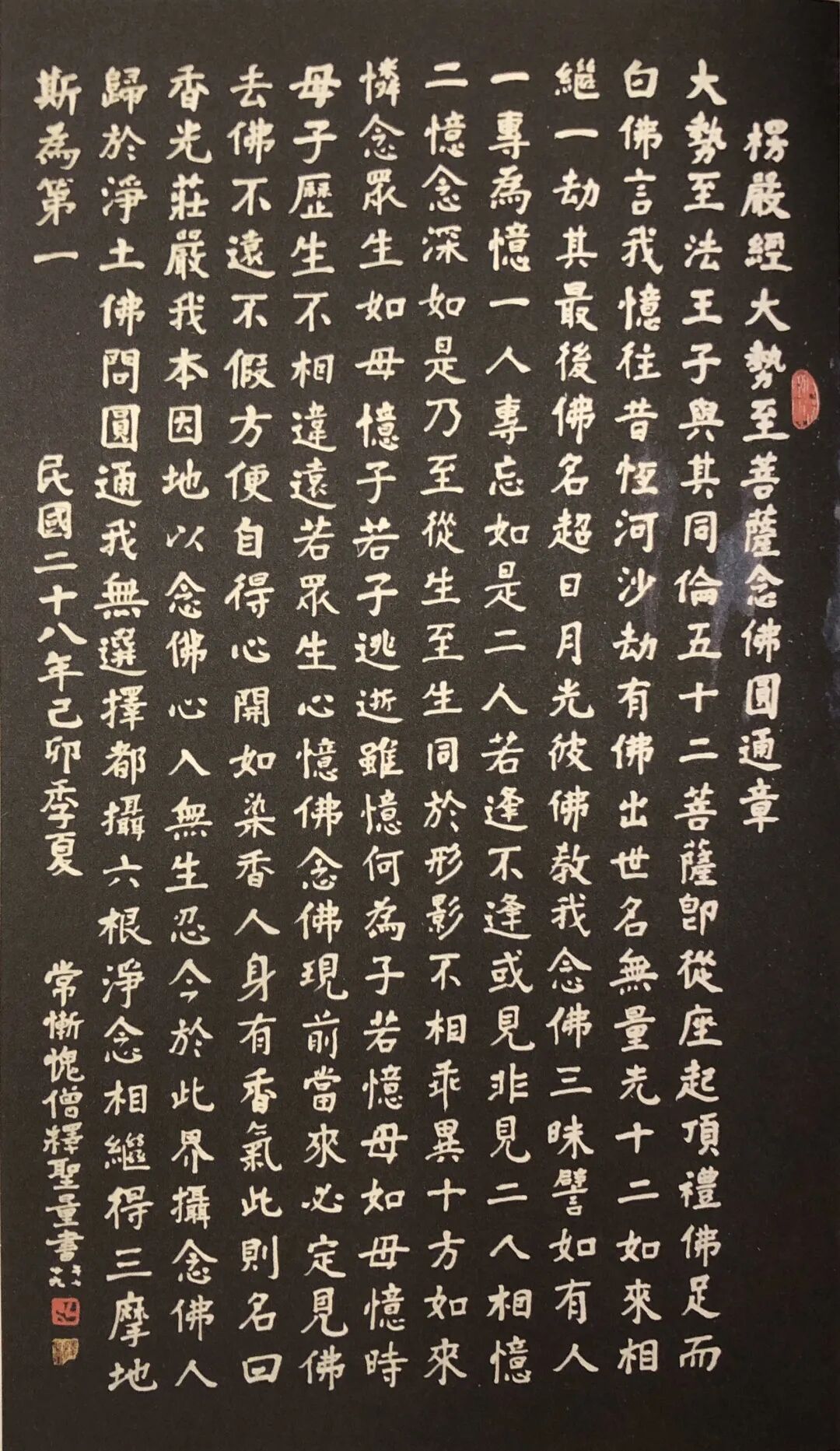
By reading Master Yinguang’s “Wenchao,” one discovers that his scholarship is profound and extensive, not something that can be learned in one lifetime. If what Ms. Yang Xinfang wrote in her article is indeed true, then we have a real-life example of the verse from the Bodhisattva of Great Strength: “Now in this world, he gathers those who recite the Buddha’s name and returns them to the Pure Land.” If we can equate this, then reading Master Yinguang’s writings is equivalent to reading the wisdom and spiritual texts left to us by the Bodhisattva of Great Strength from the Western Pure Land, and everyone will have a greater sense of reverence and respect when reading them.
Appendix
“Remembering Master Yinguang”
When I was eighteen, I attended a girls’ high school in Shanghai. I had a close classmate, Ms. Zhang Xiaojuan, who lived on Ximen Road, Run’an Li, and her mother, Mrs. Zhang, cherished me and treated me like her own daughter, so I also called her “Mother.” After school, I often stayed at Zhang’s house for meals and lodging, which became a habit.
On the night of the 23rd of the 11th month of the 25th year of the Republic of China, I stayed at Zhang’s house and shared a bed with Xiaojuan. In the middle of the night, I fell asleep and saw Avalokiteshvara standing on a small island, surrounded by the sea, with the sky and water blending together. The Bodhisattva was about ten feet tall, adorned with jewels, holding a pure vase, as depicted in the world. I was in a small boat, sailing closer to the island. The Bodhisattva waved to me and said, “The Bodhisattva of Great Strength is currently teaching sentient beings in Shanghai; why are you so confused and not listening to the Dharma?” I had no answer. The Bodhisattva continued, “Master Yinguang is the incarnation of the Bodhisattva of Great Strength, and his alms-gathering will end after four years.” After saying this, the Bodhisattva disappeared. Suddenly, a huge wave surged, and the boat nearly capsized; I cried out for help. Xiaojuan pushed me awake, saying, “Xinfang, were you dreaming?” I told her about the dream, and we both laughed.
The next morning, I told Mrs. Zhang about the dream and asked, “Is there a Bodhisattva named the Bodhisattva of Great Strength? Is there a monk named Master Yinguang?” Mrs. Zhang, being a devout Buddhist, exclaimed, “The Bodhisattva of Great Strength is from the Western Pure Land! I have heard of Master Yinguang; he is said to be a highly accomplished monk from Putuo Mountain.” I asked, “Is Master Yinguang in Shanghai now?” Mrs. Zhang replied, “I don’t know.” I felt puzzled.
The next day, I read the “Shenbao” and saw an announcement about the “Bingzi National Disaster Relief Dharma Assembly,” and I learned that a well-known person in Shanghai had invited Master Yinguang to preside over the assembly at Jueyuan. How strange this dream was! The three of us were astonished. We then went to Jueyuan with Mrs. Zhang and her daughter to listen to Master Yinguang’s teachings, and all three of us took refuge. I was given the Dharma name “Hui Fen,” Mrs. Zhang “Hui Fan,” and Xiaojuan “Hui Ying.”
I feel ashamed that I have deep karmic obstacles and have not been diligent. Now I carry my son and hold my daughter, and I am busy all day, neglecting my pure practice! Yesterday, I received a letter from a friend in Suzhou, saying that Master Yinguang has passed away at Lingyan Mountain. Alas! The Master has passed away, and his alms-gathering lasted four years, which indeed corresponds to my dream. I have a karmic connection with the Master, and I cannot remain silent. With tears in my eyes, I write this, though my words are inadequate, and I send it to the “Jue Youqing Bi-Monthly” in Shanghai for publication, to express my sorrow. Namo Bodhisattva of Great Strength!
December 7, 1939, Yang Xinfang

Official WeChat Account of Donglin Temple
Nine Lotus Flowers at the Heel
Not Reciting Amitabha, Disappointing Oneself
Official Website: www.donglin.orgDonglin Temple Guest Hall: 199 7929 0048Pure Land Consultation Hotline: 0792 8891134