




The Secret to Efficient Development and Management
 Overview of the Linux Toolchain
The Linux toolchain is a collection of small, efficient tools that adhere to the “Unix philosophy”. Each tool focuses on doing one thing well and can be combined using pipes, which is the core strength of the Linux system. This design philosophy allows us to combine multiple simple tools to solve complex problems, greatly enhancing work efficiency.

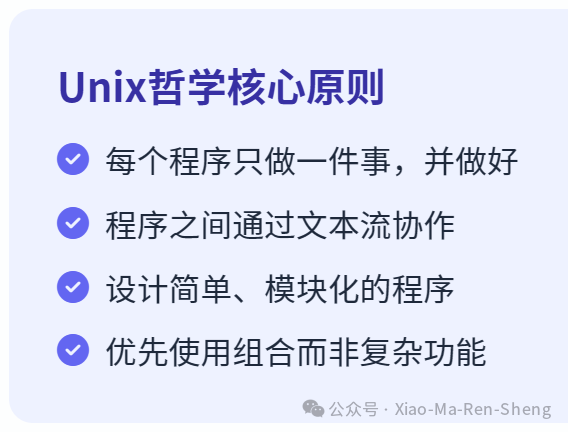
Pipes and Redirection: The Essence of the Toolchain Dance
If individual tools are instruments, then pipes and redirection are the conductor’s baton and sheet music, allowing these instruments to perform a stunning symphony. This is the core of the charm of the Linux toolchain!
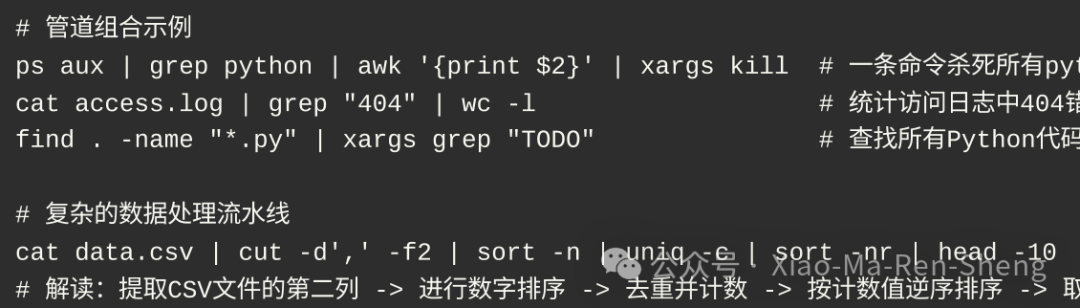
Piping Operations: The Symphony of Commands
Pipes (|) act like an assembly line, elegantly linking a series of operations by taking the output of one command as the input of the next.
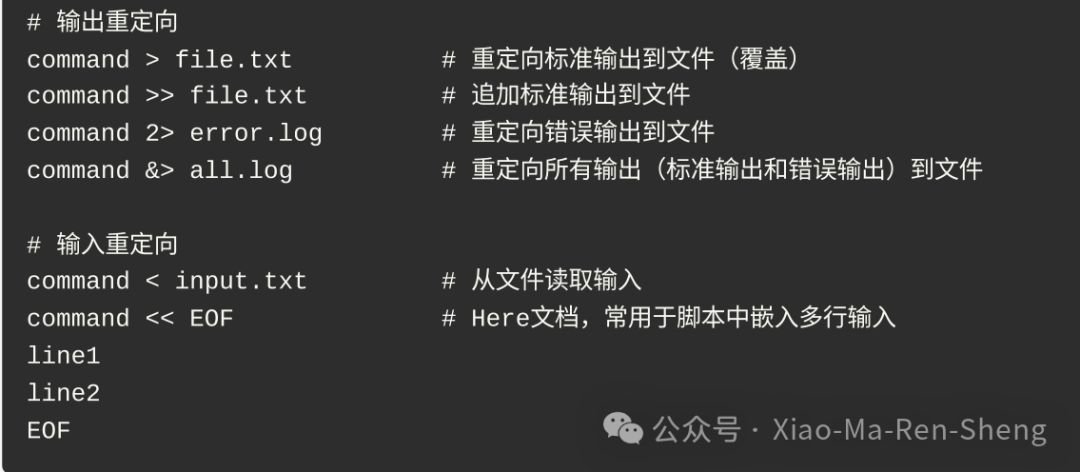
Redirection Operations:
Redirection acts like a hydraulic engineer, changing the direction of data flow, either directing it into a file or sourcing it from a file.
Theory Must Meet Practice. Let’s See How These Tools Shine on the Real Battlefield, Solving Practical Problems.
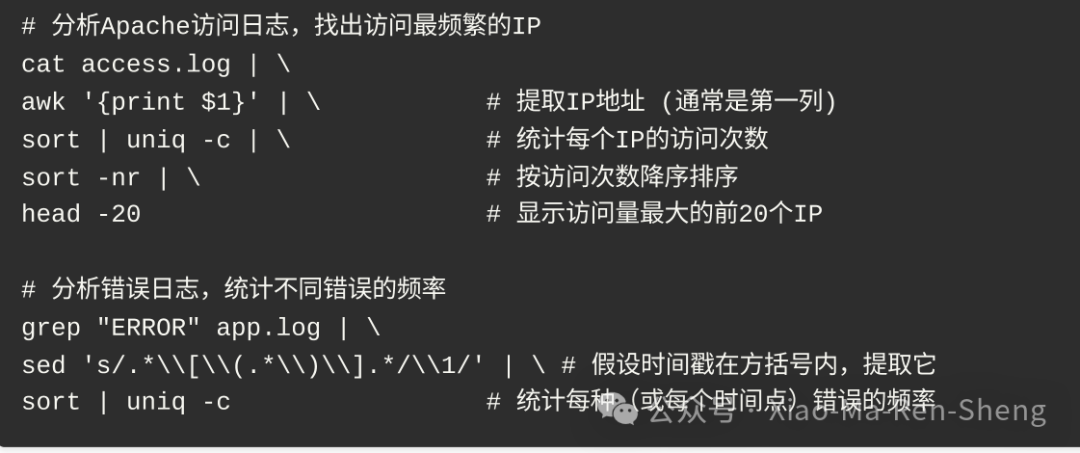
1.Log Analysis:
Logs are the autobiographies of systems and applications, containing valuable information. The toolchain can help you quickly interpret these “heavenly books”.

2.Development Assistance: The Accelerator for Coding
During the development process, the toolchain can also provide many conveniences, enhancing efficiency.

The core advantages of the toolchain: Why is it so powerful?
The magic of the Linux toolchain comes from its unique design philosophy and the core advantages it generates:
-
Composability: Small and powerful tools can be combined like Lego blocks through pipes and redirection to solve complex problems. This is the source of strength!
-
Consistency: Many tools follow similar command-line parameter styles and behavior patterns, resulting in a relatively gentle learning curve. Once mastered, it can be applied to other tools.
-
Programmability: Almost all operations can be scripted, easily achieving automation and freeing you from repetitive tasks to focus on creativity.
-
Efficiency: Each tool is deeply optimized for specific tasks, executing quickly and consuming few resources, especially advantageous when handling large-scale data.
-
Extensibility: You can easily write your own scripts or small programs and integrate them into the existing toolchain, continuously expanding its capabilities.
Want to Harness This Powerful Force? Here are some tailored suggestions to help you gradually become a master of the Linux toolchain:
1.Start from the basics, step by step: First, master the essential file operation commands (ls, cd, cp, mv, rm, mkdir, pwd, find). They are your first keys to exploring this world.
2.Understand the magic of pipes: Learn to use pipes (|) to chain commands together. This is a key step in leveraging the combinatorial power of the toolchain; try using it to solve some simple data processing tasks.
3.Master the blade of regular expressions: Regular expressions are the Swiss Army knife of text processing. Learning its basic syntax can greatly enhance your efficiency and flexibility when using tools like grep, sed, and awk.
4.Hone your skills through practice: After theoretical learning, immediately apply these tools in your daily work, personal projects, or log analysis. Solving real problems is the best teacher.
The journey has begun, and each step of exploration will open new doors for you. Enjoy the process, and you will discover the profound charm and endless potential of the Linux toolchain!