

Kitchen Cosmo: An AI Device That Generates Recipes from Leftovers
Students from the Massachusetts Institute of Technology have developed a retro-futuristic kitchen robot that uses artificial intelligence to assess available ingredients and suggests cooking ideas based on your mood, skill level, and available time.
Kitchen Cosmo is currently a working prototype, featuring a bright red body reminiscent of vintage appliances, complete with various buttons, switches, and sliders.

MIT students Jacob Payne and Ayah Mahmoud developed Kitchen Cosmo
These features allow home cooks to set their dietary preferences and mood, as well as the desired cooking time, difficulty level, portion size, and meal type.
Kitchen Cosmo uses a camera embedded in its adjustable humanoid head to capture available ingredients, which are then identified by the internal AI and transformed into recipes that meet all specified conditions.

The camera in the robot’s head can identify ingredients
A built-in thermal printer will print the final instructions and output them on a rolled-up paper receipt, which can be torn off and stored in a transparent tube at the bottom of the device.
The entire operation process is screen-free, designed by MIT students Jacob Payne and Ayah Mahmoud to achieve a tactile and simulated experience as much as possible.
“As artificial intelligence becomes more prevalent in daily life, most interfaces tend to be efficient and invisible—whether it’s touch screens, apps, or voice assistants,” Payne told Dezeen. “With Cosmo, we wanted to challenge this default mode and explore a different way of interaction.”
“Our goal is not to make the interface seamless, but to make it tactile, fun, and intentional. By designing a device that is visible on the countertop and operated through dials and switches, Cosmo emphasizes collaboration with AI rather than hiding it.”

Its retro-futuristic bright red body echoes the Honeywell kitchen computer from 1969
Payne and Mahmoud 3D printed their prototype using PLA material, adorned with red paint and aluminum accents, paying homage to the Honeywell kitchen computer from 1969—an attempt to bring computers into homes before the invention of personal computers, which ultimately failed.
While Honeywell could only output pre-programmed recipes, Kitchen Cosmo aims to establish a more creative and mutually beneficial relationship with technology by allowing users to control the final outcome through the numerous buttons on the machine.
According to researchers at MIT, the “most novel” feature is a knob that allows home cooks to switch between six different moods based on their feelings, such as nostalgia, trying something new, or using leftovers from the fridge.
“These operations make the interaction with AI more personalized and collaborative,” Payne explained. “Interaction is no longer a purely transactional process; it reshapes how people interact with smart technology in the kitchen.”
“Users set parameters not by typing or speaking, but by turning knobs and flipping switches, with each physical interaction reinforcing the sense that the device is being adjusted rather than commanded.”
Inputs from manual buttons, as well as the camera and printer, are fed into an internal Arduino microcontroller, which communicates with a central computer that processes, generates, and outputs data using OpenAI’s GPT-4o model.

AI-generated recipes are printed out like receipts
As a result, Kitchen Cosmo may encounter some of the same issues as OpenAI’s own ChatGPT chatbot. For instance, the generated recipes have not been verified for taste, safety, or program accuracy, and are mostly limited to Western ingredients and cooking techniques.
However, future versions of the product may integrate a more knowledgeable custom AI trained on a curated dataset of recipes, historical recipes, regional culinary profiles, and specific culinary knowledge (such as ingredient pairing charts or flavor compound networks).
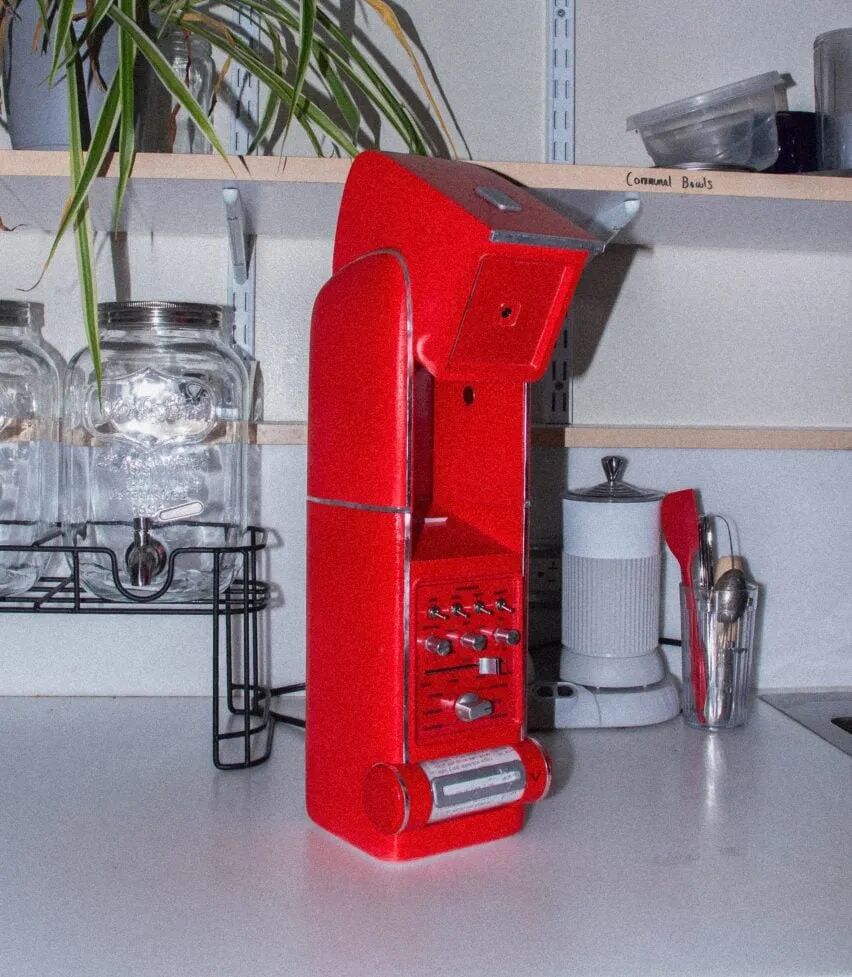
The device is currently in a working prototype stage
In 2023, ChatGPT sparked a wave of generative AI, prompting many other designers and brands to explore how to integrate this technology into physical products.
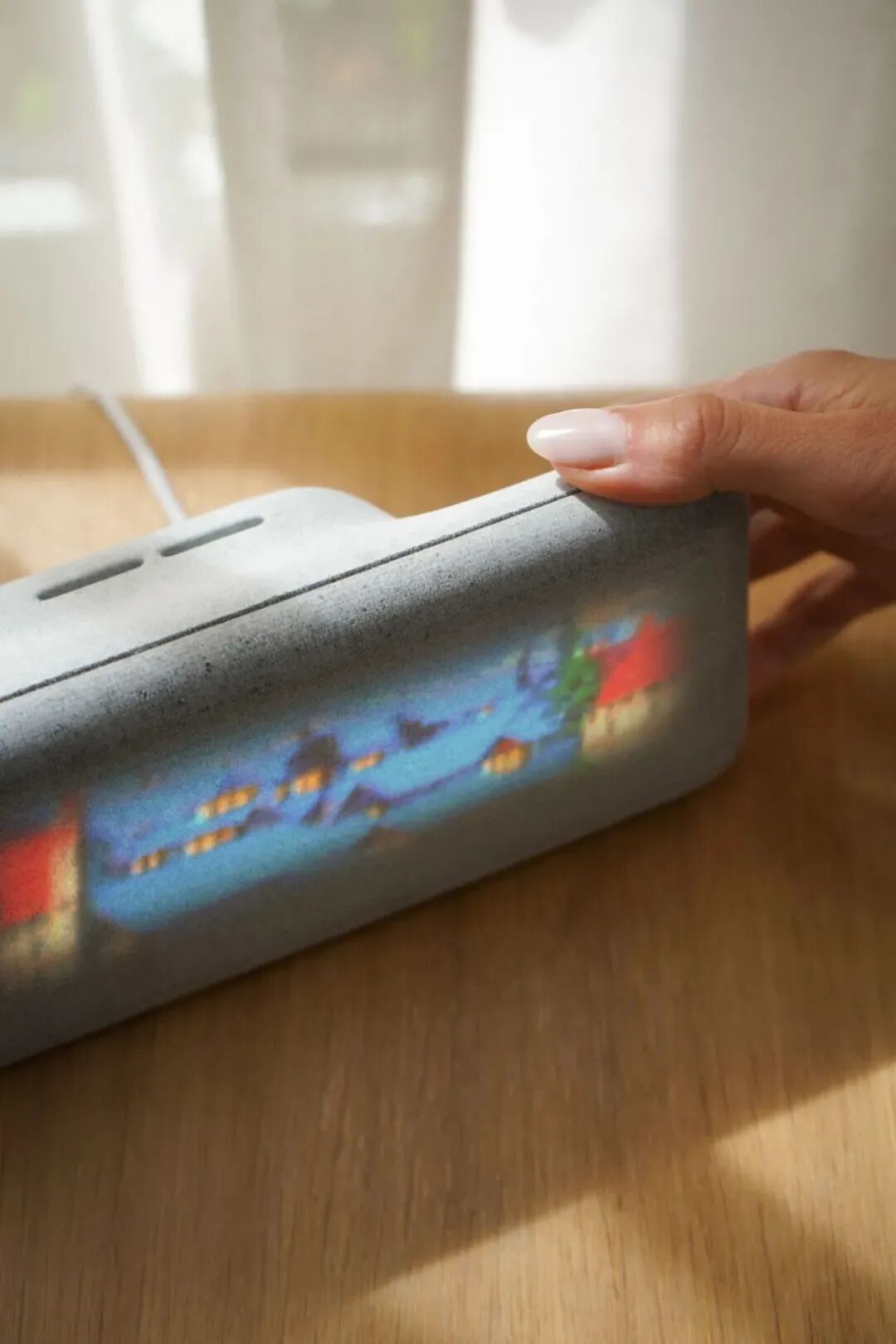
Recent explorations of real-life use cases include: the Dream Recorder, which allows users to replay their dreams; and the Petal camera, which creates mini nature documentaries based on footage of insects and birds in people’s backyards.
Images provided by Jacob Payne and Ayah Mahmoud

Recommended Reading
AI Dream Recorder Allows Users to Replay Their Dreams


– Editorial Contact
– Submission Contact
– Business Cooperation
– Dezeen Design Awards