
Click the blue text above to follow us

Add the WeChat below to obtain relevant materials and solutions from Guangda Hehui Technology
In the wave of digital transformation, enterprises are like ships sailing in the fog, urgently needing precise navigation.The integration of IoT and digital twins acts like a beacon, illuminating the path ahead.
The former collects and transmits data in real-time, while the latter constructs virtual mirrors and conducts simulation analysis, and the combination of the two forms a closed loop, helping enterprises achieve a leap from “perception” to “decision-making”, injecting powerful momentum into the transformation.

1. Golden Partners: IoT and Digital Twin
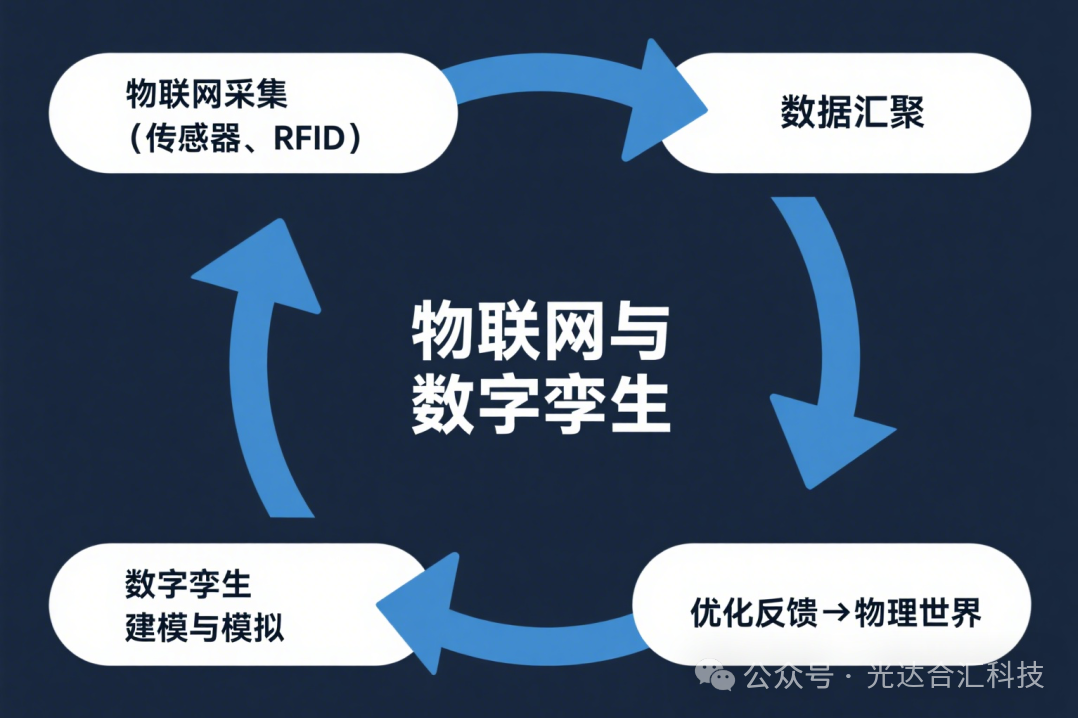
The core of IoT lies in “perception and connection”, using technologies such as sensors and radio frequency identification to enable objects in the physical world to “speak”, transmitting operational status and environmental information in real-time. It acts like the nerve endings of an enterprise, continuously providing real-world data input.
Digital twins, on the other hand, construct virtual models that synchronize with physical entities through digital modeling and simulation.This model not only maps reality but also predicts potential issues and provides optimization solutions, akin to the brain of the enterprise.
The integration of the two forms a complete closed loop: IoT provides real-time data → Digital twin analyzes and models → Simulation optimization feedback → Reapplication to reality. Enterprises are no longer just passively responding but can proactively make decisions based on simulation and prediction.
2. Manufacturing: A Tool for Quality Improvement and Efficiency Enhancement
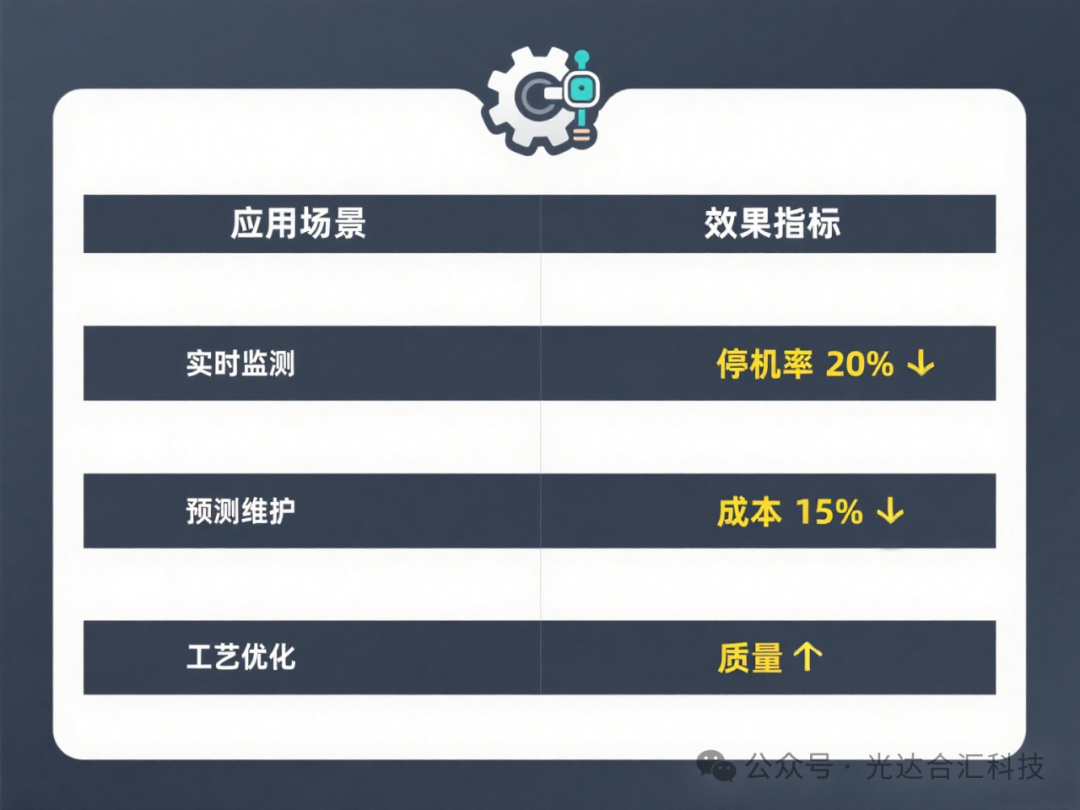
In the manufacturing industry, IoT sensors collect key data such as equipment operating parameters, material flow, and product quality in real-time, and this data is transmitted to the digital twin system to construct a virtual model consistent with the production line.
Based on the virtual model, enterprises can:
• Diagnose equipment issues in advance: When a device’s temperature is abnormal, the model will show it immediately, allowing enterprises to perform maintenance in advance and avoid production stoppage risks.
• Optimize process flows: By simulating different production parameters, the optimal solution can be found, shortening cycles, reducing energy consumption, and improving product consistency.
Case Study: A certain automotive manufacturing enterprise introduced this integrated application and conducted virtual optimization of the assembly process, resulting in a 20% reduction in production cycle, a 15% decrease in production costs, and a significant improvement in product qualification rates.
3. Cities and Water Management: A Model of Smart Governance
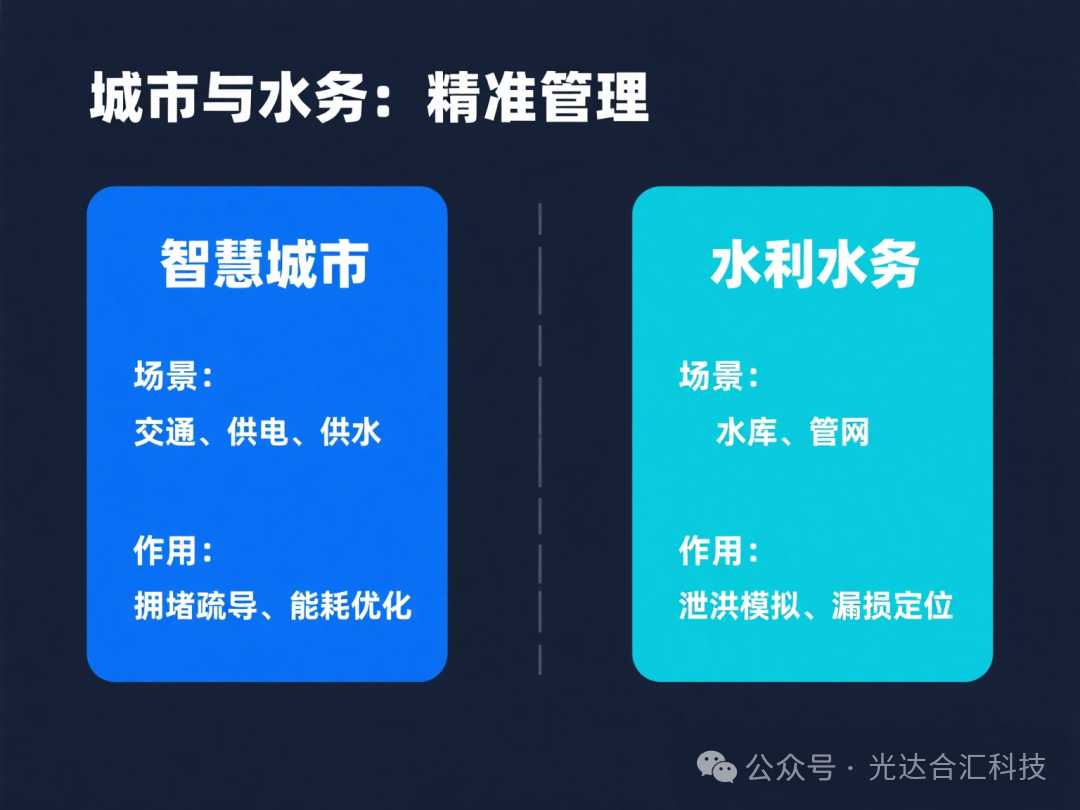
Smart Cities
In urban governance, IoT devices are deployed in transportation, water supply, and electricity infrastructure to collect data on traffic flow, water quality, water pressure, and power load in real-time. Based on this data, digital twins construct a virtual model of the city, allowing managers to grasp the operational status of the city in real-time.
• In the event of traffic congestion, the model can simulate diversion plans and achieve rapid guidance through traffic light scheduling.
• When a leak occurs in the water supply network, it can accurately locate the fault point, significantly reducing repair time.
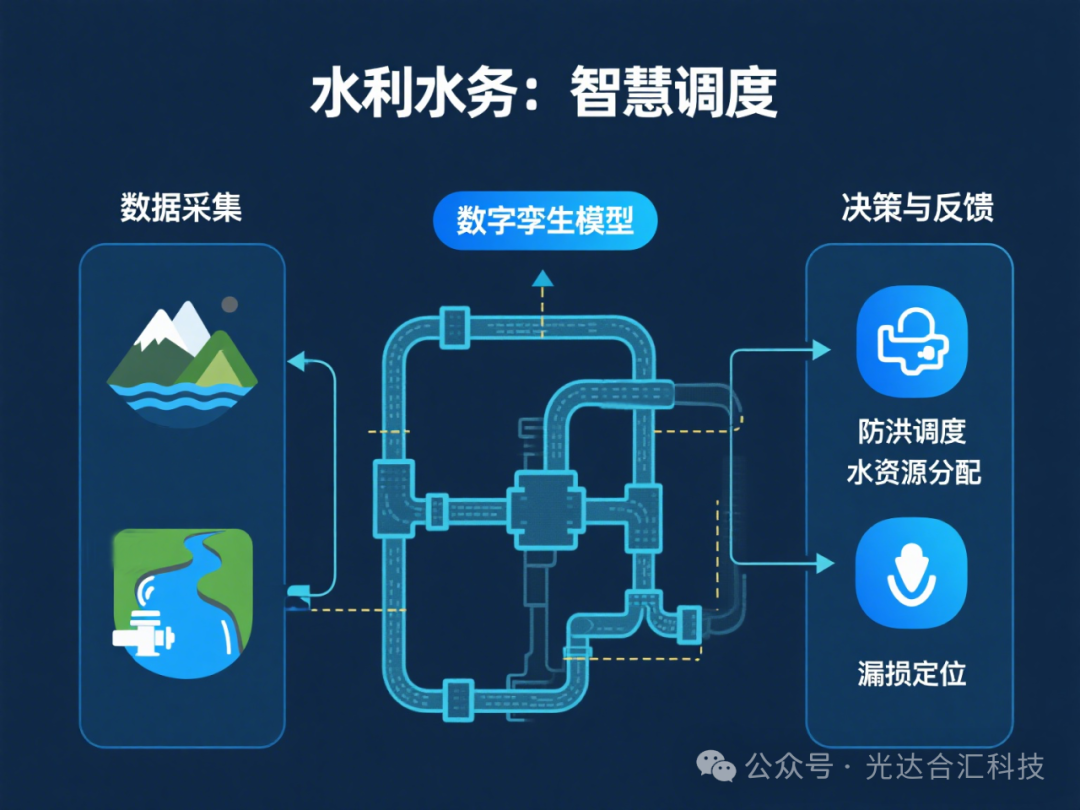
Water Resources Management
In the water management sector, sensors cover reservoirs, rivers, and pipelines, monitoring water levels, flow rates, pressure, and water quality in real-time, and digital twins thus construct a virtual water management network.
• In flood control scheduling, the model can simulate different flood discharge plans based on real-time water levels and rainfall forecasts, helping to formulate the best strategy in advance.
• In water supply allocation, it can optimize resource distribution based on regional demand and pipeline status, achieving efficient use of water resources.
• In pipeline maintenance, the model quickly locates leaks through data linkage, reducing waste.
Case Study: A certain city water management group, after application, reduced pipeline leakage rate by 12%, significantly improved water resource utilization, and greatly enhanced the stability of water supply services.
The deep integration of IoT and digital twins is becoming a “catalyst” for enterprises’ digital transformation. They help enterprises improve quality and efficiency, and also promote more scientific and efficient urban and water governance. In the future, as technologies such as sensors, edge computing, and AI continue to mature, the value of integrated applications will be further amplified.
For enterprises, actively embracing IoT and digital twins is essential to make data the “fuel” and models the “engine”, steering towards a smarter and more efficient new future in the journey of digital transformation.

Like
Collect
Share