
Introduction to Solar Panel Technology for Zephyr High-Altitude Platforms
Yuanwang Think Tank Open Source Intelligence Center Translated
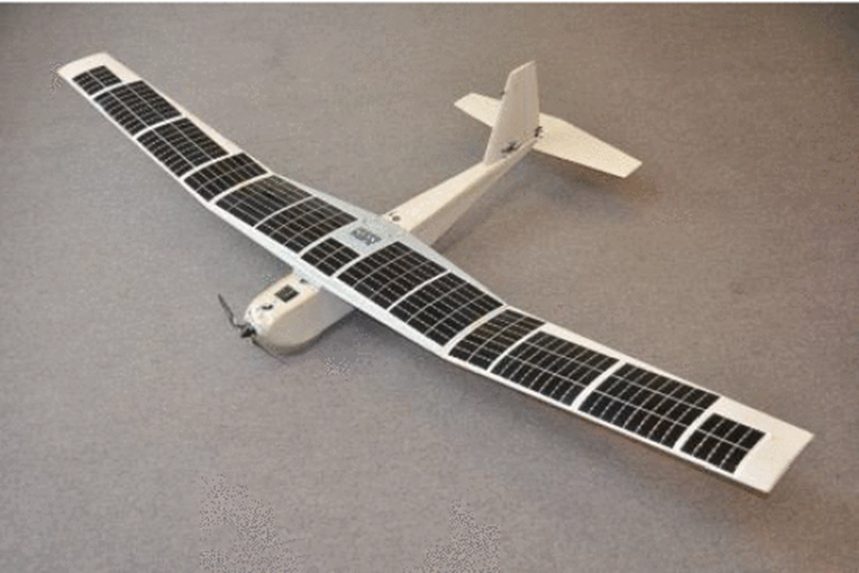 Equipped with MicroLink solar panels, the Puma experimental droneThe solar panel technology used by the Zephyr high-altitude platform can be traced back to related reports from 2018. This platform is equipped with lightweight, flexible solar cells developed by MicroLink, based on the Epitaxial Lift-Off (ELO) process, featuring Inverted Metamorphic Multi-junction (IMM) technology. This technology combines high efficiency with low weight, significantly enhancing system performance, with a specific power (power-to-weight ratio) exceeding 1500 W/kg and area power exceeding 350 W/m². In the initial flight tests, the Zephyr platform achieved an outstanding performance of continuous flight for over 25 days using this solar cell system.The development of MicroLink’s solar panels was funded by the Office of Naval Research (ONR), the Naval Air Warfare Center, NASA, and the Air Force Research Laboratory (AFRL) Space Vehicles Directorate. Ultimately, patents were granted in 2017 for “High-Efficiency, Lightweight Solar Panels” (US010214295B2) and “Integrating High-Efficiency, Lightweight Solar Panels into Drones to Enhance Endurance” (US009650148B2), with a paper published in 2018 titled “High-Efficiency, Lightweight, Flexible Solar Panels with Extremely High Solar Flight Specific Power” (DOI:10.1109/PVSC.2018.8548295).
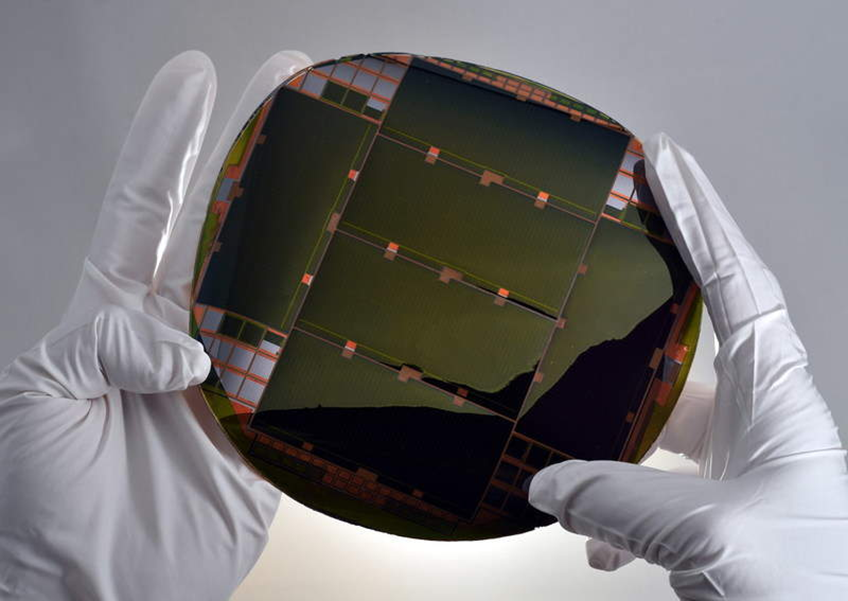 MicroLink’s ELO-based IMM solar cells
Design Features
 MicroLink’s solar cell thin film structure is shown in the figure below. This solar thin film consists of a set of ELO solar cells sandwiched between a topsheet made of polymer film and a backsheet. The topsheet covers the top surface of multiple solar cells, protecting them from environmental factors (such as moisture, dust, mechanical damage, etc.) while maintaining optical transparency to allow light to enter the solar cells.
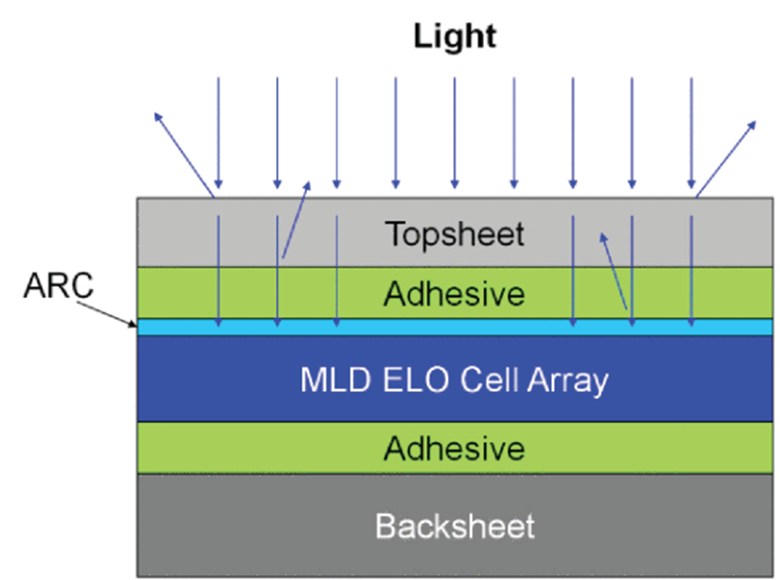 To maximize the efficiency and power generation of the solar thin film, MicroLink optimized the following three aspects: the ELO solar cell structure, the anti-reflective coating (ARC) of the ELO cell array, and the appropriate topsheet material. The ELO solar cell structure of the solar thin film is an inverted metamorphic multi-junction (IMM) design, as shown in the figure below. Several improvements were made in optimizing this cell structure, including top tunnel junctions, metamorphic buffer layers, GaInAs bottom sub-cells, and top electrode/lithography designs. The ARC coating is designed to maximize light transmittance from the selected polymer topsheet to the solar cells. MicroLink selected polymer films and adhesive layers with excellent light transmittance that perform well within the spectral response range of the IMM cell structure, producing and assembling solar cells with efficiencies exceeding 30% (AM0) and over 34% (AM1.5G), which were integrated into the solar thin film.
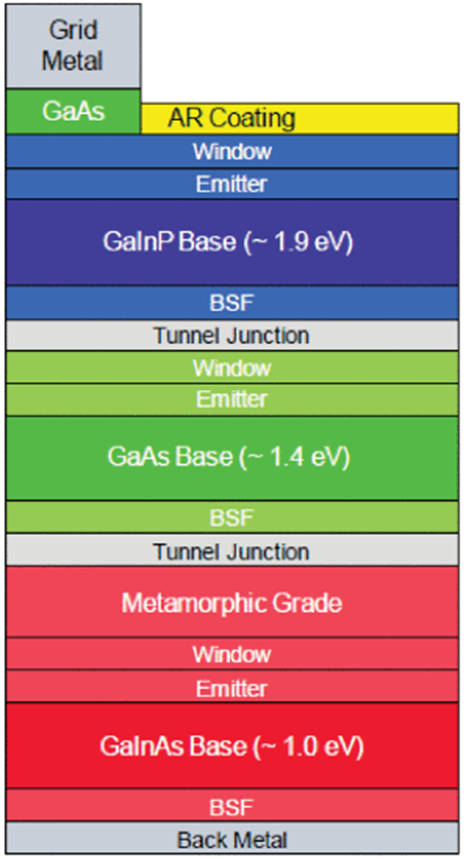 Cross-section of the 3-junction (3J) GaInP/GaAs/GaInAs ELO-IMM solar cell produced by MicroLinkThe Inverted Metamorphic Multi-junction (IMM) technology involves growing high-efficiency heterostructures on a temporary substrate during the solar cell manufacturing process, followed by bonding and lift-off processes to transfer them to the final lightweight polymer film carrier. This manufacturing method significantly reduces the total mass of the solar cells while maintaining high conversion efficiency.The Epitaxial Lift-Off (ELO) technology involves epitaxially growing efficient solar materials on a sacrificial layer, which are then detached from the original substrate through chemical or physical methods and reassembled onto a flexible substrate. This technology not only helps to reuse expensive crystalline substrate materials but also produces ultra-light and ultra-thin solar devices. To maximize the specific power of the solar thin film, it is essential to reduce its weight. The two main factors affecting the weight of the solar thin film are the weight of the solar cells themselves and the weight of the polymer film used. During the manufacturing process of ELO solar cells, a layer of metal is required to be coated on the back of the ELO wafer as mechanical support, as shown in the figure below. This back metal is a composite metal material, and its thickness is reduced to lower the final weight of the solar cells. This improvement has reduced the final weight of the cells to less than 125g/m², which is less than half of the earlier solar cells. In the packaging process of the solar thin film, MicroLink initially used Teflon topsheets and Tedlar backsheets, and later successfully reduced the overall weight by using thinner films and adhesive materials. Ultimately, the weight of the polymer laminated structure was also reduced to less than half of the original packaging structure.
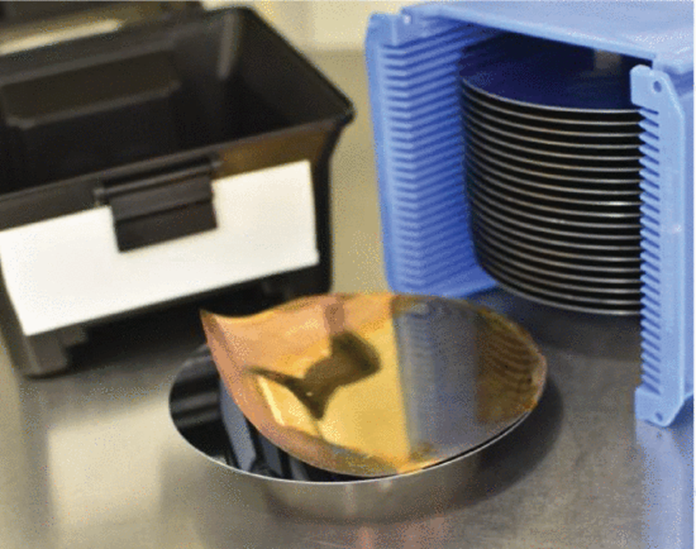 ELO wafer with back metalFor specific solar cells, their efficiency under one spectrum is usually different from that under another spectrum. The figure below illustrates the quantum efficiency (QE) spectra for the sub-cells of MicroLink’s three-junction inverted metamorphic (IMM) solar cells. This graph reflects the response capabilities of each sub-cell (such as GaInP, GaAs, Ge) to different spectral bands, indicating that the cell can efficiently cover a wide spectral range, enhancing overall photovoltaic conversion efficiency.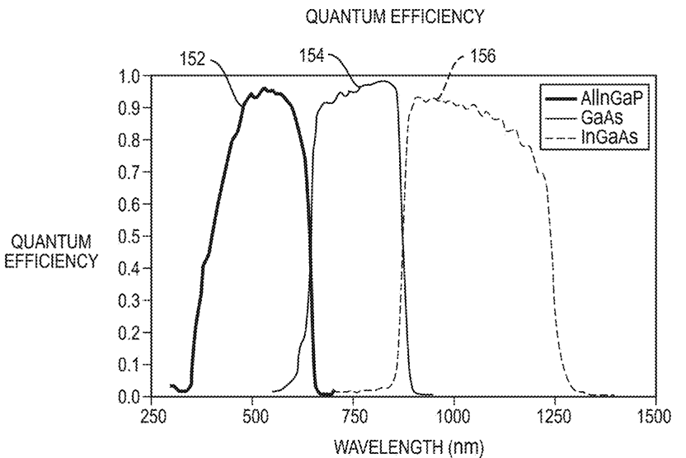
Performance Parameters
MicroLink solar cells have a specific power ranging from 1500 to 4500 W/kg under Air Mass 1.5 (AM1.5) illumination conditions, or from 1870 to 5680 W/kg under Air Mass 0 (AM0) conditions. This kit also includes a power regulation system configured to operate multiple solar cells within the desired power range and output power in a voltage form compatible with the drone’s electrical system.MicroLink has tested solar cells manufactured using inverted metamorphic technology and epitaxial lift-off processes, with results showing that each solar cell has a specific power of 2000-4500 W/kg under AM1.5 conditions and 2520-5680 W/kg under AM0 conditions. The power per unit area of each solar cell is 260-360 W/m² under AM1.5 conditions and 325-450 W/m² under AM0 conditions. The unit area mass of each solar cell ranges from 70 to 280 g/m².There are two installation methods for solar cells: one is to assemble multiple solar cells into a power kit, installed on a battery or fuel cell-powered drone. The specific power of the solar cells under AM1.5 conditions ranges from 1500 to 4500 W/kg, and from 1870 to 5680 W/kg under AM0 conditions. This kit also includes a power regulation system to ensure that multiple solar cells operate within the desired power range and output power in a voltage form compatible with the drone’s electrical system.The other method integrates multiple solar cells into a flexible solar thin film, as shown in the figure below. Tests have shown that the flexible solar thin film has a specific power of 800-2350 W/kg under AM1.5 illumination conditions, or 1020-3000 W/kg under AM0 conditions. The unit area mass of the flexible solar thin film is 120-570 g/m². MicroLink has tested this flexible solar cell film mounted on drones, providing an average power consumption reduction of 40%-99% during drone operation.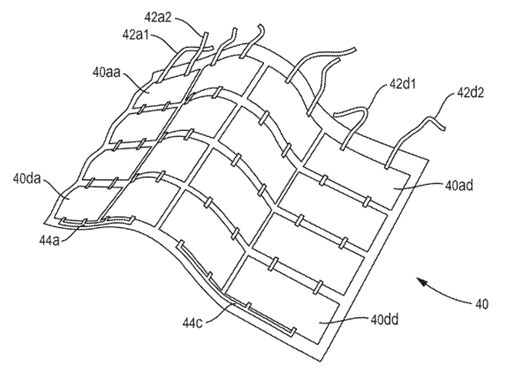
Performance Comparison
The figure below shows a performance comparison between various commercial solar cells and the ELO IMM three-junction solar cells manufactured by MicroLink. The mainstream commercial solar cells include: single-junction polycrystalline silicon solar cells, single-junction monocrystalline silicon solar cells, germanium-based three-junction gallium arsenide solar cells, germanium-based three-junction solar cells, and single-junction copper indium gallium selenide (CIGS) solar cells. Polycrystalline and monocrystalline silicon solar cells are rigid structures (i.e., not flexible). CIGS cells can be grown on glass, polymer, or metal sheets, providing flexibility, but their efficiency is generally lower than that of silicon-based or gallium arsenide-based cells. Gallium arsenide solar cells are typically grown on germanium substrates, which are rigid and brittle structures, but due to their high efficiency, they are widely used in space solar arrays.In three-junction cells, aluminum (Al) is an optional element, depending on the application scenario. For example, InGaP/GaAs/InGaAs type three-junction solar cells perform well under AM1.5 conditions, while under AM0 conditions, using AlInGaP/GaAs/InGaAs structures can better adapt to the high ultraviolet content of AM0 with aluminum. As shown in the figure below, the specific power of MicroLink’s ELO IMM three-junction solar cells is higher than that of the aforementioned commercial solar cells. The efficiency of MicroLink’s ELO IMM three-junction solar cells approaches 40%, while their area mass is far below that of rigid three-junction solar cells.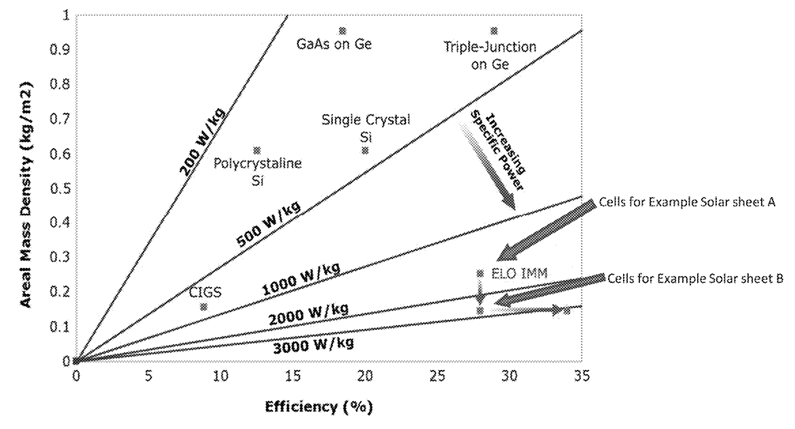
Drone Applications
MicroLink’s solar thin film is flexible, allowing it to bend and conform to the complex or curved shapes of drone components (such as wings, fuselage, tail, etc.), as shown in the figure below. The high specific power, low unit area mass, and flexibility of the flexible solar thin film make it an ideal integrated power solution for weight-constrained aerial platforms (such as HALE UAVs, airships, high-altitude balloons, etc.).The ELO IMM solar cells are bonded to a layer of flexible polyimide substrate using a non-permanent attachment method, forming solar sheets. This substrate has good mechanical flexibility, thermal stability, and dielectric properties, suitable for long-term high-altitude flight environments. Additionally, the solar cells are connected to the drone’s battery pack and power management system through conductive adhesives.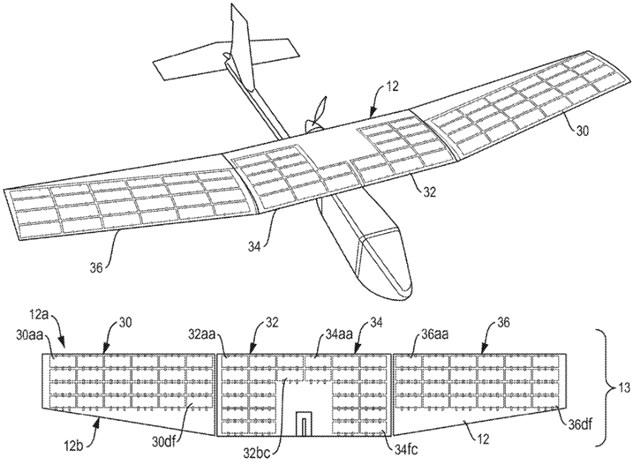 MicroLink enhances the efficiency of the cells under different lighting conditions by applying anti-reflective treatments or using nanostructures to improve incident light absorption. Furthermore, ultra-thin metal films or transparent conductive oxides (such as ITO) are used in the electrode layers of the solar cells to further reduce weight.In addition to optimizing power output, MicroLink has aerodynamically integrated the solar sheets. To avoid additional air resistance or turbulence caused by the solar sheets, the installation process employs vacuum suction and thermal adhesive lamination techniques, ensuring that the sheets adhere closely to the wing surfaces without bubbles, wrinkles, or edges lifting. At the same time, a nano-scale anti-reflective coating is applied to the surface of the sheets to enhance sunlight transmittance and reduce losses.MicroLink has also designed a Dynamic Power Management System (DPMS) that adjusts the output of each sheet and system load distribution in real-time based on parameters such as solar irradiance, flight altitude, and attitude angle, ensuring optimal energy conversion and usage efficiency for the drone under different flight conditions.The solar thin film is designed with a modular structure, making it easy to replace, maintain, or flexibly configure according to mission needs. For example, it can be designed to be fixed to the drone’s surface using magnetic attraction, adhesive, buckles, or removable bonding methods, allowing for quick integration or disassembly.This high specific power solar thin film not only extends the drone’s endurance but also powers other devices on board (such as sensors, communication modules, data processing units). Additionally, to ensure endurance during nighttime or adverse weather conditions, the drone is equipped with a set of high-energy density lithium-sulfur (Li-S) batteries or solid-state lithium batteries as auxiliary power sources, with solar power prioritizing flight during the day and storing excess energy in the batteries for nighttime use. This hybrid power supply system of solar energy and batteries greatly extends the drone’s hovering time, enhancing the platform’s autonomy and mission endurance, especially suitable for military reconnaissance, border surveillance, environmental monitoring, emergency communication, disaster assessment, and other mission scenarios. This manufacturing method and system design lay the foundation for the next generation of lightweight, efficient energy systems, with broad prospects for defense and civilian applications.