Definition of IPC: An industrial control computer (IPC) is designed specifically for industrial environments, and is also known as an industrial computer or industry computer in modern terminology. The English abbreviation is IPC, which stands for Industrial Personal Computer. Simply put, an IPC is a computer designed for industrial sites, used to monitor and control machines, production processes, data parameters, and more during production. The requirements for scalability are also very high, and the design of the interfaces must meet the needs of specific external devices, which is why most IPCs need to be customized to meet demands.
-
Introduction to IPC Features and Advantages/Disadvantages
In the early 1980s, the American AD company launched a similar IPC called the MAC-150, followed by IBM’s introduction of the IBM7532 industrial personal computer. Due to the reliable performance, rich software, and low price of IPCs, they quickly gained prominence in the field of industrial control and have become widely used. The other components of IPCs are generally compatible with standard PCs, including CPU, memory, graphics card, hard drive, floppy drive, keyboard, mouse, optical drive, monitor, etc. Applicable fields: Currently, IPCs are widely used in various aspects of industry and daily life. For example: control sites, toll collection on bridges, medical applications, environmental protection, communications, intelligent traffic, monitoring, voice systems, queue machines, POS systems, CNC machine tools, fuel dispensers, finance, petrochemicals, geophysical exploration, portable outdoor applications, environmental protection, military industry, electricity, railways, highways, aerospace, subways, etc.
Main Features
Simply put, an IPC is a computer designed specifically for industrial environments, which typically have characteristics such as strong vibrations, high dust levels, and significant electromagnetic interference, and generally operate continuously without breaks throughout the year. Therefore, compared to ordinary computers, IPCs must possess the following features:
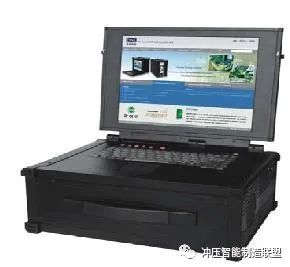 IPC
IPC
1. The chassis is made of steel, providing high resistance to electromagnetic interference, dust, and shock.
2. The chassis contains a dedicated motherboard with PCI and ISA slots.
3. The chassis has a specialized power supply with strong anti-interference capabilities.
4. It must have the capability to operate continuously for long periods.
5. Generally, a standard chassis that is easy to install is used (4U standard chassis is common).
Note: Apart from the above characteristics, the rest are basically the same. Additionally, due to these specialized features, IPCs of the same level are generally more expensive than ordinary computers, but the price difference is usually not too much.
Despite the unique advantages of IPCs compared to ordinary commercial computers, their disadvantages are also quite apparent—poor data processing capabilities, specifically:
1. Limited hard drive capacity;
2. Low data security;
3. Limited storage options;
4. Higher price.
Currently, the disadvantages of IPCs: Despite their unique advantages over ordinary commercial computers, their disadvantages are also very significant—poor data processing capabilities, specifically:
1) Limited hard drive capacity; 2) Low data security; 3) Limited storage options; 4) Higher price. The difference from ordinary computers: IPCs are also computers, but they are more stable than ordinary computers, with better moisture resistance, shock resistance, and magnetic resistance; they can run continuously for twenty-four hours without issues. However, it also depends on the configuration; low-end configurations cannot handle large games.
IPCs do not come with monitors and can be used with monitors. Using them at home would be a waste; they are generally used in harsh environments or places with high performance requirements.
First, functionality: The IPC motherboard is designed for specific needs and functions, while ordinary motherboards cater to general needs with multiple functions; second, stability: IPCs emphasize super stability and faultlessness; ordinary motherboards focus on flashy features and performance—how long they can run is a matter of luck; third, cooling solutions: IPC motherboards prioritize cooling efficiency, while ordinary motherboards focus more on appearance; fourth, IPCs are designed for specific needs, so they are produced in smaller quantities and are more expensive, while ordinary motherboards often compete on price.
2 Software Systems
Edit
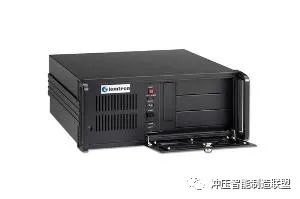 IPCThe industrial control software system mainly includes three parts: system software, industrial control application software, and application software development environments. System software is the core foundation of the other two, thus affecting the quality of system software design. Industrial control application software is generated based on the user’s industrial control and management needs, which makes it specialized. From the development history and current status of industrial control software systems, they should possess five main characteristics:
1. Openness. This is a crucial indicator in modern control systems and engineering design. Openness facilitates interconnection and compatibility among various systems, aiding in the design, establishment, and application of integrated industrial concepts. To ensure good openness in system tools, open architecture, industrial software, and software environments must be selected, which has garnered significant attention from professionals in the industrial control field.
2. Real-time capability. One of the main characteristics of industrial production processes is real-time capability, thus requiring industrial control software systems to have strong real-time capabilities.
3. Network integration. This is driven by trends in industrial process control and management.
4. User-friendly interface. This refers not only to the convenience of menu-driven operations but also includes design and application aspects of the human-computer interface.
5. Multi-tasking and multi-threading. Many modern control software systems face industrial objects that are no longer single-task lines but rather complex multi-task systems, so effectively controlling and managing such systems remains a primary research focus in industrial control software. To meet these requirements, industrial control software, especially the underlying industrial control system software, must possess these characteristics, such as research and application of multi-task real-time operating systems.
From the basic composition of industrial control software, it can be roughly divided into three layers: real-time operating system layer, control management layer, and application layer. The real-time operating system layer is the foundation of the other layers.
3 Main Structure
Edit
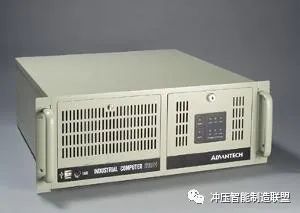 IPC1. Full Steel Chassis
The full steel chassis of IPCs is designed according to standards, providing resistance to shock, vibration, and electromagnetic interference, with the ability to install passive backplanes compatible with PC-bus.
IPC (Industry Personal Computer) is also known as a digital video recorder (DVR). IPCs are used in harsh environments and have strict requirements for maintainability, heat dissipation, dust resistance, product lifespan, and even size. Therefore, when designing and selecting an IPC platform, more consideration is given to the structural design before performance aspects. For example, Zhongchang’s IPCs lack these protections.
Classification of IPC Chassis:
(1) Heights are generally divided into 1U (44MM*430MM*XX), 2U (88*430*XX), 3U, 4U (176MM*430MM*XX), 5U, 6U, 7U, 8U, etc. A height of 1U is 44MM, and other heights follow accordingly;
(2) Length: There are two international standard lengths of 450MM and 505MM, and other lengths can be expanded based on customer requirements, such as 480MM, 500MM, 520MM, 530MM, 600MM, etc.; among these, chassis sizes of 450MM to 520MM account for over 90% of market demand. The purpose of longer chassis is primarily threefold: to install dual CPU motherboards of 12” * 13”, which require a length of 520MM; to install long industrial CPU cards or 300MM long video cards, which require sufficient expansion space; and finally, to consider heat dissipation, as some monitoring users need to install multiple video cards and hard drives, such as 64 channels, 128 channels, etc., which require good heat dissipation.
(3) Horizontal and wall-mounted types
Wall-mounted: Additionally, some equipment manufacturers need to place the control center (IPC) within their devices. Therefore, there are strict size requirements for IPCs. Traditional rack-mounted 19-inch chassis sizes generally cannot meet these requirements, so wall-mounted chassis have been introduced for such customer needs. For example, a certain brand’s IPC-6606/6608 wall-mounted chassis series. These chassis are small in size and designed for internal use within equipment, focusing on heat dissipation and expansion capabilities.
Internal Structure of IPC Chassis:
Hard drive racks and optical drive racks: Hard drive racks are generally divided into two types: detachable and pressure card types. High-quality chassis generally have metal spring shockproof features; the number of hard drives can typically range from 4 to 15; the backplane: the specifications of the backplane vary; mainly based on the specifications of the motherboard. Ordinary motherboards are generally installable; among these, chassis lengths below 520MM cannot accommodate 12*13 dual CPU motherboards, requiring a chassis length of 520MM for installation.
Pressure card strips: Mainly serve a fixing function. When installing long video cards for security monitoring or industrial CPU long cards, it is necessary to secure the long cards to prevent shaking and instability during use.
Backplane expansion: Available in two types of 7 slots or 14 slots; the 14-slot backplane is mainly used for installing multiple video cards. For some large monitoring systems requiring 64 or 128 channels, the 14-slot backplane must be replaced.
Heat conduction of IPC chassis: The rationality of the heat dissipation structure is crucial for the stable operation of the computer.
Shock resistance of IPC chassis: During operation, various components such as optical drives, hard drives, and multiple fans inside the chassis generate vibrations at high speeds, which can easily lead to incorrect reading of discs and damage to hard drive tracks, resulting in data loss. Therefore, the shock resistance of the chassis is also a key structural design consideration.
Electromagnetic shielding of IPC chassis: When the host operates, components such as the motherboard, CPU, memory, and various boards generate a large amount of electromagnetic radiation. Without protection, it can also cause harm to the human body. At this point, the chassis becomes an important defense against electromagnetic radiation, protecting health. Well-shielded chassis can effectively block external radiation interference, ensuring that internal components are not affected by external radiation. To enhance heat dissipation, necessary parts of the chassis are perforated, including side panel holes, intake holes for exhaust fans, and exhaust holes for exhaust fans, etc. Therefore, the shape of the holes must meet the technical requirements for blocking radiation. The holes in the chassis should be kept as small as possible, and strong radiation-blocking round holes should be used wherever possible. Additionally, attention should be paid to the electromagnetic shielding of various indicator lights and switch connections. Longer connection wires need to be designed as twisted pairs, and the exposed soldered metal parts at both ends must be wrapped in rubber sleeves to prevent electromagnetic radiation from the electrical circuits inside the chassis.
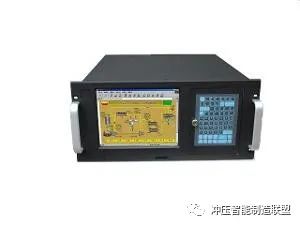 IPC2. Passive Backplane
The slots of the passive backplane consist of bus expansion slots. The bus expansion slots can be selected according to the user’s actual application, including expansion ISA bus, PCI bus, PCI-E bus, and multiple slots of PCIMG bus. The number and position of expansion slots can be selected based on needs, but various buses have requirements for combination based on different PCIMG bus specification versions. For example, the PCIMG1.3 version bus does not provide ISA bus support. This board has a four-layer structure, with the middle two layers being the ground and power layers, which can reduce mutual interference of logical signals on the board and lower power impedance. The backplane can accommodate various cards, including CPU cards, display cards, control cards, I/O cards, etc.
3. Industrial Power Supply
In the early days, IPCs primarily used AT switch power supplies based on Intel Pentium processors; currently, like PCs, they mainly use ATX power supplies, with an average mean time between failures of 250,000 hours.
4. CPU Card
The CPU cards of IPCs come in various types, categorized by size into long cards and half-length cards, mostly using desktop system processors, such as earlier 386, 486, 586, PIII, and currently mainstream P4, Core Duo processors, which users can select based on their needs. Their main characteristics are: operating temperature of 0-60°C; equipped with hardware watchdog timers; some low-power CPU cards use embedded series CPUs.
5. Other Accessories
Other accessories of IPCs are generally compatible with PCs, including CPUs, memory, graphics cards, hard drives, floppy drives, keyboards, mice, optical drives, monitors, etc.
4Main Classifications
Currently, the main categories of IPCs include: IPC (PC bus industrial computer), PLC (Programmable Logic Controller), DCS (Distributed Control System), FCS (Fieldbus Control System), and CNC (Computer Numerical Control) systems.
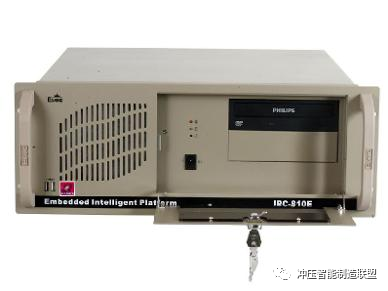 IPC1. IPC
IPC refers to industrial computers based on the PC bus. According to IPC statistics from 2000, PCs now account for over 95% of general-purpose computers due to their low price, high quality, large production volume, and rich software/hardware resources, which have been familiar and recognized by many technicians, forming the basis for the popularity of industrial computers. Its main components include an industrial chassis, passive backplane, and various cards that can be inserted, such as CPU cards and I/O cards. The design incorporates full steel casings, card pressure filtering nets, dual positive pressure fans, and EMC (electromagnetic compatibility) technology to address issues of electromagnetic interference, vibration, dust, and extreme temperatures in industrial environments.
IPC has the following characteristics:
Reliability: Industrial PCs are capable of operating in dust, smoke, extreme temperatures, humidity, vibration, and corrosion, with rapid diagnostics and maintainability, typically having a mean time to repair (MTTR) of 5 minutes and a mean time to failure (MTTF) exceeding 100,000 hours, while ordinary PCs have an MTTF of only 10,000 to 15,000 hours.
Real-time capability: Industrial PCs perform real-time online monitoring and control of industrial production processes, providing rapid responses to changes in working conditions, timely collection, and output adjustments (watchdog functionality that ordinary PCs do not possess), ensuring system normal operation.
Expandability: Industrial PCs utilize a backplane + CPU card structure, allowing for strong input/output functionality, with the capacity to expand up to 20 cards, connecting with various peripherals and boards in industrial environments, such as control devices, video monitoring systems, vehicle detectors, etc., to complete various tasks.
Compatibility: They can utilize ISA, PCI, and PICMG resources simultaneously and support various operating systems, multiple assembly languages, and multi-task operating systems.
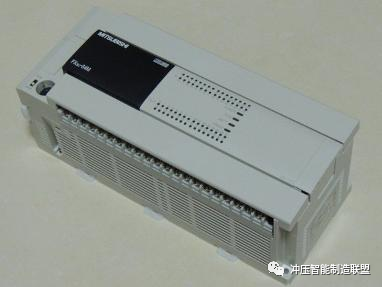 Programmable Logic Controller (PLC)2. Programmable Logic Controller (PLC)
PLC stands for Programmable Logic Controller, which is designed for application in industrial environments. It is a digital operation electronic system that uses a programmable memory to store instructions for executing logic operations, sequential control, timing, counting, and arithmetic operations, controlling various types of machinery and production processes through digital or analog inputs and outputs.
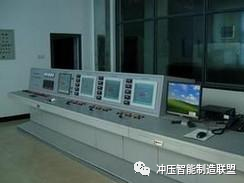 Distributed Control System (DCS)3. Distributed Control System (DCS)
The programmable controller is a new type of universal automatic control device developed by combining computer technology with automation control technology, emerging as a replacement for traditional relays. With the rapid development of microelectronics and computer technology, programmable controllers have increasingly adopted computer functionalities, enabling not only logical control but also data processing, communication, and networking capabilities. Due to its ability to change control processes through software, and its compact size, ease of assembly and maintenance, simple programming, high reliability, and strong anti-interference capabilities, it has been widely applied in various fields of industrial control, greatly advancing the integration of machinery and electronics.
DCS stands for Distributed Control System. It is a high-performance, high-quality, low-cost, and flexible configuration distributed control system series that can form various independent control systems, distributed control systems (DCS), monitoring, and data acquisition systems (SCADA), meeting the needs of various industrial fields for process control and information management. The system’s modular design, reasonable software and hardware function configuration, and easy expandability can be widely used in various large, medium, and small power plants for decentralized control, automation system renovation in power generation plants, and process control in industries such as steel, petrochemicals, papermaking, and cement.
4. Fieldbus Control System (FCS)
FCS stands for Fieldbus Control System. It is a fully digital serial, bidirectional communication system. Measurement and control devices within the system, such as sensors, actuators, and controllers, can connect, monitor, and control each other. In the hierarchical structure of factory networks, it serves as a local network for process control (such as PLC, LC, etc.) and intelligent instruments (such as frequency converters, valves, barcode readers, etc.), while also possessing embedded functions for distributed control applications on the network. Due to its vast application prospects, many capable foreign manufacturers are competing to invest in product development. Currently, there are over forty known types of fieldbus systems internationally, with typical examples including FF, Profibus, LONworks, CAN, HART, and CC-LINK.
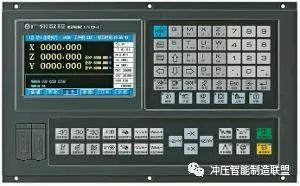 Computer Numerical Control (CNC)5. Computer Numerical Control (CNC)
CNC stands for Computer Numerical Control. It is a control system that uses microprocessors or dedicated microcomputers, implementing control logic through software stored in memory to achieve partial or complete CNC functions, interfacing with peripheral devices, known as computer numerical control, abbreviated as CNC system. CNC machine tools represent a new technology that penetrates traditional mechanical manufacturing industries, forming mechatronic products; its technological scope covers many areas:
1) Mechanical manufacturing technology;
2) Information processing, processing, transmission technology;
3) Automatic control technology;
4) Servo drive technology;
5) Sensor technology;
6) Software technology, etc.
5Applicable Fields
IPCs have been widely used in various aspects of industry and daily life.
For example: control sites, toll collection systems for bridges, medical instruments, environmental monitoring, communication assurance, intelligent traffic control systems, building security monitoring, voice call centers, queue machines, POS cash registers, CNC machine tools, fuel dispensers, financial information processing, petrochemical data collection and processing, geophysical exploration, portable outdoor operations, environmental protection, military applications, electricity, railways, highways, aerospace, subways, smart buildings, outdoor advertising, etc.
Precision stamping straightening 8MM production line video
Precision stamping straightening 15MM production line video
Disclaimer: This article is a repost from the internet, and the copyright belongs to the original author. However, due to numerous reposts, it may not be possible to identify the true original author, so only the source of the repost is indicated. If there are any copyright issues, please contact us, and we will negotiate the copyright issue or delete the content at the first opportunity! The content reflects the author’s personal views and does not represent the views of this public account or its authenticity.
Friendly reminder: Long press the following public account QR code, then press “Recognize the QR code in the image”, and then click “Follow” to subscribe.