
Introduction
Vascular calcification is a common pathological manifestation associated with atherosclerosis, hypertension, diabetic vascular lesions, vascular injury, chronic kidney disease, and aging.
It primarily manifests as increased stiffness of the vascular wall, decreased compliance, and can easily lead to myocardial ischemia, left ventricular hypertrophy, and heart failure, triggering thrombosis and plaque rupture, making it one of the significant factors for the high incidence and mortality of cardiovascular and cerebrovascular diseases; it is also an important molecular marker for cardiovascular events, strokes, and peripheral vascular diseases associated with atherosclerosis.
Vascular calcification refers to the deposition of calcium in the vascular wall, leading to hardening and reduced compliance of the vessel wall. According to the “Chinese Expert Consensus on the Diagnosis and Treatment of Coronary Artery Calcification (2021 Edition)”, coronary artery calcification increases with age. Additionally, calcification of peripheral arteries is also a common issue. Whether in coronary or peripheral arteries, calcification presents a significant challenge in interventional treatment.
Overview of Shockwave Balloon Catheter
Intravascular lithotripsy (IVL) is a system innovatively developed based on the concept of treating urinary stones, which differs from traditional calcification treatment techniques. It primarily provides unfocused, circumferential, and pulsed mechanical energy to the lesion during low-pressure balloon expansion, effectively and safely disrupting superficial and deep calcifications, causing multiple small fractures within the calcified lesions, loosening the calcified plaques without affecting the integrity of the vascular endothelium, achieving the effect of modifying calcified plaques, expanding the lumen area, and improving vascular compliance, thus providing adequate conditions for subsequent stent placement and expansion.Since the energy from the shockwave only acts on the hard calcified parts and does not damage the healthy soft vascular wall, it poses minimal harm to healthy vessels, ensuring high safety.With the continuous development of percutaneous coronary intervention (PCI), interventional treatments increasingly involve more complex lesions, and coronary artery calcification often complicates various complex lesions, increasing the difficulty of PCI, which is one of the main challenges faced by cardiovascular interventional physicians, especially in cases of severe calcification or twisted, angulated, and diffuse severe calcification, where the incidence of immediate complications and early and late major adverse cardiovascular events significantly increases.Depending on the severity of calcification, options include non-compliant balloons, scoring balloons, rotational atherectomy balloons, laser ablation catheters, and shockwave lithotripsy systems.Shockwave lithotripsy technology is an innovative technique for addressing severe calcification, being safer, more effective, and simpler than other techniques.
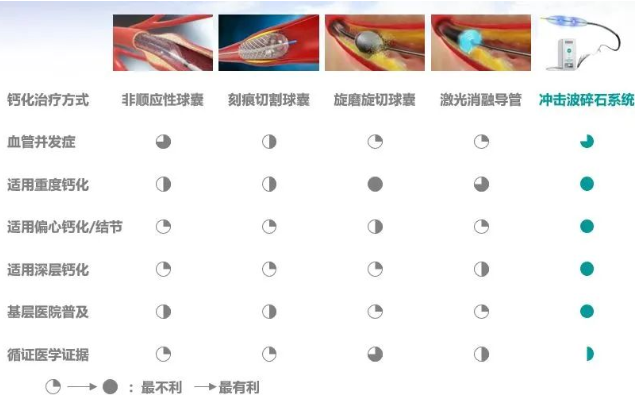
Taking the well-known product ShockWave in the field of intravascular lithotripsy as an example, I will briefly explain the working principle of the shockwave balloon catheter:
The Shockwave intravascular shockwave technology is inspired by extracorporeal shockwave treatment for kidney stones, delivering pulsed acoustic pressure waves to the calcified areas via a balloon catheter, “shaking loose” the calcified plaques, restoring vascular elasticity and blood flow, and remodeling the diseased vessels while avoiding damage to the vascular endothelium.The product consists of a balloon, catheter shaft, catheter hub, filling port, guidewire exit, connector, and pulse generator.
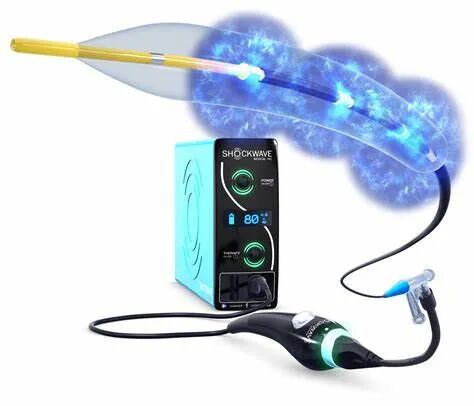
The product is improved based on the principle of extracorporeal lithotripsy shockwaves, changing focused high-intensity energy to diffuse low-intensity energy, and introducing it into peripheral vessels via an intravascular catheter to relieve calcified lesions, thereby alleviating the degree of vascular stenosis or facilitating subsequent treatment.
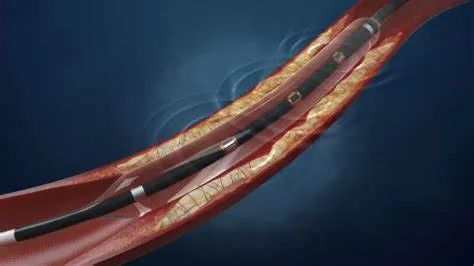
The product catheter contains several electromechanical energy wave sources (pulse generators), which convert electrical energy transmitted from the generator into mechanical energy to output shockwave energy. The energy wave sources are externally connected to a balloon, which, when used with a balloon inflation device, can be used to dilate narrowed vascular areas. The balloon can be filled with a mixture of saline/contrast agent to transmit shockwave energy.For Shockwave, the structure and working principle of related products in the intravascular shockwave technology can be referenced in the following video:
Intense Market Competition
It is reported that the IVL product from the American company ShockWave will be fully commercialized in China in 2023. Currently, more than ten domestic companies are developing similar products. Zhonghui Medical has obtained the first domestic device certification, and other domestic devices are expected to be certified successively.
Peijia Medical
In addition to being used for coronary and peripheral calcified lesions, shockwave technology can also be applied tovalvular calcification, with Peijia Medical being a pioneer in this niche market. Peijia Medical’s TaurusWave shockwave valve treatment system is a non-implantable shockwave balloon designed for treating calcific aortic stenosis, being the first to introduce shockwave technology into the treatment of calcific stenosis of heart valves. By using the balloon to shatter calcified structures or reconstruct calcified areas, it improves the success rate of valve implantation, with three completed clinical cases showing good safety and therapeutic effects.
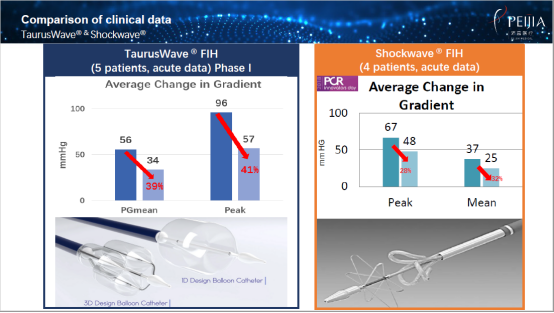 Comparison of Clinical Data between TaurusWave® and Shockwave®
LePu Medical
LePu Medical’s Angiocrack™ pulse acoustic balloon system targets peripheral, especially lower limb arterial lesions, and completed its first case of severe calcified lesion recanalization in the popliteal artery in February 2022, successfully performed by Professor Li Xuan’s team from Peking University Third Hospital using LePu Medical’s self-developed Angiocrack™ pulse acoustic balloon system.
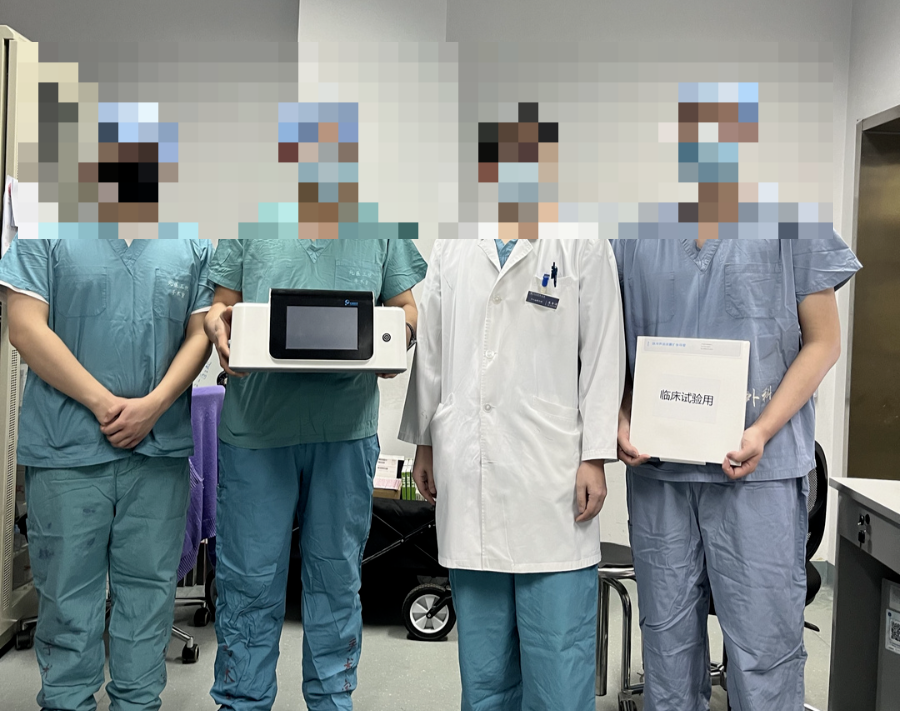
First Clinical Application of Angiocrack™ Pulse Acoustic Balloon System in China
Zhonghui Medical
The C-Wave peripheral shockwave catheter system developed by Zhonghui Medical is also suitable for moderate to severe calcified lesions in the peripheral vascular system, consisting of a shockwave catheter, tail wire, and shockwave generator, effectively improving the lumen preparation effect for calcified lesions.
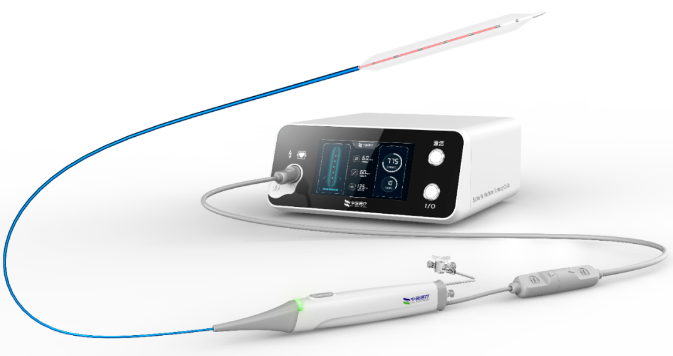
C-Wave® Peripheral Shockwave System
Minimally Invasive Coronary
The Minimally Invasive Melody™ coronary shockwave balloon catheter system is a product for treating calcified lesions, capable of delivering unfocused, pulsed shockwaves to calcified plaques during low-pressure balloon expansion, effectively fracturing deep calcifications without damaging the vascular endothelium, improving vascular compliance, and facilitating subsequent device passage and stent expansion. To further enhance safety, this device features a new pulse electrode design that reduces the outer diameter and employs a multi-layer puncture-resistant balloon, with a unique pressure detection function to improve energy transfer efficiency, and a variety of models to meet diverse clinical needs and scenarios.
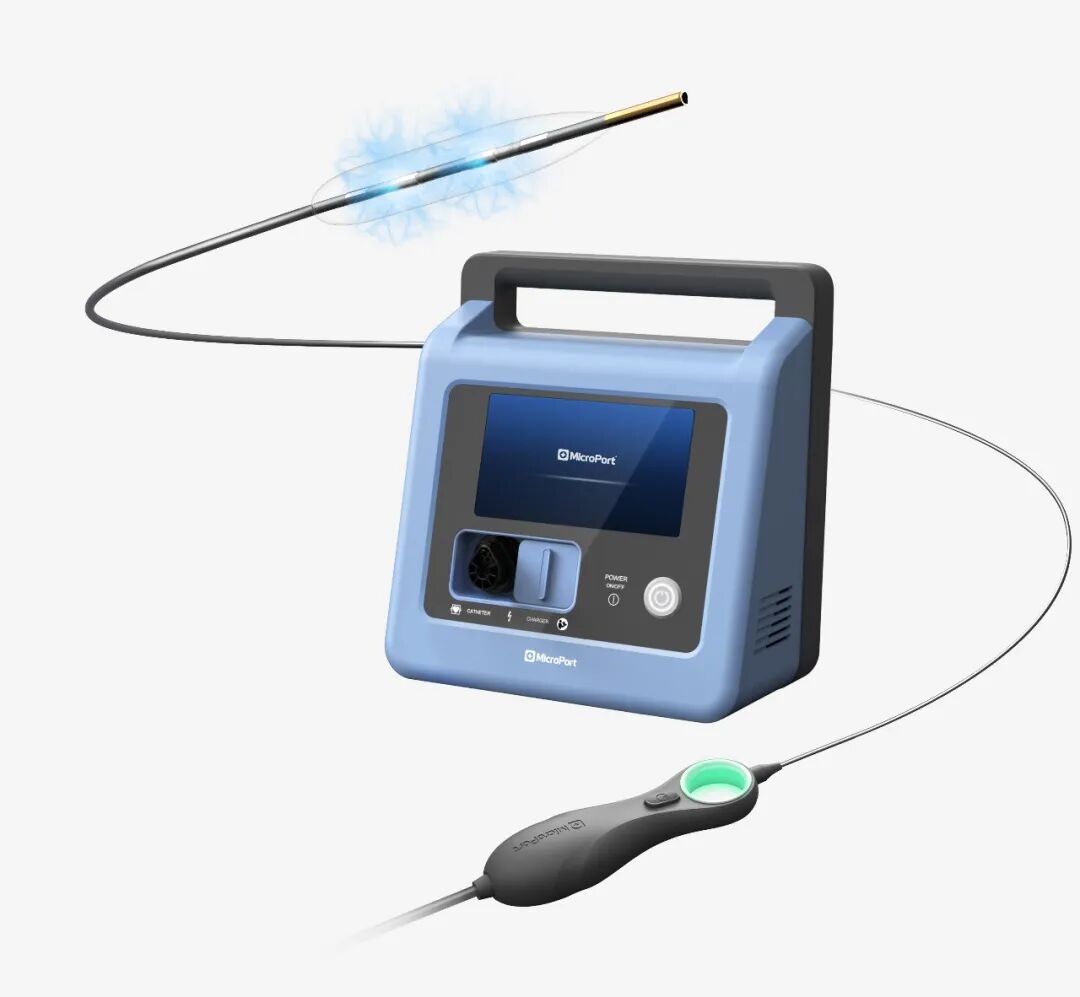
Minimally Invasive Melody™ Coronary Shockwave Balloon Catheter System
Puchuang Medical
Puchuang Medical has launched the Sonico intravascular electromechanical shockwave balloon catheter system for treating arterial vascular calcification, utilizing acoustic energy to directly target calcified plaques within the intima and media, emitting shockwave energy uniformly in a 360-degree manner to shatter annular calcified plaques and restore vascular compliance.
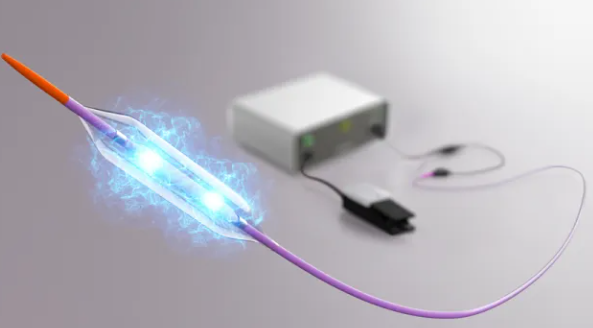
Sonico Electromechanical Shockwave Balloon Catheter System
Saihe Medical
Saihe Medical’s self-developed coronary shockwave lithotripsy system consists of the “LiqMagic C14 Shockwave Coronary Balloon Catheter” and the “ISL100 Pro In Vivo Shockwave Therapy Device” (as shown below), utilizing an innovative vascular calcification plaque fracturing technology that integrates traditional electromechanical lithotripsy and balloon angioplasty, creatively applied to the treatment of vascular calcification lesions in coronary arteries, by pre-treating the vascular lumen to fracture existing calcified plaques, significantly improving vascular compliance.
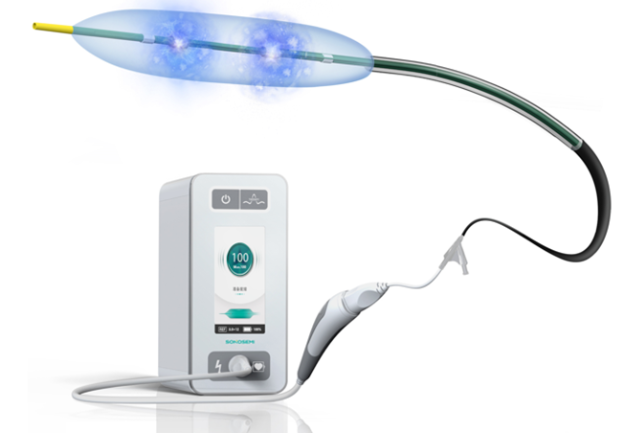
Shockwave’s Key Patents Invalidated
In December 2018, the well-known cardiovascular medical device company Cardiovascular Systems (CSI) submitted an intellectual property application to the United States Patent and Trademark Office (USPTO) Patent Trial and Appeal Board (PTAB), questioning the validity of three patents issued by Shockwave. CSI requested PTAB to reconsider the original decision made by the USPTO regarding these patents and sought to invalidate all claims of each patent.
Cardiovascular Systems is an innovative medical device company focused on developing and commercializing innovative solutions for treating vascular and coronary artery diseases. Their Diamondback 360 device is used for treating vascular calcification diseases, requiring only a few minutes for the entire treatment time, addressing many limitations associated with traditional surgical procedures. Cardiovascular Systems was acquired by medical device giant Abbott for $890 million in February 2023.
In July 2020, preliminary rulings related to the multi-party review (IPR) case concerning the patent disputes between Cardiovascular Systems and Shockwave were gradually announced.
PTAB ruled that patent US8728091B2 is entirely invalid, which relates to an energy-controlled shockwave catheter system.
This system is used for treating through percutaneous coronary angioplasty or peripheral angioplasty, where the dilating catheter is used to traverse the lesion to expand it and restore normal blood flow in the artery. This is particularly useful when the lesion is a calcified lesion within the arterial wall. Calcified lesions require high pressure (sometimes up to 10-15 or even 30 atmospheres) to fracture the calcified plaques and push them back into the vessel wall. Applying such pressure can cause trauma to the vessel wall, leading to vessel recoil, dissection, thrombosis, and high levels of restenosis.
When exposed to high pressure, different calcified lesions can exert excessive pressure on the free wall of the vessel. Inflated to high pressure, angioplasty balloons can achieve a specific maximum diameter, but the openings beneath concentric lesions in the vessel are usually much smaller. When pressure is increased to open the blood pathway, the balloon (before rupture) will be limited to the size of the opening in the calcified lesion. As pressure accumulates, a significant amount of energy is stored in the balloon before the calcified lesion fractures or ruptures. This energy is then released, causing the balloon to rapidly expand to its maximum size, which can apply pressure and damage the vessel wall.
Therefore, there is a need in the art for a means to control the energy applied to the electrodes of the arc shockwave generator. More specifically, there is a need to control the applied energy to ensure proper bubble and shockwave formation while conserving electrode materials and ensuring tissue safety. This invention addresses these and other issues.
PTAB ruled that patent US9642673B2 is entirely invalid, which relates to a shockwave balloon catheter with multiple shockwave sources.
In shockwave valvuloplasty, the impact intensity of the shockwave diminishes with the distance from the shockwave source to the valve. More specifically, the impact intensity of the shockwave is inversely proportional to the square of the distance from the shockwave source to the valve. Therefore, when applying shockwaves, it is desirable to maximize the effectiveness of the shockwave by minimizing the distance between the shockwave source and the treated valve area.
Similar issues exist in angioplasty. Here, the calcified areas of veins or arteries can extend over a certain longitudinal distance of the vein or artery. In this case, point shockwave sources within the angioplasty balloon will not be consistently effective across the range of the calcified area due to the varying distances from the shockwave source to different parts of the calcified area.
Thus, this invention addresses this and other significant issues by providing the most effective valvuloplasty and angioplasty treatments.
PTAB ruled that patent US8956371B2 is partially invalid, which relates to a shockwave balloon catheter system, belonging to Shockwave’s early foundational principle patents, retaining only one claim 5: that the electrodes are positioned near and outside the guidewire lumen.
As a leader in the industry, the core technology patents of Shockwave have been invalidated in the United States, which is evidently favorable for domestic companies. The invalidation of Shockwave’s foundational and core technology patents may significantly undermine the stability of rights for related family patents laid out in China under the influence of the prior art referenced in the relevant comparison documents.
Objectively speaking, in the IVL field, domestic companies’ related products are similar or even identical to Shockwave’s, and there have been ongoing allegations of infringement. This recent maneuver by the American company Cardiovascular Systems has indeed provided significant assistance to various companies across the ocean!
Is a Spring for Domestic Devices Approaching?
Currently, in the IVL field, more than ten domestic companies are developing products, with intense competition having reached a boiling point. Although there is only one approved domestic shockwave balloon treatment system for coronary artery disease, related stakeholders have already engaged in fierce patent battles in this product field, indicating the level of competition and internal strife.
The requester Wang Ying has initiated multiple rounds of patent invalidation against Peijia, Saihe, and Zhonghui, evidently employing a “strawman” strategy, clearly representing a certain domestic company. However, with the invalidation of Shockwave’s related patents, the comparative documents used have emerged, and the technical routes of various domestic companies are similar to Shockwave’s. Shockwave itself is the closest existing technology, indicating that the patents of various domestic companies are now in a transparent phase, with the difficulty and risk of infringement significantly reduced. It is essential for everyone to avoid making foolish moves; I hope the leaders in the IVL field understand the meaning of this statement.
However, I must emphasize that Shockwave will certainly not sit idly by and will take action, which is worth paying attention to.
I still believe that as domestic attention continues to rise, Chinese companies are poised to take off, beginning to stir in a market that is generally viewed positively. However, as various “bottleneck” technologies are continuously overcome, more domestic IVL products will achieve significant breakthroughs and be launched in the coming years.
Foreign giants and emerging domestic enterprises are tightening their intellectual property layouts, and competition among domestic manufacturers in the IVL field will gradually intensify. At that time, related intellectual property issues will undoubtedly become a key research topic for major IVL manufacturers, and subsequent product development and patent matters will be worth continuous attention.
Finally, I must emphasize that in the field of medical device patents, it is crucial to pay attention to the appropriateness of the protection scope. For medical devices, the appropriateness of the protection scope is even more critical, as agents, examiners, and others may establish the protection scope of some cases with deviations due to their working time, academic background, and medical experience. This largely depends on the control of IPR by medical device companies, which plays a stabilizing role, serving as a bridge to implement the protection scope appropriately. Moreover, from the patent litigation initiated by domestic medical device companies in the past two years, a significant portion of patents have been declared entirely invalid, indicating that practitioners represented by IPR still have much room for improvement in the appropriateness of patent protection scope. For medical device patents, especially for products in the Me too and Me better stages, claims should not be overly formalistic; existing technology searches should be conducted thoroughly, distinguishing technical features, assessing the actual technical problems solved, and making clear and concise claims while ensuring the completeness of the specification.
References: Medical Heart, Shockwave, Jian Shi Medical, Smart Medical Devices, Medical Device Intellectual Property, publicly available information, etc.This article is written by Medical Device Intellectual Property.Please indicate the reference materials and the source of Medical Device Intellectual Property when reprinting, and do not reprint without permission.
END

Author Profile

Medical IP Jun, intellectual property scholar, deeply engaged in the field of medical devices.
More exciting contentWelcome to add “Medical IP Jun” WeChat
 Statement1. The copyright of this article belongs to theoriginal author.2. Media and other public accounts wishing to reprint the manuscript must apply through the message at the end of the article and may only reprint after receiving permission.3. Reprints must indicate the source and author in the “under the title + before the text” position.4. Unauthorized reductions, screenshots, commercial use, or failure to indicate the source and author as required will be pursued and reported.


Long press the QR code to follow Medical Device Intellectual Property

Focusing on medical device intellectual property
Creating the most professional platform
Previous Recommendations
Focus | Patent for Surgical Robot Invalidated
In-depth | Brain-Computer Interface Industry Research and Patent Technology Analysis
In-depth | Analysis of Hot Topics and Response Suggestions in Medical Device Intellectual Property
In-depth | Innovative Medical Device Patent Analysis Report (Endoscope Edition)
First Release | Innovative Medical Device Patent Analysis Report (Pulsed Electric Field Ablation Edition)
First Release | Surgical Robot Patent Analysis Report (Titan Edition)
First Release | Medical Endoscope Patent Analysis Report (Self-Propelling Endoscope Edition)
In-depth | Dental Medical Device Patent Analysis Report (Implant Edition)
Comprehensively Carrying Out Patent Layout to Form Protection Advantages—A Brief Discussion on Intellectual Property Protection Measures for Innovative Medical Device Companies
Research Report | Proton Therapy System Patent Analysis Report
First Release | Electrophysiological Medical Device Patent Analysis Report (Mapping Catheter Edition)
In-depth | Surgical Robot Patent Analysis Report
In-depth | Hemodialysis Medical Device Patent Analysis Report
Learning | Medical Imaging Medical Device Patent Analysis Report (United Imaging Edition)
First Release | Vascular Interventional Medical Device Patent Analysis Report (Vascular Rotational Atherectomy Edition)
First Release | Surgical Robot Patent Analysis Report (CMR Edition)
First Release | Surgical Robot Patent Analysis Report (Minimally Invasive Medical Edition)
In-depth | Cardiac Valve Medical Device Patent Analysis Report
Research | Thermage Patent Analysis Report
In-depth | Cardiac Valve Patent Analysis Report (Mitral Valve Edition)
Research Report | Artificial Heart Patent Analysis Report (CorWave Edition)
Research Report | Renal Artery Ablation Device Patent Analysis Report (RDN Edition)