Today, let’s explorehow those robots that were once criticized as ‘dumb’ have gradually become cash machines for hotel owners. Don’t be fooled by their past, where they could get stuck at the elevator for ten minutes just delivering slippers; now they can save hotels 20,000 yuan in labor costs each month and even boost OTA ratings by 0.2 points.
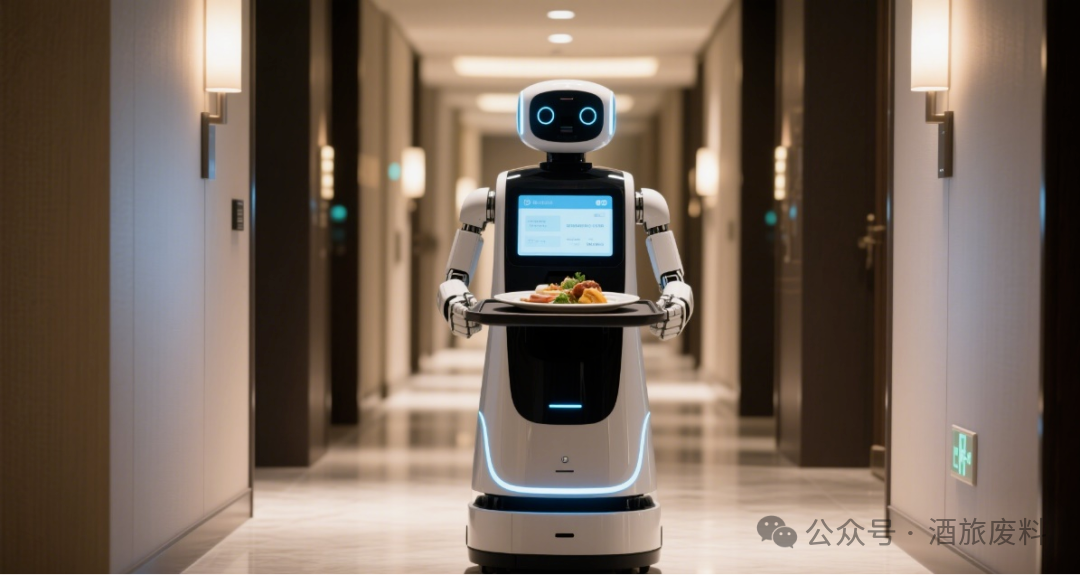
Step 1: Eliminate Repetitive Tasks and Let Robots Handle the ‘Dirty Work’ Previously, hotel robots were mostly props, taking ten minutes to deliver a pair of slippers. But that’s changed—Yunji Technology’s robot ‘Run’ can deliver items up to 89 times a day at the Shenzhen Airlines International Hotel, saving 241 hours of labor each month. Jinjiang Hotels took it a step further, reducing the front desk process to10 seconds for check-in and 3 seconds for check-out, cutting staff from 11 to 8 for a 150-room hotel, saving 150,000 yuan in labor costs annually. A creative approach: Small hotels can’t afford high-end robots? They can emulate Shoulv Hotels’ operations—using AI digital managers to automatically analyze operational data and generate reports at 3 AM, allowing managers to adjust prices and control room availability while lying down.
Step 2: Transform Robots into ‘Traffic Harvesters’ Robots are no longer just laborers—they are nowreputation builders for hotels. International luxury hotels have improved their OTA ratings by 0.1-0.2 points with robots, and guests are spontaneously sharing photos on social media. Even more impressive is JD.com’s Youliqi robot, which directly connects to e-commerce channels, allowing guests to purchase the same robot model by scanning their room card, with hotels earning a commission.Counterintuitive Truth: The greatest profit-making ability of robots is not cost-saving, but rathercreating viral effects. A guesthouse in Zhejiang dressed a robot in traditional Hanfu and live-streamed it delivering afternoon tea, resulting in a 300% increase in group-buy sales on Douyin.
Step 3: From ‘Solo Acts’ to ‘Intelligent Networks’ A single delivery robot is at most a high-end toy, but once networked, it becomes acash printing system. Luma Intelligent provided Jinjiang Hotels with a smart central system: delivery robots + self-service check-in machines + AI financial management, even automating breakfast verification to sync with the financial system, completely eliminating paper meal vouchers.Ultimate Form: Hotels become ‘unmanned yet attentive’—a smart hotel in Beijing uses robots for navigation and AI to adjust room lighting and humidity, so guests don’t even need to say ‘I’m hot’; the system automatically adjusts the temperature.

So, next time you see a hotel robot, don’t laugh at its cuteness—behind it lies a mathematical problem that saves 150,000 yuan and a traffic code that boosts OTA ratings by 0.2 points.
Waste Material Review:The essence of the AI revolution is not to replace humans, but to allow them to do more valuable work (like mixing cocktails for guests instead of standing at the front desk checking IDs). As for those hotels still using robots as decorations, I wish them a speedy awakening—after all, your competitors are already making money with robots!
🎁 Follow us for great gifts~ Scan to get the ‘National Bar Pitfall Guide’
🗣️ Join the ‘Special Forces of Hospitality’ group Scan to add our assistant, team up to explore stores | Benefits and giveaways

Code: Waste Material VIP