On September 16, 2020, at midnight Beijing time, Apple’s autumn product launch event officially kicked off. However, this time, there was no rumored iPhone 12; instead, two new smartwatches, Apple Watch S6 and Apple Watch SE, as well as two new iPad tablets, iPad Air 4 and the eighth-generation iPad, were released. This made the A14 Bionic processor the biggest highlight of the event, but compared to the previous generation A13, the performance improvement of A14 in CPU and GPU is quite small.
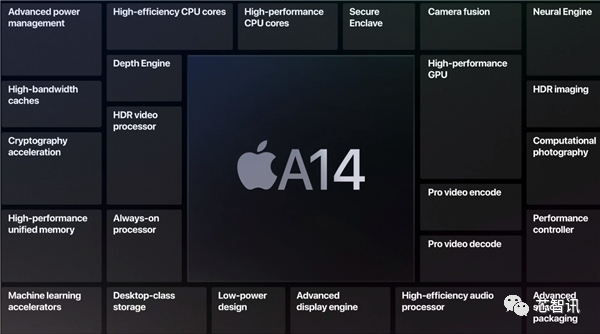
According to reports, the A13 Bionic processor used in the iPhone 11 and iPad Pro is based on TSMC’s 7nm EUV process, integrating 8.5 billion transistors, with a 6-core CPU and a 4-core GPU, while also integrating a Neural Engine (AI core) with an AI computing capability of 1 trillion operations.
Compared to the previous generation A13, Apple’s latest A14 processor debuted TSMC’s 5nm process, with the number of transistors reaching 11.8 billion. According to data previously released by TSMC, its 5nm process improves logic density by 80% compared to the previous 7nm process, with a 15% performance increase at the same power consumption, and a 30% reduction in power consumption at the same performance. This means that just by improving the process, A14 can achieve certain enhancements in performance and power consumption.
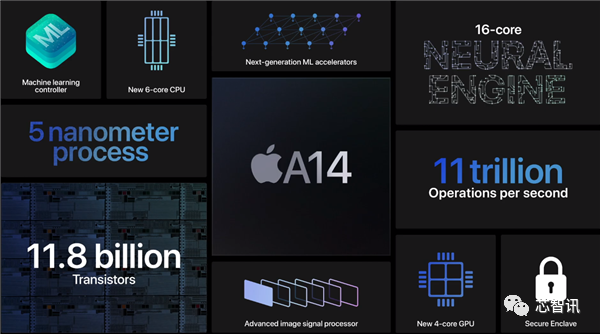
Of course, each generation of Apple’s processors also sees some performance improvements in CPU and GPU cores.
It is reported that the CPU core architecture of A14 is still a design of 2 large cores + 4 small cores, but performance has increased by 40%. Similarly, the GPU core remains 4 cores, but due to an upgraded architecture, performance has increased by 30%. However, the performance increase ratio here is compared to the A12, not A13.
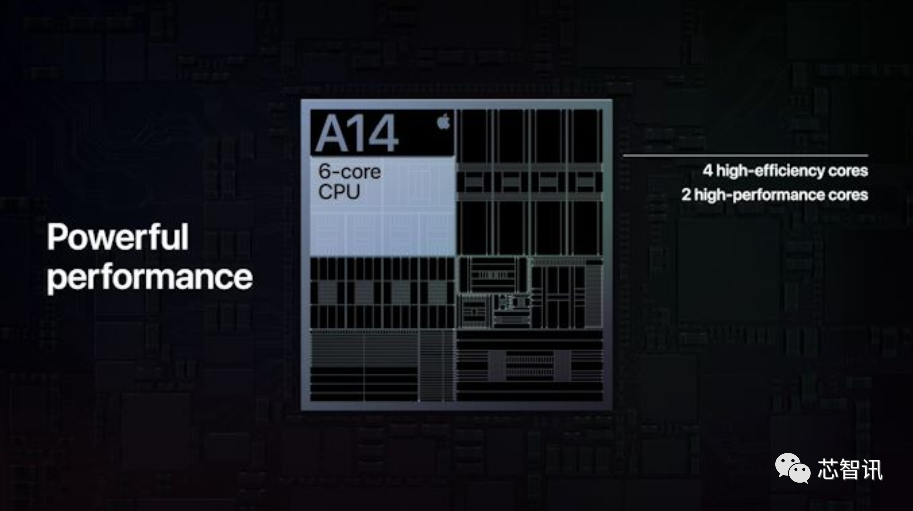
According to data previously released by Apple, A13 improved CPU and GPU performance by 20% compared to A12. Therefore, if the performance measurement standards of these two generations of processors are consistent, the A14’s CPU performance is only about 16% faster than A13, and GPU performance is only about 8.3% higher than A13.
If we exclude the enhancements brought by the 5nm process itself, the performance improvement of A14 in terms of CPU and GPU cores compared to A13 may be very small.
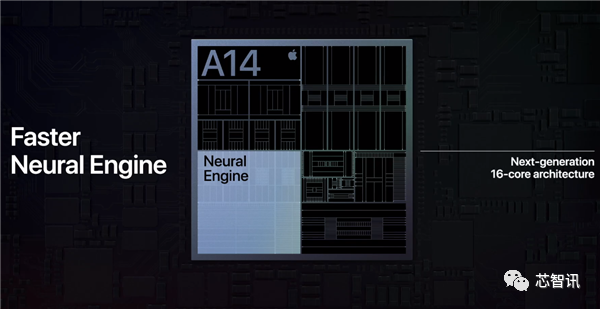
However, in terms of AI computing cores, A14 has seen a significant improvement compared to A13, upgrading from an 8-core NPU to a 16-core NPU architecture. According to data released by Apple, the AI computing capability of A14 has also increased to 11.8 trillion operations, with machine learning speed improved by 70%.
Additionally, the A14 processor has also seen upgrades in the ISP signal processing unit, security features, and more, although Apple did not disclose details.
Due to the delay in the release of the iPhone 12 series, the debut of A14 was given to the latest generation of iPad tablets, the iPad Air 4.
It is reported that the iPad Air 4 features a 10.9-inch Liquid Retina display with a resolution of 2360×1640 pixels, and for the first time integrates Touch ID into the top power button, debuting the Apple A14 processor and featuring a USB-C port. It has a 7-megapixel front camera and a 12-megapixel rear camera, with a battery life of about 10 hours.
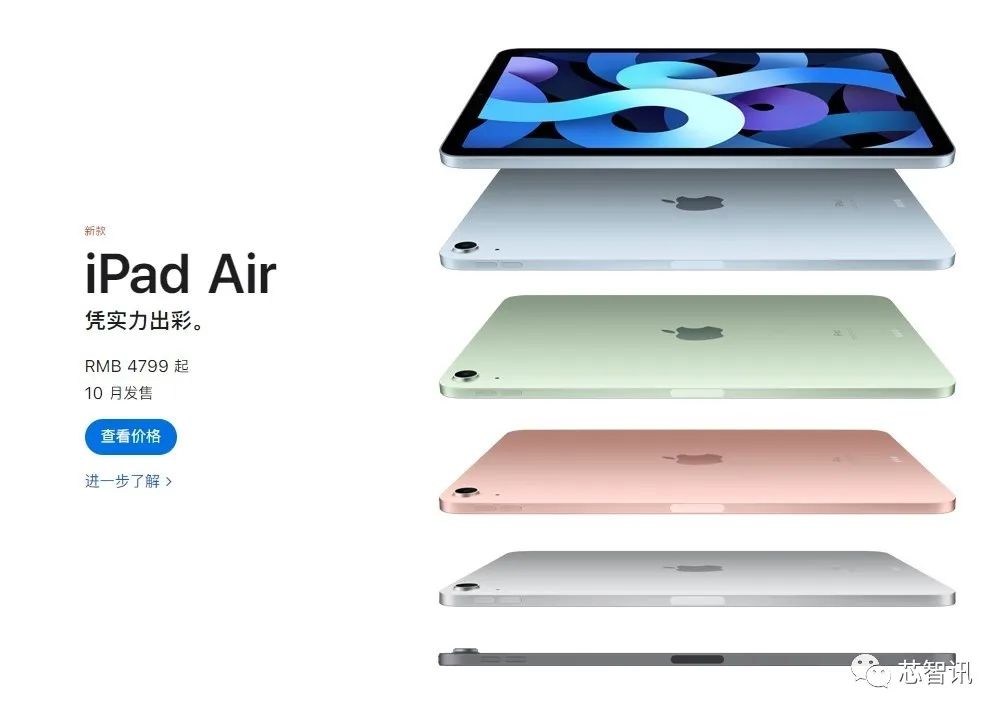
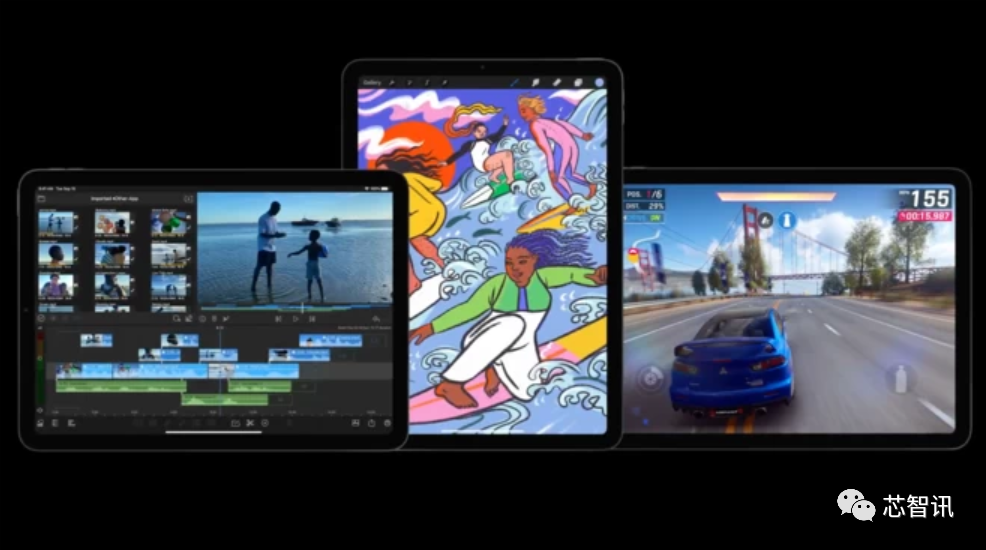
Thanks to the A14 processor, the iPad Air 4 can provide a powerful on-device experience for image recognition, natural language learning, sports analysis, and more.
Tim Miller, Vice President of Platform Architecture at Apple, stated, “For users performing performance-intensive applications on the iPad Air (such as editing 4K video, creating artwork, or playing immersive games), the incredible performance of A14 can easily handle all of these tasks. In addition to the outstanding fast CPU and GPU, A14 also features custom technologies that can drive… just like a faster neural engine, which will make the machine learning capabilities of the iPad Air even stronger.”
In terms of pricing, the iPad Air 4 with 64GB Wi-Fi is priced at 4799 yuan, and the cellular version is 5799 yuan; while the 256GB Wi-Fi version is 5999 yuan, and the cellular version is 6999 yuan. It will be released in October.
Editor: Chip Intelligence – Lin Zi
Previous Exciting Articles
NVIDIA Acquires Arm: Huang Renxun Remains Confident Amidst Pessimism!
Official Announcement! NVIDIA Acquires Arm for $40 Billion! But Arm’s China Business Will Still Be Key!
Three Months Without Revenue Sharing? Wu Xiongang’s Resistance Escalates, Will Arm China Become a Sacrificial Piece?
Huawei Harmony OS 2.0 Released: Harmony Phones Expected to Debut in December! A Wave of Home Appliance Brands Coming!
Three Major Storage Manufacturers and Two Major Panel Manufacturers Announce Supply Cuts! Huawei’s Phone Shipment Target Dropped to 50 Million Units Next Year?
TCL Huaxing T7 Project Successfully Lights Up First Product, Expected to Mass Produce by Year-End! 8K Panel Market Share Will Be Number One Globally in 2024!
Will Huawei’s Phone Sales Plummet by 75%? Xiaomi OV is Ready to Divvy Up the Market?
The Strongest Domestic Brain-like Computer Released: Based on Self-Developed Brain-like Chip, with 120 Million Neurons, Comparable to Mouse Brain!
After 3 Acquisitions and 1 Investment in 8 Months, What Does TCL Technology Want to Achieve with 24.8 Billion Investment?
Strong Performance Growth! Wingtech Technology’s Net Profit Reached 1.7 Billion Yuan in the First Half of the Year, a Year-on-Year Increase of 767.19%!
$1.08 Billion! TCL Technology Acquires Samsung’s 8.5 Generation Line in Suzhou: Production Capacity Will Increase by 60% in the Next Year!
For Industry Communication and Cooperation, Please Add WeChat: icsmart01Chip Intelligence Official Group: 221807116