Has How Way suddenly penetrated NVIDIA’s core supply chain? Is it really that simple behind the surface glamour?
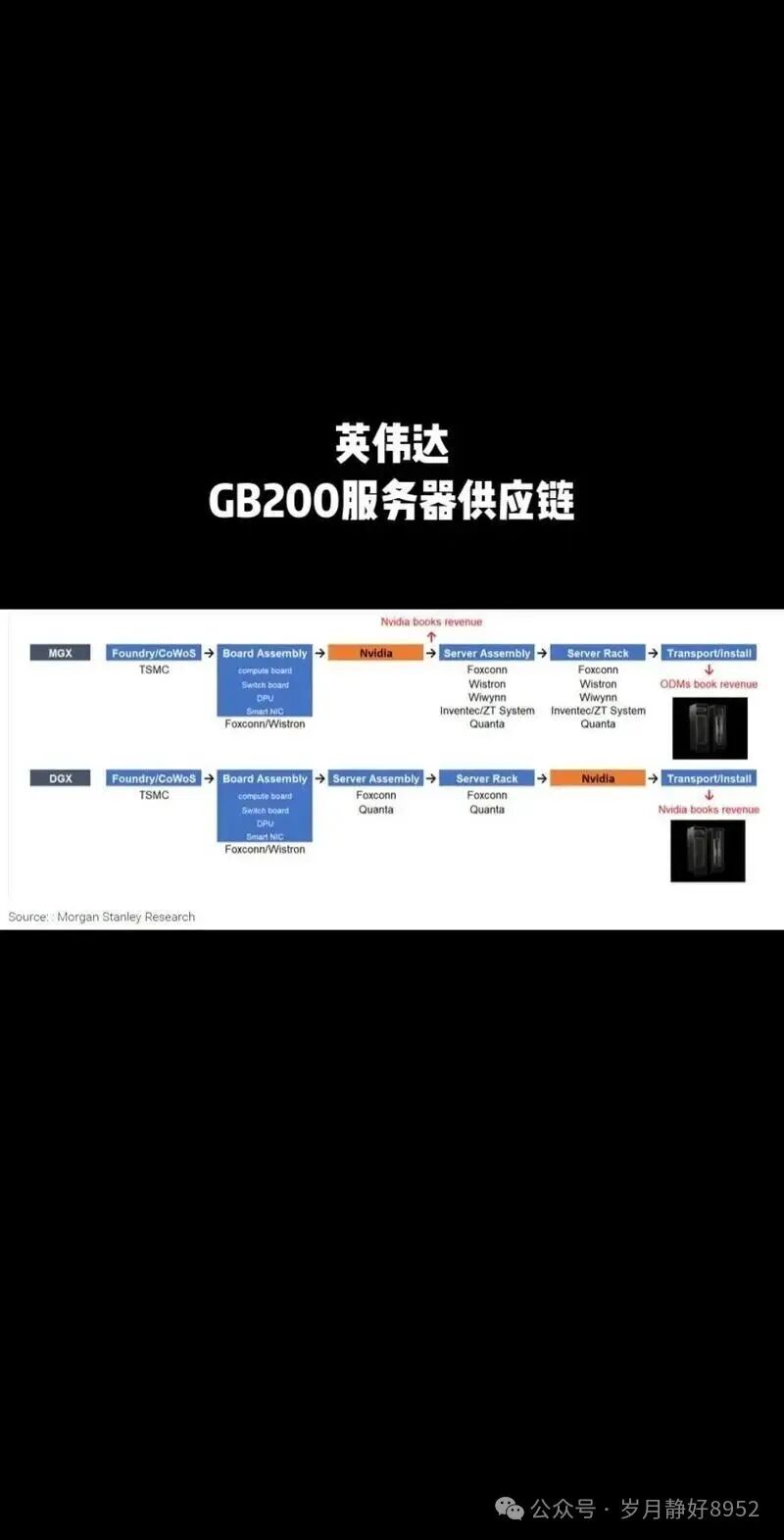
Here comes a straightforward truth that even a 60-year-old can understand: a company that started with mobile phone cameras suddenly claims to have entered the core circle of the world’s most powerful autonomous driving chip platform, with the Thor system used by BYD, Li Auto, and Volvo now relying on its sensors—does this news sound a bit too smooth? Is it a technological breakthrough or just concept packaging?
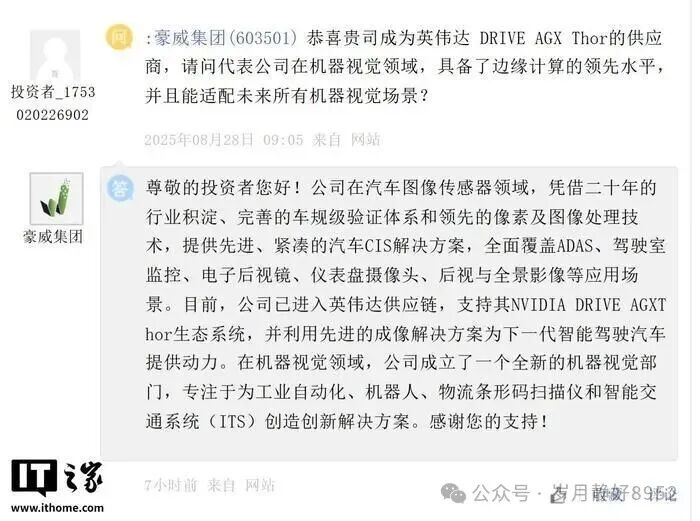
How Way Group announced its official integration into NVIDIA’s DRIVE AGX Thor ecosystem, claiming to provide automotive-grade CMOS image sensors and participate in building an integrated “sensor-chip-algorithm” solution. The official statement says that its imaging data can directly interface with the Blackwell architecture GPU, enabling real-time processing and fusion of multiple video streams. This means that the data link from the perception end to the computing end has been established, theoretically improving the response speed and accuracy of intelligent driving systems.
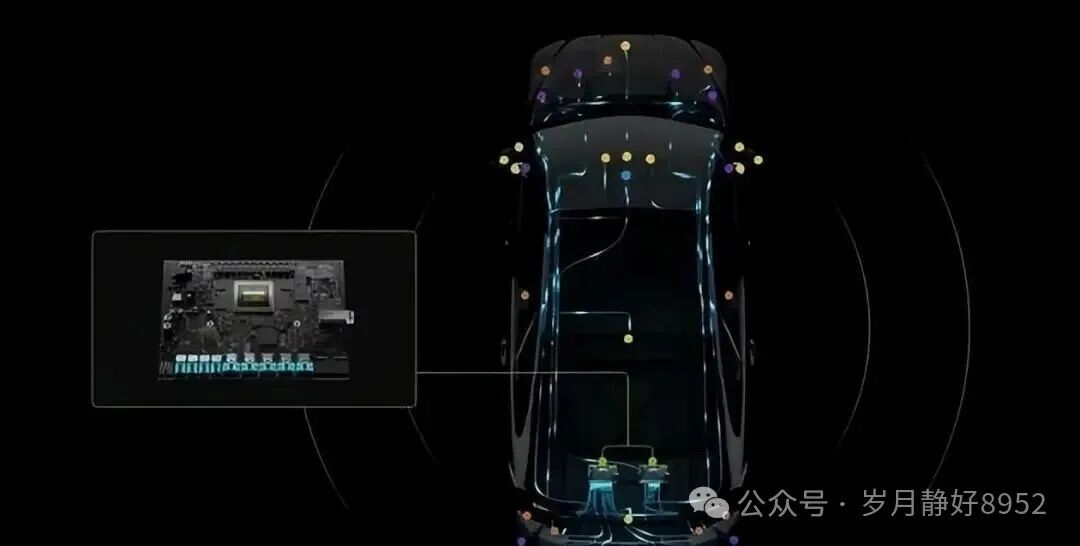
However, there is a key point that must be clarified: entering the supply chain does not mean becoming a primary supplier. NVIDIA has never listed How Way as an officially recommended or exclusive image sensor partner in public documents. Currently, the technical documentation for the Thor developer kit shows that the supported image input interfaces are compatible with various mainstream ISPs (Image Signal Processors) and do not specify that How Way products must be used. In other words, while How Way claims to be “pre-integrated,” the choice of whether customers use it remains open.
It is also worth noting that the NVIDIA DRIVE platform has long maintained deep cooperation with manufacturers such as Sony and onsemi. Especially Sony, whose Starvis series global shutter sensors have been widely used in high-end ADAS systems; while onsemi, as a traditional leader in automotive image sensors, has accumulated deep expertise in functional safety, low-light performance, and HDR dynamic range. To date, there has been no news of How Way replacing these two companies.
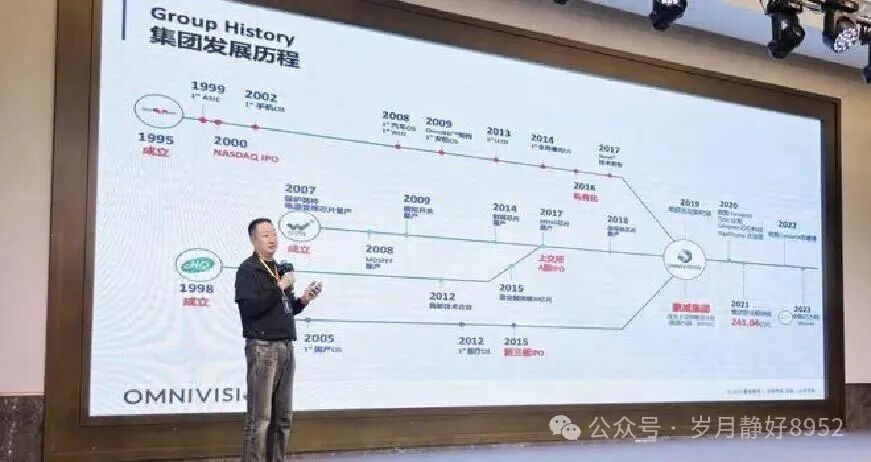
So the question arises—what gives How Way the sudden rise?
From a technical perspective, How Way has indeed made strides in the automotive field in recent years. Its OG0AF series sensors focus on 120dB high dynamic range and LED flicker mitigation (LFM) capabilities, comply with AEC-Q100 certification, and meet the needs of L2+ and above systems for nighttime recognition and traffic signal capture. These parameters reach industry mainstream levels, qualifying them for automotive applications. However, this is merely the “passing line,” not a “crushing advantage.”

Looking at the so-called “deep participation in ecosystem construction,” in reality, any image sensor that complies with the MIPI CSI-2 protocol can connect to the Thor platform. As long as the driver adaptation is done well and the software layer is connected, data flow can be established. Therefore, How Way’s so-called “joint development integrated solution” essentially completes the matching of standard interfaces, not a unique technical barrier. Other manufacturers can completely connect in a similar manner.
Interestingly, the wording in the description of the cooperation model states: “Collaborating with toolchain suppliers such as AdaCore and QNX to provide full-stack support.” This phrase seems professional, but upon reflection, it exposes shortcomings. True full-stack self-research companies like Mobileye or Tesla control everything from sensor design, ASIC customization to algorithm closure. What How Way has done is essentially package and sell others’ operating systems, compilers, and middleware, making it fundamentally a “integration service provider,” far from being a core technology leader.
Another detail that is easily overlooked: the Thor platform has a computing power of up to 1000 TOPS INT8, mainly used for heavy-load tasks such as neural network inference, point cloud processing, and path planning. In contrast, the image sensor itself is only responsible for collecting raw data; the real “heavy lifting” occurs in subsequent ISP processing, target detection, and semantic segmentation—these are all handled by NVIDIA’s Orin/X series SoCs or Blackwell GPUs. In other words, no matter how good your sensor is, the final performance still depends on the calibration capabilities and algorithm optimization levels at the chip end.
In other words, what How Way provides is merely “raw materials”; the real determinant of how good the dish tastes is the chef (NVIDIA) and the recipe (software stack). Now, the raw material supplier jumps out to say, “This dish is successful because I provided high-quality ingredients”—does this logic hold?
Moreover, we must be wary of market promotional language. Terms like “deep participation,” “core supplier,” and “pre-integrated solutions” frequently appear but lack specific customer case studies to support them. To date, no automotive company has publicly stated that its new models based on the Thor platform use How Way as the main camera solution. Even in How Way’s own disclosed cooperation list, it only remains at the level of “joint development,” with no mass production timeline.
In contrast, competitors like Sony have clearly established a joint venture with Honda to focus on automotive sensing systems; onsemi has secured multiple targeted projects with Lucid and Rivian. In comparison, How Way’s “ecological position” seems more like a marginal supplement rather than a main player.
Another unavoidable fact is that the decline in mobile business has forced How Way to accelerate its transformation into the automotive sector. Financial reports show that in 2024, its automotive business revenue share has just surpassed 25%, far lower than Sony (over 40%) and onsemi (nearly 60%). Against this backdrop, the high-profile announcement of entering the NVIDIA system raises the question of whether there is a motive to tell a story to the capital market. After all, the day after the announcement, the stock price rose by over 7%.
Of course, we cannot deny How Way’s technological progress. Being able to obtain interface adaptation qualifications in the fiercely competitive automotive market indicates that its product reliability meets standards. However, packaging a normal business connection as a milestone event of “breaking foreign monopolies” and “entering the top ecosystem” is somewhat over-interpreted.
Now, back to the initial question: Has How Way really become a key piece in NVIDIA’s autonomous driving empire?
Don’t rush to conclusions. Let’s look at reality—what camera chip is used in the cars you drive, like Li Auto, Xiaomi SU7, or Zeekr 001? The manufacturers have never mentioned How Way. The Thor reference design diagram released on NVIDIA’s official website also does not label How Way as a designated component. How can a “core partner” that doesn’t even appear in the customer white paper be considered core?
In plain language: just because you can supply goods doesn’t mean you’re important; just because you got in doesn’t mean you sit at the main table.
Anyone can play word games. “Participating in ecosystem construction” can mean leading the formulation of standards or providing test samples; “pre-integrated” may imply deep binding or simply leaving a port for future use. Treating these vague statements as achievements and taking secondary market sentiment as results is somewhat unseemly.
Let me ask a naive question: If How Way is really that powerful, why hasn’t NVIDIA proactively announced it? Why haven’t the automakers followed up with endorsements? Are global tech giants really waiting for a Chinese sensor company to save their vision systems?
Let me say something a bit sour: while others are drinking soup, you can hear the noise, and that’s already good; you still want to sit at the table and eat?
Finally, I throw out a question for everyone to ponder:
Since How Way has already “deeply integrated” into NVIDIA’s autonomous driving core chain, which currently available model has truly used this joint solution to achieve urban NOA functionality?
Are you brave enough to show it?