To check if the water pump motor coil is burned out using a multimeter, you need to measurethe continuity between the coil windings,short circuit conditions, andinsulation resistance. First, determine whether the motor is a three-phase or single-phase motor. The resistance values of the three-phase motor windings are the same, while the resistance values of the single-phase motor windings may differ.
Three-Phase MotorFor a three-phase motor with three sets of winding coils, set the multimeter to the 200-ohm range. Regardless of whether the three-phase motor is connected in star or delta configuration, you can measure it using the same method by measuring the resistance between U1, V1, and W1. Measure the resistance between U1 and V1, U1 and W1, and V1 and W1. If the measured resistance values are the same and the mutual error does not exceed 10%, it can be concluded that there are no open or short circuit issues with the coils.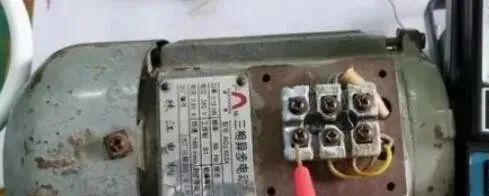 Open Circuit:If the measured resistance of one set of coils is infinite or significantly greater than the other two sets, it can be confirmed that the motor coil is damaged due to an open circuit.Short Circuit:If the resistance of one set of windings differs by more than 30% from the other two sets, causing three-phase imbalance, it can be concluded that the motor is short-circuited and burned out.For motors under 7.5KW, the coil resistance is generally between 2-50 ohms. The greater the motor power, the smaller the coil resistance; conversely, the smaller the motor power, the larger the coil resistance.Even if the measured resistance between the windings is normal, it does not guarantee that the motor is good; you also need to measure the motor’s insulation resistance, which is the resistance between the windings and the casing.Set the multimeter to the MΩ range and measure the resistance of U1, V1, and W1 against the casing. If the measured resistance is above 0.58MΩ, the motor is considered good; if below 0.58MΩ, the insulation is poor and requires repair.Single-Phase MotorA single-phase motor has two sets of winding coils: one for starting and one for running. Generally, the starting coil has a lower resistance, while the running coil has a higher resistance. The wiring terminals of a single-phase motor are also three: one for the starting coil, one for the running coil, and one common terminal for both coils.Using a multimeter to measure the three terminals of a single-phase motor two at a time will yield three different resistance values. The smallest resistance is for the running coil, the middle one is for the starting coil, and the largest is the total series resistance = running coil resistance + starting coil resistance. The three key factors for determining the condition of a single-phase motor are open circuit, short circuit, and insulation resistance.
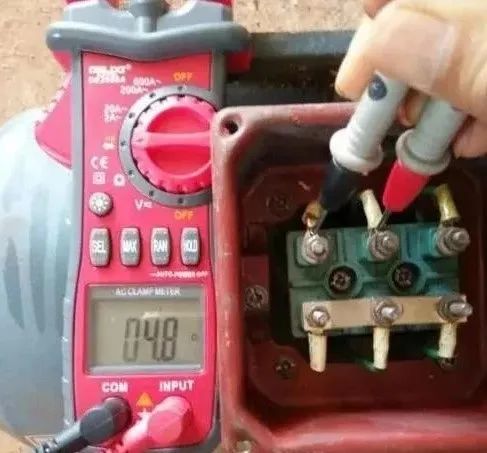 Open Circuit:If the resistance of the starting or running coil is infinite or significantly greater than the other coil’s resistance, it indicates an open circuit.Short Circuit:If the resistance of the starting or running coil is close to zero, it indicates a short circuit. The measurement of insulation resistance is the same as that for three-phase motors.Single-phase water pump motors generally have lower power, typically below one kilowatt, with coil resistance generally between 20-200 ohms.For single-phase motor connections, the starting and running coils are connected in series, and the capacitor is connected in parallel (the two terminals with the maximum resistance are connected in parallel with the capacitor). When 220V is applied across the running coil, the motor rotates forward. When 220V is applied across the starting coil, the motor rotates in reverse.