Click the blue text to follow us 
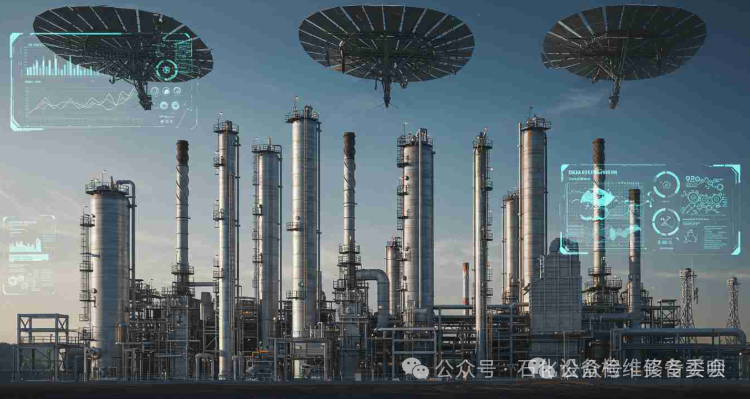
1. Background Overview
The petrochemical industry is characterized by high temperature, high pressure, flammability, and explosiveness, which places extremely high demands on equipment reliability and production safety. Traditional automation systems such as DCS and SCADA have struggled to meet the needs for intelligent, predictive, and collaborative management. Therefore, IIoT is gradually becoming a key technology driving the digital transformation of the petrochemical industry.
2. Key Applications of IIoT in the Petrochemical Industry
1. Predictive Maintenance
By deploying sensors (such as temperature, pressure, vibration, lubrication quality, etc.) on critical equipment:
Utilize edge computing or cloud analytics platforms to monitor equipment health
Predict failure trends for compressors, pumps, heat exchangers, and reactors
Avoid unexpected downtime, reduce maintenance costs, and extend equipment lifespan
Example: A refinery monitored the vibration of centrifugal pump bearings through IIoT, providing a 7-day early warning of anomalies, preventing significant production stoppage.
2. Real-time Process Monitoring and Optimization
High-frequency collection of temperature, pressure, and flow rate data enables more precise PID control
Data-driven energy management systems optimize heat exchange networks, reducing energy consumption
Implement online quality analysis (e.g., using near-infrared sensors + AI models)
Example: Ethylene cracking units adjust gas ratios based on real-time calorific value feedback, achieving a 5% annual energy saving.
3. Safety Management and Leak Detection
Gas leak detection sensors combined with IIoT networks can achieve second-level alarm notifications
Link video surveillance systems and automatic shut-off valves for rapid response
High-risk area equipment status such as pressure vessel levels, pressure, and temperature are automatically uploaded to the platform
Example: An IIoT system detected a trend of tank leakage, automatically alarming and remotely activating the emergency discharge system.
4. Smart Inventory and Logistics Tracking
IIoT tags track the inventory status of chemicals, catalysts, and raw material tanks
Intelligent monitoring of storage environments (temperature/humidity/flammable gases)
Integration with ERP systems for automated procurement and inventory counting
Achieve visualization and traceability management throughout the entire lifecycle of chemical storage.
5. Intelligent Decision-Making and Operational Training
Build virtual device models through Digital Twin for scheduling and operational reference
Combine machine learning to achieve the optimal combination of raw materials, processes, energy consumption, and product quality
Virtual reality (VR) + IIoT data for simulation training of operators
3. Architecture Diagram (Simplified)
swift
Copy
Edit
Sensor layer → Edge gateway → Industrial network communication (e.g., OPC-UA, Modbus) → IIoT platform → MES/ERP/cloud AI platform
4. Challenges and Countermeasures
Challenges Countermeasures
High cybersecurity risks Implement a zero-trust architecture, isolate industrial networks from IT networks, deploy firewalls and intrusion detection
Complex device access Use unified communication protocols (e.g., OPC-UA) and industrial IoT platforms to connect heterogeneous systems
Difficulty in cost and ROI assessment Start with small-scale pilots on key equipment and gradually expand
5. Conclusion
IIoT is elevating petrochemical plants from “automation” to “intelligence.” Through device interconnection, data-driven approaches, and cloud-edge collaboration, companies can achieve:
A safer production environment
Lower operational costs
Higher product quality and responsiveness
Source:Buy Beibei
END

WeChat ID|shsbjwxzwh
Petrochemical Equipment Maintenance and Repair Committee
Source Material: Organized by the Petrochemical Equipment Maintenance and Repair Professional Committee of the Chinese Chemical Society
Disclaimer: The content is sourced from the internet, public accounts, and other publicly published materials. We maintain neutrality regarding the views expressed in the text, which are for reference and mutual learning purposes. The copyright of the reproduced articles belongs to the original authors and institutions. If there is any infringement, please contact us for deletion.
Click “Read the original text” or scan the QR code below

Learn more about the “Petrochemical Equipment Maintenance and Repair Technology Exchange Conference”“