
Driven by the dual forces of explosive computing power demand and the construction of green data centers, liquid cooling technology has become the core path to breaking through computing power bottlenecks and is now the focus of collaborative innovation in the global computing industry. Recently, the “GCC Lounge” series of interviews “CXO Path” invited Mr. Zhang Chun, Director of the GCC Open Liquid Cooling Professional Committee, to deeply analyze the collaborative development path of the liquid cooling committee from its establishment to standard construction and large-scale implementation.
Now, let us explore through the interview with Mr. Zhang how the GCC Open Liquid Cooling Professional Committee promotes the evolution of the liquid cooling ecosystem and explores the path of technological collaborative innovation.
Click to view the exclusive interview video
Half-Year Leap of the Liquid Cooling Ecosystem:
Practical Breakthroughs from Organizational Establishment to Standard Formation
Director Zhang Chun reflected on the industry’s advancement, stating: “Since the establishment of the GCC Open Liquid Cooling Professional Committee (hereinafter referred to as the Committee) in October 2024, it has quickly gatheredover 60 member units,making it the largest membership among all branches of GCC.”
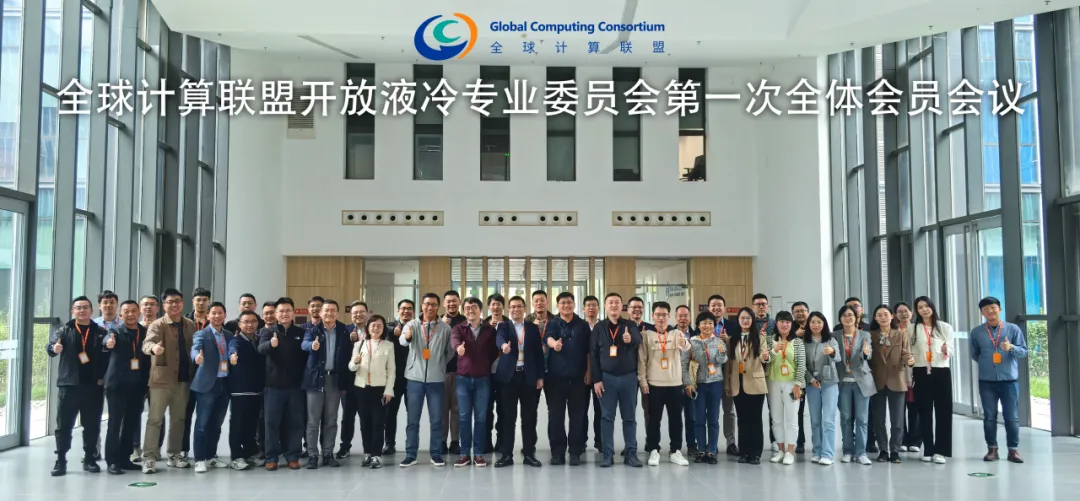
Image: In October 2024, the first general meeting of the GCC Open Liquid Cooling Committee was successfully held, officially establishing the liquid cooling committee.
This rapid aggregation of industry partners reflects theurgent need for standardized collaboration in the industry chain, which has already led to three core achievements of the liquid cooling committee:
1. Significant Ecological Aggregation Effect The gathering of over 60 member units from users to OEMs, component suppliers, and testing institutions has achieved a leap from “point innovation” to “systematic breakthroughs,” building a collaborative network covering all aspects of liquid cooling.
2. High Frequency of Organizational Operations Through 5 committee working meetings and 2 industry events, a full-chain dialogue platform for “industry-academia-research-application” has been established, forming a dual activation mechanism for technical exchange and industry consensus.
3. Formation of Standard System Matrix The committee has promoted the establishment of 7 standards and 4 research reports, covering all aspects of liquid cooling including machine rooms, cabinets, server nodes, components, and deployment operations. Among these, 1 standard and 2 research reports have been prominently released at the “2025 Liquid Cooling Technology Forum,” with the remaining projects expected to complete reviews by the end of 2025. Currently, the liquid cooling committee has fully constructed a closed-loop system for standard “project establishment – research and development – release.”
Image: In May 2025, the “2025 Liquid Cooling Technology Forum” released the relevant achievements of the liquid cooling committee.
When discussing the positive impact of these achievements on the industry, Director Zhang emphasized that the liquid cooling committee aims to “build an open exchange platform” to gather experts from the entire liquid cooling chain, committed to creating an industry ecosystem of “standard unity, ecological completeness, and open win-win.” Through more than half a year of practice, a vibrant atmosphere for technical open exchange has been initially formed, and multiple industry consensuses have been reached, providing a development path from conceptual ideas to practical implementation for the liquid cooling industry.
2025 Strategic Layout:
Five-Dimensional Collaboration to Break Through Industry Pain Points
In response to the rapidly developing trends in liquid cooling technology, Director Zhang stated that the committee has conducted multiple special discussions to recognize that further deepening is needed in areas such as“user participation mechanism construction” and “original content production”.
In 2025, the committee will focus on the following five areas to break down barriers, deepen collaboration, and accelerate innovation: First, accelerate the construction of a“cold plate liquid cooling cabinet server standard system,” completing the formulation of technical requirements and testing methods standards from the entire machine to key components; second, establish three certification systems for“blind plug quick connectors,” “cabinet servers,” and “coolant materials,” connecting with authoritative testing institutions to initiate testing and certification activities; third, address the bottlenecks in the implementation of liquid cooling technology by promoting the implementation of the“Zero Problems, Zero Waiting Action for Liquid Cooling Machine Rooms,” aimed at solving material compatibility issues in liquid cooling deployment; fourth, collaborate with upstream and downstream of the liquid cooling industry chain to create demonstration projects, using benchmarks to drive the large-scale application and ecological improvement of liquid cooling technology; fifth, focus on improving the committee’s operational mechanisms to attract leading users to deeply participate in demand definition, and collaborate with universities to discuss future evolution technologies, laying the foundation for the future development of liquid cooling technology.
Regarding the formulation of development goals and specific layout strategies, Director Zhang stated that these are the collective results of multiple discussions among member experts, reflecting the current situation and practical needs of the liquid cooling industry. While gaining insights into demand and focusing on development trends, we are also taking concrete actions, building certification systems, and initiating the “Zero Action.” The committee’s work is “not just empty slogans or theoretical discussions, but real actions.”
Understanding the “Zero Action”:
From Technical Breakthroughs to Value Elevation of Ecological Paradigms

In April 2025, the GCC official WeChat platform released the “Joint Action Plan for the Zero Problems, Zero Waiting Deployment of Liquid Cooling Machine Rooms” and the notice for the collection of participating units. Subsequently, the liquid cooling committee officially announced the comprehensive launch of the “Zero Problems, Zero Waiting Action Plan for Liquid Cooling Machine Room Deployment” at the 2025 Liquid Cooling Technology Forum.
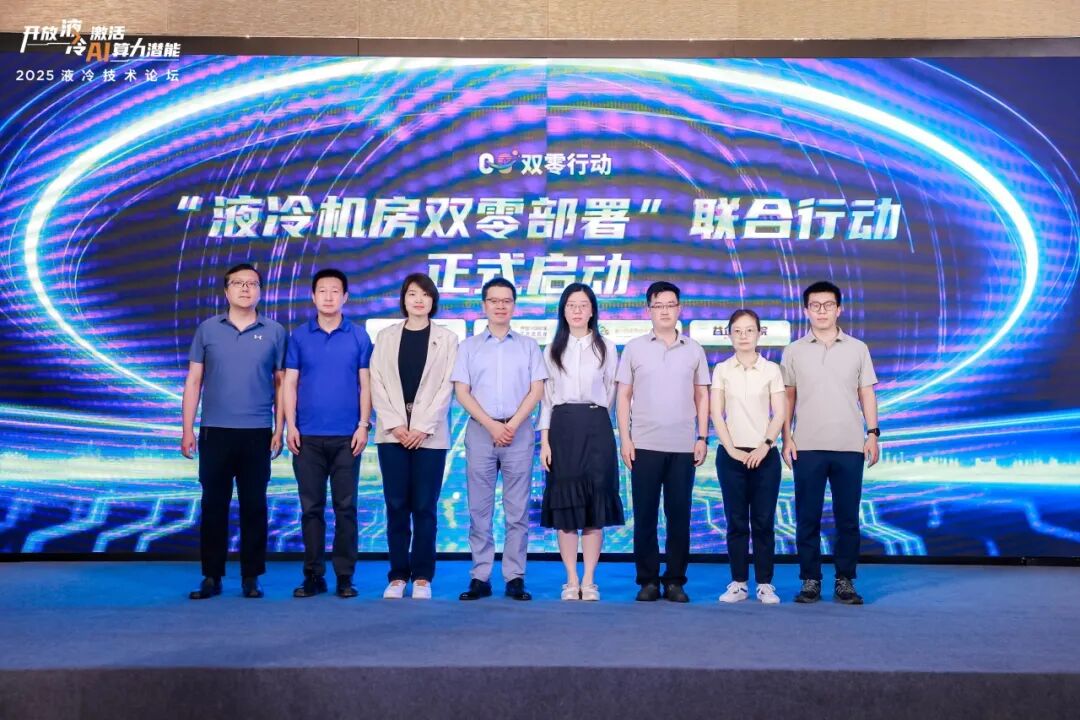
Image: In May 2025, the “Joint Action for Zero Deployment of Liquid Cooling Machine Rooms” was officially launched.
The “Zero Action” is jointly initiated by the Global Computing Alliance Open Liquid Cooling Professional Committee (OC-SIG), the China Electronic Industry Standardization Technology Association Open Computing Standard Working Committee (OCTC), and the New Generation Computing Standard Industrial Committee (NGCS), with the core goal of promoting the maturity of basic materials related to liquid cooling and preemptively solving compatibility issues of cooling fluids, materials, and liquid cooling equipment. The goal is to achieve“zero quality issues, zero waiting for machine rooms” during the deployment of liquid cooling machine rooms, overcoming the “last mile” challenge of implementing liquid cooling technology. Director Zhang stated in the interview, “The Zero Action is not only an important start for the committee to move from ‘theoretical discussions’ to ‘practical actions,’ but also a crucial lever for solving liquid cooling ecological issues.”
Regarding the actual value this action can bring to industry partners, Director Zhang stated: “The Zero Action can promote product maturity for end users and OEMs, eliminate potential risks, and provide users with more peace of mind; for suppliers, it offers guidance from material selection to testing and deployment, building a platform for mutual compatibility, greatly enhancing the systematic nature of product development and adaptation, and effectively reducing workload.”
Conclusion
As this interview comes to a close, Director Zhang’s summary resonates deeply with the underlying fabric of industry development— the liquid cooling committee has distilled industry truths through half a year of practice:Only through end-to-end promotion from standards to practical operations can we effectively facilitate the development of organizations and the industry. This also provides valuable operational experience for GCC and the liquid cooling industry. This “collaborative equation” that has grown from the fertile soil of practice offers invaluable operational insights for GCC and the liquid cooling industry.
When the collaborative philosophy of the liquid cooling committee is deeply rooted in the rich soil of industry practice, the energy it unleashes is reshaping the development coordinates of the global computing industry. This is a dual transformation characterized by both “technical penetration” and “ecological radiation”—building a solid foundation for the standard system, meticulously cultivating industry implementation; breaking through barriers through technical collaboration, and strategically planning the ecological landscape. Each exploration injects “hardcore support” into the digital economy, propelling liquid cooling technology from a singular cooling innovation to a wave of the global computing era. This wave will ultimately nourish the digital civilization and illuminate the new journey of global economic development.
Welcome to reprint! Please contact the WeChat backend for authorization confirmation before reprinting. When reprinting, the original source must be indicated. If prior contact is not made, please ensure that the content remains consistent with the original; if there are substantial differences or misleading statements, GCC and the author of this article reserve the right to pursue legal action.
Further Reading


·Column Introduction·
“Leaders’ Words”
Pioneering industry development trends
Delivering core viewpoints on industry development direction
“CXO Path”
Decoding the stories behind strategic layouts
Sharing new thoughts on industry development frontiers
“Industry Voices”
Showcasing the prosperous ecology of the industry
Discussing pain points, sharing experiences, and presenting examples from the customer perspective
Welcome to scan the code to schedule an interview at the GCC Lounge!
👇👇👇

Teacher Ju

Teacher Xue