
1. Introduction
In modern IT operations environments, configuration management automation has become a key technology for improving efficiency, ensuring consistency, and reducing human errors. Ansible, as an open-source configuration management tool, has become one of the preferred tools for operations engineers due to its ease of use and agentless architecture. This article will comprehensively introduce various aspects of Ansible configuration automation, from basic concepts to advanced applications, helping operations engineers master this powerful automation tool.
2. Basic Concepts of Ansible
2.1 What is Ansible
Ansible is an open-source automation platform used for configuration management, application deployment, task automation, and IT orchestration. It adopts an agentless architecture, executing tasks remotely via SSH protocol, and uses YAML language to write playbooks, characterized by low learning costs and simple deployment.
2.2 Core Components
Control Node
- • The machine where Ansible is installed
- • Executes playbooks and ad-hoc commands
- • Manages inventory files
Managed Node
- • The target machine managed by Ansible
- • Requires SSH service to be enabled
- • Typically requires a Python environment
Inventory
- • Defines the list of managed nodes
- • Supports static and dynamic inventory
- • Can set host variables and group variables
Playbook
- • Configuration files written in YAML
- • Describes the execution process of automation tasks
- • Contains one or more plays
Module
- • The execution unit of Ansible
- • Completes specific task operations
- • Built-in thousands of modules
Plugin
- • Components that extend Ansible’s functionality
- • Includes connection plugins, filter plugins, etc.
3. Installation and Configuration
3.1 Installing Ansible
CentOS/RHEL Systems
# Use epel repository
yum install epel-release -y
yum install ansible -y

# Or install using pip
pip install ansible
Ubuntu/Debian Systems
# Add PPA repository
sudo apt-add-repository ppa:ansible/ansible
sudo apt update
sudo apt install ansible -y

# Or install using pip
pip install ansible
Verify Installation
ansible --version3.2 Configuration File Structure
The search order for Ansible configuration files is as follows:
- 1.
<span>$ANSIBLE_CONFIG</span>specified by the environment variable - 2. The
<span>ansible.cfg</span>in the current directory - 3. The
<span>.ansible.cfg</span>in the user’s home directory - 4. The system configuration file
<span>/etc/ansible/ansible.cfg</span>
Main Configuration Items
[defaults]
# Default inventory file path
inventory = /etc/ansible/hosts
# Remote user
remote_user = root
# SSH private key file path
private_key_file = ~/.ssh/id_rsa
# Host key checking
host_key_checking = False
# Number of forks
forks = 20
# Timeout
timeout = 30
# Log file
log_path = /var/log/ansible.log

[ssh_connection]
# SSH parameters
ssh_args = -o ControlMaster=auto -o ControlPersist=60s
# Enable pipelining
pipelining = True
4. Inventory Management
4.1 Static Inventory
Basic Format
# Single host
web1.example.com

# Host groups
[webservers]
web1.example.com
web2.example.com
web3.example.com

[databases]
db1.example.com
db2.example.com

# Host variables
[webservers]
web1.example.com http_port=80 maxRequestsPerChild=808
web2.example.com http_port=8080 maxRequestsPerChild=909

# Group variables
[webservers:vars]
ntp_server=ntp.example.com
proxy=proxy.example.com
Host Ranges
# Numeric range
[webservers]
web[01:50].example.com

# Alphabetic range
[databases]
db[a:f].example.com

# Multiple ranges
[servers]
server[01:20].example[1:3].com
4.2 Dynamic Inventory
AWS EC2 Dynamic Inventory
#!/usr/bin/env python3
import boto3
import json

def get_ec2_instances():
    ec2 = boto3.client('ec2')
    response = ec2.describe_instances()

    inventory = {
        '_meta': {'hostvars': {}},
        'all': {'hosts': []},
        'webservers': {'hosts': []},
        'databases': {'hosts': []}
    }

    for reservation in response['Reservations']:
        for instance in reservation['Instances']:
            if instance['State']['Name'] == 'running':
                public_ip = instance.get('PublicIpAddress')
                if public_ip:
                    inventory['all']['hosts'].append(public_ip)

                    # Grouping by tags
                    for tag in instance.get('Tags', []):
                        if tag['Key'] == 'Role':
                            role = tag['Value']
                            if role not in inventory:
                                inventory[role] = {'hosts': []}
                            inventory[role]['hosts'].append(public_ip)

    return inventory

if __name__ == '__main__':
    print(json.dumps(get_ec2_instances(), indent=2))
4.3 Host Variables and Group Variables
Directory Structure
inventory/
├── hosts
├── group_vars/
│   ├── all.yml
│   ├── webservers.yml
│   └── databases.yml
└── host_vars/
    ├── web1.example.com.yml
    └── db1.example.com.yml
group_vars/all.yml
---
# Global variables
timezone: Asia/Shanghai
dns_servers:
  - 8.8.8.8
  - 8.8.4.4
group_vars/webservers.yml
---
# Web server group variables
http_port: 80
max_clients: 200
document_root: /var/www/html
5. Ad-hoc Commands
5.1 Basic Syntax
ansible <pattern> -m <module> -a <arguments>5.2 Common Ad-hoc Commands
Execute Shell Commands
# Execute command on all hosts
ansible all -m shell -a "uptime"

# Execute command on specific group
ansible webservers -m shell -a "systemctl status nginx"

# Use sudo privileges
ansible all -m shell -a "systemctl restart nginx" --become
File Operations
# Copy files
ansible all -m copy -a "src=/tmp/test.txt dest=/tmp/test.txt"

# Create directory
ansible all -m file -a "path=/tmp/testdir state=directory"

# Change file permissions
ansible all -m file -a "path=/tmp/test.txt mode=0644"
Package Management
# Install package
ansible all -m yum -a "name=nginx state=present"

# Uninstall package
ansible all -m yum -a "name=nginx state=absent"

# Update all packages
ansible all -m yum -a "name=* state=latest"
Service Management
# Start service
ansible all -m service -a "name=nginx state=started"

# Stop service
ansible all -m service -a "name=nginx state=stopped"

# Restart service
ansible all -m service -a "name=nginx state=restarted"
6. Writing Playbooks
6.1 Basic Structure
---
-name: Configure Web Server
hosts: webservers
become: yes
vars:
    http_port: 80
    max_clients: 200

tasks:
    -name: Install Nginx
      yum:
        name: nginx
        state: present

    -name: Start Nginx Service
      service:
        name: nginx
        state: started
        enabled: yes
6.2 Using Variables
Defining Variables
---
-name: Variable Example
hosts: all
vars:
    packages:
      - nginx
      - mysql
      - php

    user_info:
      name: webapp
      group: webapp
      shell: /bin/bash

tasks:
    -name: Install Packages
      yum:
        name: "{{ packages }}"
        state: present

    -name: Create User
      user:
        name: "{{ user_info.name }}"
        group: "{{ user_info.group }}"
        shell: "{{ user_info.shell }}"
Variable Files
# vars/main.yml
---
database_name: myapp
database_user: myapp_user
database_password: "{{ vault_database_password }}"
Referencing in Playbook
---
-name: Database Configuration
hosts: databases
vars_files:
    - vars/main.yml

tasks:
    -name: Create Database
      mysql_db:
        name: "{{ database_name }}"
        state: present
6.3 Conditional Statements
---
-name: Conditional Example
hosts: all

tasks:
    -name: Install Apache (RedHat)
      yum:
        name: httpd
        state: present
      when: ansible_os_family == "RedHat"

    -name: Install Apache (Debian)
      apt:
        name: apache2
        state: present
      when: ansible_os_family == "Debian"

    -name: Check Disk Space
      shell: df -h /
      register: disk_usage

    -name: Warn if Disk Space is Low
      debug:
        msg: "Disk space is low, please clean up"
      when: "'90%' in disk_usage.stdout"
6.4 Loops
---
-name: Loop Example
hosts: all

tasks:
    -name: Install Multiple Packages
      yum:
        name: "{{ item }}"
        state: present
      loop:
        - nginx
        - mysql
        - php
        - redis

    -name: Create Multiple Users
      user:
        name: "{{ item.name }}"
        group: "{{ item.group }}"
        state: present
      loop:
        - { name: 'user1', group: 'web' }
        - { name: 'user2', group: 'db' }
        - { name: 'user3', group: 'app' }

    -name: Process Dictionary Loop
      debug:
        msg: "{{ item.key }}: {{ item.value }}"
      loop: "{{ lookup('dict', {'a': 1, 'b': 2, 'c': 3}) }}"
6.5 Error Handling
---
-name: Error Handling Example
hosts: all

tasks:
    -name: Attempt to Start Service
      service:
        name: nginx
        state: started
      ignore_errors: yes

    -name: Capture Error Information
      shell: /bin/false
      register: result
      failed_when: result.rc != 0
      ignore_errors: yes

    -name: Execute Different Actions Based on Result
      debug:
        msg: "Command execution failed"
      when: result.failed

    -name: Rescue Operation
      block:
        -name: Potentially Failing Task
          shell: /bin/false
      rescue:
        -name: Rescue Task
          debug:
            msg: "Executing rescue operation"
      always:
        -name: Task Always Executed
          debug:
            msg: "Executed regardless of success or failure"
7. Module Details
7.1 System Modules
User Module
- name: Create User
  user:
    name: webapp
    group: webapp
    shell: /bin/bash
    home: /home/webapp
    create_home: yes
    password: "{{ 'password' | password_hash('sha512') }}"
Group Module
- name: Create Group
  group:
    name: webapp
    gid: 1001
    state: present
Cron Module
- name: Add Cron Job
  cron:
    name: "backup database"
    minute: "0"
    hour: "2"
    job: "/usr/local/bin/backup.sh"
    user: root
7.2 File Modules
File Module
- name: Create Directory
  file:
    path: /var/www/html
    state: directory
    owner: nginx
    group: nginx
    mode: '0755'

- name: Create Symbolic Link
  file:
    src: /var/www/html
    dest: /var/www/site
    state: link
Copy Module
- name: Copy File
  copy:
    src: /tmp/source.txt
    dest: /tmp/dest.txt
    owner: root
    group: root
    mode: '0644'
    backup: yes
Template Module
- name: Generate Configuration File
  template:
    src: nginx.conf.j2
    dest: /etc/nginx/nginx.conf
    owner: root
    group: root
    mode: '0644'
  notify: restart nginx
7.3 Package Modules
Yum Module
- name: Install Packages
  yum:
    name:
      - nginx
      - mysql-server
      - php
    state: present
    update_cache: yes

- name: Install Specific Version
  yum:
    name: nginx-1.18.0
    state: present
Apt Module
- name: Update Package Cache
  apt:
    update_cache: yes
    cache_valid_time: 3600

- name: Install Packages
  apt:
    name: "{{ packages }}"
    state: present
vars:
    packages:
      - nginx
      - mysql-server
      - php
7.4 Service Modules
Service Module
- name: Start and Enable Service
  service:
    name: nginx
    state: started
    enabled: yes

- name: Restart Service
  service:
    name: nginx
    state: restarted
Systemd Module
- name: Reload Systemd
  systemd:
    daemon_reload: yes

- name: Start Service
  systemd:
    name: nginx
    state: started
    enabled: yes
8. Templates and Filters
8.1 Jinja2 Templates
Basic Syntax
# nginx.conf.j2
user {{ nginx_user }};
worker_processes {{ ansible_processor_cores }};
error_log /var/log/nginx/error.log;
pid /var/run/nginx.pid;

events {
    worker_connections {{ nginx_worker_connections }};
}

http {
    include /etc/nginx/mime.types;
    default_type application/octet-stream;

    {% for upstream in nginx_upstreams %}
    upstream {{ upstream.name }} {
        {% for server in upstream.servers %}
        server {{ server }};
        {% endfor %}
    }
    {% endfor %}

    server {
        listen {{ http_port }};
        server_name {{ server_name }};

        location / {
            root {{ document_root }};
            index index.html index.htm;
        }
    }
}
8.2 Common Filters
---
-name: Filter Example
hosts: all
vars:
    items: [1, 2, 3, 4, 5]
    text: "Hello World"

tasks:
    -name: Number Filter
      debug:
        msg: "{{ items | max }}" # Maximum value

    -name: String Filter
      debug:
        msg: "{{ text | lower }}" # Convert to lowercase

    -name: Default Value Filter
      debug:
        msg: "{{ undefined_var | default('default_value') }}"

    -name: Password Hash
      debug:
        msg: "{{ 'password' | password_hash('sha512') }}"

    -name: Time Filter
      debug:
        msg: "{{ ansible_date_time.iso8601 | to_datetime }}"
9. Handlers and Notifications
9.1 Basic Usage of Handlers
---
-name: Web Server Configuration
hosts: webservers

tasks:
    -name: Install Nginx
      yum:
        name: nginx
        state: present

    -name: Configure Nginx
      template:
        src: nginx.conf.j2
        dest: /etc/nginx/nginx.conf
      notify:
        - restart nginx
        - reload nginx

    -name: Ensure Nginx is Running
      service:
        name: nginx
        state: started
        enabled: yes

handlers:
    -name: restart nginx
      service:
        name: nginx
        state: restarted

    -name: reload nginx
      service:
        name: nginx
        state: reloaded
9.2 Conditional Handlers
---
-name: Conditional Handler Example
hosts: all

tasks:
    -name: Check Configuration File
      stat:
        path: /etc/nginx/nginx.conf
      register: nginx_config

    -name: Update Configuration
      template:
        src: nginx.conf.j2
        dest: /etc/nginx/nginx.conf
      when: nginx_config.stat.exists
      notify: restart nginx

handlers:
    -name: restart nginx
      service:
        name: nginx
        state: restarted
      when: nginx_config.stat.exists
10. Roles
10.1 Role Structure
roles/
└── nginx/
    ├── tasks/
    │   └── main.yml
    ├── handlers/
    │   └── main.yml
    ├── templates/
    │   └── nginx.conf.j2
    ├── files/
    │   └── index.html
    ├── vars/
    │   └── main.yml
    ├── defaults/
    │   └── main.yml
    ├── meta/
    │   └── main.yml
    └── README.md
10.2 Creating a Role
tasks/main.yml
---
-name: Install Nginx
  yum:
    name: nginx
    state: present

-name: Create Configuration File
  template:
    src: nginx.conf.j2
    dest: /etc/nginx/nginx.conf
  notify: restart nginx

-name: Start Nginx Service
  service:
    name: nginx
    state: started
    enabled: yes
handlers/main.yml
---
- name: restart nginx
  service:
    name: nginx
    state: restarted
defaults/main.yml
---
nginx_user: nginx
nginx_worker_connections: 1024
http_port: 80
document_root: /usr/share/nginx/html
meta/main.yml
---
galaxy_info:
  author: your-name
  description: Nginx web server role
  company: your-company
  license: MIT
  min_ansible_version: 2.9

platforms:
    - name: EL
      versions:
        - 7
        - 8
    - name: Ubuntu
      versions:
        - 18.04
        - 20.04

dependencies: []
10.3 Using Roles
---
-name: Deploy Web Server
hosts: webservers
roles:
    - nginx
    - mysql
    - php

# Pass variables to Role
-name: Deploy Web Server
hosts: webservers
roles:
    - role: nginx
      nginx_user: www-data
      http_port: 8080
11. Vault Encryption
11.1 Creating Encrypted Files
# Create encrypted file
ansible-vault create secret.yml

# Edit encrypted file
ansible-vault edit secret.yml

# View encrypted file
ansible-vault view secret.yml

# Encrypt existing file
ansible-vault encrypt existing_file.yml

# Decrypt file
ansible-vault decrypt secret.yml
11.2 Using Encrypted Variables
Encrypted Variable File
# vault.yml
---
vault_database_password: secretpassword123
vault_api_key: abc123def456
Using in Playbook
---
-name: Use Encrypted Variables
hosts: databases
vars_files:
    - vault.yml

tasks:
    -name: Create Database User
      mysql_user:
        name: myapp
        password: "{{ vault_database_password }}"
        priv: "myapp.*:ALL"
        state: present
Running Playbook
ansible-playbook -i inventory site.yml --ask-vault-pass
# Or use password file
ansible-playbook -i inventory site.yml --vault-password-file ~/.vault_pass
12. Advanced Features
12.1 Strategy Control
---
-name: Strategy Control Example
hosts: all
strategy: free # Free strategy, each host executes independently

tasks:
    -name: Long Running Task
      shell: sleep 30

    -name: Quick Task
      debug:
        msg: "This task will complete quickly"
12.2 Delegation and Proxy
---
-name: Delegation Example
hosts: webservers

tasks:
    -name: Check Service Status on Monitoring Server
      uri:
        url: "http://{{ inventory_hostname }}/health"
        method: GET
      delegate_to: monitor.example.com

    -name: Execute Command Locally
      shell: echo "Executed on control node"
      delegate_to: localhost
      run_once: true
12.3 Rolling Updates
---
-name: Rolling Update Example
hosts: webservers
serial: 2 # Process 2 servers at a time

tasks:
    -name: Remove from Load Balancer
      uri:
        url: "http://lb.example.com/remove/{{ inventory_hostname }}"
        method: POST
      delegate_to: localhost

    -name: Update Application
      yum:
        name: myapp
        state: latest
      notify: restart myapp

    -name: Wait for Service to Start
      wait_for:
        port: 8080
        delay: 10

    -name: Add to Load Balancer
      uri:
        url: "http://lb.example.com/add/{{ inventory_hostname }}"
        method: POST
      delegate_to: localhost

handlers:
    -name: restart myapp
      service:
        name: myapp
        state: restarted
12.4 Asynchronous Tasks
---
-name: Asynchronous Task Example
hosts: all

tasks:
    -name: Long Running Task
      shell: /opt/long_running_script.sh
      async: 3600 # Maximum run time (seconds)
      poll: 0      # Do not wait for result
      register: long_task

    -name: Execute Other Tasks
      debug:
        msg: "Continue executing other tasks"

    -name: Check Asynchronous Task Status
      async_status:
        jid: "{{ long_task.ansible_job_id }}"
      register: job_result
      until: job_result.finished
      retries: 30
      delay: 10
13. Best Practices
13.1 Directory Structure
ansible-project/
├── inventories/
│   ├── production/
│   │   ├── hosts
│   │   └── group_vars/
│   └── staging/
│       ├── hosts
│       └── group_vars/
├── roles/
│   ├── common/
│   ├── nginx/
│   └── mysql/
├── playbooks/
│   ├── site.yml
│   ├── webservers.yml
│   └── databases.yml
├── group_vars/
│   └── all.yml
├── host_vars/
├── vault/
│   └── secrets.yml
├── files/
├── templates/
├── library/
├── filter_plugins/
└── ansible.cfg
13.2 Naming Conventions
---
# Use descriptive names
-name: Install and Configure Nginx Web Server
hosts: webservers

tasks:
    -name: Install Nginx Package
      yum:
        name: nginx
        state: present

    -name: Create Nginx Configuration File
      template:
        src: nginx.conf.j2
        dest: /etc/nginx/nginx.conf
      notify: Restart Nginx Service

    -name: Start and Enable Nginx Service
      service:
        name: nginx
        state: started
        enabled: yes

handlers:
    -name: Restart Nginx Service
      service:
        name: nginx
        state: restarted
13.3 Variable Management
# Use clear variable hierarchy
nginx_config:
  user: nginx
  worker_processes: auto
  worker_connections: 1024
  keepalive_timeout: 65

server:
    listen: 80
    server_name: example.com
    root: /var/www/html
    index: index.html

upstream:
    name: backend
    servers:
      - 192.168.1.10:8080
      - 192.168.1.11:8080
13.4 Error Handling
---
-name: Robust Error Handling
hosts: all

tasks:
    -name: Check System Requirements
      assert:
        that:
          - ansible_distribution_major_version | int >= 7
          - ansible_memtotal_mb >= 1024
        fail_msg: "System does not meet minimum requirements"

    -name: Backup Configuration File
      copy:
        src: /etc/nginx/nginx.conf
        dest: /etc/nginx/nginx.conf.bak
        remote_src: yes
      ignore_errors: yes

    -name: Update Configuration
      template:
        src: nginx.conf.j2
        dest: /etc/nginx/nginx.conf
        validate: nginx -t -c %s
      notify: restart nginx
14. Monitoring and Logging
14.1 Log Configuration
# ansible.cfg
[defaults]
log_path = /var/log/ansible.log
display_skipped_hosts = False
display_ok_hosts = False
14.2 Callback Plugins
# callback_plugins/timer.py
from ansible.plugins.callback import CallbackBase
from datetime import datetime

class CallbackModule(CallbackBase):
    def __init__(self):
        super(CallbackModule, self).__init__()
        self.start_time = datetime.now()

    def v2_playbook_on_task_start(self, task, is_conditional):
        self.task_start_time = datetime.now()

    def v2_runner_on_ok(self, result):
        duration = datetime.now() - self.task_start_time
        self._display.display(f"Task completed in {duration.total_seconds():.2f}s")
14.3 Performance Monitoring
---
-name: Performance Monitoring Example
hosts: all

tasks:
    -name: Collect System Information
      setup:
        gather_subset:
          - hardware
          - network
          - virtual

    -name: Record Performance Metrics
      debug:
        msg: |
          CPU Cores: {{ ansible_processor_cores }}
          Memory Size: {{ ansible_memtotal_mb }}MB
          Disk Usage: {{ ansible_mounts | selectattr('mount', 'equalto', '/') | map(attribute='size_available') | first }}
15. CI/CD Integration
15.1 GitLab CI Integration
# .gitlab-ci.yml
stages:
  - test
  - deploy

ansible-lint:
  stage: test
  script:
    - ansible-lint playbooks/site.yml
  only:
    - merge_requests

deploy-staging:
  stage: deploy
  script:
    - ansible-playbook -i inventories/staging/hosts playbooks/site.yml --vault-password-file $VAULT_PASSWORD_FILE
  environment:
    name: staging
    url: https://staging.example.com
  only:
    - develop

deploy-production:
  stage: deploy
  script:
    - ansible-playbook -i inventories/production/hosts playbooks/site.yml --vault-password-file $VAULT_PASSWORD_FILE
  environment:
    name: production
    url: https://production.example.com
  when: manual
  only:
    - master
15.2 Jenkins Integration
// Jenkinsfile
pipeline {
    agent any

    environment {
        ANSIBLE_HOST_KEY_CHECKING = 'False'
        VAULT_PASSWORD_FILE = credentials('ansible-vault-password')
    }

    stages {
        stage('Checkout') {
            steps {
                checkout scm
            }
        }

        stage('Syntax Check') {
            steps {
                sh 'ansible-playbook --syntax-check playbooks/site.yml'
            }
        }

        stage('Lint') {
            steps {
                sh 'ansible-lint playbooks/site.yml'
            }
        }

        stage('Deploy to Staging') {
            steps {
                sh '''
                    ansible-playbook -i inventories/staging/hosts \
                    playbooks/site.yml \
                    --vault-password-file $VAULT_PASSWORD_FILE
                '''
            }
        }

        stage('Deploy to Production') {
            when {
                branch 'master'
            }
            steps {
                input message: 'Deploy to Production?'
                sh '''
                    ansible-playbook -i inventories/production/hosts \
                    playbooks/site.yml \
                    --vault-password-file $VAULT_PASSWORD_FILE
                '''
            }
        }
    }

    post {
        always {
            archiveArtifacts artifacts: 'logs/*.log', allowEmptyArchive: true
        }
        failure {
            emailext (
                subject: "Ansible Deployment Failed: ${env.JOB_NAME} - ${env.BUILD_NUMBER}",
                body: "Build failed. Check console output at ${env.BUILD_URL}",
                to: "${env.CHANGE_AUTHOR_EMAIL}"
            )
        }
    }
}
15.3 GitHub Actions Integration
# .github/workflows/deploy.yml
name: Deploy with Ansible

on:
  push:
    branches: [ main, develop ]
  pull_request:
    branches: [ main ]

jobs:
  test:
    runs-on: ubuntu-latest

    steps:
      - uses: actions/checkout@v2

      - name: Setup Python
        uses: actions/setup-python@v2
        with:
          python-version: 3.8

      - name: Install dependencies
        run: |
          pip install ansible ansible-lint

      - name: Run ansible-lint
        run: ansible-lint playbooks/site.yml

      - name: Syntax check
        run: ansible-playbook --syntax-check playbooks/site.yml

  deploy-staging:
    needs: test
    runs-on: ubuntu-latest
    if: github.ref == 'refs/heads/develop'

    steps:
      - uses: actions/checkout@v2

      - name: Deploy to staging
        env:
          ANSIBLE_HOST_KEY_CHECKING: False
          VAULT_PASSWORD: ${{ secrets.VAULT_PASSWORD }}
        run: |
          echo "$VAULT_PASSWORD" > .vault_pass
          ansible-playbook -i inventories/staging/hosts playbooks/site.yml --vault-password-file .vault_pass
          rm .vault_pass

  deploy-production:
    needs: test
    runs-on: ubuntu-latest
    if: github.ref == 'refs/heads/main'
    environment: production

    steps:
      - uses: actions/checkout@v2

      - name: Deploy to production
        env:
          ANSIBLE_HOST_KEY_CHECKING: False
          VAULT_PASSWORD: ${{ secrets.VAULT_PASSWORD }}
        run: |
          echo "$VAULT_PASSWORD" > .vault_pass
          ansible-playbook -i inventories/production/hosts playbooks/site.yml --vault-password-file .vault_pass
          rm .vault_pass
16. Troubleshooting
16.1 Common Issues and Solutions
SSH Connection Issues
# Check SSH connection
ansible all -m ping

# Use verbose output
ansible all -m ping -vvv

# Skip host key checking
export ANSIBLE_HOST_KEY_CHECKING=False
Permission Issues
# Use sudo privileges
ansible all -m shell -a "systemctl status nginx" --become

# Specify sudo user
ansible all -m shell -a "systemctl status nginx" --become-user=root
Module Not Found
# Check module path
ansible-doc -l | grep module_name

# Install missing Python modules
pip install required_module
16.2 Debugging Techniques
---
-name: Debug Example
hosts: all

tasks:
    -name: Gather Facts
      setup:
      register: facts

    -name: Display Variable Content
      debug:
        var: facts
        verbosity: 2

    -name: Conditional Debug
      debug:
        msg: "Disk space is low"
      when:
        - ansible_mounts | selectattr('mount', 'equalto', '/') | map(attribute='size_available') | first < 1000000000

    -name: Pause Execution
      pause:
        prompt: "Please check system status and press enter to continue"
      when: debug_mode | default(false)
16.3 Performance Optimization
# ansible.cfg optimization configuration
[defaults]
# Increase number of forks
forks = 50
# Enable fact caching
gathering = smart
fact_caching = jsonfile
fact_caching_connection = /tmp/ansible_facts_cache
fact_caching_timeout = 3600

[ssh_connection]
# Enable SSH pipelining
pipelining = True
# Control connection reuse
ssh_args = -o ControlMaster=auto -o ControlPersist=300s
# Reduce SSH connection time
control_path = /tmp/ansible-ssh-%%h-%%p-%%r
17. Security Considerations
17.1 Permission Control
---
-name: Security Configuration Example
hosts: all
become: yes
become_method: sudo

tasks:
    -name: Create Dedicated User
      user:
        name: ansible
        groups: wheel
        shell: /bin/bash
        create_home: yes

    -name: Configure Sudo Permissions
      lineinfile:
        path: /etc/sudoers.d/ansible
        line: 'ansible ALL=(ALL) NOPASSWD: ALL'
        create: yes
        validate: 'visudo -cf %s'

    -name: Configure SSH Key
      authorized_key:
        user: ansible
        key: "{{ lookup('file', '~/.ssh/id_rsa.pub') }}"
        state: present
17.2 Sensitive Information Protection
---
-name: Sensitive Data Handling
hosts: all
vars:
    sensitive_data: "{{ vault_sensitive_data }}"

tasks:
    -name: Use Sensitive Data
      shell: echo "{{ sensitive_data }}"
      no_log: true # Prevent sensitive information from being logged

    -name: Handle Password
      user:
        name: dbuser
        password: "{{ vault_db_password | password_hash('sha512') }}"
      no_log: true
17.3 Network Security
---
-name: Network Security Configuration
hosts: all

tasks:
    -name: Configure Firewall
      firewalld:
        service: "{{ item }}"
        permanent: yes
        state: enabled
        immediate: yes
      loop:
        - ssh
        - http
        - https

    -name: Restrict SSH Access
      lineinfile:
        path: /etc/ssh/sshd_config
        regexp: "^#?PasswordAuthentication"
        line: "PasswordAuthentication no"
      notify: restart sshd

    -name: Configure SELinux
      selinux:
        policy: targeted
        state: enforcing

handlers:
    -name: restart sshd
      service:
        name: sshd
        state: restarted
18. Enterprise Deployment Cases
18.1 Automated Deployment of LAMP Architecture
---
-name: Deploy LAMP Architecture
hosts: webservers
become: yes
vars:
    mysql_root_password: "{{ vault_mysql_root_password }}"
    app_user: webapp
    app_group: webapp

roles:
    - common
    - apache
    - mysql
    - php
    - application

post_tasks:
    -name: Validate Deployment
      uri:
        url: "http://{{ inventory_hostname }}/health"
        method: GET
        status_code: 200
      delegate_to: localhost
18.2 Docker Containerization Deployment
---
-name: Docker Containerization Deployment
hosts: docker_hosts
become: yes

tasks:
    -name: Install Docker
      yum:
        name: docker
        state: present

    -name: Start Docker Service
      service:
        name: docker
        state: started
        enabled: yes

    -name: Pull Application Image
      docker_image:
        name: "{{ app_image }}"
        tag: "{{ app_version }}"
        source: pull

    -name: Deploy Application Container
      docker_container:
        name: "{{ app_name }}"
        image: "{{ app_image }}:{{ app_version }}"
        state: started
        restart_policy: always
        ports:
          - "80:8080"
        env:
          DB_HOST: "{{ db_host }}"
          DB_PASSWORD: "{{ vault_db_password }}"

    -name: Wait for Application to Start
      wait_for:
        port: 80
        delay: 10
        timeout: 60
18.3 Kubernetes Cluster Deployment
---
-name: Kubernetes Cluster Deployment
hosts: k8s_masters
become: yes

tasks:
    -name: Initialize Cluster
      shell: |
        kubeadm init --pod-network-cidr=10.244.0.0/16
      register: kubeadm_init
      run_once: true

    -name: Save Join Command
      set_fact:
        join_command: "{{ kubeadm_init.stdout_lines | select('match', 'kubeadm join.*') | first }}"
      run_once: true

    -name: Configure kubectl
      shell: |
        mkdir -p $HOME/.kube
        cp -i /etc/kubernetes/admin.conf $HOME/.kube/config
        chown $(id -u):$(id -g) $HOME/.kube/config
      run_once: true

    -name: Deploy Network Plugin
      shell: kubectl apply -f https://raw.githubusercontent.com/coreos/flannel/master/Documentation/kube-flannel.yml
      run_once: true

-name: Join Worker Nodes
hosts: k8s_workers
become: yes

tasks:
    -name: Join Cluster
      shell: "{{ hostvars[groups['k8s_masters'][0]]['join_command'] }}"
19. Conclusion
Ansible, as an important tool for modern IT infrastructure automation, provides operations engineers with powerful and flexible configuration management capabilities. Through this comprehensive introduction, we can see the advantages of Ansible in the following aspects:
Easy to Use: Uses YAML syntax, with low learning costs, allowing users to get started without complex programming knowledge.
Agentless Architecture: Does not require installing clients on target hosts, reducing deployment and maintenance complexity.
Powerful Module System: Built-in thousands of modules covering all aspects of system management, while supporting custom module extensions.
Good Scalability: Supports infrastructure management from small to large scale, meeting the needs of enterprises of different sizes.
Integration with DevOps Toolchain: Can integrate well with CI/CD tools, monitoring systems, container platforms, etc., to build a complete automation workflow.
In practical applications, it is recommended that operations engineers gradually master Ansible from the following aspects:
- 1. Basic Learning: Master core concepts, module usage, and playbook writing
- 2. Practical Application: Start with simple system configurations and gradually apply to complex multi-layer architecture deployments
- 3. Best Practices: Follow best practices for naming conventions, directory structures, security configurations, etc.
- 4. Advanced Features: Learn advanced features such as Roles, Vault, and strategy control
- 5. Integration Optimization: Integrate Ansible into existing DevOps workflows for end-to-end automation
With the continuous development of cloud computing, containerization, and microservices architecture, the importance of configuration management automation is becoming increasingly prominent. Ansible, with its simplicity, power, and flexibility, will play an even more important role in future IT operations automation.
Mastering Ansible not only improves operational efficiency but also lays a solid foundation for the career development of operations engineers.
19. Conclusion
20. End of Article Benefits
We also share a collection of Ansible learning materials.Content is detailed, including comprehensive Ansiblemind maps (3 pieces), AnsibleChinese manual (45 pages),Ansible interview questions (17 questions), and91 pages Easily Master Ansible for Enterprise-Level Automation!
Scan the QR code
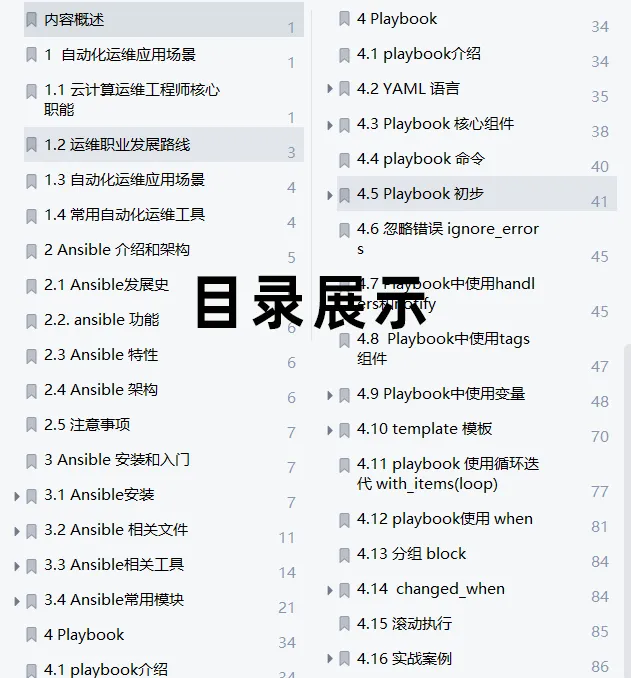
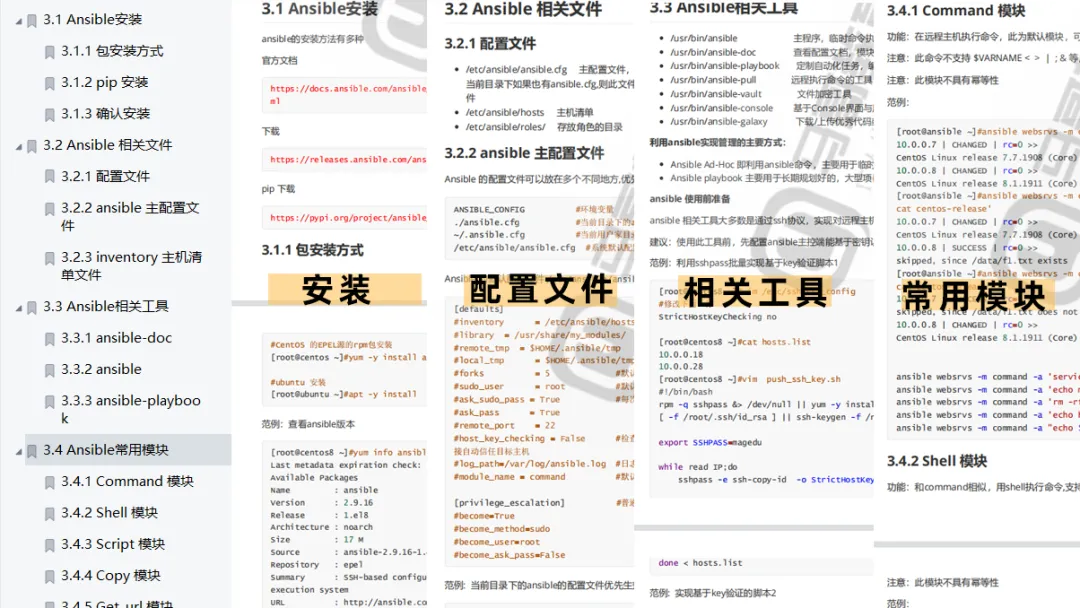
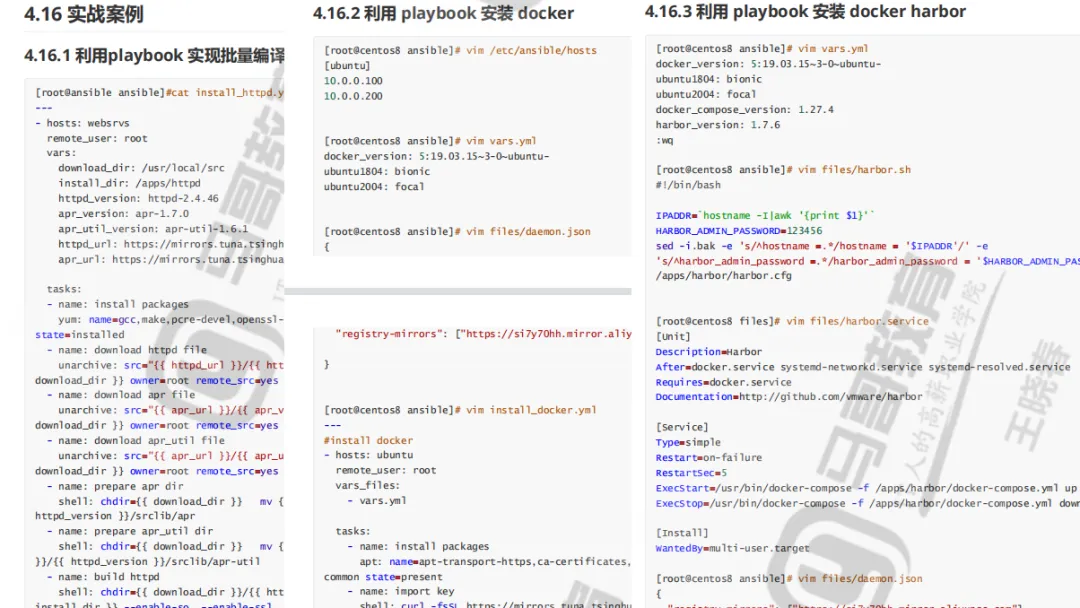
 ▲▲▲Identify the QR codeNote:ansible collection to take everything away
I hope this article can help readers comprehensively understand and master Ansible configuration automation technology, flexibly apply it in practical work, and improve the level of operational automation.