Today, we continue discussing an important type of pointer in C: the void pointer.
Void Pointer: The “Universal Key” of C Language
1 What is a void pointer?
A void pointer is a special pointer type in C, defined as<span>void *</span>. It can point to the memory address of any data type, serving as a “universal pointer container” or “master key” that can unlock various data types.
void *generic_ptr; // Declare a void pointer
2 Basic Usage and Type Conversion
The true power of a void pointer lies in its flexibility, but it must be correctly typecast before use:
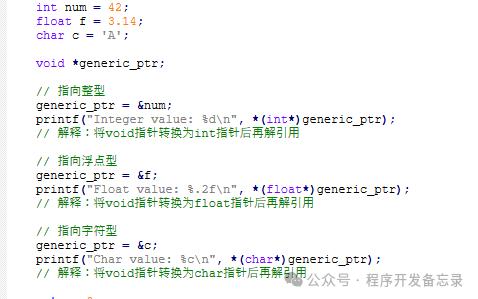 Key Point: Before using a void pointer, it must be converted to a specific type pointer to dereference it correctly.
3 Powerful Applications of Void Pointers
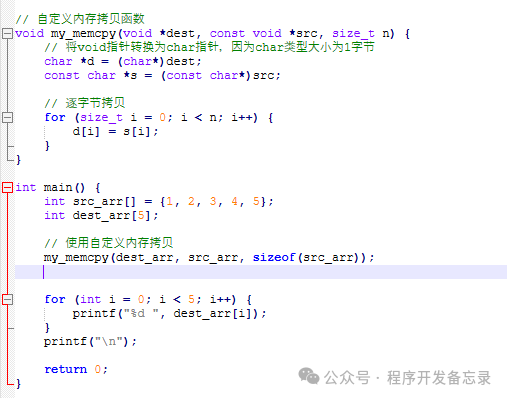
3.1 Generic Memory Operation Functions
Void pointers are particularly useful in implementing generic memory operation functions, such as memory copy:
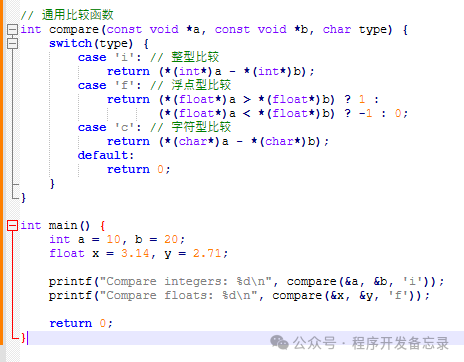
3.2 Generic Comparison Functions
Void pointers can be used to create generic comparison functions suitable for various data types:
4 Common Pitfalls and Solutions for Void Pointers
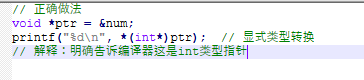
4.1 Pitfall One: Forgetting Type Conversion

Solution: Always perform explicit type conversion before use
4.2 Pitfall Two: Incorrect Type Conversion
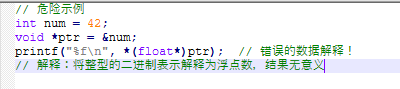
Solution: Ensure the correctness of type conversions
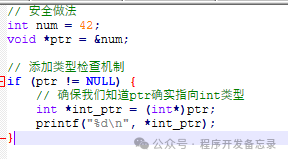
4.3 Pitfall Three: Pointer Arithmetic
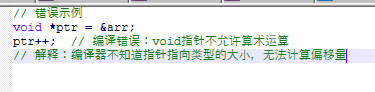
Solution: Convert to a specific type pointer before performing pointer arithmetic

The void pointer is an extremely powerful tool in C, but it is also a double-edged sword. Its universality brings flexibility but also increases the risk of errors. When using it, keep in mind:
-
Always perform explicit type conversion: Before using a void pointer, it must be converted to a specific type
-
Ensure the correctness of conversions: Incorrect type conversions can lead to unpredictable behavior
-
Avoid direct arithmetic operations: Convert to a specific type pointer before performing pointer arithmetic
This is a personal opinion for reference only; my level is limited, and any criticism or correction is welcome.