Exploring C Language Pointers (Part Four): The Void Pointer

Exploring C Language Pointers (Part Four): The Void Pointer

Today, we continue discussing an important type of pointer in C: the void pointer. Void Pointer: The “Universal Key” of C Language 1 What is a void pointer? A void pointer is a special pointer type in C, defined as<span>void *</span>. It can point to the memory address of any data type, serving as a … Read more
Key Differences Between Operators in Java and C++

Key Differences Between Operators in Java and C++

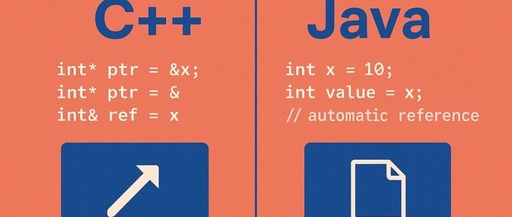
A summary of the main differences between operators in Java and C++ is provided. Please add any omissions. Pointer and Reference Operators Available in C++, Not in Java: // C++ – Pointer and Reference Operators int x = 10; int* ptr = &x; // Address-of operator (&) int value = *ptr; // Dereference operator (*) … Read more

C++ Basics: The explicit Keyword

C++ Basics: The explicit Keyword

1. What is explicit? explicit is a C++ keyword It modifies constructors and type conversion functions Purpose: to prohibit implicit type conversions 2. What is the use of explicit?First, let’s look at the following example: class A{public: A(int x) { }}; void foo(A a) { } foo(10); // Valid, int implicitly converts to A By … Read more

C++ Programming Guidelines – Initialization and Type Conversion

C++ Programming Guidelines - Initialization and Type Conversion

01 C++ Programming Guidelines – Constants02 Initialization and Type Conversion Declaration, Definition, and Initialization 03 Do not use memcpy or memset to initialize non-POD objects Note: POD stands for “Plain Old Data”, a concept introduced in the C++98 standard (ISO/IEC 14882, first edition, 1998-09-01). POD types mainly include int, char, float, double, enumeration, void, and … Read more

Summary of Two Types of Type Conversion in C: Understanding Implicit and Explicit Conversion

Summary of Two Types of Type Conversion in C: Understanding Implicit and Explicit Conversion

“From today onwards, study hard and make progress every day” Repetition is the best method for memory; spend one minute each day to remember the basics of C language. “C Language Beginner’s Essential Knowledge Notes Series of 100 Articles”“ 24. Summary of Two Types of Type Conversion: Understanding Implicit and Explicit Conversion 1. Basic Concept … Read more

The Art of Type Conversion in C++

The Art of Type Conversion in C++

As an old programmer accustomed to writing in C, type conversion in C can be described as simple and straightforward. Regardless of the type, you can directly convert it by adding parentheses, even if the resulting type is completely unrelated to the original. The compiler will not throw an error. This mechanism gives programmers ample … Read more

Tutorial for Judging the Wiring Sequence of POWER-Z CT001 Type-C Cable Tester

Tutorial for Judging the Wiring Sequence of POWER-Z CT001 Type-C Cable Tester

Introduction With the widespread application of Type-C interfaces in electronic devices, the accuracy of the cable wiring sequence directly determines the device’s power supply, data transmission, and functional expansion capabilities. Only cables with a complete wiring sequence can meet the demands of high-speed data transmission. Cables lacking wire cores cannot support Thunderbolt and high-speed USB … Read more

Basic Data Types and Variable Naming, Assignment in Python

Basic Data Types and Variable Naming, Assignment in Python

1. Defining Different Types of Variables a = 42 b = 3.14 c = "Python" d = True e = None f = [1, 2, 3] g = {"name": "Alice"} h = (1, 2, 3) i = {1, 2, 3} j = complex(2, 3) k = b"byte" l = bytearray(b"bytearray") print(type(a)) # &lt;class 'int'&gt; print(type(b)) … Read more

Essential Knowledge Points for C Language Beginners: 9. Differences Between Float and Double

Essential Knowledge Points for C Language Beginners: 9. Differences Between Float and Double

“From today on, study hard and make progress every day” Repetition is the best method for memory; spend one minute every day to remember the basics of C language. “Series of 100 Essential Knowledge Points for C Language Beginners“ 9. Differences Between Float and Double 1. Overview of Floating Point Types The floating point type … Read more

Four Types of Type Conversion Operators in C++

Four Types of Type Conversion Operators in C++

In C++, there are four type conversion operators: static_cast, dynamic_cast, const_cast, and reinterpret_cast. They have significant differences in their usage and behavior. Below, we will detail their differences and applicable scenarios: 1. static_cast (Static Conversion) Usage: Used for conversions between basic data types and for pointer or reference conversions between classes with an inheritance relationship. … Read more