Click the “blue text” above to follow us!
2025.08.13
Word count: 6018
Estimated reading time: 18 minutes
Abstract
The implementation of artificial intelligence in resource-constrained embedded microcontrollers is an urgent issue to be addressed. This article analyzes the current situation and challenges of embedded artificial intelligence in engineering education, introduces teaching practices based on the Kociemba algorithm and AI neural networks for Rubik’s Cube solving robots, and discusses the application of artificial intelligence in recent research competitions and teaching in intelligent robotics, offering suggestions for the cultivation of engineering capabilities and competitions involving artificial intelligence.
Keywords
Embedded systems; Artificial intelligence; Robotics; STM32F4;
Authors: Wang Wei1,2, Wang Junyan1, Miao Zhenteng1
Classification number: TP31
Document identification code: A
0 Introduction
Since the Ministry of Education released the “Action Plan for Leading Artificial Intelligence Innovation in Higher Education” in April 2018, a total of 345 universities in China have established artificial intelligence majors, 194 universities have established intelligent science and technology programs, and 301 universities have established robotics engineering programs, totaling 840 undergraduate institutions. In 2021, 558 vocational colleges successfully applied for artificial intelligence technology service majors, along with countless related majors labeled as “intelligent,” such as intelligent medical engineering and intelligent construction. The intelligent disciplines and majors in Chinese universities have blossomed rapidly, with annual enrollment numbers exceeding 100,000.
It is well known that the field of artificial intelligence is a comprehensive discipline involving numerous mathematical foundations and knowledge from science and engineering. Overall, the development of artificial intelligence programs in Chinese universities started late and is still in its infancy. Except for a few double-first-class universities with accumulated disciplines related to artificial intelligence, many artificial intelligence programs are almost entirely new, facing common issues such as a lack of qualified faculty, unclear talent cultivation plans and objectives, nascent course system construction, professional textbook development, and nearly empty artificial intelligence training bases, especially in ordinary undergraduate programs and vocational colleges aimed at employment.
Currently, a significant proportion of engineering universities offer artificial intelligence programs, but there is a considerable gap between the number of qualified faculty and the enthusiasm of students to enroll. Existing artificial intelligence courses and teaching materials tend to focus on theoretical science, and there is a significant communication gap with the artificial intelligence industry. Most current professional courses merely incorporate widely used technologies such as facial image recognition and speech recognition into the curriculum or directly reference online open-source materials. Many courses and experimental content primarily consist of simulations and parameter tuning to achieve results, which only equates to the role of a marker in the workplace, leading to a substantial discrepancy between industry expectations for artificial intelligence professionals and the employment training objectives for graduates.
The teaching of embedded artificial intelligence is particularly inadequate, falling short of the requirements advocated by the “New Engineering” initiative, which emphasizes the practicality, interdisciplinary nature, and integration of new technologies such as artificial intelligence, information communication, robotics control, and software design with traditional industrial technologies.
1 The Predicament of Embedded Artificial Intelligence Teaching and Application
Typical applications of artificial intelligence (such as facial image recognition, automatic language recognition and translation, smart speakers, robotic vacuum cleaners, and automatic push notifications) are widespread and relatively mature. The extensive dissemination of news and market expectations regarding intelligent manufacturing, robotics applications, autonomous vehicles, drone swarms, and voiceprint recognition has led the education sector and society to believe that “artificial intelligence and industrial technology” have matured, and there is a huge demand for such talent across various industries, requiring only the integration of educational resources and increased promotion. In reality, the more mature artificial intelligence-related (including robotics and intelligent) industries and products, both domestically and internationally, are primarily concentrated in information processing and push notifications, with a lack of strong examples and large-scale applications in unstructured scenarios requiring reliable real-time performance, one of the challenges being how to integrate the training results and algorithms of artificial intelligence into resource-limited embedded systems.
The main issues faced by the application of artificial intelligence in embedded systems and teaching are the limited computing power of embedded systems, a lack of AI integration software, insufficient teaching materials and suitable practical equipment, and teachers’ reluctance to tackle difficulties.
Embedded systems, especially MCUs, have very limited computing power. Even with the support of cloud platforms and edge computing, when faced with poor network conditions, wireless interference, real-time computing demands, channel congestion, and security authentication issues, the computing power required for artificial intelligence based on embedded systems is far from sufficient. Even the application of new neural network-based dedicated processor ICs cannot achieve smooth processing or adapt to the demands of intelligent logistics, smart manufacturing, and the Internet of Things.
Currently, widely used technologies such as facial recognition, road sign recognition, and speech and text recognition primarily adopt deep learning models based on convolutional neural networks, which heavily rely on networks and computing power. Typically, deep learning involves training large labeled datasets on high-performance computers hundreds or thousands of times before transplanting the algorithm results to less capable computers (such as embedded systems and microcontrollers). However, obtaining a large amount of labelable data through embedded systems is extremely challenging, as much data from autonomous driving, industrial data, and the Internet of Things is private, discrete, distributed, and non-reproducible. Directly cutting and transplanting the results of deep learning training for application in embedded systems requires substantial development and research work, and new application routes for artificial intelligence based on embedded systems need to be explored to resolve the contradiction of “the model is excellent, but the computing power is too small.”
The embedded artificial intelligence teaching experimental boards in universities differ from the development boards used by corporate R&D engineers. In many embedded systems and intelligent professional teachings, some teaching instrument manufacturers provide universities with Cortex-A series embedded artificial intelligence experimental devices and software platforms that frequently encounter issues, have high application difficulties, and require knowledge and foundations for students’ hands-on operations that far exceed the teaching scope of university students. They provide prototype development boards (blocks) or products intended for R&D engineers, packaged and trimmed for direct use in universities. Some appear closely integrated with practical applications, high-end, high-resolution, and high-recognition rates, but in reality, only provide packaging and partial programs, leading teachers and students to mostly replicate routines, run parameter tuning to achieve results, but with only a superficial understanding of algorithms and principles, failing to meet teaching and practical objectives. While students may seem to complete experiments quickly, smoothly, and easily, submitting “very reliable” experimental reports, the reality is often that they are downloading or copying, resulting in a “serious formality” that becomes apparent during job interviews. This is also the dilemma and predicament between university embedded artificial intelligence teaching and workplace demands.
There are very few teaching software tools available for embedded artificial intelligence, and even fewer that are user-friendly. Some universities are attempting to adopt teaching based on Cortex-M level MCUs, such as STMicroelectronics’ STM32Cube.AI artificial intelligence neural network development toolkit, which provides pre-trained HAR human activity recognition neural network models and generates STM32 library functions, supporting smart wearable devices, smart homes, the Internet of Things, smart buildings, and industrial IoT. The so-called HAR (Human Activity Recognition system) model is generated based on a 3D acceleration database of human activities, capable of inferring current human movement behaviors (such as walking, jumping, climbing stairs, etc.), but the recognition of low acceleration movements still needs improvement. This artificial intelligence model can be compressed to less than 800 KB and can be applied to Cortex-M4, M7, and other series MCUs. We are also attempting to apply STMicroelectronics’ STM32Cube.AI artificial intelligence neural network development toolkit in the teaching of intelligent robotics, but progress has been slow due to a lack of industry support.
NXP has also launched the DeepView RT inference engine suitable for i.MX application processors, applicable to the i.MX RT cross-domain MCU’s eIQ (edge intelligence) machine learning software, integrated into the MCUXpresso SDK version. eIQ provides a comprehensive set of workflow tools, inference engines, and neural network (NN) compilers, simplifying and accelerating machine learning development. This learning software has been continuously upgraded since its launch in 2018, supporting system-level applications and machine learning algorithm implementations, suitable for NXP’s multi-core i.MX8 and i.MX8M application processors based on Arm Cortex-M and Cortex-A cores.
Moreover, due to a lack of suitable teaching materials, appropriate teaching methods, and usable teaching experimental equipment, some teaching elements and aspects of embedded artificial intelligence are still in the exploratory stage, often encountering deadlocks, repetitions, and misjudgments, urgently needing continuous upgrades and improvements. Relevant course teachers also face difficulties, especially with the research GDP orientation in universities, making the path of embedded AI teaching and application extremely challenging, with everyone waiting and observing.
2 Practice of Embedded Artificial Intelligence in Rubik’s Cube Robot Teaching and Competitions
The 3×3 Rubik’s Cube consists of 8 corner pieces, 12 edge pieces, 6 center pieces, and 6 colored faces, with an enormous number of combinations. If it turns 3 times per second, it would take 4542 billion years to complete all combinations. Since its inception, it has been highly favored, and numerous Rubik’s Cube solving competitions have been held worldwide. The multi-axis Rubik’s Cube solving robot “Sub 1 Reloaded” designed by German engineer Albert Beer broke the Guinness World Record for the fastest Rubik’s Cube solving time at 0.637 seconds (the human record is 4.904 seconds).
Some companies and universities both domestically and internationally have begun to use intelligent robots as application projects for embedded artificial intelligence. In May 2018, the first China College Intelligent Robot Creative Competition finals were held in Yuyao, Zhejiang, where the competition themed “Rubik’s Cube Robot – Challenge the Limits” comprehensively utilized embedded systems, mechanics, electronic sensing, information, and natural science knowledge, striving to achieve faster calculations and more agile movements than humans.
Rubik’s Cube solving methods can be divided into human solving algorithms, computer solving algorithms, and AI-enhanced algorithms. The first two types of algorithms are based on the fundamental principles of group theory, while the latter introduces artificial intelligence algorithms into the work of embedded systems, which is just beginning.
The artificial intelligence robotic arm developed by the American artificial intelligence research organization OpenAI has achieved Rubik’s Cube solving with a single-arm five-finger design. This project originated from a study at Cornell University, where OpenAI utilized neural networks to solve the Rubik’s Cube problem, simulating training through reinforcement learning, filtering Rubik’s Cube solving steps using the Kociemba algorithm, and applying automatic domain randomization (ADR) to transfer the training simulation to a real robotic hand (see Figure 1), achieving a success rate of approximately 60%.
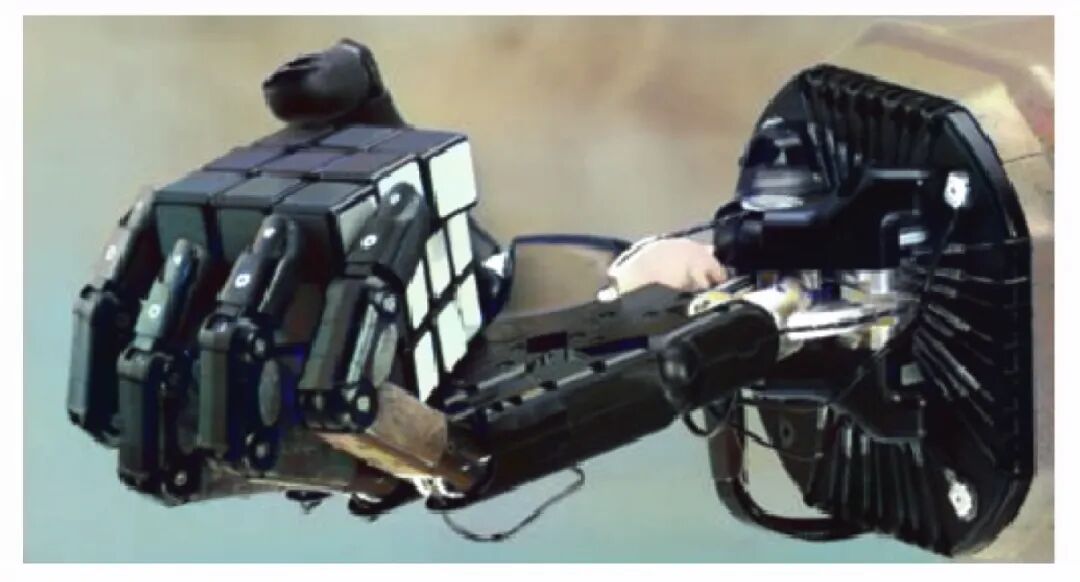
Figure 1 Single-arm five-finger Rubik’s Cube solving robot
Automatic domain randomization training starts from a single, non-random Rubik’s Cube solving scenario, allowing the neural network to first learn to solve the cube. As the neural network’s performance improves, the number of domain randomizations automatically increases when a certain performance threshold is reached, making the tasks more challenging and thereby increasing robustness.
A research team from the University of California, Irvine, released a Rubik’s Cube solving AI based on reinforcement learning, which coordinates deep neural networks (DNN) with self-learning iterations (ADI) and Monte Carlo tree search (MCTS) to develop “DeepCube” (Deep Rubik’s Cube). The training of ADI is essentially an iterative supervised learning process. It has been reported that the current success rate of solving the Rubik’s Cube is close to 100%.
We are also attempting to apply embedded systems and artificial intelligence in intelligent teaching based on Rubik’s Cube robots, having developed an intelligent Rubik’s Cube teaching robot based on the Kociemba algorithm. This system consists of subsystems for Rubik’s Cube position detection, computer color recognition, Rubik’s Cube solving using the Kociemba (two-phase) algorithm, mechanical hands for solving, embedded main controllers, and voice teaching assistance, as shown in Figure 2.
The six-axis Rubik’s Cube solving intelligent robotic hand developed by our research group uses three image sensors to capture the state of the Rubik’s Cube, with a PC performing edge recognition and color analysis. The embedded microcontroller STM32F4 controls the stepper motor, achieving a solving speed of 2.7 seconds, and won the second prize in the national graduate electronic innovation competition, the “Huawei Cup.”
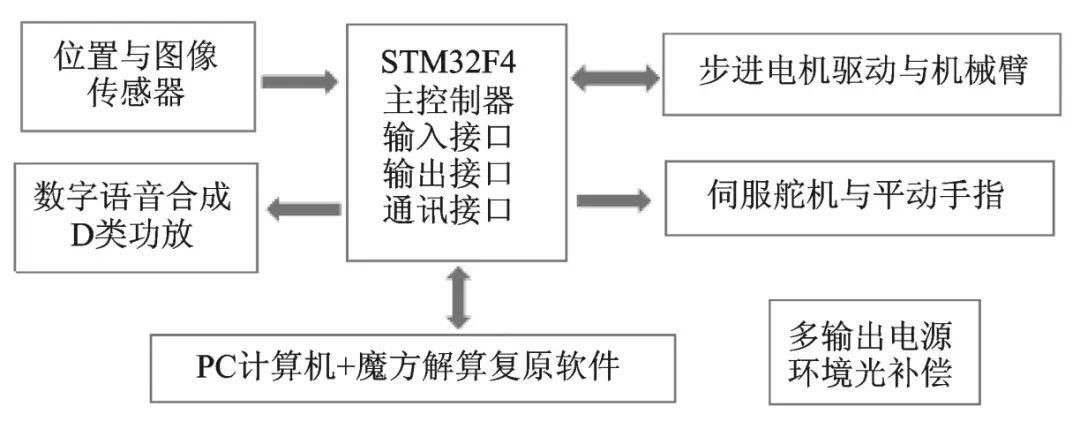
Figure 2 Composition of the intelligent Rubik’s Cube teaching robot
Since 2018, four editions of the China College Intelligent Robot Creative Competition have been held, including Rubik’s Cube intelligent robot competitions, “IRFC” intelligent robot combat competitions, creative design competitions, and “ROS” competitions. For example, competitions that combine artificial intelligence and robotics technology with traditional Chinese martial arts in humanoid robot visual confrontations; applications of visual intelligent grasping with robotic hands, drone and mobile robot air-ground coordination; and multi-robot group operations require students to possess high machine vision and artificial intelligence application programming skills. These competitions are highly engaging and have educational and research value, as shown in Figure 3.
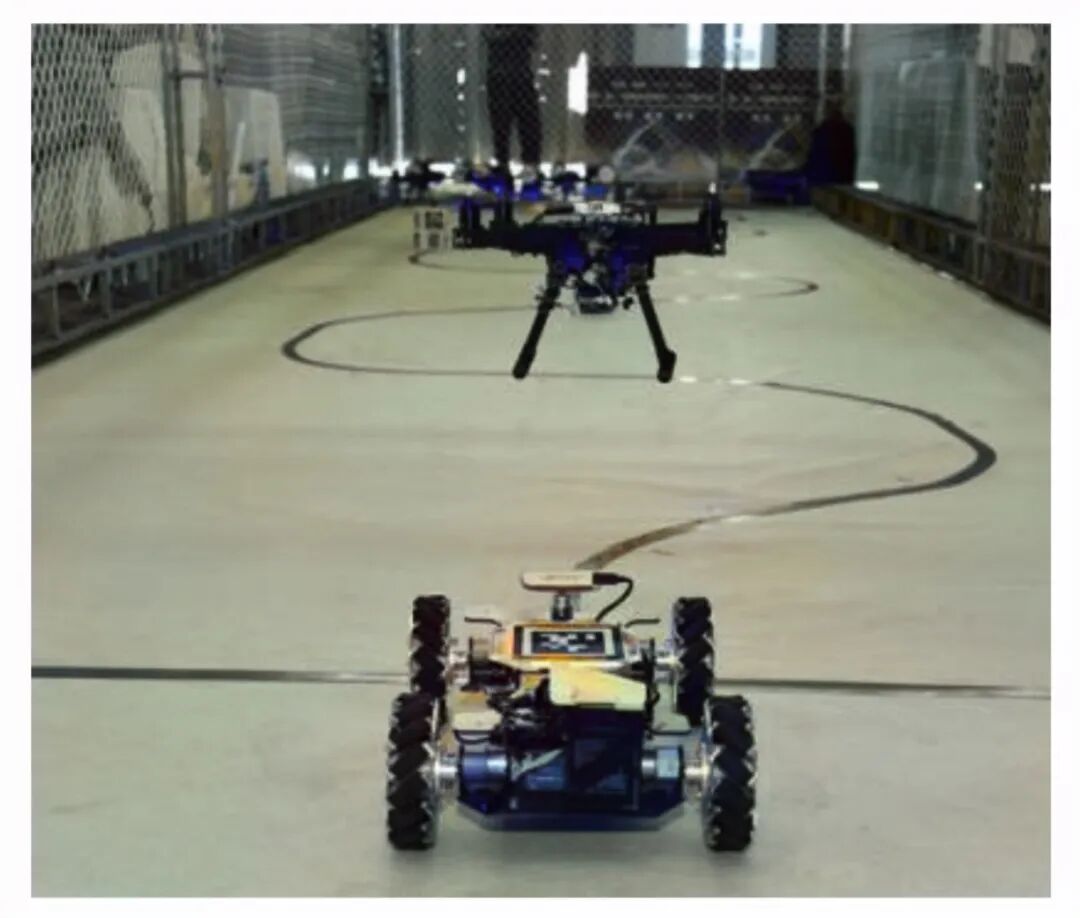
Figure 3 Air-ground coordination system of drones and robots
These competitions showcase new applications of artificial intelligence, mostly based on embedded systems, with a good competitive ecosystem, involving knowledge from multiple courses and fields such as computer principles and applications, embedded systems and microcontrollers, artificial intelligence, machine vision, sensor interfaces, motion control, and human-computer interaction. This is beneficial for enhancing university students’ enthusiasm and initiative in learning related knowledge and has a comprehensive and positive guiding role in the talent cultivation of related majors such as artificial intelligence, automation, electronic information, and intelligent manufacturing.
3 Reflections and Suggestions on Embedded Artificial Intelligence in Engineering Education
Based on engineering education, how to resolve the interrelated yet contradictory issues of national industrial transformation demands for talent, the scarcity of faculty and resources in universities, contemporary students’ practical foundations and individual characteristics, and insufficient theoretical and technical practical equipment in embedded artificial intelligence remains to be explored collaboratively by the industry and universities. The design, production, and debugging of teaching practices or competitions based on embedded artificial intelligence and robotics involve multiple disciplines, perspectives, and courses, requiring trade-offs among cost-effectiveness, outcomes and rules, theory and practical skills, in line with the Ministry of Education’s promotion of engineering professional accreditation, which emphasizes strengthening the ability of undergraduates to solve complex engineering problems, showing good teaching prospects.
In light of the teaching, competitions, and industry requirements for graduates’ capabilities in embedded artificial intelligence among domestic university students, combined with our years of teaching experience, we have the following reflections and suggestions:
① Embedded artificial intelligence should focus more on applied technology rather than just science. Artificial intelligence must be implemented to develop and meet societal demands for university students. It is recommended to conduct tiered teaching based on different professional training requirements. There is no need to start with MCS-51, especially for majors applying embedded artificial intelligence technology, rather than those studying intelligent science and technology or electronic engineering that focus on research. In recent years, we have made good progress in STM32 teaching based on the HAL library, where even vocational students can understand basic technical principles, provided that the teaching materials and methods for C language and electronic technology undergo significant adjustments.
② Increase the development and application promotion of embedded artificial intelligence integration software. It is essential to write teaching materials and supplementary materials suitable for the current situation of ordinary university teachers and students. The RT-THREAD-AI software package has been launched domestically, but the engineering application examples, content, and quantity need to be expanded, especially to compare the effectiveness with traditional measurement and control methods, demonstrating the advantages of embedded artificial intelligence in specific applications (if any). Relevant domestic and foreign software and hardware manufacturers should increase their R&D and promotion efforts.
③ Develop necessary and user-friendly embedded artificial intelligence teaching experimental devices. More attention should be paid to students’ learning outcomes rather than just how teachers teach. Students are merely beginners in embedded artificial intelligence, and the goal is to facilitate learning from 0 to 1. It is not advisable to use development boards and pile on too many “high-end” empty applications. Ordinary universities are training university students, not R&D engineers at the level of continuing education or training classes for university graduates. Currently, many students report that embedded systems are difficult to learn, leading to abandonment, one key reason being insufficient or regressive improvements in teaching methods and related teaching instruments after enrollment expansion, especially under the current situation of reduced class hours and increased student-teacher ratios. Blindly and excessively demanding the introduction of PPT and information technology teaching, requiring “higher, faster, more convenient, and better-looking” approaches, deviates from teaching and cognitive principles.
④ Organize the “University Student Embedded Artificial Intelligence Application Ability Competition” in a timely manner. Following the Ministry of Education’s engineering professional accreditation requirements based on teaching outcomes, attention should be paid to competitions that allow more university students to participate, especially by setting appropriate competition rules that involve most students and teachers rather than a small number of students. The purpose of the competition is to promote university students’ learning of embedded artificial intelligence, not to overly emphasize producing significant or new results. University students are in a learning and nurturing stage, not a stage for producing results or significant outcomes, and the negative impact of “pulling seedlings to help them grow” should be mitigated.
In conclusion, embedded artificial intelligence technology is essential for achieving intelligent manufacturing, the Internet of Everything, smart cities, and autonomous vehicles, representing the last mile of the intelligent era, with vast market space and educational prospects. We hope that colleagues in the semiconductor IC industry, universities, research institutions, and the artificial intelligence application industry can work together to accomplish practical tasks, promote the integration and application of artificial intelligence and embedded technology, and enhance the industrial competitiveness of domestic intelligent equipment and technology.
References

[1] Solving Rubik’s Cube with a Robot Hand [EB/OL]. [2021-10]. https://openai.com/blog/solving-rubiks-cube/.
[2] CubeExplorer 5.14 [EB/OL]. [2021-10]. https://github.com/hkociemba/CubeExplorer.
(Author affiliations: 1. Guangdong Bi Gui Yuan Vocational College, Qingyuan 511510; 2. Guangzhou University Songtian College)
END
[Click the “blue text” above to search for more content in the account]

Follow us for more exciting content
 Share, like, and arrange to see?