Today, I had an interview with a major company, where I was asked how to implement stack and queue using C language. I found the questions quite interesting, so I would like to review them here.StackA stack is a last-in-first-out (LIFO) data structure. The implementation idea is to use an array to realize it, maintaining the stack’s capacity and pointer through a structure. When the stack is full, it expands.First, define a structure that includes capacity, top pointer, and data address elements.When creating a stack, manually allocate the size of the capacity, and initialize the top pointer to -1.The operation to push an element into the stack: if the capacity is insufficient, double the capacity. Based on the position pointed to by the top pointer, copy the data to the pointer position and increment the pointer.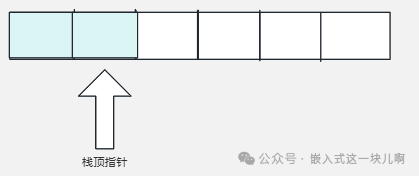 The pop operation: decrement the top pointer.
typedef void (*FreeFunction)(void*);        // Provides a generic memory release mechanism

typedef struct{    void **data;        // Data    int top;            // Top pointer    int capacity;        // Capacity    FreeFunction freeFn;} Stack;
Stack* stack_create(int capacity, FreeFunction freeFn) {    Stack *stack = (Stack*)malloc(sizeof(Stack));    stack->data = (void**)malloc(sizeof(void*) * capacity);    stack->top = -1;    stack->capacity = capacity;    stack->freeFn = freeFn;    return stack;}
void stack_push(Stack* stack, void* element) {    if (stack->top == stack->capacity - 1) {        stack->capacity *= 2;        stack->data = (void**)realloc(stack->data, sizeof(void*) * stack->capacity);    }    stack->data[++stack->top] = element;}
void* stack_pop(Stack* stack) {    if (stack->top == -1) return NULL;    return stack->data[stack->top--];}
void* stack_top(Stack* stack) {    if (stack->top == -1) return NULL;    return stack->data[stack->top];}
int stack_empty(Stack* stack) {    return stack->top == -1;}
void stack_destroy(Stack* stack) { if (stack->freeFn) { for (int i = 0; i <= stack->top; i++) { stack->freeFn(stack->data[i]); } } free(stack->data); free(stack);}QueueA queue is a first-in-first-out (FIFO) data structure. The implementation idea is to use an array, maintaining the head and tail of the queue through a structure. It also expands when the capacity is insufficient.Without further ado, the implementation method is similar to that of the stack, but it requires maintaining an additional pointer.
typedef struct {    void** data;    int front;    int rear;    int capacity;    int size;    FreeFunction freeFn;} Queue;
Queue* queue_create(int capacity, FreeFunction freeFn) {    Queue* queue = (Queue*)malloc(sizeof(Queue));    queue->data = (void**)malloc(sizeof(void*) * capacity);    queue->front = 0;    queue->rear = -1;    queue->size = 0;    queue->capacity = capacity;    queue->freeFn = freeFn;    return queue;}
void queue_enqueue(Queue* queue, void* element) {    if (queue->size == queue->capacity) {        queue->capacity *= 2;        queue->data = (void**)realloc(queue->data, sizeof(void*) * queue->capacity);    }    queue->rear = (queue->rear + 1) % queue->capacity;    queue->data[queue->rear] = element;    queue->size++;}
void* queue_dequeue(Queue* queue) {    if (queue->size == 0) return NULL;    void* element = queue->data[queue->front];    queue->front = (queue->front + 1) % queue->capacity;    queue->size--;    return element;}
void* queue_front(Queue* queue) {    if (queue->size == 0) return NULL;    return queue->data[queue->front];}
int queue_empty(Queue* queue) {    return queue->size == 0;}
void queue_destroy(Queue* queue) {    if (queue->freeFn) {        while (!queue_empty(queue)) {            void* element = queue_dequeue(queue);            queue->freeFn(element);        }    }    free(queue->data);    free(queue);}