Editor’s Note:
With the initial victory in the fight against the pandemic, the GCC Secretariat will report on the trend judgments of GCC members regarding post-pandemic industries through interviews, as well as their strategic layouts and proactive actions in the wave of safe resumption of work and economic recovery.This issue features Dr. Zhang Zhiqun, Deputy General Manager of Tianjin Feiteng.
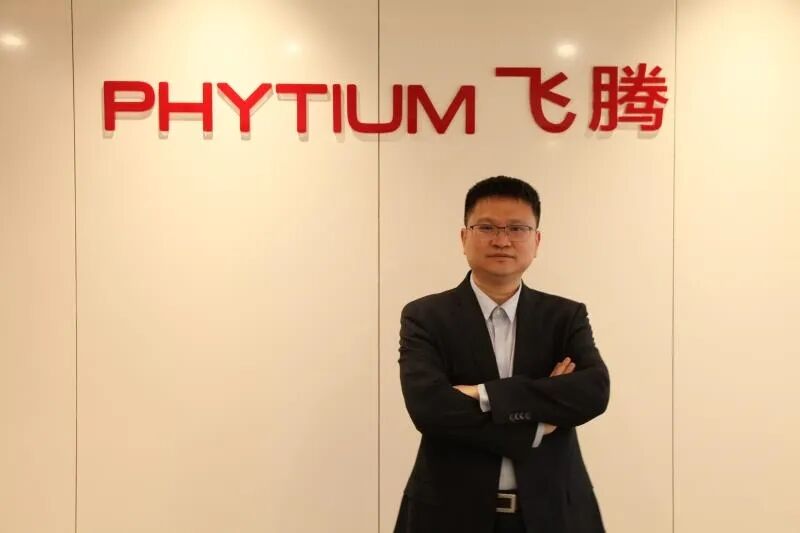
Dr. Zhang Zhiqun, Deputy General Manager of Tianjin Feiteng
Q: Could you discuss the challenges and opportunities that this pandemic has brought to the entire IT industry?
A: This pandemic will have a huge and far-reaching impact on global politics, economy, technology, healthcare, and society. As the gene that constructs the information society, IT technology and its industry are deeply integrated into various fields of society, facing significant and profound shocks and transformations.
First, a new round of information revolution and industrial transformation is unstoppable. Although the pandemic has hindered offline interactions, it has accelerated online interactions. Big data, cloud computing, AI, the Internet of Things, cloud video, healthcare informationization, and collaborative office work are closely related to people’s work and life. The IT field may welcome deeper cross-border integration and globalization, where the profit added value of various industries depends on the information and knowledge processed, rather than on specific materials. This presents a huge development space for the IT industry.
Second, the globalization of the online economy inevitably requires the internationalization of IT technology and ecology, open architecture, and open-source software. We should take proactive actions, align with the trends in IT technology development, and engage in open cooperation to strive for a voice in the formulation of international standards, ecological construction, and industrial reshaping, aiming to gradually gain dominance over the next 10 to 20 years.
Third, the digital economy is booming, and the era of intelligent computing is accelerating. AI based on big data has played a significant role in pandemic monitoring, temperature detection, virus testing, resuming work and production, remote work, and online education. Non-centralized and contactless interactions will become the new normal in work and life, with technologies such as virtual reality, digital twins, blockchain, and AI continuously integrating with traditional industries. The large-scale landing and application of AI scenarios will continue to create a new speed for China, and the new industrial landscape of the intelligent computing era has begun to take shape.
Fourth, our domestic IT innovation has undergone 10 years of tempering, and IT technology and products can leverage this to achieve collective breakthroughs. Currently, the gap between domestic CPUs and international advanced levels is 3 to 5 years, effectively addressing information security issues represented by “backdoors” and laying a solid foundation for information security. The domestic key software and hardware industry ecosystem is becoming more focused, with application fields continuously expanding and enriching, actively addressing supply chain security issues. National regulatory authorities, the IT industry, and industry users should seize the opportunity to conduct in-depth research on core technology breakthroughs, optimize and improve the investment layout of basic industries, increase investment in supply chain construction, strengthen the localization rate requirements for complete machines and systems, accelerate the replacement and upgrade of large-scale applications, and promote the IT industry chain to align with high-end standards, rapidly transforming and growing to encompass high, medium, and low-end industrial ecosystems.
Q: Could you share how this pandemic has impacted your company? Did your performance in 2020 increase, remain stable, or decline?
A: This year is the year of comprehensive promotion and application of domestic innovation. Key industries such as finance, telecommunications, energy, and transportation have fully launched the adaptation verification and pilot application of domestic key software and hardware, which is a significant benefit for domestic CPU manufacturers. In the second half of last year, Feiteng and downstream ecological partners had already made sufficient preparations and production plans, which perfectly compensated for the global IT industry’s capacity decline and rising production costs caused by this pandemic.
Due to the pandemic, some government procurement projects may be delayed or scaled down, bringing uncertainty to this year’s performance growth. However, Feiteng has made comprehensive layouts and pilot applications in key industries such as finance, telecommunications, energy, and transportation over the past few years, which can offset the uncertainties brought by government procurement. This year, we expect to grow by 3 to 5 times compared to last year.
Q: Everyone is actively working to restore the economy. Could you introduce your company’s strategy and ongoing work this year?
A: For over 20 years, the Feiteng team has focused on the major strategic needs of the country, centering on core chips for information systems, serving society with Chinese chips. This year, in the face of the impact of the pandemic and the opportunities for industrial development, Feiteng remains committed to the mission of the CPU national team, controlling risks and honing internal skills to support national information security and industrial development.
We will manage short-term risk control, accelerate production plans for supply,
increase chip inventory, ensure multi-channel supply, and enhance capacity conversion.
First, we will actively bear the pressure of component supply and inventory funding. In the face of adverse factors such as raw material shortages and insufficient upstream capacity, we will increase the inventory baseline and develop a long-term continuous production plan to alleviate the inventory and supply funding pressure on downstream manufacturers. Due to timely responses and adequate preparations, Feiteng currently has sufficient chip inventory, and shipments are normal, ensuring that downstream manufacturers can resume work and supply products on schedule.
Second, we will strengthen multi-channel guarantees for the upstream supply chain and capacity conversion capabilities. In the wafer fabrication stage, we will comprehensively consider product performance indicators, supply chain requirements, commercial costs, yield rates, and other multidimensional factors, using different processes, wafer fabrication channels, and multiple testing and packaging manufacturers to ensure efficient capacity conversion and mutual backup.
We will cultivate long-term core competitiveness and accelerate the R&D progress of new products,
and strengthen the construction of the industrial ecosystem and service system.
First, we will accelerate the R&D progress of CPU chips. Feiteng CPUs are updated every two years on average, steadily improving performance and continuously enriching the product spectrum. Recently, Feiteng will release the multi-socket server CPU FT-2500, supporting 2 to 8 high-end servers. The new generation of cloud computing server CPUs is accelerating R&D, fully supporting cloud computing, intelligent computing, and trusted computing; the new generation of desktop CPUs has been initiated for R&D, which will further enhance single-core performance and strengthen security features. At the same time, Feiteng is also expanding and enhancing the embedded CPU product line, customizing products for industries such as aerospace, rail transit, electric power, and industrial control.
Second, we will strengthen and expand the industrial ecosystem. The Feiteng ecosystem is rapidly developing and expanding, with direct cooperative service partners exceeding a thousand, collaborating with leading companies in computing, networking, security, cloud computing, big data, artificial intelligence, and the Internet of Things, including hundreds of OEM/ODM manufacturers such as Great Wall, Lenovo, Inspur, Sugon, and Baolongda, as well as hundreds of well-known network and security manufacturers such as ZTE, Unisoc, Qihoo 360, and Venustech, along with numerous cloud computing, video, and AI manufacturers like Tencent, Alibaba, Baidu, Hikvision, and Bitmain.
Third, we will optimize our service system. Feiteng has established branches across the country, including in Beijing, Guangdong, Sichuan, Hubei, Tianjin, Hunan, Jiangsu, and Zhejiang, to provide services close to users. At the same time, Feiteng actively participates in the adaptation verification work of government and local integrators, conducting in-depth analyses based on user needs, and collaborating comprehensively on technical specifications and application migration; during the pandemic, we organized numerous online training sessions for integrators and industry units, continuously empowering them.
Q: What plans does your company have to seize new opportunities such as new infrastructure?
A: The core of new infrastructure is digital infrastructure, and autonomous computing platforms will become a new choice for “new infrastructure”! New infrastructure is not simply about domestic substitution; it involves a “dual upgrade” of core technology systems that are secure and controllable and the use of data to empower intelligence in information systems!
Feiteng has been committed to providing core computing power for the evolution of information networks and the transformation of the digital economy, offering a full-stack autonomous solution from edge to cloud. Recently, we jointly released over 80 solutions validated through engineering practice with more than 70 partner companies, covering various fields of “new infrastructure” such as communication networks, big data, cloud computing, artificial intelligence, smart energy, and smart transportation, providing strong support for cloudification, data governance, business restructuring, and intelligent transformation across various industries.
In terms of communication network infrastructure represented by 5G, the Internet of Things, industrial internet, and satellite internet, we are collaborating with operators and equipment manufacturers such as China Unicom, China Mobile, ZTE, Lenovo, and Datang to promote the implementation of multi-scenario solutions for 5G wireless access networks, edge clouds, and core networks; with manufacturers such as Lenovo, Yansai, Jizhida, and the Sixth Electronics Institute, we are providing a secure and reliable computing control platform for the transition of industrial manufacturing to intelligent manufacturing; as a vice-chairman unit of the Software Defined Satellite Alliance, we are actively promoting the application of high-performance onboard autonomous computing platforms, with software-defined satellites based on Feiteng CPUs set to launch this year.
In terms of computing power infrastructure represented by data centers and intelligent computing centers, the performance of cloud service infrastructure based on Feiteng’s servers, networks, storage, and security devices is rapidly improving, and the variety of products is increasingly rich; at the IaaS layer, we have adapted to all domestic cloud vendors and open-source cloud platforms, with deployment scales continuously growing. At the PaaS layer, we support rapid deployment and iterative upgrades of services, with widespread applications across relevant industries. At the SaaS layer, various business software, including government software, is being migrated and optimized on the Feiteng platform.
In terms of new technology infrastructure represented by artificial intelligence, cloud computing, trusted computing, and blockchain, we are fully adapting to AI chips from Bitmain, Cambrian, Baidu Kunlun, and Yuntianlifeng, as well as the Baidu PaddlePaddle deep learning framework, to meet typical AI application scenarios such as vision, natural language processing, and speech. We are also jointly promoting the unification of industry standards for deep learning frameworks, hardware-software adaptation interfaces, and complete system integration, facilitating large-scale applications in the industry; we have proposed the Feiteng Security Processor Architecture specification (PSPA) and are actively participating in the formulation of national standards for “trusted computing architecture” with leading industry companies such as Trusted Huatai and Qihoo 360, injecting security genes into every aspect of computing execution, information flow, and business applications, endowing the computing environment and information infrastructure with ubiquitous “immunity”.
In terms of smart energy infrastructure, we are collaborating with the CEC Group and power groups such as State Grid, Huadian, Huaneng, Datang, and Three Gorges to establish joint laboratories. The first 30mW unit based on domestic CPUs has been connected to the grid at the Yangzhou power plant since 2019. Currently, Feiteng CPUs have been fully adapted and tested from power generation, transmission, and transformation to distribution, covering thermal, nuclear, hydro, and new energy, and are gradually expanding into the petrochemical field.
In terms of smart transportation infrastructure, we are jointly undertaking major projects from the Ministry of Science and Technology with the China Academy of Railway Sciences and the Institute of Railway Science, establishing joint laboratories; we are collaborating with research institutes under CRRC to develop core control, traction transmission, network transmission, and data centers for high-speed rail, and the Feiteng platform-based big data analysis platform for rail transit is also in planning and verification, gradually expanding into subway operation control systems, rail transit and civil aviation ticketing systems, and highway informationization.
In summary, whoever can seize the opportunities of new infrastructure and innovate in a timely manner will become the leader in growth and innovation in the IT industry over the next decade.
Q: The entire IT industry has formed a closer community during the pandemic. What good initiatives or suggestions do you have for jointly managing the entire ecosystem?
A: For 20 years, the people of Feiteng have always adhered to the sentiment of serving the country by creating chips and serving society. During the pandemic, Feiteng people stood together with the nation, and the company and all employees donated over 1.6 million yuan to Wuhan, Tianjin, and Changsha at the first opportunity. Meanwhile, the design and supply departments resumed work on the fourth day of the Lunar New Year, proactively ensuring that partners could develop and deploy anti-pandemic information products, providing chip supply and technical services to ensure that downstream supplies were not affected.
Through this pandemic, we have gained a deeper understanding of the practical significance of a community of shared human destiny and a community of industrial development. We have also recognized that the development of IT technology and industry is closely related to national rejuvenation and competition for national fortune. Regarding the joint management of a timely, open, and growth-oriented industrial ecosystem, I have two suggestions:
First, we must have an objective and clear understanding and choice of what development path to take and which technology route to adopt. We should neither be overly self-important and ignore our gaps nor be overly self-deprecating and lose confidence. We should take the path of independent innovation in core technologies and open cooperation in industrial ecosystems, ensuring safety through independent design and promoting development through an open ecosystem. Through 10 to 20 years of unremitting efforts, we can truly master the initiative in innovation and development.
Second, the competitors of China’s IT industry are external, not internal. Compared to international giants, the domestic IT industry is relatively small, weak, and fragmented. Regardless of any differences in understanding, technical disparities, business considerations, or competitive strategies, IT companies should unite, concentrate on product R&D, ecosystem construction, service support, and talent cultivation, establishing a new type of deeply embedded partnership between upstream and downstream, forming a community of development. We must resolutely prevent funding from bad media that defames competitors and confuses the public, jointly creating a healthy competitive growth environment.
Small chips, national treasures. Feiteng firmly believes that tomorrow will be better! We hope to work with upstream and downstream ecological partners to weather the storm together, build ecosystems together, create a better future, and support the “chip” takeoff of new infrastructure, contributing to the new takeoff of the national information industry!
About GCC
Since its establishment in 2016, GCC has aimed to collaboratively build a green, open, autonomous, and shared ecological system, dedicated to promoting the development of the green computing industry and building a platform for industrial exchange and cooperation to enhance enterprises in fields such as PCs, servers, storage, operating systems, and databases, promoting win-win cooperation in the computing field. It has now become a global alliance with the most complete Arm infrastructure server chip partners, including Tianjin Feiteng, HiSilicon, Marvell, and Ampere.