
【Research Background】
Water-based zinc iodide batteries have become a promising next-generation energy storage system due to their high theoretical capacity, low cost, and inherent safety. However, their practical application is hindered by the formation of zinc dendrites and the polysulfide shuttle effect, which reduces cycling stability and efficiency. Here, we introduce a commercially available graphene oxide-based electrolyte additive that utilizes interfacial carbon sites to form multifunctional p-π conjugated orbitals, effectively enhancing battery performance. The graphene oxide-modified batteries exhibit excellent cycling stability, retaining 85% of their capacity after 8000 cycles at a high current density of 20 A/g. Additionally, the flexible pouch batteries achieve an average capacity of 190 mAh/g under a mass load of 8 mg/cm2 and a current density of 4 mA/cm2, maintaining stable performance even after repeated folding. Density functional theory calculations and experimental analyses indicate that the two-dimensional graphene oxide molecules on the Zn surface suppress the hydrogen evolution reaction and promote the growth of the Zn(002) plane during the electroplating process. Furthermore, the p-π conjugation enhances the interaction between graphene oxide and polysulfide, accelerating the conversion kinetics and effectively suppressing the shuttle effect. This work highlights the multifunctional role of commercially available graphene oxide in stabilizing zinc iodide batteries and provides new insights for the engineering of p-band center materials in catalyst design for advanced energy storage systems.
【Research Highlights】
1. Multifunctional role of commercial graphene oxide in catalyst engineering for advanced energy storage systems
2. p-π conjugated bonds enable efficient Zn2+ transport and catalyze the iodide redox reaction
3. High-performance flexible zinc iodide batteries for next-generation wearable electronics
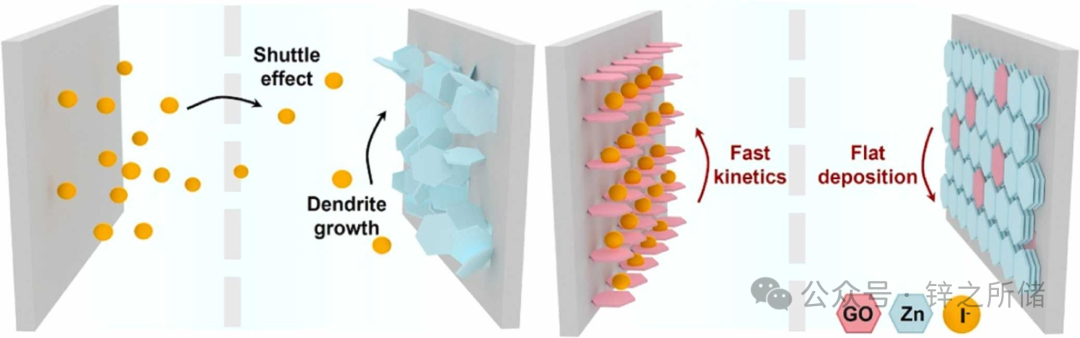
【Illustrated Guide】
Figure 1 Schematic diagram of the optimization mechanism of GO additive in Zn-I2 batteries
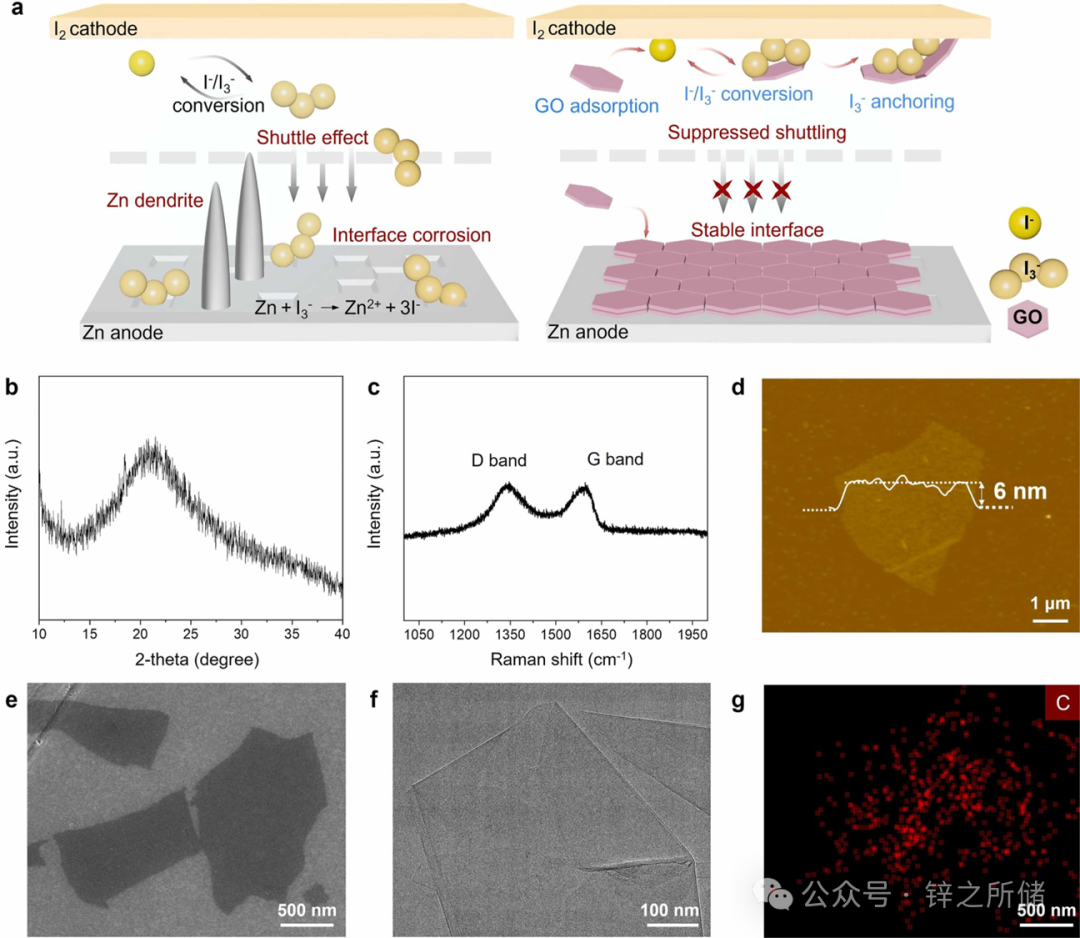
(a) XRD spectrum of GO, (b) Raman spectrum, (c) AFM image, (d) SEM image, (e) HRTEM image, and (f) corresponding elemental distribution map (g).
Figure 2 Electrochemical advantages of GO additive
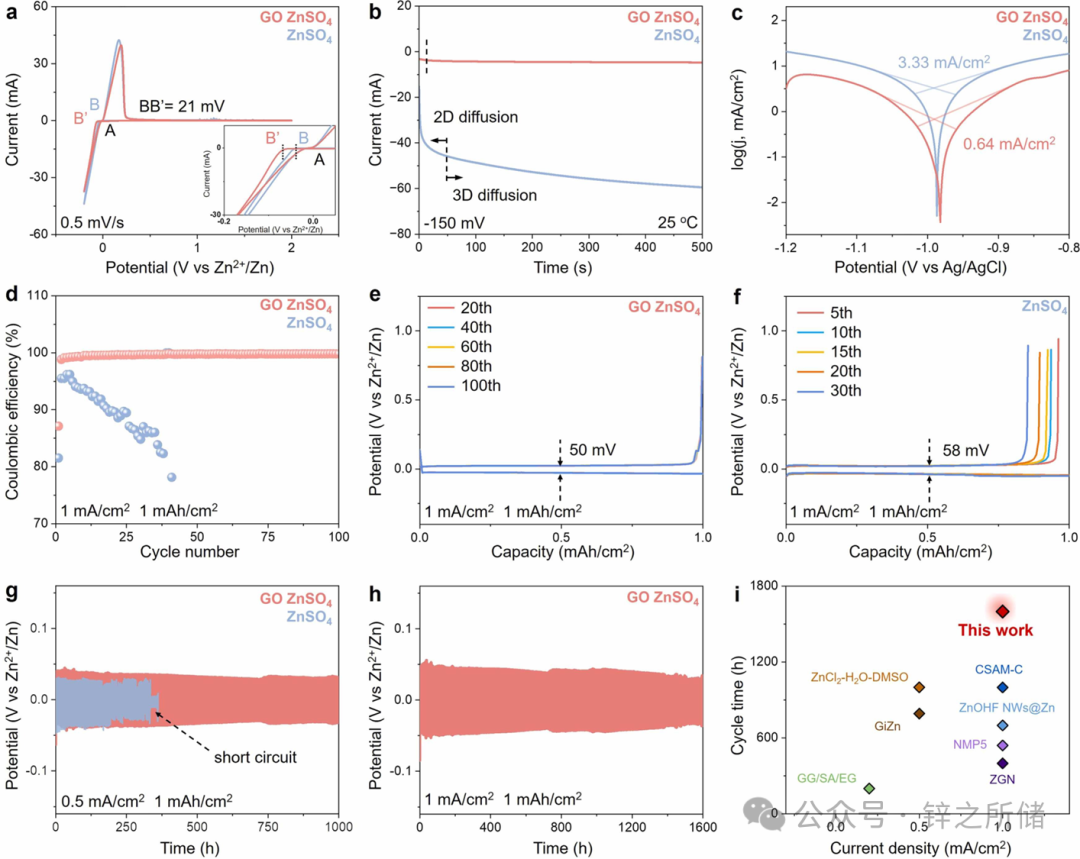
Pure ZnSO4 electrolyte and GO ZnSO4 electrolyte respectively (a) CV curves and magnified curves of Zn-Ti batteries, (b) CA curves of Zn-Zn batteries, (c) Tafel curves of Zn-Zn batteries, (d) Coulombic efficiency of Zn-Cu batteries, and (e-f) charge/discharge curves of Zn-Zn batteries during long-term cycling (g-h) comparison of cycling performance of different working Zn-Zn batteries.
Figure 3 Effects of GO-modified ZnSO4 electrolyte on Zn anode
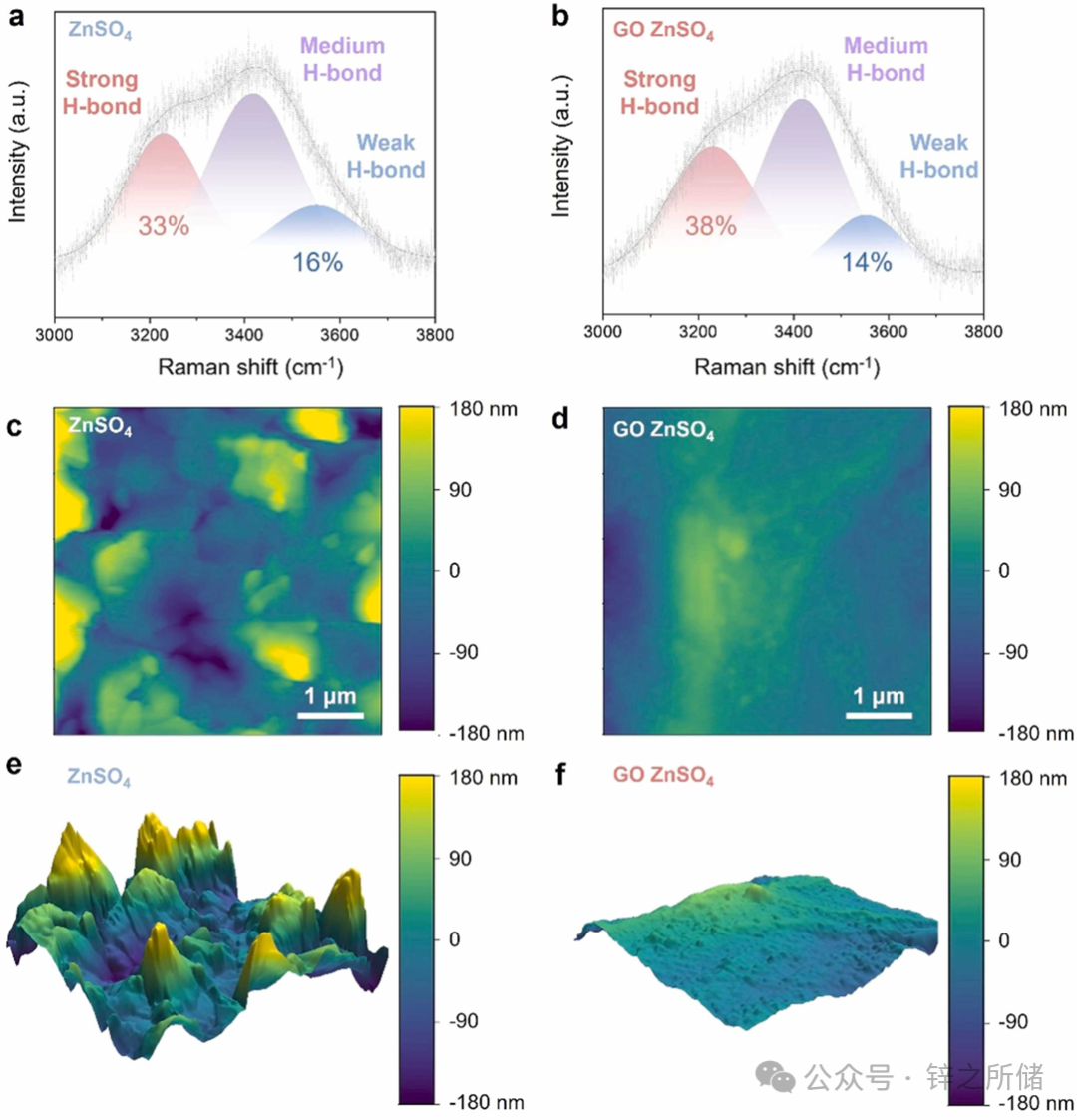
Fitted Raman spectra of (a) pure ZnSO4 electrolyte and (b) GO ZnSO4 electrolyte in the O-H stretching vibration region. Corresponding (c,e) 2D and 3D AFM images of pure ZnSO4 electrolyte-based Zn metal and (d,f) GO ZnSO4 electrolyte-based Zn metal.
Figure 4 Molecular mechanism of GO additive enhancing Zn anode performance
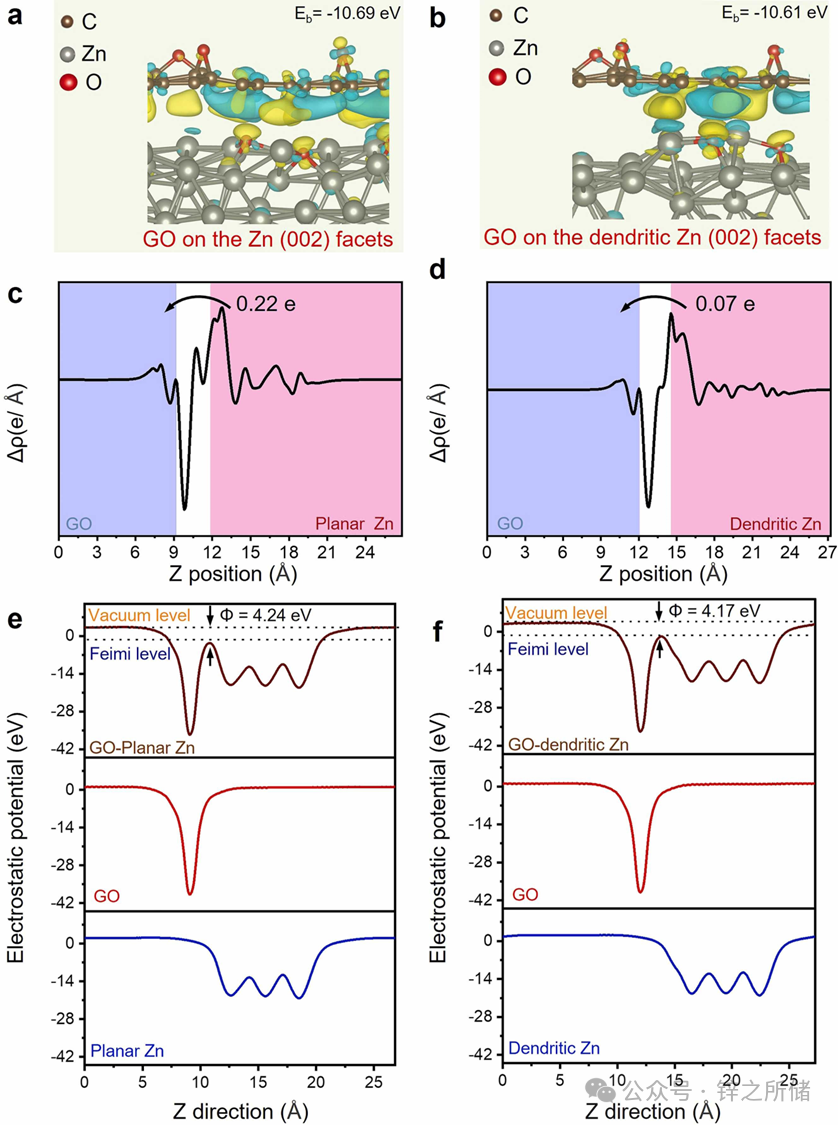
Theoretical calculations of GO interactions on (a) planar Zn and (b) dendritic Zn. Corresponding average differential charge density (c,d) and work function (e,f).
Figure 5 Electrochemical performance of Zn-I2 batteries in GO ZnSO4 electrolyte
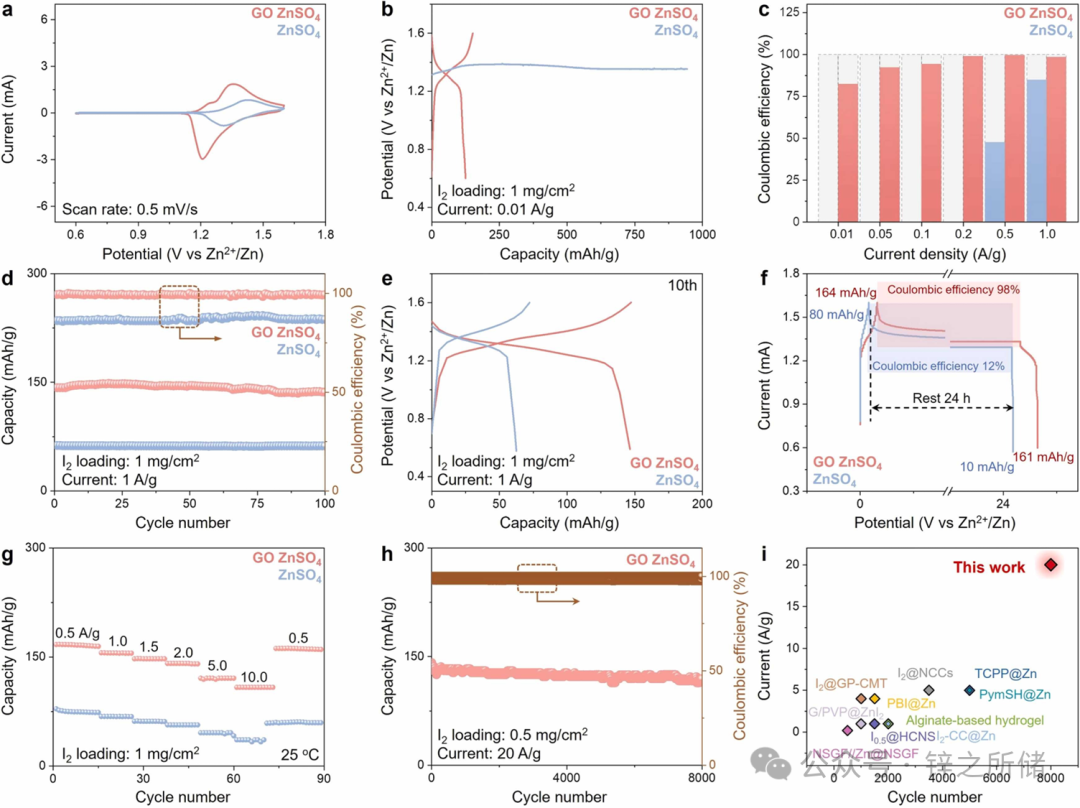
(a) CV curves, (b) charge/discharge curves at 0.01 A/g ultra-low current, (c) Coulombic efficiency at different low current densities (0.01, 0.05, 0.1, 0.2, 0.5, and 1 A/g), (d) comparison of cycling performance, (e) corresponding charge/discharge curves at 1 A/g current density, (f) self-discharge curves after 24 hours of rest, (g) rate performance from 0.5 A/g to 10 A/g, (h) long cycling performance of zinc iodide batteries using GO-ZnSO4 composite electrolyte, (i) comparison of cycling performance with other similar batteries.
Figure 6 Zn-I2 batteries undergoing multi-iodide ion migration and redox reactions in pure ZnSO4 and GO ZnSO4 electrolytes
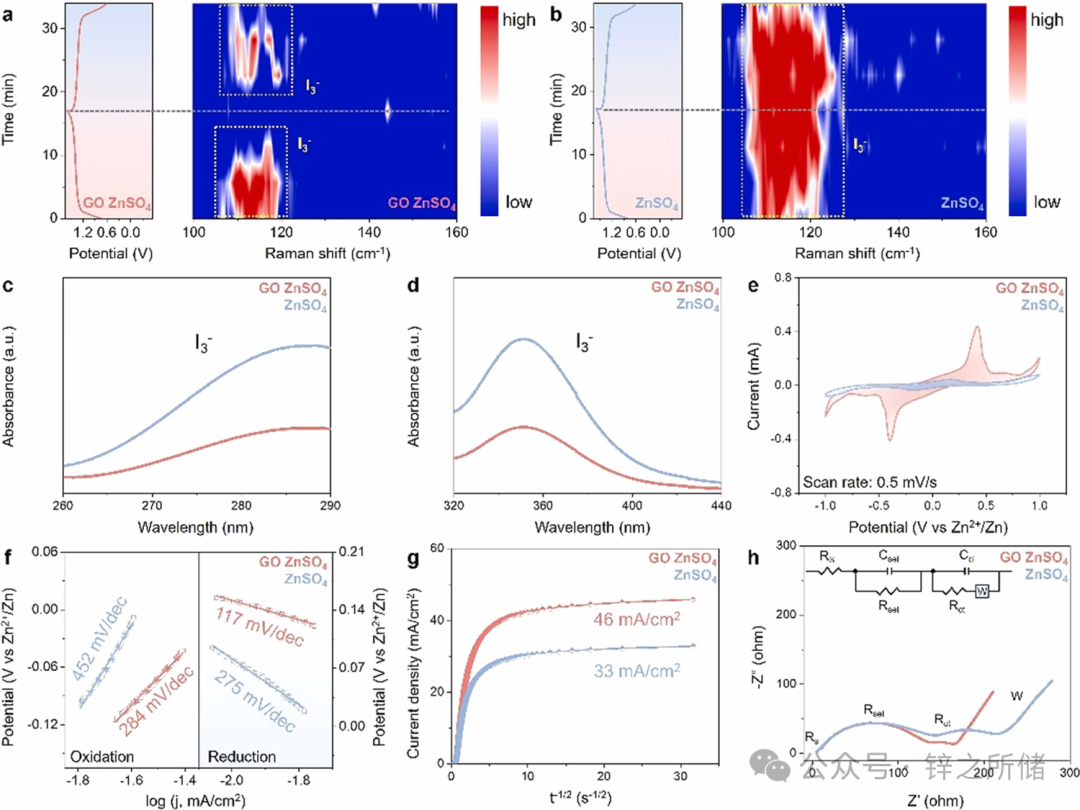
(a,b) In situ Raman spectra showing the charge/discharge process of polysulfide conversion, (c,d) UV-visible absorption spectra, CV curves and their (f) corresponding Tafel slopes, (g) Koutecky-Levich plots, (h) EIS spectra and their equivalent circuits.
Figure 7 Interaction of GO with iodide species
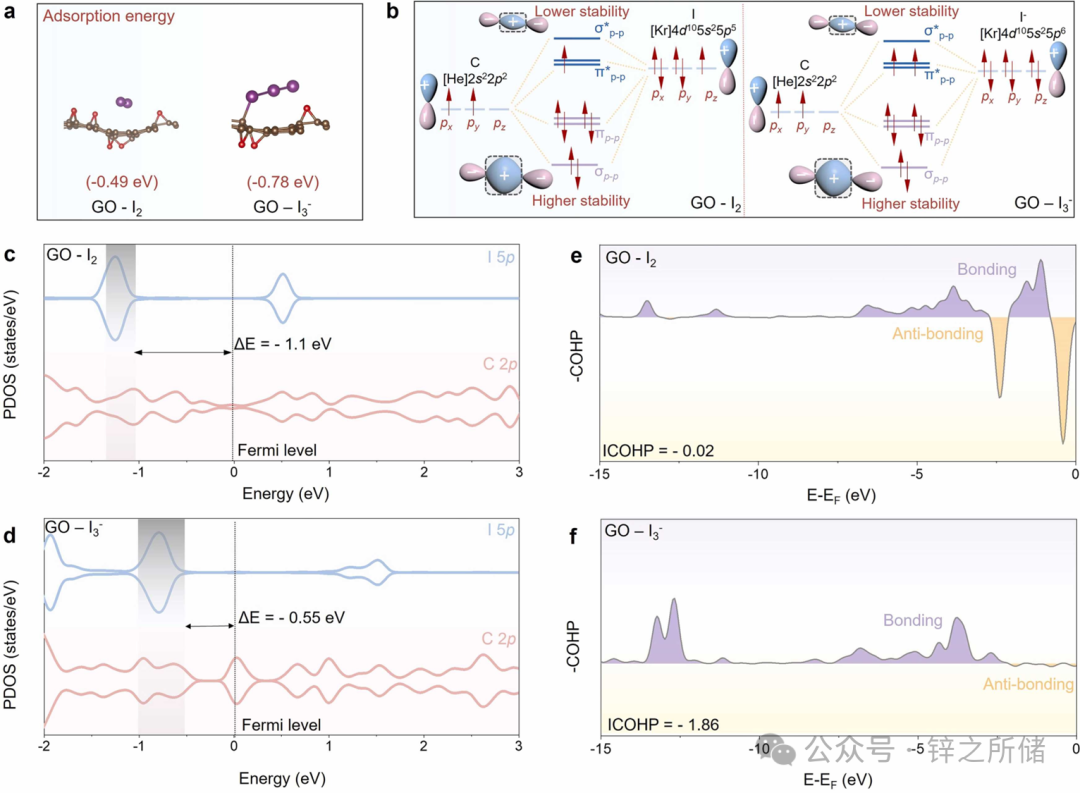
(a) Adsorption energy of I2 and I– on the GO(001) surface. (b) Molecular orbital energy levels and electronic configurations of GO and I2/I molecules. (c,d) DOS and COHP of I2 and (e,f) I– adsorbed on the GO(001) surface.
Figure 8 Applications of Zn-I2 wearable batteries
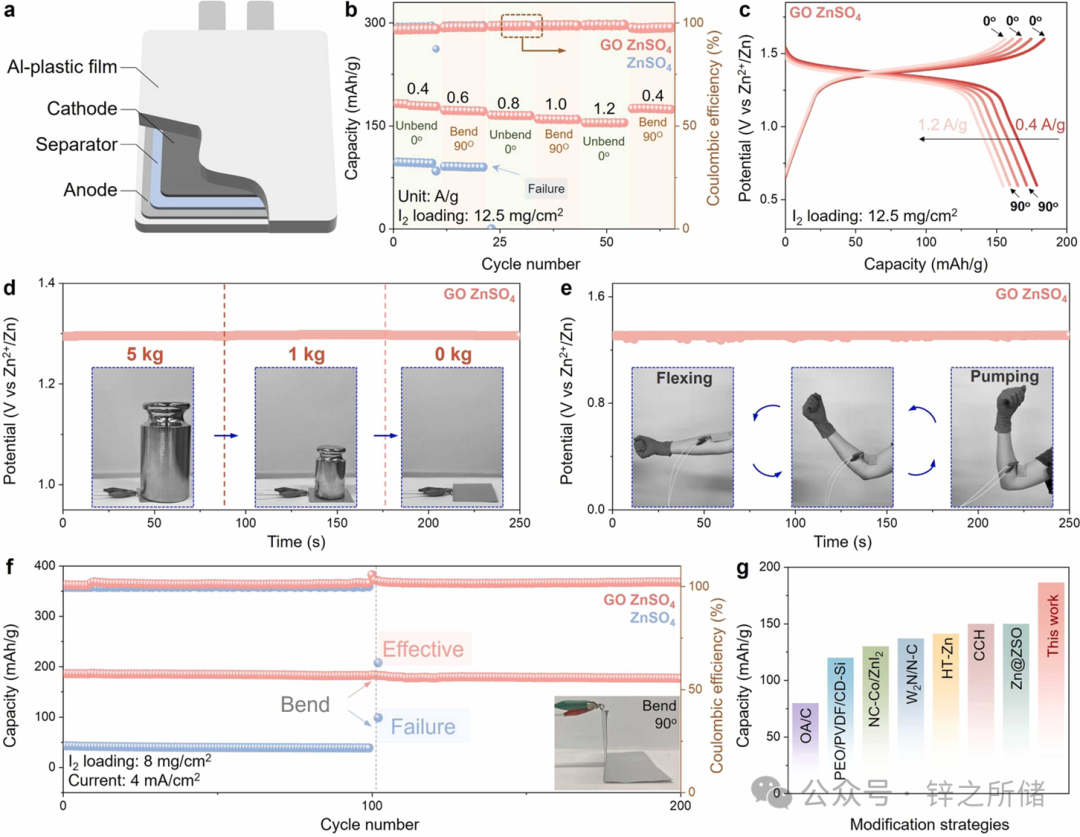
(a) Schematic diagram of Zn-I2 pouch battery. Zn-I2 pouch battery performance in (b) pure ZnSO4 and GO-ZnSO4 electrolytes under rate performance and (c) corresponding charge/discharge curves. (d,e) Performance of GO ZnSO4 electrolyte pouch batteries under different geometric states. Cycling performance of Zn-I2 pouch batteries with pure ZnSO4 and GO ZnSO4 electrolytes under different bending states (f), and corresponding comparison of cycling performance with other similar pouch batteries (g).
【Research Conclusion】
In conclusion, this study proposes a simple and effective strategy using commercially available graphene oxide activators to develop high-performance Zn-I2 batteries. By modulating the p-band center of graphene oxide as a protective coating, the nucleation, deposition, and transport kinetics of Zn are effectively balanced. Simultaneously, the interaction between graphene oxide and polysulfide on the cathode side forms p-π conjugation, preventing the dissolution and shuttle of polysulfide. As proof, the zinc plating process exhibits enhanced reversibility, serving as a protective layer to improve zinc deposition, extending cycling stability to 1600 hours at 1 mA/cm2. The Zn-I2 coin cell achieves high specific capacity and Coulombic efficiency at 20 A/g, excellent rate performance, and extends the lifespan to 15,000 cycles. Furthermore, the flexible Zn-I2 pouch battery, utilizing a high loading of I2 cathode (8 mA/cm2), maintains a high capacity of 190 mAh/g at a current density of 4 mA/cm2 even under folding conditions, and retains stable performance over 200 cycles. This work provides valuable insights into p-band center modulation and emphasizes the p-π conjugated bond as a key descriptor of catalytic performance. The findings demonstrate the feasibility of commercial graphene oxide for application in next-generation energy storage systems, highlighting its potential for real-world deployment.
【References】
Constructing p-π Conjugated Bonds toward High-performance Flexible Zinc Iodide Batteries for Wearable Electronics
Chenyang Zha,* Weina Guo, Yuwei Zhao, Huifang Ma, Huifang Xu, Qingbin Jiang, Tianyu Chen, Cheng-Zong Yuan, Kwan San Hui, Linghai Zhang,* and Kwun Nam Hui,*
https://doi.org/10.1016/j.nanoen.2025.111390