Stroke prevention is a core aspect of atrial fibrillation management. Given the growing population of atrial fibrillation patients and the significant morbidity and mortality associated with atrial fibrillation-related ischemic strokes, Left Atrial Appendage Occlusion (LAAO) has become a viable option for patients who cannot undergo anticoagulation.
Despite significant advancements in this field, several unresolved issues remain, including limited randomized controlled evidence, device-related thrombosis, and the management of residual leaks around the occluder.
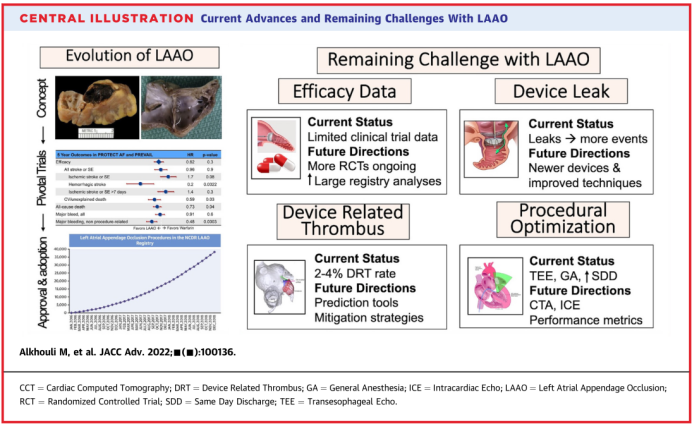
Advancements and Challenges of LAAO
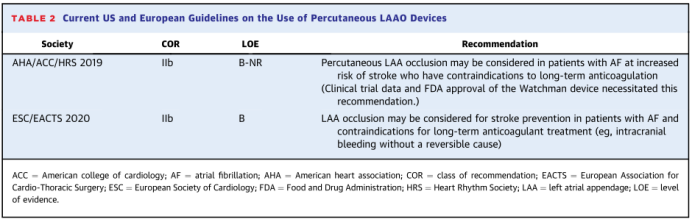
Details of International Guidelines
Evidence of EfficacyBased on the PROTECT AF and PREVAIL studies, Left Atrial Appendage Occlusion received FDA approval in 2015. However, atrial fibrillation-related guidelines emphasize the need for more randomized data to support the efficacy of LAAO. To meet this demand, several prospective trials have been initiated.Details of the TrialsThe results of these trials are crucial for further validating the overall efficacy of LAAO and assessing its role in low-risk patients and special populations (e.g., patients with contraindications to anticoagulation, those undergoing transcatheter aortic valve replacement for aortic stenosis, and patients with atrial fibrillation undergoing catheter ablation). Other prospective trials are currently underway, including LAAO combined with anticoagulation therapy for optimal stroke prevention. This design is derived from the LAAOS III trial, which demonstrated that LAAO combined with anticoagulation is superior to anticoagulation alone in atrial fibrillation patients undergoing cardiac surgery.In this trial, patients who underwent LAAO had a 33% relative risk reduction in ischemic stroke or systemic embolism compared to those receiving only anticoagulation (HR 0.67; 95% CI 0.53-0.85; P=0.001).Although this approach is limited to patients suitable for long-term anticoagulation, a recent proof-of-concept observational study indicated that the outcomes of LAAO combined with reduced-dose oral anticoagulants were superior to those of LAAO alone, suggesting that individualized combination therapy may also be feasible even in high-bleeding-risk patients.Device-Related ThrombosisThe issue of thrombosis on Left Atrial Appendage occlusion devices has garnered significant attention. Numerous studies have documented the incidence, timing, and correlation of device-related thrombosis (DRT) with adverse events. Few studies have explored the susceptibility factors for DRT and the efficacy of various management strategies.Incidence and Timing of DRT
The incidence of DRT in studies such as PROTECT AF and PREVAIL is 3.74%. Notably, 1/3 of DRT cases were incidentally detected during transesophageal echocardiography (TEE).
In a meta-analysis involving over 10,000 patients, the combined incidence of DRT was 3.8%. In this meta-analysis, the probability of diagnosis at <90, 90-365 days, and >365 days was 42%, 57%, and 1%, respectively. In the Amulet IDE trial, the DRT incidence at 18 months was 3.3% in the Amulet group and 4.5% in the Watchman group. In a prospective registry study using the second-generation Watchman FLX device, the DRT incidence at one year was 1.7%, with 3 out of 7 cases detected more than 300 days postoperatively.
Clinical Significance of DRTThe correlation between DRT and thromboembolic events has been confirmed. In the pivotal Watchman trial, 26.2% of DRT patients experienced a stroke or systemic embolic event within six months of DRT detection. In a global registry study, DRT was associated with a greater than threefold increase in the risk of ischemic stroke (HR 3.49; 95% CI 1.35-9.00; P=0.01).Risk Factors for DRTIdentifying susceptibility factors for DRT is crucial for optimizing risk stratification and surgical outcomes. However, this task is challenging due to the presence of numerous potential risk factors and the overall low incidence of DRT events.In an international registry study, five candidate risk factors in the logistic regression model independently predicted DRT, including hypercoagulability, renal insufficiency, permanent atrial fibrillation, deep device implantation, and pericardial effusion.
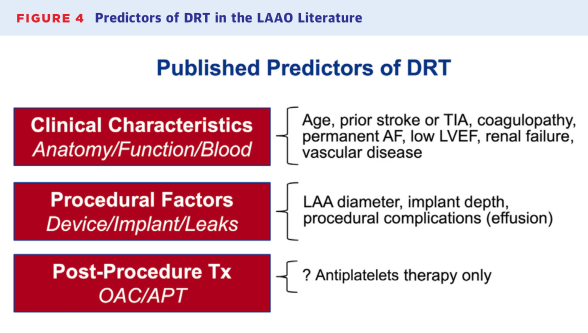
Currently, new insights into predicting DRT have emerged, including the potential role of hemodynamics in thrombosis formation and the use of cardiac computed tomography (CCT) for early detection of DRT. The application of CCT in monitoring after LAAO is increasing, providing a unique opportunity to further understand the DRT patterns of contemporary LAAO devices. In a recent study by Kramer et al., the authors assessed the frequency and phenotype of low-density thickening (HAT) observed on CCT after LAAO using the Watchman FLX device. Although the study could not definitively determine the correlation between different HAT patterns and clinical events, it is the first to propose a framework for assessing the normal device treatment after LAAO and various HAT/DRT patterns.Treatment of DRTAlthough some studies suggest that oral or parenteral anticoagulants can effectively resolve DRT in most patients, several issues remain. First, most patients referred for LAAO are not suitable for intensified or long-term anticoagulation regimens, leading to two opposing high-risk scenarios: the risk of DRT embolic events vs. the risk of major bleeding from resuming or initiating anticoagulation therapy. Second, among patients receiving anticoagulation therapy, 20%-25% still have persistent DRT, with significantly higher morbidity and mortality. Third, even with anticoagulation therapy, the recurrence rate of DRT is high (35% recurrence rate while on anticoagulation, 50% recurrence rate after stopping anticoagulation). Finally, not all DRTs are managed the same way, and the management of large and/or highly active thrombi remains uncertain. The feasibility of catheter aspiration for DRT has been reported, but the safety and efficacy of this method for routine management of high-risk DRTs have yet to be established.Iterative designs of LAAO devices have also considered the risk of DRT. For example, the DRT risk of the Watchman FLX device is significantly reduced. Device manufacturers are also exploring novel methods to prevent DRT, such as adding antithrombotic coatings to devices to minimize the risk of thrombosis formation, similar to drug-eluting stents.Residual Leaks Around the Occluder (PDL)The mechanism of LAAO is to occlude the left atrial appendage tissue, which can reduce the risk of thromboembolic events, as most thrombi in non-valvular atrial fibrillation patients originate from the left atrial appendage. However, there is substantial evidence that percutaneous LAAO devices often fail to achieve “complete closure” of the left atrial appendage.Incidence of PDLDue to a lack of consensus on the methods for examining and classifying PDL, the incidence of PDL varies widely across studies. Nevertheless, the literature indicates a high incidence of PDL after LAAO, with rates in randomized controlled trials exceeding those in observational registry studies. In the PROTECT AF trial, 40.9% of patients had PDL at 45 days, which decreased to 32.1% at one year. The incidence of PDL with a diameter >3 mm was 13.3% at 45 days and 11.8% at one year.Numerous LAAO devices are currently being evaluated in preclinical and early feasibility studies. Whether these devices will provide more advantages in achieving complete LAA closure compared to the Amulet and Watchman FLX devices remains to be seen. Preliminary data on a novel foam-based occlusion device suggest that it can effectively achieve complete LAA closure in 94% of patients.Optimization of Surgical ProceduresTEE is considered the gold standard for preoperative assessment of LAA size and shape. However, current studies indicate that CCT can more accurately assess LAA size and shape. Due to a lack of standardized methods for acquiring and interpreting CT images, CCT has not been fully utilized. However, thanks to advancements in computer technology, some software programs facilitate this work. These software programs not only provide a platform for assessing LAA dimensions but also allow for virtual implantation of various devices to evaluate the positioning, occlusion, and compression of different LAAO methods.
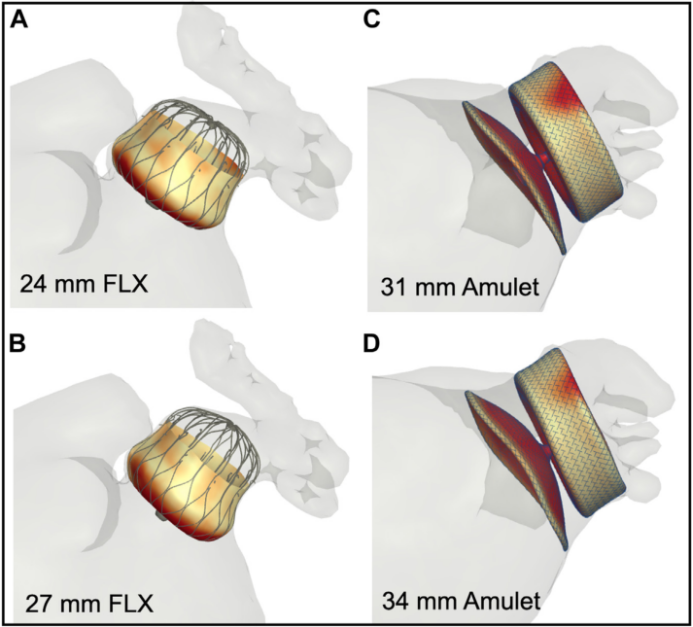
Computer Models for Optimizing Left Atrial Appendage Occluder ImplantationAdditionally, recent studies have shown that CCT is more sensitive than TEE in detecting postoperative device complications (such as DRT or PDL). CCT may soon become the preferred imaging tool for preoperative and postoperative assessment of LAAO, with user-friendly, machine-learning-supported interactive platforms that can be integrated into the routine workflow of LAAO practice.Similar to the case with transcatheter aortic valve replacement, LAAO is increasingly adopting minimalist approaches, primarily characterized by an increase in ICE-guided LAAO, the emergence of contrast-free LAAO, and same-day discharge.If confirmed in future studies, contrast-free LAAO may be a promising alternative for patients with advanced kidney disease and those at risk of contrast-induced nephropathy.
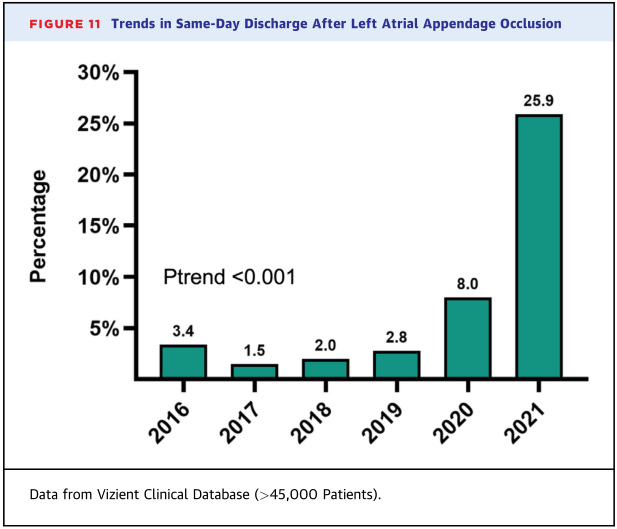
Same-Day Discharge Data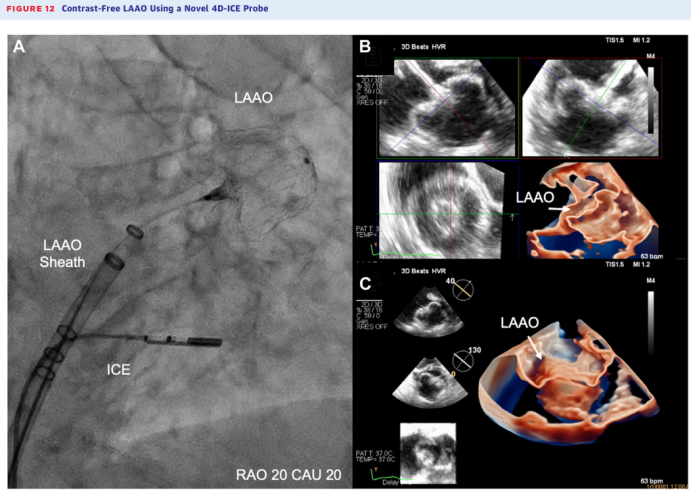 Contrast-Free LAAO Imaging Based on Novel 4D-ICEConclusionLAAO has become an effective means of preventing strokes in patients with non-valvular atrial fibrillation, demonstrating excellent safety, but issues such as limited efficacy data, long-term adverse effects of DRT and PDL, and the need for optimization and simplification of surgical procedures still need to be addressed.These challenges are being addressed in clinical and preclinical studies. The results of these studies will further demonstrate that LAAO can serve as a promising method for stroke prevention.
Source:
Mohamad Alkhouli, Christopher R. Ellis, et al. Left Atrial Appendage Occlusion – Current Advances and Remaining Challenges. JACC Adv. Nov 16, 2022.

Edited/Formatted by: Medical Heart Editorial Team