1. Overview of RS232 and RS485
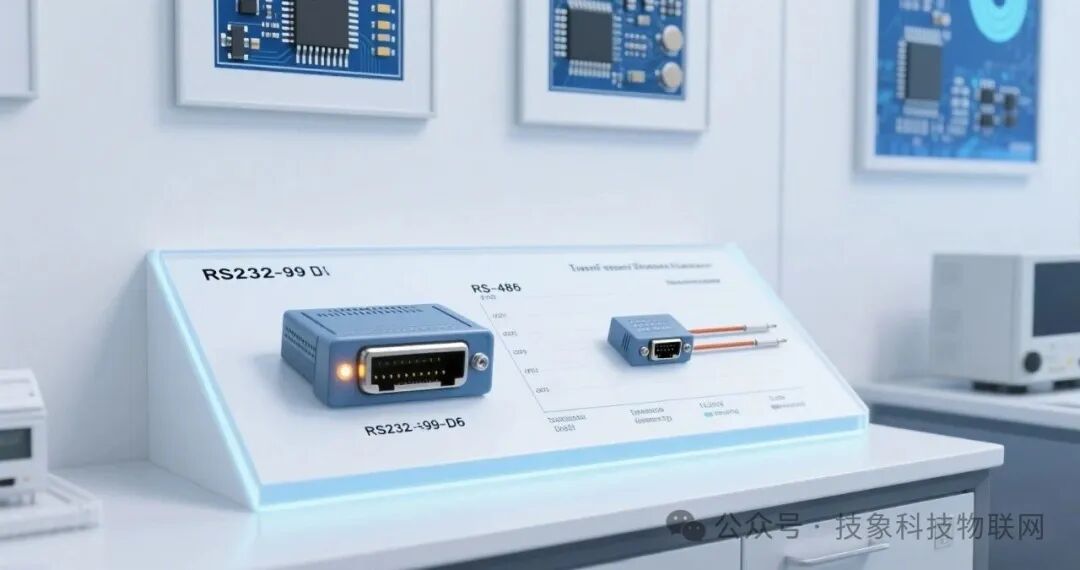
RS232 and RS485 are two widely used serial communication standards in industrial control, data acquisition, communication devices, and the Internet of Things (IoT), used for data exchange between devices. RS232, as a classic point-to-point communication standard, is suitable for short-distance, low-speed scenarios; RS485, with its multipoint communication and long-distance transmission capabilities, is widely used in complex network environments. There are significant differences between the two in terms of physical layer, protocol characteristics, and application scenarios, meeting different needs.
RS232 and RS485 play important roles in industrial automation, building automation, sensor networks, and communication devices. For example, RS232 is commonly used for connecting computers to printers, while RS485 is used for PLCs and sensor networks in industrial fields. This article will compare the four key aspects of RS232 and RS485—physical layer characteristics, communication modes and topologies, transmission performance and distance, security and anti-interference, analyzing their principles, applications, advantages, and challenges, and looking forward to future development trends.
2. Four Key Comparisons between RS232 and RS485
1. Physical Layer Characteristics
The physical layer characteristics define the electrical properties and hardware implementation of RS232 and RS485, determining their applicable environments.
-
RS232:
-
Electrical Characteristics: Uses single-ended signal transmission, with positive and negative voltages (±3V to ±15V) representing logic “0” and “1”. The standard interface is DB9 or DB25 connectors, with typical pins including TXD, RXD, and GND.
-
Hardware Implementation: Uses UART chips (such as MAX232) to convert TTL levels to RS232 levels. The cable is typically shielded twisted pair, and the driver supports single device connections.
-
Characteristics: High signal levels (±12V typical), higher power consumption. Simple interface, suitable for short-distance point-to-point communication. Supports full-duplex communication, allowing simultaneous sending and receiving.
-
RS485:
-
Electrical Characteristics: Uses differential signal transmission, with the voltage difference between A and B lines (±200mV) representing logic. Supports multipoint connections, commonly using 2-wire (half-duplex) or 4-wire (full-duplex) configurations.
-
Hardware Implementation: Uses differential drivers (such as MAX485), supporting up to 32 transceivers. The cable is shielded twisted pair, requiring termination resistors (120Ω) to prevent signal reflection.
-
Characteristics: Differential signals have strong noise immunity and lower power consumption. Supports long-distance and multi-device networks, with high flexibility.
-
Comparative Analysis: RS232 has high signal levels and a simple interface but poor noise immunity; RS485 has strong anti-interference with differential signals, suitable for complex environments, but hardware configuration is slightly more complex.
-
Advantages and Challenges: RS232 has low implementation costs but is not suitable for long-distance or multipoint communication; RS485 supports networking but requires termination matching and wiring planning.
2. Communication Modes and Topologies
The communication modes and topologies determine the device connection methods and network structures of RS232 and RS485.
-
RS232:
-
Communication Mode: Point-to-point communication, supporting only one sending device and one receiving device. Full-duplex mode allows simultaneous sending and receiving of data without additional control signals.
-
Topology Structure: Single device connection, no network topology. Typical configuration is a direct connection between a computer and peripherals (such as modems, printers).
-
Characteristics: Simple communication, no complex protocols required. Suitable for single device short-distance scenarios, intuitive configuration.
-
RS485:
-
Communication Mode: Supports multipoint communication, allowing up to 32 devices (drivers and receivers) to share the bus. Half-duplex (2-wire) requires direction control, while full-duplex (4-wire) supports bidirectional communication.
-
Topology Structure: Supports bus, star, or tree topologies. Devices are connected in parallel through the bus, requiring address allocation and protocol management (such as Modbus).
-
Characteristics: Supports multi-device networks, with strong scalability. Requires communication protocol to control data flow and avoid conflicts.
-
Comparative Analysis: RS232 is suitable for simple point-to-point connections, easy to implement; RS485 supports multipoint networks, suitable for complex systems but requires protocol support.
-
Advantages and Challenges: RS232 is simple to configure but has poor scalability; RS485 is flexible but requires conflict management mechanisms, increasing software complexity.
3. Transmission Performance and Distance
Transmission performance and distance are the core differences between RS232 and RS485, directly affecting their application scenarios.
-
RS232:
-
Transmission Rate: Maximum rate of about 115.2 kbps (commonly used at 9600 bps). The rate decreases rapidly with increasing distance, and high rates are prone to interference.
-
Transmission Distance: Maximum distance of about 15 meters (at 9600 bps). Cable capacitance and signal attenuation limit long-distance transmission.
-
Characteristics: Suitable for low-speed, short-distance communication. Signal attenuation is rapid, with weak noise immunity.
-
RS485:
-
Transmission Rate: Maximum rate of up to 10 Mbps (short distance), commonly used rates are 50 kbps to 1 Mbps. Differential signals support stable transmission at higher rates.
-
Transmission Distance: Maximum distance of about 1200 meters (at 9600 bps). Differential transmission and low-level signals reduce attenuation, suitable for long-distance communication.
-
Characteristics: Supports long-distance, high-speed communication, with strong noise immunity. Rate and distance can be balanced according to the scenario.
-
Comparative Analysis: RS232 has short transmission distance and low rate, suitable for close-range simple applications; RS485 supports long distances and higher rates, suitable for industrial networks.
-
Advantages and Challenges: RS232 is low-cost but limited in application; RS485 has superior performance, but long-distance wiring and termination resistor configuration need precision.
4. Security and Anti-Interference
Security and anti-interference determine the reliability of RS232 and RS485 in complex environments.
-
RS232:
-
Security: No built-in encryption mechanism, data is easily intercepted. Security relies on upper-layer protocols (such as custom checks). Point-to-point communication reduces the risk of unauthorized access.
-
Anti-Interference: Single-ended signals are susceptible to electromagnetic interference (such as motor noise). Shielded cables can reduce interference, but the effect is limited. Suitable for low-interference environments (such as offices).
-
Characteristics: Weak anti-interference capability, requiring high-quality cables and short-distance transmission. Security relies on external protocols.
-
RS485:
-
Security: Supports multi-device communication, requiring protocols (such as Modbus) to provide address authentication and checks. Some implementations support encryption (such as AES-128), but require additional configuration.
-
Anti-Interference: Differential signals are immune to common-mode noise, with strong anti-interference capability. Suitable for high electromagnetic interference environments (such as factories, outdoors). Termination resistors and shielded cables further enhance stability.
-
Characteristics: High anti-interference capability, suitable for industrial environments. Security requires protocol and configuration support.
-
Comparative Analysis: RS232 has poor anti-interference, with simple security; RS485 has strong anti-interference, with security enhanced through protocols, but requires additional design.
-
Advantages and Challenges: RS232 is suitable for low-interference scenarios, with simple security implementation; RS485 adapts to complex environments but requires security protocols and wiring optimization.
3. Integration and Collaboration of RS232 and RS485
RS232 and RS485 can be used in collaboration within systems to meet different needs. The following are integration methods and scenarios:
-
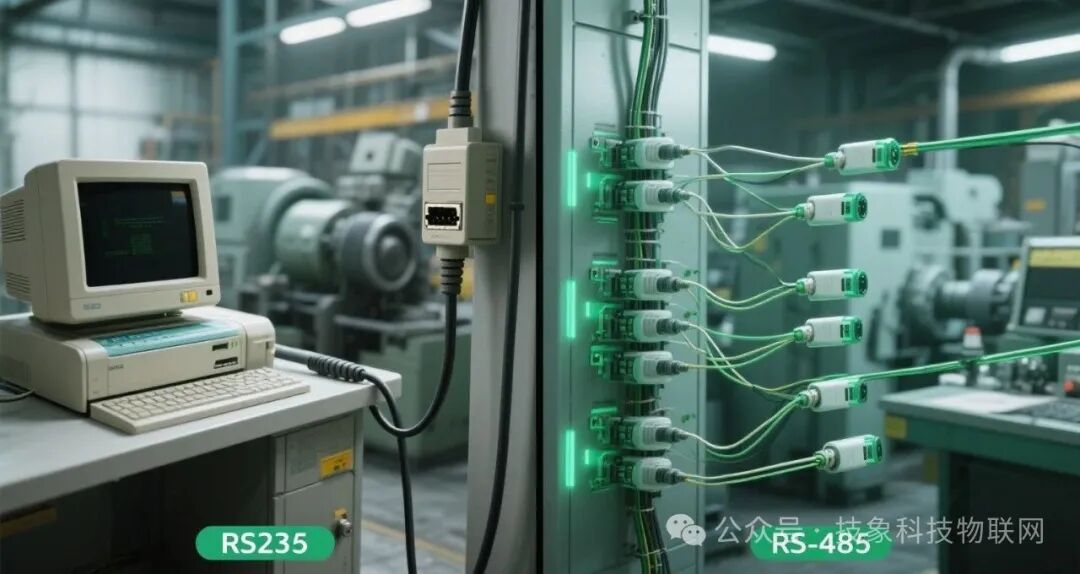
Hybrid Applications: In industrial control, RS232 connects local debugging devices (such as PC and PLC), while RS485 builds sensor networks to upload data to the control center. Converters (such as RS232-to-RS485) achieve interface bridging.
-
Protocol Support: RS485 supports complex protocols (such as Modbus, Profibus), while RS232 can serve as a debugging interface. AI optimizes protocol management, reducing RS485 bus conflicts and improving data efficiency.
-
Hardware and Software Support: System integration includes UART and differential drivers (such as MAX485), running embedded systems (such as RTOS). RS232 has a simple interface, while RS485 requires bus management and termination resistors. Modular design supports dual-interface devices.
-
Redundancy and Fault Tolerance: RS485 supports multi-node redundancy, with RS232 as a backup debugging interface. Data checks and retransmission mechanisms ensure reliability.
-
Testing and Validation: Testing needs to verify the short-distance stability of RS232 and the long-distance anti-interference of RS485. Optimize parameters (such as baud rate, termination resistors) to adapt to scenario requirements.
4. Challenges and Solutions
RS232 and RS485 face multiple challenges, and the following are analyses and response strategies:
-
Transmission Distance and Rate: RS232 has short distance and low rate, while RS485 is superior but limited in distance at high rates.
-
Solutions: Use signal amplifiers (such as repeaters) to extend the distance for RS232. Optimize baud rate and cable quality for RS485 to support higher rates. Develop fiber optic converters to break distance limits.
-
Anti-Interference: RS232 is easily affected by electromagnetic interference, while RS485 still needs optimization in extreme environments.
-
Solutions: Use high-quality shielded cables for RS232. RS485 adopts differential balanced lines and anti-interference chips. AI predicts interference and dynamically adjusts signal parameters.
-
Security Threats: Both lack built-in advanced encryption, making them susceptible to data interception.
-
Solutions: Introduce end-to-end encryption (such as AES-256) and authentication mechanisms. Develop secure protocol stacks to protect data privacy. Explore quantum communication for higher security.
-
Compatibility and Cost: RS232 is simple but has poor scalability, while RS485 multi-node management increases costs.
-
Solutions: Develop RS232/RS485 dual-mode converters to enhance compatibility. Optimize RS485 drivers to reduce costs. Provide open-source drivers to simplify development.
-
Future Trends: Integration of 5G/6G and IoT protocols (such as MQTT) with RS485 to enhance bandwidth and networking capabilities. AI optimizes bus management and anti-interference. New chips (such as RISC-V) reduce power consumption and costs. Optical communication and wireless alternatives (such as LoRa) complement traditional serial communication.
5. Conclusion
RS232 and RS485, as serial communication standards, meet communication needs from simple point-to-point to complex multipoint networks through differences in physical layer characteristics, communication modes, transmission performance, and anti-interference. RS232, with low cost and simple configuration, is suitable for short-distance scenarios, while RS485 supports industrial applications with long distances, multiple nodes, and anti-interference. Despite challenges in distance, rate, anti-interference, security, and compatibility, solutions such as signal amplification, AI optimization, encryption technologies, and new chips are driving performance improvements. In the future, RS232 and RS485 will deeply integrate with 5G, IoT, and intelligent technologies, providing more reliable and efficient communication support for industrial automation, IoT, and smart devices, showcasing broader application prospects.