Click above[Business Institute] Follow us
Drones are frequently used in modern warfare; when will robots be deployed on a large scale?
1. Drones vs. Robots: The Evolution of Modern Warfare
Unmanned Aerial Vehicles (UAVs) have become core equipment in modern warfare, significantly changing the rules of engagement from reconnaissance to precision strikes. However, true “robot warfare” (such as autonomous combat robots and AI-controlled unmanned ground vehicles) has not yet become widespread due to several reasons:
- Technological Maturity: Drone technology is relatively simple (remote control + navigation), while robots require stronger AI decision-making capabilities.
- Ethics and Law: The United Nations and several countries have called for restrictions on “lethal autonomous weapons” (LAWS), fearing that AI misjudgments could lead to disasters.
- Cost and Reliability: The battlefield environment is complex, and robots need extreme stability; currently, they mainly assist in tasks (such as mine clearance and transportation).
2. Robots Have Already Tested the Waters in the Military Field
Although not yet engaged in large-scale combat, countries have accelerated their deployments:
- United States:
- “Iron Dome” air defense system (AI-assisted missile interception).
- “Black Knight” unmanned ground vehicle (in testing, can accompany infantry in combat).
- Russia:
- “Marker” combat robot (testing on the Ukrainian battlefield in 2024, capable of autonomous target recognition).
- “Uran-9” unmanned tank (already in actual combat in Syria).
- China:
- “Sharp Claw” unmanned ground vehicle (mountain combat exercises).
- Swarm drone technology (AI-coordinated attacks, such as the Shenzhen “swarm” experiment).
3. What Could Trigger Robot Warfare?
The next 5-10 years may see a turning point:
- AI Breakthroughs: Large models like ChatGPT, if adapted for military use, could enable robots to quickly analyze the battlefield and make autonomous decisions.
- Russia-Ukraine/Israel-Palestine Conflicts as Catalysts: The drone attrition warfare is accelerating the development of robots in various countries (such as replacing infantry charges with robots).
- Decreasing Costs: As chips and sensors become cheaper, robotic soldiers may be more “cost-effective” than training human soldiers.
4. Will Humans Be Replaced?
– Short-term: Robots are still controlled by humans (for example, in a “human-in-the-loop” mode, firing requires approval).
– Long-term: If AI gains autonomy, warfare will enter an “algorithmic duel” era, but international conventions may impose strict limitations.
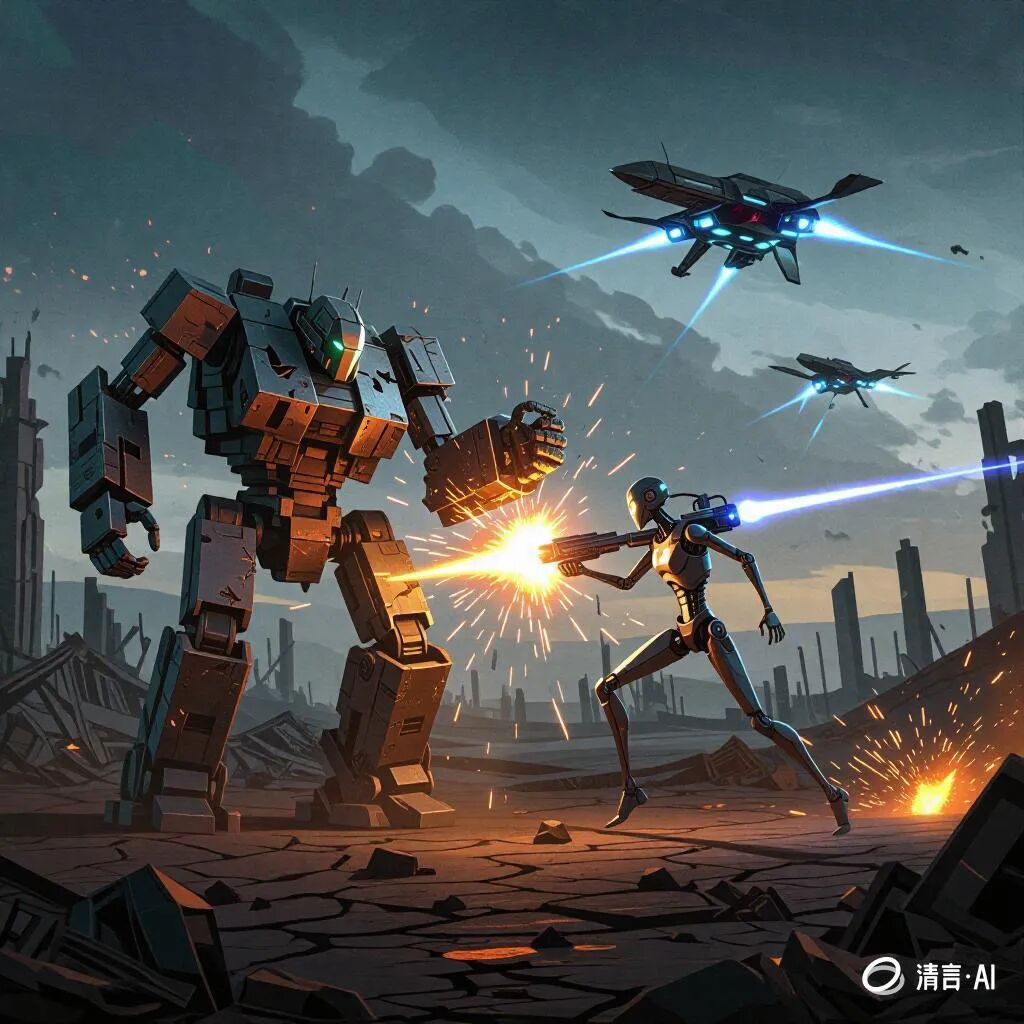
Drones are just the beginning; robot warfare is quietly approaching. When the first AI armored legion is deployed in actual combat, the rules of war will be completely rewritten—on future battlefields, there may be no human soldiers’ flesh and blood, only the cold game of chips and steel. Note: This could extend the discussion on whether the sci-fi setting of “The Terminator” will become a reality in this century…
 The Advanced Training Class of Zhejiang University Innovation Phoenix starts on July 12