
Introduction
The rapid development of artificial intelligence (AI) technology has made AI chatbots an important tool across various industries. Building an AI chatbot is not only a challenge to technical capabilities but also an exploration of future intelligent service models. This article aims to systematically introduce the entire process of building an AI chatbot from scratch, helping readers to comprehensively understand its concepts, purposes, and significance.
An AI chatbot is a software system that can interact with users through natural language processing (NLP). Its core purpose is to provide efficient and convenient services, enhance user experience, and alleviate the burden on human customer service. Whether in customer service, educational tutoring, or in smart homes and entertainment, AI chatbots have broad application prospects.
Building an AI chatbot is of great significance. Firstly, it can significantly improve service efficiency, achieving 24/7 uninterrupted service. Secondly, through big data analysis and machine learning, chatbots can continuously optimize their performance and provide more personalized services. Additionally, the widespread application of chatbots helps promote the popularization and development of AI technology.
This article will cover the main content of building an AI chatbot, including: requirement analysis and design, technology selection and platform setup, data collection and processing, model training and optimization, system integration and testing, as well as operation and maintenance after launch. By elaborating on each step, this article aims to provide readers with a comprehensive and practical guide to help them successfully build and deploy an AI chatbot in real projects.
Through this article, readers will not only master the core technologies and methods for building an AI chatbot but also gain a deeper understanding of the principles and application value behind it, laying a solid foundation for future intelligent service innovations.
1. Historical Background

The development of AI chatbots can be traced back to the mid-20th century, witnessing significant advancements in artificial intelligence technology. One of the earliest chatbots was ELIZA, developed by Joseph Weizenbaum in 1966, which simulated human conversation through simple scripts and pattern matching techniques. Although its functionality was limited, it laid the foundation for subsequent research.
Entering the 21st century, with the popularization of the internet and the improvement of computing power, chatbot technology ushered in new development opportunities. In 2001, Microsoft launched the chatbot “SmarterChild” in MSN Messenger, which could provide weather forecasts, news, and other information, marking the beginning of chatbots integrating into daily life.
After 2010, breakthroughs in deep learning technology greatly promoted the intelligence of chatbots. In 2014, the chatbot DeepMind, acquired by Google, was released based on deep neural networks, showcasing the powerful potential of natural language processing (NLP). In the same year, Facebook launched the Messenger platform, allowing developers to create custom chatbots, further promoting the application of chatbots in the business field.
In 2016, advanced models such as Microsoft’s Tay and OpenAI’s GPT-2 were successively released, which not only possessed more natural language generation capabilities but also enabled more complex conversational interactions. However, these advanced models also exposed ethical and regulatory issues, such as Tay being taken offline due to inappropriate remarks.
Overall, AI chatbots have evolved from simple scripts to complex deep learning models, experiencing multiple key technological milestones, and the continuous emergence of representative products has not only driven technological progress but also profoundly influenced people’s lives and work styles.
2. Main Features

The core features of AI chatbots include their efficient natural language processing capabilities, precise contextual understanding, smooth multi-turn dialogue, and personalized response mechanisms.
Firstly, natural language processing (NLP) capability is the cornerstone of AI chatbots. Through advanced algorithms and models, chatbots can understand and parse the text input by users, identifying intentions and key information. This includes not only basic vocabulary and grammar analysis but also semantic understanding and emotion recognition, ensuring that chatbots can accurately capture users’ true intentions.
Secondly, contextual understanding is a key feature that distinguishes AI chatbots from traditional interactive systems. Chatbots can remember and analyze previous conversation content, maintaining coherence in subsequent communications. This ability allows chatbots to provide more precise and relevant answers based on the context of the conversation, enhancing user experience.
The multi-turn dialogue capability further enhances the practicality of AI chatbots. Unlike simple Q&A in single-turn dialogues, multi-turn dialogues allow chatbots to engage in in-depth communication with users over multiple rounds, handling complex questions and tasks. This continuous interaction capability enables chatbots to better meet users’ needs, especially in situations requiring multi-step problem-solving.
Finally, personalized responses are a key factor in enhancing user satisfaction with AI chatbots. By analyzing users’ historical data and preferences, chatbots can generate customized responses, providing more thoughtful services. This personalization is reflected not only in content but also in tone and expression, making conversations more natural and friendly.
In summary, these core features collectively constitute the powerful functionality of AI chatbots, demonstrating outstanding performance and user experience in various application scenarios.
3. Building an AI Chatbot from Scratch

Building an AI chatbot from scratch is a complex project involving multiple steps and technical fields. The process includes determining requirements, collecting a corpus, designing dialogue flows, selecting models, writing code, and testing and optimizing. Here is a detailed guide to help you build an AI chatbot from scratch:
3.1. Define Goals and Requirements
Functional requirements: Determine the functions that the chatbot needs to have, such as Q&A, task execution, sentiment analysis, etc.
Target users: Clearly define the target user group to better design dialogue flows and language styles.
Usage scenarios: Determine the platforms on which the chatbot will operate, such as websites, mobile applications, social media, etc.
3.2. Choose Technology Stack
Based on your requirements and technical capabilities, choose the appropriate AI models and technology stack. For example, you can choose traditional rule-based methods or deep learning methods based on machine learning. Common deep learning frameworks include TensorFlow, PyTorch, and Keras.
Programming language: Python is a common choice due to its rich libraries for machine learning and natural language processing.
Frameworks and libraries:
(1) Deep learning: TensorFlow, PyTorch
(2) Natural language processing: NLTK, spaCy, Hugging Face Transformers
(3) Development environment: Jupyter Notebook, VS Code.
3.3. Data Collection and Preprocessing
The corpus is the knowledge base of the chatbot, and you can collect it from public datasets, professional literature, or self-created dialogue records. Ensure the quality and relevance of the corpus to train a smarter chatbot.
Data sources: Public datasets, social media, customer service dialogue records, etc.
Data cleaning: Remove noise, standardize text, tokenize, remove stop words, etc.
Data labeling: Label the data according to requirements, such as intent recognition, sentiment analysis, etc.
3.4. Model Selection and Training
Pre-trained models: Use pre-trained models such as GPT-3, BERT to reduce training time and resources.
Custom models: Design and train your own models based on specific requirements.
Model training:
(1) Tuning: Adjust hyperparameters such as learning rate, batch size, etc.
(2) Evaluation: Use cross-validation, confusion matrix, etc., to evaluate model performance.
(3) Optimization: Use techniques such as gradient clipping, regularization, etc., to prevent overfitting.
3.5. Dialogue Management
Designing a clear and reasonable dialogue flow is key. You need to consider the questions users may ask, the chatbot’s responses, and the jump logic in different situations. Flowcharts or state machines can be used to visualize the dialogue flow.
Intent recognition: Identify the intent of user input.
Entity extraction: Extract key information from user input.
Dialogue state management: Track the dialogue context to ensure coherence.
Response generation: Generate appropriate responses based on the dialogue state.
3.6. Deployment and Integration
API development: Wrap the model into an API for easy integration with other systems.
Platform integration: Integrate the chatbot into target platforms such as websites, mobile applications, social media, etc.
Testing: Conduct functional testing, performance testing, user testing, etc.
3.7. Monitoring and Maintenance
Logging: Record user interaction logs for subsequent analysis and improvement.
Performance monitoring: Monitor the chatbot’s response time, accuracy, and other metrics.
Continuous optimization: Continuously optimize the model and dialogue flow based on user feedback and log data.
3.8. User Interface Design
Interface design: Design a user-friendly chat interface, considering factors such as color, font, layout, etc.
Case study: Refer to the interface design of mature applications such as Slack, WhatsApp, etc.
Design principles: Simplicity, consistency, feedback.
Interaction design: Ensure that the interaction process is natural and smooth, providing clear operational guidance and feedback.
3.9. Legal and Ethical Considerations
Data privacy: Use encryption technology to protect user data and comply with the principle of data minimization.
Case study: Use AES encryption to store user conversation records.
Compliance: Comply with relevant laws and regulations, such as GDPR, and conduct data protection impact assessments.
Implementation recommendations: Regularly conduct data privacy audits to ensure compliance.
3.10. Additional Recommendations:
* Use natural language processing (NLP) technology to improve the language understanding capabilities of the chatbot.
* Utilize machine learning technology to continuously learn and improve the chatbot’s dialogue capabilities.
* Consider using cloud services to deploy and scale the chatbot.
* Pay attention to user privacy and data security.
4. Example Code for AI Chatbots

4.1 Example Code: Using Hugging Face Transformers for Chatbots
Here is a simple chatbot example using Python and Hugging Face Transformers:
|
from transformers import pipeline
# Load pre-trained model chatbot = pipeline(‘conversational’, model=’microsoft/DialoGPT-medium’)
# Example dialogue user_input = “Hello!“ response = chatbot(user_input) print(response[0][‘generated_text’])
user_input = “What is your name?“ response = chatbot(user_input) print(response[0][‘generated_text’])
user_input = “What can you do?“ response = chatbot(user_input) print(response[0][‘generated_text’])
user_input = “Goodbye!“ response = chatbot(user_input) print(response[0][‘generated_text’]) |
4.2 Further Technical Details and Examples
Model tuning and evaluation
During the model training process, tuning and evaluation are key steps. Here are some specific methods:
Hyperparameter tuning:
– Use grid search or random search to find the best hyperparameter combinations.
– Utilize automated hyperparameter optimization tools, such as Hyperopt or Optuna.
Model evaluation:
– Use cross-validation to evaluate the model’s generalization ability.
– Calculate confusion matrix, precision, recall, and F1 score to evaluate model performance.
– Use ROUGE scores to evaluate the quality of responses generated by the model.
Code example: Model tuning and evaluation
|
from sklearn.model_selection import GridSearchCV from sklearn.metrics import classification_report, confusion_matrix
# Assuming we are using a classification model for intent recognition from sklearn.ensemble import RandomForestClassifier
# Define parameter grid param_grid = { ‘n_estimators’: [100, 200, 300], ‘max_depth’: [10, 20, 30] }
# Initialize model model = RandomForestClassifier()
# Use grid search for hyperparameter tuning grid_search = GridSearchCV(model, param_grid, cv=5, scoring=’accuracy’) grid_search.fit(X_train, y_train)
# Output best parameters print(“Best parameters:”, grid_search.best_params_)
# Use best model for predictions best_model = grid_search.best_estimator_ y_pred = best_model.predict(X_test)
# Output evaluation metrics print(confusion_matrix(y_test, y_pred)) print(classification_report(y_test, y_pred)) |
Latest technology updates
Transformers 4.0: Hugging Face’s latest release of the Transformers library provides more pre-trained models and optimization features.
Application scenarios: Use Transformers 4.0 for more efficient model training and inference.
Advantages: Supports more model architectures, optimizes memory usage and training speed.
AutoML: Use Google’s AutoML or AWS’s SageMaker to automate the model training and tuning process.
Application scenarios: Rapid prototyping and model deployment.
Advantages: Reduces manual tuning time and improves model development efficiency.
4.3 In-depth Technical Details: Model Tuning and Evaluation
Model tuning
Learning rate scheduling: Use learning rate decay strategies, such as cosine annealing or learning rate warmup.
Regularization techniques: Apply L1/L2 regularization, Dropout, etc., to prevent overfitting.
Data augmentation: Increase the robustness of the model through data augmentation techniques, such as random insertion, deletion, and replacement of vocabulary.
Code example: Learning rate scheduling
|
import torch from torch.optim.lr_scheduler import CosineAnnealingLR
# Initialize optimizer optimizer = torch.optim.Adam(model.parameters(), lr=0.001)
# Initialize learning rate scheduler scheduler = CosineAnnealingLR(optimizer, T_max=10)
# Training loop for epoch in range(num_epochs): for batch in train_loader: # Training step optimizer.zero_grad() loss = model(batch) loss.backward() optimizer.step()
# Update learning rate scheduler.step() print(f”Epoch {epoch+1}, Learning Rate: {scheduler.get_last_lr()[0]}”) |
4.4 User Interface Design Case Studies
Design principles
Simplicity: The interface should be clear and concise, avoiding excessive redundant information.
Consistency: Maintain consistency in interface elements and interaction methods.
Feedback: Provide immediate feedback, such as loading animations and input prompts.
Case analysis
Slack: Uses clear fonts and colors to distinguish different types of messages, providing rich emojis and quick reply features.
WhatsApp: The interface is simple, supports multimedia messages and real-time status updates, and provides clear operational guidance.
4.4 Legal and Ethical Implementation Recommendations
Data privacy
Encrypted storage: Use AES encryption technology to store user conversation records.
Data minimization: Only collect and store data necessary to achieve functionality.
Compliance
GDPR compliance: Conduct data protection impact assessments (DPIA) to ensure data processing activities comply with GDPR requirements.
Regular audits: Regularly conduct data privacy audits to ensure ongoing compliance.
Through the above improvements, we not only provide more comprehensive technical details and example code but also cover the latest technologies and tools, as well as specific ethical and legal implementation recommendations, helping you more effectively build and maintain an AI chatbot. We hope this improved guide is helpful to you!
5. Application Areas
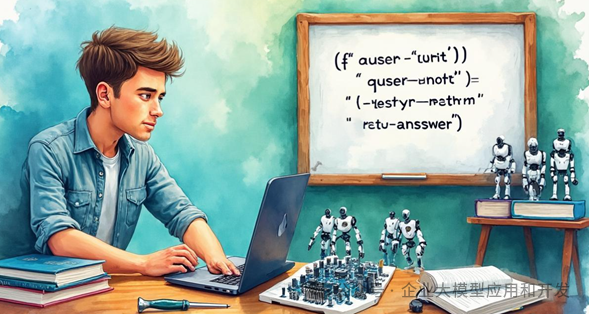
AI chatbots demonstrate broad application potential in modern society, gradually penetrating multiple industries and fields, greatly enhancing service efficiency and user experience.
Customer service: AI chatbots are one of the most common application areas. By deploying chatbots, businesses can achieve 24/7 round-the-clock responses, handling common questions, order inquiries, and complaint feedback. For example, e-commerce platforms use chatbots to automatically reply to user inquiries, significantly reducing the workload of human customer service and improving response speed.
Educational assistance: In the education sector, AI chatbots play a role in assisting teaching. They can provide personalized learning suggestions, answer questions, and even conduct language practice. An AI teaching assistant chatbot launched by an online education platform can intelligently recommend practice questions based on students’ learning progress and difficulties, effectively improving learning outcomes.
Medical consultation: AI chatbots are increasingly applied in the medical field. They can assist in preliminary diagnosis, provide health consultations, and medication reminders. For example, a smart diagnosis chatbot developed by a hospital can suggest possible diseases based on patients’ symptom descriptions and guide them for further examinations, alleviating the burden on doctors.
Smart homes: In the smart home field, AI chatbots have become core components of home intelligence. Users can control home appliances, check the weather, set alarms, etc., through voice or text commands. An AI assistant in a smart home system can not only execute commands but also automatically adjust the indoor environment based on user habits, enhancing living comfort.
In summary, AI chatbots, with their efficient and intelligent characteristics, demonstrate significant application value in customer service, educational assistance, medical consultation, and smart homes, and are expected to further expand their application scope, aiding the digital transformation of various industries.
6. Controversies and Criticisms

In the process of building an AI chatbot from scratch, despite the conveniences brought by technological advancements, a series of controversies and criticisms have arisen. Firstly, privacy issues are one of the most concerning points for the public.AI chatbots collect a large amount of personal data during interactions with users, including chat records, personal preferences, etc. If the storage and usage of this data are not transparent, it can easily lead to privacy breaches, thereby harming user rights.
Secondly, data security issues cannot be ignored.AI chatbots rely on large amounts of data for training and optimization, and if this data is not strictly encrypted and protected, it may become a target for hacker attacks. Once data is illegally obtained, not only is user privacy threatened, but it may also trigger broader security risks.
Ethical issues are also hot topics of controversy.AI chatbots, when mimicking human conversation, may involve moral judgments and value orientations, and whether their responses meet social ethical standards has become a widely discussed topic. Additionally, the decision-making processes of chatbots lack transparency, which may lead to unfair or discriminatory outcomes.
Technological limitations are also heavily criticized. Although AI chatbots can simulate human conversation to a certain extent, their understanding and response capabilities remain limited, especially when dealing with complex contexts and emotional exchanges, leading to misunderstandings or inappropriate responses that affect user experience.
In summary, the controversies and criticisms faced by AI chatbots during their development are multifaceted, involving privacy, data security, ethical issues, and technological limitations. Addressing these issues requires not only continuous breakthroughs at the technical level but also the simultaneous improvement of legal regulations and ethical standards.
7. Future Prospects

With the continuous advancement of artificial intelligence technology, the future development trends of AI chatbots present multiple possibilities. Firstly, at the technical level, further optimization of deep learning, natural language processing (NLP), and machine learning algorithms will significantly enhance the understanding and response accuracy of chatbots. In particular, the application of transfer learning and multimodal learning will enable chatbots to better handle complex contexts and diverse tasks.
In terms of application expansion, the application scenarios of AI chatbots will further broaden. In addition to existing fields such as customer service, education, and entertainment, they are expected to play important roles in more specialized areas such as medical consultation, legal assistance, and mental health support. Moreover, with the popularization of the Internet of Things (IoT), chatbots will be more intelligently integrated into smart homes, smart cities, and other environments, becoming effective assistants in people’s daily lives.
The impact of policies and regulations cannot be ignored. As AI technology is widely applied, governments around the world will introduce more relevant regulations to standardize the development and use of AI chatbots, ensuring data privacy and security. These policies will influence the direction and speed of technological development to some extent.
In terms of innovation direction, personalized customization and emotional computing will be important breakthroughs in the future. By analyzing user behavior and preferences, chatbots can provide more personalized services. At the same time, the integration of emotional computing will enable chatbots to better understand and respond to human emotional needs, enhancing the naturalness and friendliness of human-computer interaction.
In summary, the future development of AI chatbots will be a multidimensional and multi-layered evolutionary process, full of opportunities and challenges. Through continuous technological innovation and policy guidance, AI chatbots are expected to unleash their potential in more fields, becoming an indispensable part of human society.
References
In the process of building an AI chatbot, this article cites various literature, research papers, technical documents, and online resources to provide comprehensive and accurate information. The following lists the main references for further reading and learning.
1. Research papers:
“A Survey of Conversational Agents on Social Media”: This paper provides a detailed overview of conversational agent technology on social media, offering an in-depth analysis of the development history and current status of chatbots.
“Natural Language Processing with Python”: Co-authored by Steven Bird, Ewan Klein, and Edward Loper, this book systematically introduces the basic concepts of natural language processing and its implementation in Python, serving as an important reference for understanding the language processing module of chatbots.
2. Technical documents:
TensorFlow official documentation: TensorFlow is a widely used open-source machine learning framework, and its official documentation provides rich API descriptions and example codes, which are of significant guidance for building machine learning models for chatbots.
OpenAI GPT-3 technical report: This report details the architecture, training process, and application scenarios of the GPT-3 model, providing valuable references for advanced chatbot development.
3. Online resources:
Hugging Face Transformers library: Hugging Face provides the Transformers library, a powerful natural language processing tool that includes various pre-trained models suitable for quickly building chatbots.
Stack Overflow community: For technical issues encountered during development, the Stack Overflow community provides a wealth of solutions and discussions, serving as a practical resource for solving real problems.
4. Books:
“Deep Learning”: Co-authored by Ian Goodfellow, Yoshua Bengio, and Aaron Courville, this book explains the theoretical foundations and practical applications of deep learning in an accessible manner, which is very helpful for understanding the deep learning technologies behind chatbots.