✅ Author Profile: A Matlab simulation developer passionate about research, skilled in data processing, modeling simulation, program design, complete code acquisition, paper reproduction, and scientific simulation.
🍎 Previous reviews, follow the personal homepage:Matlab Research Studio
🍊 Personal motto: Investigate things to gain knowledge, complete Matlab code and simulation consultation content via private message.
🔥 Content Introduction
Reinforced concrete members are indispensable structural elements in modern buildings. When subjected to external loads, cracks inevitably occur. The appearance of these cracks not only affects the aesthetics of the structure but may also pose potential threats to the load-bearing capacity, durability, and functionality of the structure. Therefore, in-depth profile analysis of cracks in reinforced concrete members is a key step in ensuring structural safety and performance.
1. Basic Principles and Types of Crack Formation
The formation of cracks in reinforced concrete members is rooted in the brittle characteristics of concrete material and the complex interactions between concrete and steel reinforcement. The tensile strength of concrete is much lower than its compressive strength. When the tensile stress at a certain point in the member’s cross-section exceeds the ultimate tensile strength of concrete, cracks will initiate. Based on the causes and characteristics of crack formation, they can be roughly classified into the following categories:
- Load Cracks: This is the most common type of crack, caused by tensile stresses generated when the structure bears various design loads (such as bending moments, shear forces, and axial forces). Bending cracks, shear cracks, and tensile cracks are its main manifestations.
- Shrinkage Cracks: During the hardening process of concrete, volume shrinkage occurs due to moisture evaporation. If the shrinkage is constrained, tensile stresses will arise, leading to shrinkage cracks. Plastic shrinkage cracks and drying shrinkage cracks are its main types.
- Temperature Cracks: Changes in environmental temperature cause thermal expansion and contraction of concrete material. When this deformation is constrained, temperature stresses will develop within the structure, resulting in temperature cracks.
- Construction Cracks: During the mixing, transportation, pouring, and curing of concrete, improper operations, such as premature formwork removal, insufficient compaction, and inadequate curing, may also lead to crack formation.
- Uneven Settlement Cracks: When uneven bearing capacity of the foundation or improper foundation treatment leads to uneven settlement of the structural foundation, additional stresses will be induced in the superstructure, resulting in cracks.
- Chemical Erosion Cracks: Concrete may undergo chemical reactions under the action of certain corrosive media (such as acids, alkalis, salts, etc.), leading to material performance degradation and volume expansion, thereby causing cracks.
2. Impact of Cracks on Member Performance
The appearance of cracks has various impacts on the performance of reinforced concrete members:
- Reduced Load-Bearing Capacity: The formation of cracks signifies a reduction in the effective tensile area of the concrete cross-section, leading to an upward shift of the neutral axis and a decrease in the height of the compressed zone, thereby reducing the member’s resistance to bending, shear, and tensile loads.
- Decreased Stiffness: Cracks reduce the effective moment of inertia of the member, leading to a decrease in structural stiffness, which in turn causes increased deformation of the component, affecting the structural functionality and appearance.
- Reduced Durability: Cracks provide pathways for moisture, oxygen, carbon dioxide, and other harmful media to penetrate into the concrete, accelerating the corrosion process of the steel reinforcement. The volume expansion due to steel corrosion further exacerbates the development of cracks, creating a vicious cycle that severely impacts the durability of the structure.
- Leakage Issues: For structures with high waterproof requirements, such as pools and basements, cracks may lead to leakage, affecting their normal use.
- Psychological Impact: The appearance of cracks in buildings often raises concerns and panic among users, affecting their confidence in the structural safety.
3. Methods and Theories for Crack Profile Analysis
The purpose of conducting profile analysis of cracks in reinforced concrete members is to reveal the mechanisms of crack formation, assess the impact of cracks on structural performance, and provide a basis for subsequent repair and reinforcement. Commonly used analysis methods mainly include:
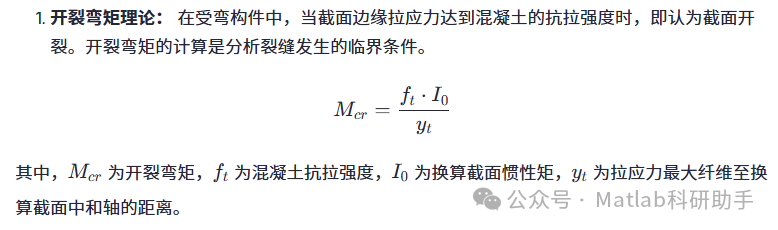
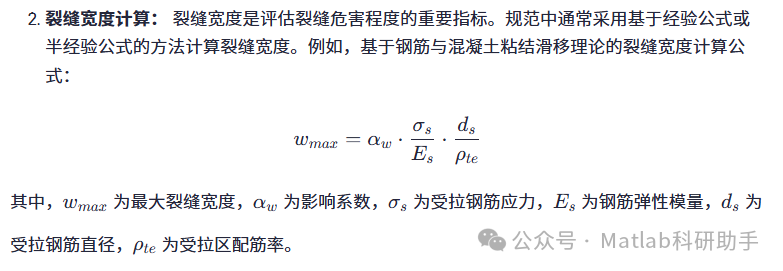
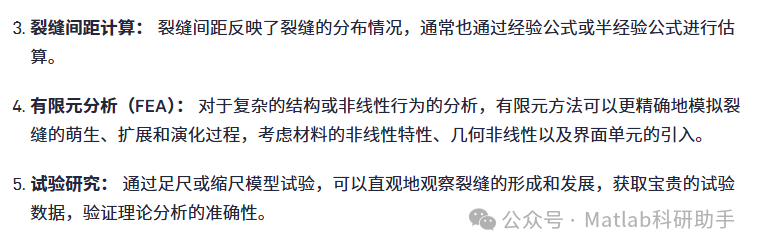
4. Crack Control Measures
Effective crack control is key to ensuring the long-term safe use of reinforced concrete members. The main control measures include:
-
Reasonable Design:
- Reinforcement Design: A reasonable amount and arrangement of reinforcement can effectively limit the width and spacing of cracks. For example, placing sufficient fine diameter steel bars in the tensile zone can ensure uniform crack distribution and reduce the width of individual cracks.
- Structural Layout: Avoid or reduce stress concentration in the structure, optimize the distribution of structural stiffness, and reduce secondary stresses.
- Prestressed Concrete: Introducing prestress allows components to be in a compressed state before external loads are applied, thereby counteracting some tensile stresses and delaying or even preventing crack formation.
Optimize Materials:
- Select Low-Shrinkage Concrete: Use high-performance concrete, such as incorporating expansion agents and low heat of hydration cement, to reduce concrete shrinkage.
- Add Fibers: Incorporating steel fibers, polypropylene fibers, etc., into concrete can enhance its tensile strength and toughness, suppressing the initiation and propagation of cracks.
Refined Construction:
- Strictly Control Water-Cement Ratio: Lowering the water-cement ratio improves the density and strength of concrete.
- Enhance Curing: Ensure sufficient moisture during the hardening process of concrete to reduce drying shrinkage and lower temperature gradients.
- Ensure Compaction: Guarantee the density of concrete to avoid voids and loose areas.
- Reasonable Construction Joint Settings: Set construction joints reasonably in stress concentration areas to reduce stress constraints.
Monitoring and Assessment:
- Regular Inspections: Conduct regular inspections of the structure to promptly identify and record the occurrence and development of cracks.
- Crack Observation: Use crack observation instruments, microscopes, etc., to accurately measure the width, length, and depth of cracks and conduct long-term monitoring.
- Non-Destructive Testing: Employ non-destructive testing techniques such as ultrasound, rebound hammer, radar, etc., to assess the impact of cracks on the internal structure of concrete and the condition of steel reinforcement.
5. Conclusion
The issue of cracks in reinforced concrete members is a complex and important engineering topic. A deep understanding of the mechanisms of crack formation, types, and their impact on structural performance, mastery of scientific profile analysis methods, and the implementation of comprehensive and effective control measures are key to ensuring the safety, durability, and economy of reinforced concrete structures. With the development of materials science and computational technology, future crack analysis and control will become more refined and intelligent, creating a safer and more reliable built environment for humanity. Ongoing research and practice on crack issues will continuously enhance the overall performance of engineering structures and contribute to sustainable development.
⛳️ Operation Results
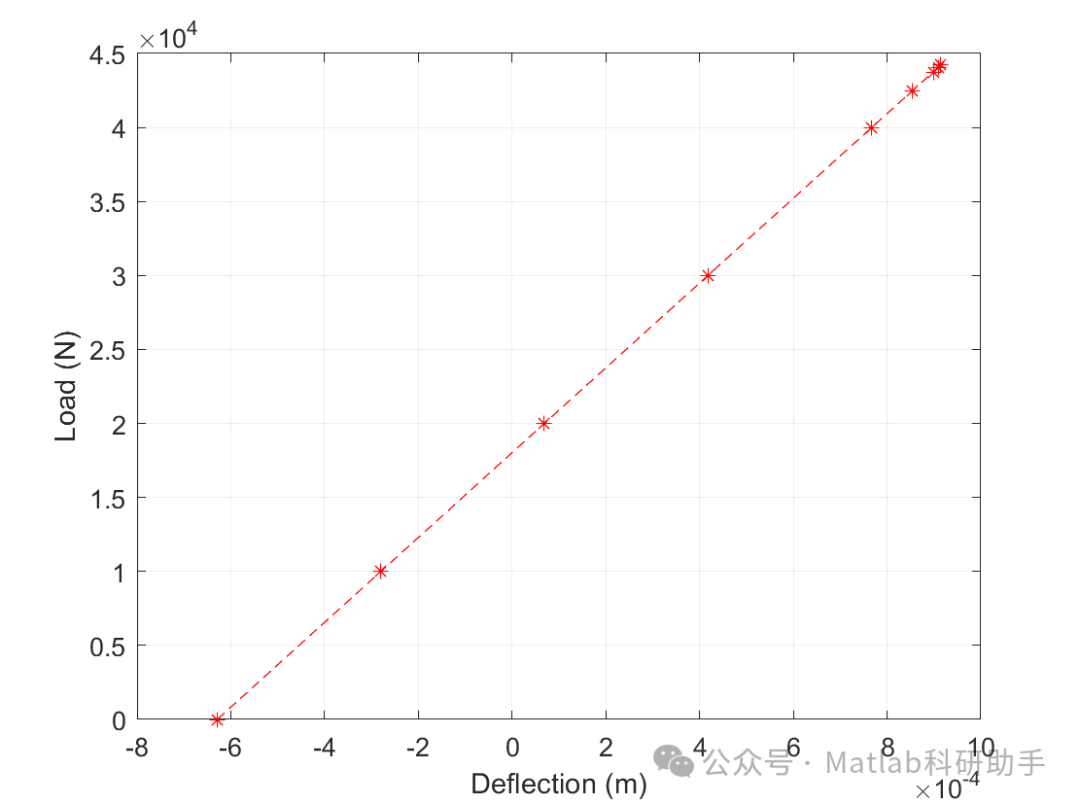
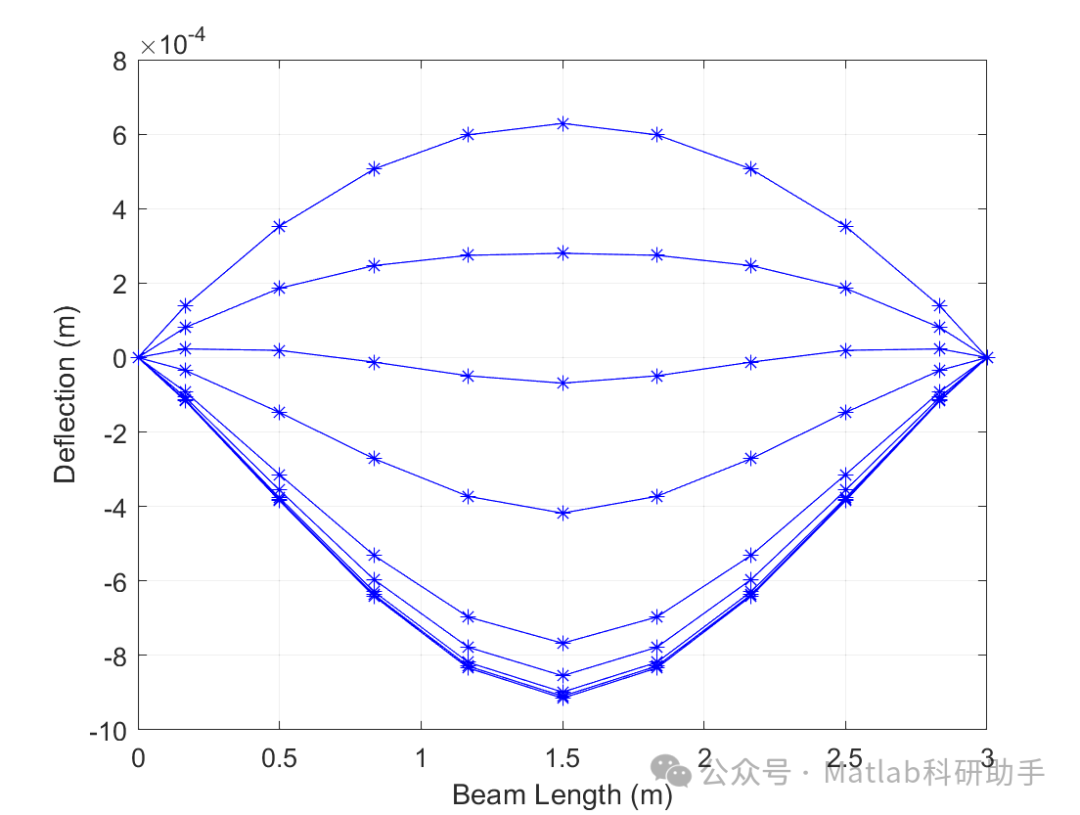
🔗 References
[1] Li Jian. Research on Ground Penetrating Radar Data Processing Methods and Software Development[D]. China University of Geosciences (Beijing), 2008.
[2] Ouyang Lianhua, Wang Jialin. A Matlab Language Algorithm for Arbitrarily Cutting Profiles on Contour Maps[J]. Geophysical and Geochemical Computing Technology, 2003, 25(3):4. DOI:10.3969/j.issn.1001-1749.2003.03.017.
[3] Li Rui, Xiao Weimin. Research on a New Formula for JRC Calculation Based on Fine Digital Processing of Barton Standard Profile Lines[J]. Journal of Rock Mechanics and Engineering, 2018, 37(A01):8. DOI:CNKI:SUN:YSLX.0.2018-S1-042.
📣 Sample Code
🎈 Some theoretical references are from online literature; if there is any infringement, please contact the author for deletion.
👇 Follow me to receive a wealth of Matlab e-books and mathematical modeling materials
🏆 The team specializes in guiding customized MATLAB simulations in various research fields, helping to realize research dreams:
🌈 Various intelligent optimization algorithm improvements and applications
Production scheduling, economic scheduling, assembly line scheduling, charging optimization, workshop scheduling, departure optimization, reservoir scheduling, three-dimensional packing, logistics site selection, cargo position optimization, bus scheduling optimization, charging pile layout optimization, workshop layout optimization, container ship loading optimization, pump combination optimization, medical resource allocation optimization, facility layout optimization, visual domain base station and drone site selection optimization, knapsack problem, wind farm layout, time slot allocation optimization, optimal distribution of distributed generation units, multi-stage pipeline maintenance, factory-center-demand point three-level site selection problem, emergency supply distribution center site selection, base station site selection, road lamp post layout, hub node deployment, transmission line typhoon monitoring devices, container scheduling, unit optimization, investment optimization portfolio, cloud server combination optimization, antenna linear array distribution optimization, CVRP problem, VRPPD problem, multi-center VRP problem, multi-layer network VRP problem, multi-center multi-vehicle VRP problem, dynamic VRP problem, two-layer vehicle routing planning (2E-VRP), electric vehicle routing planning (EVRP), hybrid vehicle routing planning, mixed flow workshop problem, order splitting scheduling problem, bus scheduling optimization problem, flight shuttle vehicle scheduling problem, site selection path planning problem, port scheduling, port bridge scheduling, parking space allocation, airport flight scheduling, leak source localization
🌈 Machine learning and deep learning time series, regression, classification, clustering, and dimensionality reduction
2.1 BP time series, regression prediction, and classification
2.2 ENS sound neural network time series, regression prediction, and classification
2.3 SVM/CNN-SVM/LSSVM/RVM support vector machine series time series, regression prediction, and classification
2.4 CNN|TCN|GCN convolutional neural network series time series, regression prediction, and classification
2.5 ELM/KELM/RELM/DELM extreme learning machine series time series, regression prediction, and classification
2.6 GRU/Bi-GRU/CNN-GRU/CNN-BiGRU gated neural network time series, regression prediction, and classification
2.7 Elman recurrent neural network time series, regression prediction, and classification
2.8 LSTM/BiLSTM/CNN-LSTM/CNN-BiLSTM/long short-term memory neural network series time series, regression prediction, and classification
2.9 RBF radial basis function neural network time series, regression prediction, and classification
2.10 DBN deep belief network time series, regression prediction, and classification
2.11 FNN fuzzy neural network time series, regression prediction
2.12 RF random forest time series, regression prediction, and classification
2.13 BLS broad learning system time series, regression prediction, and classification
2.14 PNN pulse neural network classification
2.15 Fuzzy wavelet neural network prediction and classification
2.16 Time series, regression prediction, and classification
2.17 Time series, regression prediction, and classification
2.18 XGBOOST ensemble learning time series, regression prediction, and classification
2.19 Transform various combinations of time series, regression prediction, and classification
Directions cover wind power prediction, photovoltaic prediction, battery life prediction, radiation source identification, traffic flow prediction, load prediction, stock price prediction, PM2.5 concentration prediction, battery health status prediction, electricity consumption prediction, water body optical parameter inversion, NLOS signal identification, precise prediction of subway stops, transformer fault diagnosis
🌈 Image processing aspects
Image recognition, image segmentation, image detection, image hiding, image registration, image stitching, image fusion, image enhancement, image compressed sensing
🌈 Path planning aspects
Traveling salesman problem (TSP), vehicle routing problem (VRP, MVRP, CVRP, VRPTW, etc.), three-dimensional path planning for drones, drone collaboration, drone formation, robot path planning, grid map path planning, multimodal transport problems, electric vehicle routing planning (EVRP), two-layer vehicle routing planning (2E-VRP), hybrid vehicle routing planning, ship trajectory planning, full path planning, warehouse patrol
🌈 Drone application aspects
Drone path planning, drone control, drone formation, drone collaboration, drone task allocation, online optimization of drone safe communication trajectories, vehicle collaborative drone path planning
🌈 Communication aspects
Sensor deployment optimization, communication protocol optimization, routing optimization, target localization optimization, Dv-Hop localization optimization, Leach protocol optimization, WSN coverage optimization, multicast optimization, RSSI localization optimization, underwater communication, communication upload and download allocation
🌈 Signal processing aspects
Signal recognition, signal encryption, signal denoising, signal enhancement, radar signal processing, signal watermark embedding and extraction, electromyography signals, electroencephalography signals, signal timing optimization, electrocardiogram signals, DOA estimation, encoding and decoding, variational mode decomposition, pipeline leakage, filters, digital signal processing + transmission + analysis + denoising, digital signal modulation, bit error rate, signal estimation, DTMF, signal detection
🌈 Power system aspects
Microgrid optimization, reactive power optimization, distribution network reconstruction, energy storage configuration, orderly charging, MPPT optimization, household electricity
🌈 Cellular automata aspects
Traffic flow, crowd evacuation, virus spread, crystal growth, metal corrosion
🌈 Radar aspects
Kalman filter tracking, trajectory association, trajectory fusion, SOC estimation, array optimization, NLOS identification
🌈 Workshop scheduling
Zero-wait flow shop scheduling problem (NWFSP) , Permutation flow shop scheduling problem (PFSP) , Hybrid flow shop scheduling problem (HFSP) , zero idle flow shop scheduling problem (NIFSP), distributed permutation flow shop scheduling problem (DPFSP), blocking flow shop scheduling problem (BFSP)
👇