With the continuous advancement of automotive technology, automotive display systems have also become increasingly sophisticated. Compared to consumer electronics applications, automotive displays operate in more demanding environments. To cope with dynamic lighting conditions ranging from starlight to sunlight, automotive displays need to possess good readability and image uniformity. Therefore, this paper studies the tone mapping technology of Mini-LED backlit LCD displays, aiming to enhance the readability of automotive displays under strong ambient light by optimizing the backlight emission pattern, adaptive tone mapping, and integrating Mini-LED local dimming technology.
To improve contrast and reduce power consumption, high-end automotive displays typically use Mini-LED backlight panels with local dimming capabilities. The subject of this study is an LCD with a resolution of 1920×1200, featuring 40×25 dimming zones, each containing 3×3 Mini-LED units.
1.Evaluation of Mini-LED Backlight Uniformity
Referring to previous literature, the light modulation characteristics of the LCD panel for Mini-LED can be modeled using a Gaussian distribution model for the light spread function (LSF, Light Spread Function):

Where ux,i and uy,i represent the mean distances of the light pattern of the ith LED in the x and y directions, respectively, and σi is the standard deviation of the light pattern of the ith LED. By adjusting the σ in the Gaussian distribution function of the LSF, different full width at half maximum (FWHM) and pitch ratios can be achieved, thereby affecting the uniformity of the backlight. As the FWHM/Pitch ratio increases, the uniformity of the backlight improves rapidly and gradually saturates. Simulation results show that when the FWHM/Pitch ratio is 1.2, the uniformity exceeds 98%, but a higher FWHM/Pitch ratio exacerbates the halo effect. Therefore, the researchers set the ratio to 1.2 in the proposed local dimming backlight system to balance uniformity and halo effects.
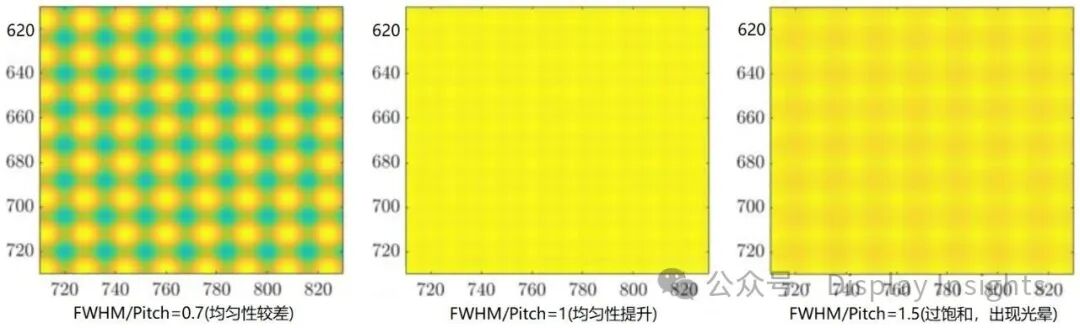
Figure 1. Distribution of Mini-LED display uniformity under different PWHM/Pitch ratios
Using different definitions of uniformity, the relationship between uniformity and PWHM/Pitch:
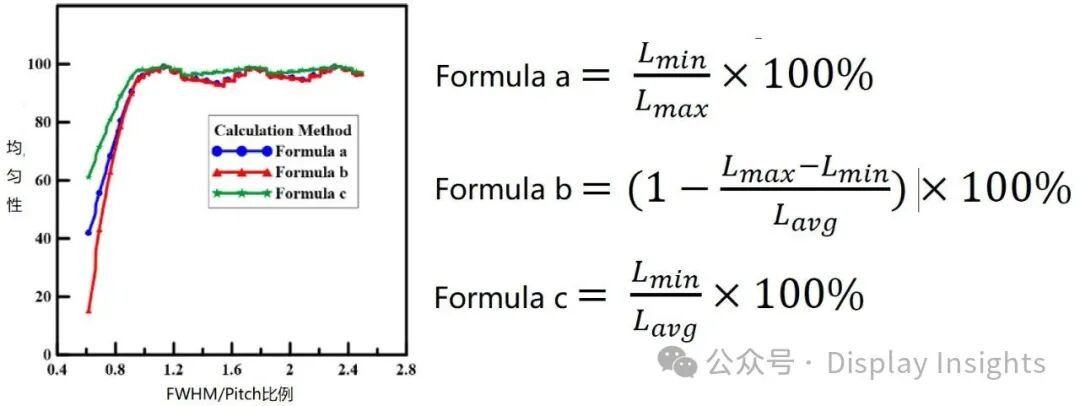
Figure 2. Relationship between PWHM/Pitch and uniformity under different definitions of uniformity
2. Comparison of Backlight Algorithm Performance
To evaluate the performance of the backlight algorithms, the researchers compared the peak signal-to-noise ratio (PSNR) under four different methods (maximum method, root mean square method, standard deviation method, and error correction method). The results showed that the root mean square method had the highest PSNR, and this method was adopted in the proposed local dimming backlight system.
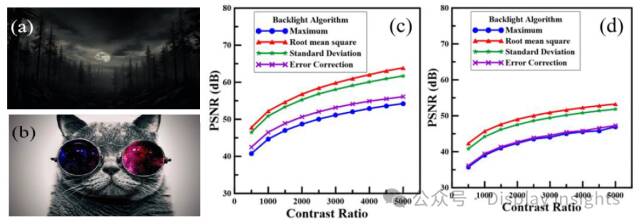
Figure 3. Corresponding PSNR under different algorithm conditions
3. Adaptive Tone Mapping
3.1 Impact of Ambient Light on Display Brightness
As the intensity of ambient light increases, the brightness perceived by the human eye also increases. Especially in low gray areas, gamma correction is required to prevent content from being washed out (Wash-out). The researchers simulated the changes in brightness perceived by the human eye at different gray levels by increasing the ambient light intensity.
3.2 Tone Mapping Based on DICOM GSDF
DICOM GSDF is a model based on human contrast sensitivity that standardizes the brightness response perceived by the human eye. Compared to the traditional gamma 2.2 curve, the DICOM GSDF curve has higher brightness in low gray areas, preventing dark image content from being washed out. By fitting a new electro-optical transfer function (EOTF) to the DICOM GSDF, the brightness of low gray content can be enhanced, making it easier for the human eye to distinguish.
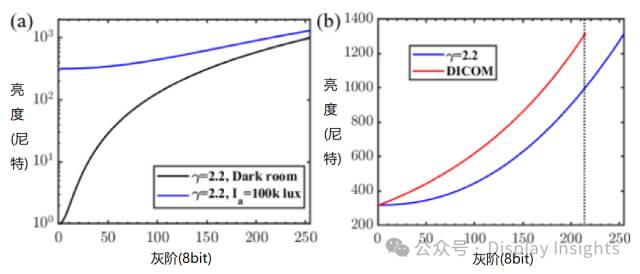
Figure 4. (a) Brightness perceived by the human eye under different ambient illuminance when Gamma=2.2; (b) Comparison between Gamma 2.2 and DICOM under the same 100k lux illuminance
3.3 Adaptive Gamma Value
As the intensity of ambient light changes, the peak brightness of the display panel should also be adaptively adjusted. Experimental results indicate that on display panels with high peak brightness, larger gamma values are preferred; while under strong ambient light, reducing the gamma value can provide better visibility.
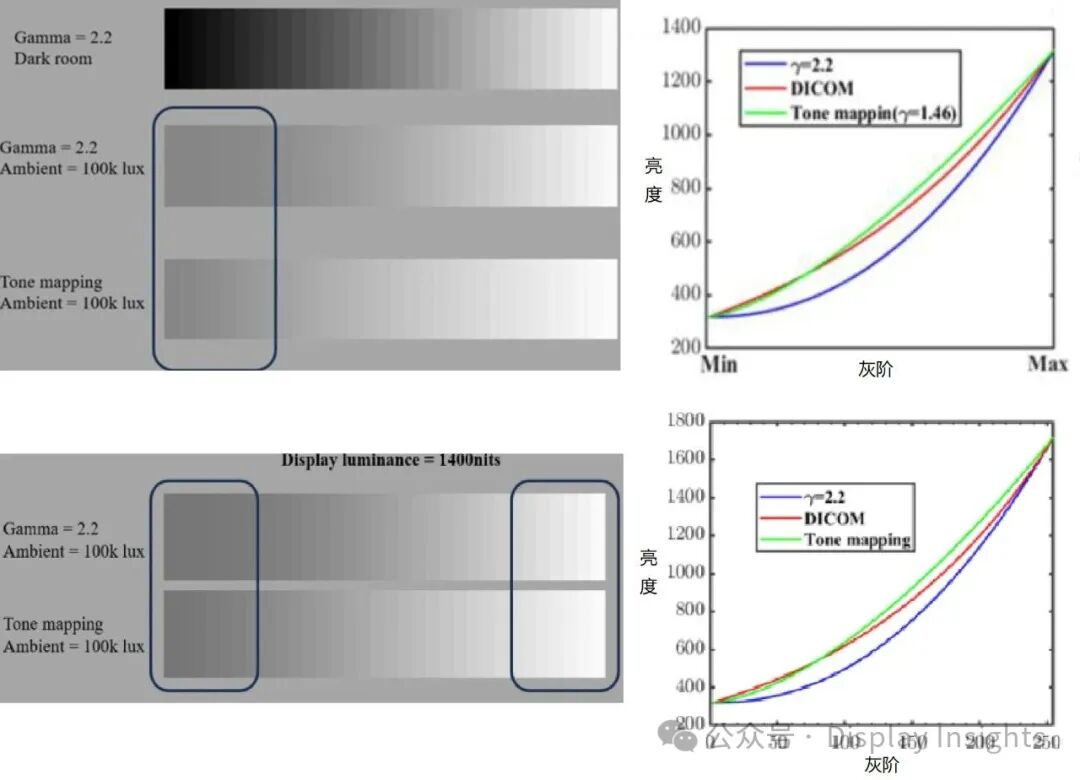
Figure 5. Adaptive Gamma design can enhance gray scale detail under different environmental conditions
4. Conclusion
This paper studied the advanced tone mapping technology of Mini-LED backlit LCDs, significantly enhancing the readability of automotive displays under strong ambient light by optimizing the Mini-LED backlight emission patterns, adaptive tone mapping, and integrating Mini-LED local dimming technology. Experimental and simulation results indicate that the optimized FWHM/Pitch ratio and adaptive gamma values can effectively improve the visibility of low gray content while reducing clipping effects. These technologies are of great significance for enhancing the sunlight readability of automotive displays and mobile devices.
Source: Sung-Chun Chen, “Advanced Tone Mapping of Mini-LED Backlit LCDs for Automotive Displays”
To follow this public account, please click below↓↓↓