✅ Author Profile: A research enthusiast and Matlab simulation developer, skilled in data processing, modeling simulation, program design, complete code acquisition, paper reproduction, and scientific simulation.
🍎 Previous reviews, follow the personal homepage:Matlab Research Studio
🍊 Personal motto: Seek knowledge through investigation, complete Matlab code and simulation consultation available via private message.
🔥 Content Introduction
In complex system perception and decision-making, a single information source often has limitations— for example, radar can obtain target distance and speed but is greatly affected by weather, while visual sensors can provide rich texture information but fail in low light conditions. Multi-source information fusion can achieve a “1+1>2” effect by integrating different types of information across various spatial and temporal scales, enhancing the completeness, reliability, and decision accuracy of information. This article systematically introduces a multi-source information fusion method based on a three-level architecture of “data layer – feature layer – decision layer” and discusses its application value in specific fields.
1. Core Principles and Three-Level Architecture of Multi-Source Information Fusion
The essence of multi-source information fusion is the collaborative processing of data from different sensors (or information sources) to eliminate redundancy, compensate for missing data, and ultimately form a consistent state estimate or decision result. The core challenges lie in handling information heterogeneity (such as differences in data formats, accuracy, and temporal-spatial synchronization), uncertainty (such as noise, delays, and conflicts), and dynamics (such as sensor failures and environmental changes).
Based on the depth of fusion, the three-level fusion architecture proposed in this article is as follows:
1. Data Layer Fusion (Pixel Level / Raw Data Level)
- Principle: Directly fuse the raw data from the same or similar source sensors (such as multi-spectral images or multiple radar echo signals from the same area), retaining the most complete detail information.
- Key Technologies:
- Temporal-Spatial Alignment: Ensure the temporal and spatial consistency of multi-source data through timestamp synchronization (e.g., GPS time calibration) and spatial registration (e.g., feature point-based image registration);
- Data Assimilation: Use methods such as weighted averaging and Kalman filtering for homogeneous data (e.g., measurements from multiple temperature sensors), and project heterogeneous data (e.g., radar point clouds and visual images) into a unified coordinate system.
- Advantages and Limitations: Retains original information, suitable for high-precision scenarios; however, it has a large computational load and requires high consistency among sensors (e.g., resolution, field of view overlap).
2. Feature Layer Fusion (Attribute Level)
- Principle: Extract features from each information source (e.g., edges and textures from images, target speed and size from radar) and then fuse the feature vectors to reduce data volume while retaining key discriminative information.
- Key Technologies:
- Feature Selection: Use methods such as Principal Component Analysis (PCA) and Mutual Information (MI) to select the most discriminative features and reduce dimensionality;
- Feature Fusion: Use feature concatenation (linking multi-source feature vectors), feature weighting (assigning weights based on feature importance), or subspace learning (e.g., Canonical Correlation Analysis (CCA), finding a common subspace for multi-source features).
- Applicable Scenarios: Scenarios with strong sensor heterogeneity (e.g., radar and vision) and difficulty in raw data fusion, balancing information completeness and computational efficiency.
3. Decision Layer Fusion (Conclusion Level)
- Principle: Each information source independently completes a decision (e.g., “target exists” or “fault type A”), and then the fusion rules synthesize the decision results to obtain the final conclusion.
- Key Technologies:
- Probabilistic Fusion: Use Bayesian theory (e.g., D-S evidence theory) to handle uncertain decisions, combining the decision probabilities of multiple sensors through trust functions;
- Voting-Based Fusion: Use majority voting or weighted voting methods, suitable for hard decisions (e.g., “yes/no” classification results);
- Learning-Based Fusion: Use models such as Support Vector Machines (SVM) and Neural Networks to learn the optimal combination of multi-source decisions, enhancing decision robustness in complex scenarios.
- Advantages: Low dependency on sensors (can tolerate partial sensor failures), high flexibility, commonly used architecture for multi-source heterogeneous information fusion.
2. Handling Uncertainty in Multi-Source Information Fusion and Key Algorithms
The uncertainty of multi-source information (such as noise, conflicts, and ambiguity) is a core obstacle in the fusion process, requiring targeted algorithms for robust fusion:
1. Uncertainty Modeling Methods
- Probabilistic Models: Use Gaussian distribution to describe sensor noise (e.g., radar ranging errors), achieving dynamic state estimation through Kalman filtering or Particle Filtering;
- Evidence Theory (D-S Theory): Handle information conflicts (e.g., one sensor determines “the target is a car”, while another determines “it is a truck”) by fusing evidence through Basic Probability Assignment (BPA) and Dempster’s combination rule to obtain the final trust level;
- Fuzzy Logic: Quantitatively describe qualitative information (e.g., “temperature is too high”, “target is ambiguous”) using membership functions, and fuse multiple fuzzy judgments through fuzzy inference rules.
2. Typical Fusion Algorithm Example: Decision Layer Fusion Based on D-S Evidence Theory
Taking target recognition as an example (fusing decision results from radar, vision, and infrared sensors):
- Evidence Generation: Each sensor independently outputs target category probabilities (e.g., radar: “car” 60%, “truck” 30%, “unknown” 10%), converting them into BPA functions;
- Conflict Handling: If two sensors have high evidence conflict (e.g., vision determines “pedestrian” 90%, conflicting with radar’s conclusion), use Yager’s improved rule to weaken the weight of the conflict item, avoiding unreasonable conclusions;
- Evidence Combination: Use Dempster’s rule to iteratively fuse all sensors’ BPA, obtaining the final trust distribution (e.g., “car” trust level 85%), with the highest trust category being the fusion result.
3. Typical Application Scenarios of Multi-Source Information Fusion Methods
1. Intelligent Driving Environmental Perception
- Fusion Goals: 3D point clouds from LiDAR, RGB images from cameras, distance-speed information from millimeter-wave radar, and positioning data from GPS/IMU;
- Fusion Process:
- Data Layer: Project LiDAR point clouds onto the visual image plane to associate point clouds with pixels;
- Feature Layer: Fuse the target contour features from LiDAR with the semantic segmentation features from vision (e.g., “pedestrian”, “lane line”);
- Decision Layer: Use D-S evidence theory to fuse the target detection results from each sensor, outputting the final obstacle type, position, and motion state to support the obstacle avoidance decision in autonomous driving.
- Effect: Compared to a single sensor, the accuracy of obstacle detection improves by 15%-30%, with significantly enhanced robustness in extreme weather conditions (heavy rain, fog).
2. Medical Diagnosis and Image Analysis
- Fusion Goals: CT (bone structure), MRI (soft tissue), PET (metabolic activity), and pathological slice data;
- Fusion Process:
- Data Layer: Spatially register multi-modal images (e.g., aligning PET images with MRI to the same anatomical coordinate system);
- Feature Layer: Extract bone density features from CT, tumor texture features from MRI, and metabolic rate features from PET, inputting them into a classification model through feature concatenation;
- Decision Layer: Combine physician experience (expert rules) with machine learning model diagnostic results to comprehensively determine cancer staging and the benign or malignant nature of lesions.
- Case Study: In the diagnosis of brain gliomas, multi-modal fusion improved grading accuracy from 82% with single MRI to 91%, reducing misdiagnosis rates.
3. Industrial Equipment Fault Diagnosis
- Fusion Goals: Vibration sensors (mechanical faults), temperature sensors (overheating risks), current sensors (electrical anomalies), and sound sensors (abnormal noises);
- Fusion Process:
- Feature Layer: Extract frequency features from vibration signals and temporal change features from temperature, then fuse them after dimensionality reduction using PCA;
- Decision Layer: Use neural networks to fuse multi-source features, outputting fault types (e.g., “bearing wear”, “motor imbalance”) and confidence levels, providing early warnings for equipment failures.
- Value: Compared to a single sensor, the average early warning time for faults is extended by 3-5 days, with a 40% reduction in false alarm rates.
4. Challenges and Future Development Directions
The core challenges currently facing multi-source information fusion include:
- Difficulty in Adapting Heterogeneous Information: The fusion of cross-modal data (e.g., text reports and images) lacks a unified representation method, necessitating exploration of universal heterogeneous feature mapping mechanisms (e.g., cross-modal attention models based on Transformers);
- Contradiction Between Dynamics and Real-Time Performance: The correlation of sensor data in dynamic environments changes over time, requiring lightweight fusion algorithms (e.g., online learning under edge computing architectures) to balance accuracy and speed;
- Insufficient Interpretability: The decision-making process of deep learning fusion models (e.g., black-box neural networks) is difficult to trace, limiting their application in safety-sensitive fields such as healthcare and autonomous driving, necessitating the integration of causal reasoning to enhance interpretability.
Future research directions focus on:
- Adaptive Fusion Framework: Dynamically adjust fusion strategies based on reinforcement learning (e.g., automatically reassigning weights when sensors fail);
- Federated Fusion Technology: Achieve collaborative multi-source information across institutions and regions while protecting data privacy (e.g., “data does not move, model does”);
- Brain-Inspired Fusion Models: Develop more efficient bio-inspired fusion algorithms by referencing the brain’s integration mechanisms for multi-sensory information.
Conclusion
Multi-source information fusion integrates heterogeneous data through a three-level architecture, demonstrating irreplaceable value in intelligent driving, medical diagnosis, and industrial monitoring—it is not only a technical means to address the limitations of single sensors but also a core support for intelligent decision-making in complex systems. With the development of IoT and AI technologies, multi-source information fusion will evolve towards “real-time, adaptive, and interpretable” directions, facilitating the transition from “perception” to “cognition” and providing key technical support for the construction of a smart society.
⛳️ Operation Results
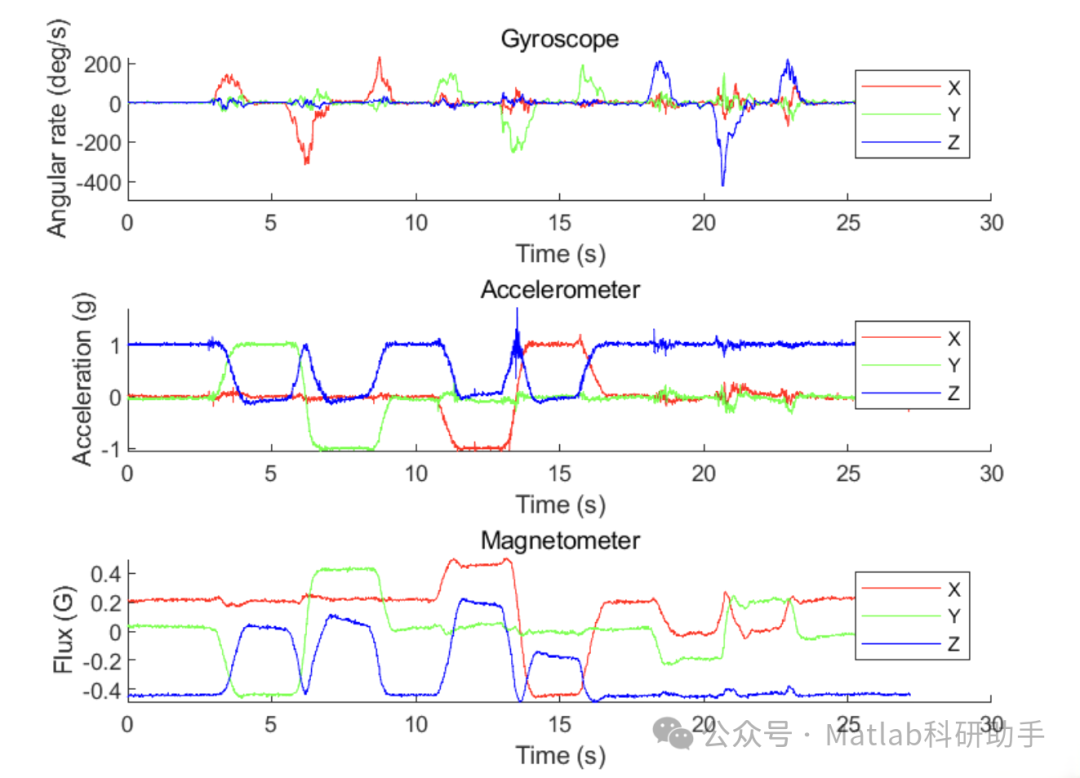
🔗 References
[1] Zhang Hui. Research on Chestnut Grading Detection Method Based on Multi-Source Information Fusion Technology [D]. Huazhong Agricultural University [2025-07-24]. DOI:10.7666/d.Y1805021.
[2] Zhang Yi, Zhou Taoyun, Yang Xiaoya. Research on a Filtering Algorithm Based on Information Fusion [J]. Electronic Measurement Technology, 2007, 30(2):65-67. DOI:10.3969/j.issn.1002-7300.2007.02.021.
[3] Zhou Wei. Research on Non-Destructive Detection Method for Pork Freshness Based on Multi-Source Information Fusion Technology [D]. Huazhong Agricultural University [2025-07-24]. DOI:10.7666/d.Y1994148.
📣 Partial Code
🎈 Some theoretical references are from online literature; please contact the author for removal if there is any infringement.
👇 Follow me to receive a wealth of Matlab e-books and mathematical modeling materials
🏆 The team specializes in guiding customized Matlab simulations in various research fields, supporting research dreams:
🌈 Various intelligent optimization algorithm improvements and applications
Production scheduling, economic scheduling, assembly line scheduling, charging optimization, workshop scheduling, departure optimization, reservoir scheduling, 3D packing, logistics site selection, cargo location optimization, bus scheduling optimization, charging pile layout optimization, workshop layout optimization, container ship loading optimization, pump combination optimization, medical resource allocation optimization, facility layout optimization, visual domain base station and drone site selection optimization, knapsack problem, wind farm layout, time slot allocation optimization, optimal distributed generation unit allocation, multi-stage pipeline maintenance, factory-center-demand point three-level site selection problem, emergency supply distribution center site selection, base station site selection, road lamp column arrangement, hub node deployment, transmission line typhoon monitoring devices, container scheduling, unit optimization, investment optimization portfolio, cloud server combination optimization, antenna linear array distribution optimization, CVRP problem, VRPPD problem, multi-center VRP problem, multi-layer network VRP problem, multi-center multi-vehicle VRP problem, dynamic VRP problem, two-layer vehicle routing planning (2E-VRP), electric vehicle routing planning (EVRP), hybrid vehicle routing planning, mixed flow workshop problem, order splitting scheduling problem, bus scheduling optimization problem, flight shuttle vehicle scheduling problem, site selection path planning problem, port scheduling, port bridge scheduling, parking space allocation, airport flight scheduling, leak source location.
🌈 Time series, regression, classification, clustering, and dimensionality reduction in machine learning and deep learning
2.1 BP time series, regression prediction, and classification
2.2 ENS sound neural network time series, regression prediction, and classification
2.3 SVM/CNN-SVM/LSSVM/RVM support vector machine series time series, regression prediction, and classification
2.4 CNN|TCN|GCN convolutional neural network series time series, regression prediction, and classification
2.5 ELM/KELM/RELM/DELM extreme learning machine series time series, regression prediction, and classification
2.6 GRU/Bi-GRU/CNN-GRU/CNN-BiGRU gated neural network time series, regression prediction, and classification
2.7 Elman recurrent neural network time series, regression prediction, and classification
2.8 LSTM/BiLSTM/CNN-LSTM/CNN-BiLSTM long short-term memory neural network series time series, regression prediction, and classification
2.9 RBF radial basis neural network time series, regression prediction, and classification
2.10 DBN deep belief network time series, regression prediction, and classification
2.11 FNN fuzzy neural network time series, regression prediction
2.12 RF random forest time series, regression prediction, and classification
2.13 BLS broad learning system time series, regression prediction, and classification
2.14 PNN pulse neural network classification
2.15 Fuzzy wavelet neural network prediction and classification
2.16 Time series, regression prediction, and classification
2.17 Time series, regression prediction, and classification
2.18 XGBOOST ensemble learning time series, regression prediction, and classification
2.19 Transform various combinations of time series, regression prediction, and classification
Directions cover wind power prediction, photovoltaic prediction, battery life prediction, radiation source identification, traffic flow prediction, load prediction, stock price prediction, PM2.5 concentration prediction, battery health status prediction, electricity consumption prediction, water body optical parameter inversion, NLOS signal identification, precise prediction of subway stops, transformer fault diagnosis.
🌈 In image processing
Image recognition, image segmentation, image detection, image hiding, image registration, image stitching, image fusion, image enhancement, image compressed sensing.
🌈 In path planning
Traveling salesman problem (TSP), vehicle routing problem (VRP, MVRP, CVRP, VRPTW, etc.), three-dimensional path planning for drones, drone collaboration, drone formation, robot path planning, grid map path planning, multimodal transport problems, electric vehicle routing planning (EVRP), two-layer vehicle routing planning (2E-VRP), hybrid vehicle routing planning, ship trajectory planning, full path planning, warehouse patrol.
🌈 In drone applications
Drone path planning, drone control, drone formation, drone collaboration, drone task allocation, drone secure communication trajectory online optimization, vehicle collaborative drone path planning.
🌈 In communication
Sensor deployment optimization, communication protocol optimization, routing optimization, target location optimization, Dv-Hop location optimization, Leach protocol optimization, WSN coverage optimization, multicast optimization, RSSI location optimization, underwater communication, communication upload and download allocation.
🌈 In signal processing
Signal recognition, signal encryption, signal denoising, signal enhancement, radar signal processing, signal watermark embedding and extraction, electromyography signals, electroencephalography signals, signal timing optimization, electrocardiogram signals, DOA estimation, encoding and decoding, variational mode decomposition, pipeline leakage, filters, digital signal processing + transmission + analysis + denoising, digital signal modulation, bit error rate, signal estimation, DTMF, signal detection.
🌈 In power systems
Microgrid optimization, reactive power optimization, distribution network reconstruction, energy storage configuration, orderly charging, MPPT optimization, household electricity.
🌈 In cellular automata
Traffic flow, crowd evacuation, virus spread, crystal growth, metal corrosion.
🌈 In radar
Kalman filtering tracking, trajectory association, trajectory fusion, SOC estimation, array optimization, NLOS identification.
🌈 In workshop scheduling
Zero-wait flow shop scheduling problem (NWFSP), permutation flow shop scheduling problem (PFSP), hybrid flow shop scheduling problem (HFSP), zero idle flow shop scheduling problem (NIFSP), distributed permutation flow shop scheduling problem (DPFSP), blocking flow shop scheduling problem (BFSP).
👇