Phase 1: Mastering C/C++ Basics
Week 1: Introduction and Environment Setup (4 hours)Set up the C/C++ development environment, learn basic output (print), variable definition, input methods, and conditional statements to establish a fundamental understanding of the language.Week 2: Core Syntax Learning (5 hours)Systematically master data types, operators and expressions, program execution structures (sequential, loop, branch), as well as the definition and use of arrays, functions, pointers, and structures.Week 3: Basic Programming Practice (5 hours)Consolidate syntax through practical exercises, completing simple programming problems such as “printing narcissistic numbers” (numbers where the sum of their digits raised to the power of the number of digits equals the number itself).Week 4: Intermediate Programming Training (6 hours)Solve advanced problems, including string reversal and palindrome detection, greatest common divisor calculation, merging two sorted arrays, implementing a number guessing game, and age calculation.Week 5: Basics of Object-Oriented Programming (OOP) (18 hours)Understand the core concepts of object-oriented programming, learn to create classes and objects, constructors and destructors, references, copy constructors, operator overloading, inline functions, type conversion, exception handling, and the application of friends and static members.Week 6: Advanced Object-Oriented Programming (38 hours)Dive deeper into design patterns, callable objects, and move semantics, mastering inheritance and polymorphism, understanding generic programming concepts, and proficiently using templates and the STL standard library.
Phase 2: Advanced C/C++ Development
Week 1: Mastering IDE Tools (5 hours)Become proficient in using an IDE (Integrated Development Environment), including project creation, code editing, debugging, etc., laying the foundation for large project development.Week 2: Basics of Linux Systems (10 hours)Learn Linux system operations, understand its basic commands and environment configuration, as many internet services are based on Linux, making this a necessary foundation for backend development.Week 3: Data Structures and Algorithms (28 hours)Master the core foundations of program design, including data structures (singly linked lists, doubly linked lists, trees and binary trees, Huffman trees, concepts/storage/traversal/shortest paths of graphs), and basic algorithms (selection sort, bubble sort, insertion sort).Week 4: Advanced Programming Techniques (24 hours)Delve into Linux system programming, learning system programming interfaces, system call APIs, memory management, inter-process communication (IPC), and network programming techniques.Week 5: Database Development (12 hours)Master practical skills in SQL, learn the basic usage of Oracle and MySQL databases, and implement data storage and management.Week 6: QT Graphics Library Application (26 hours)Complete QT environment installation, project creation, and debugging, learn QT features and basic modules, and master QT graphical interface development capabilities.Week 7: MFC Development (8 hours)Understand the Microsoft Foundation Class Library (MFC), learn the basic framework of MFC, message mechanisms, UI program design, and the development and use of dynamic libraries (DLLs).Week 8: Source Code Management and Development Process (6 hours)Learn to use GitHub source code management tools, understand the standard software development process, and enhance collaboration and project management skills.
If you can master the above skills, possess the ability to solve complex problems and tackle technical challenges, and can independently develop complex functional modules, you will have reached the intermediate development level in C/C++.
The above is a brief introduction to learning C++, helping beginners clarify the learning sequence and basic logic. Below, I will share a C++ learning website and a compiled introductory material package that covers all modules of C++ learning, which is very suitable for students preparing to delve deeper into C++. (Website + material acquisition method can be found at the end)
1. Introductory Videos
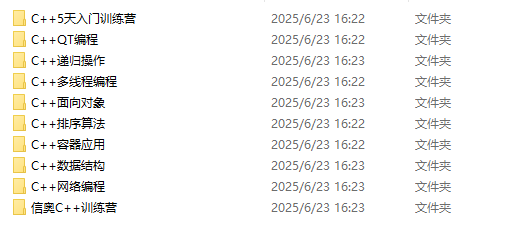
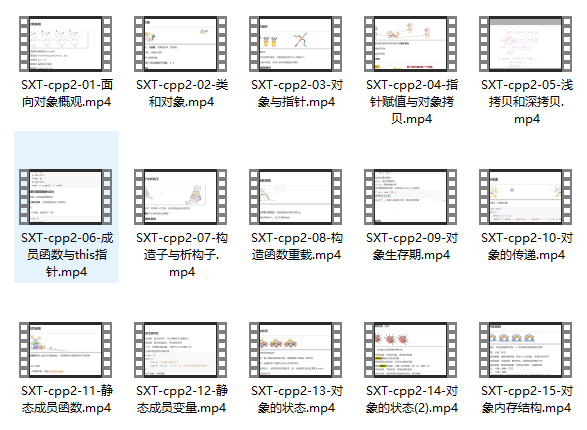
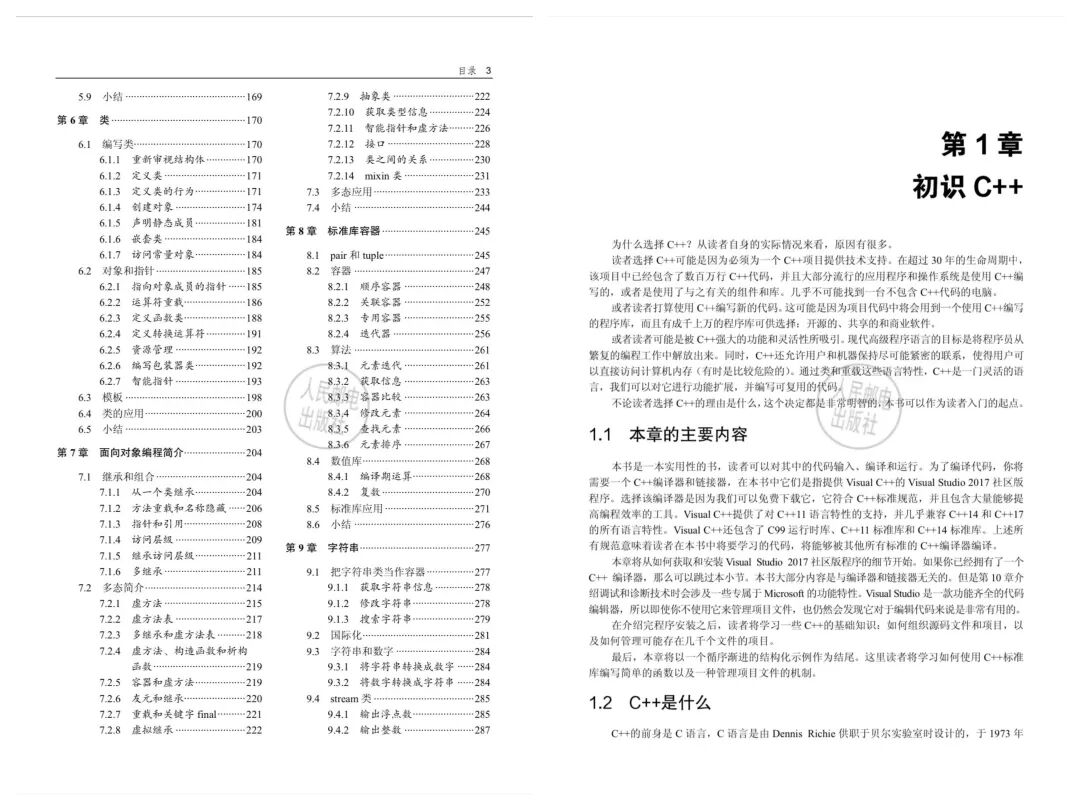
2. Introductory Textbooks (Highly recommended!!! “C++ Self-Learning Guide”)
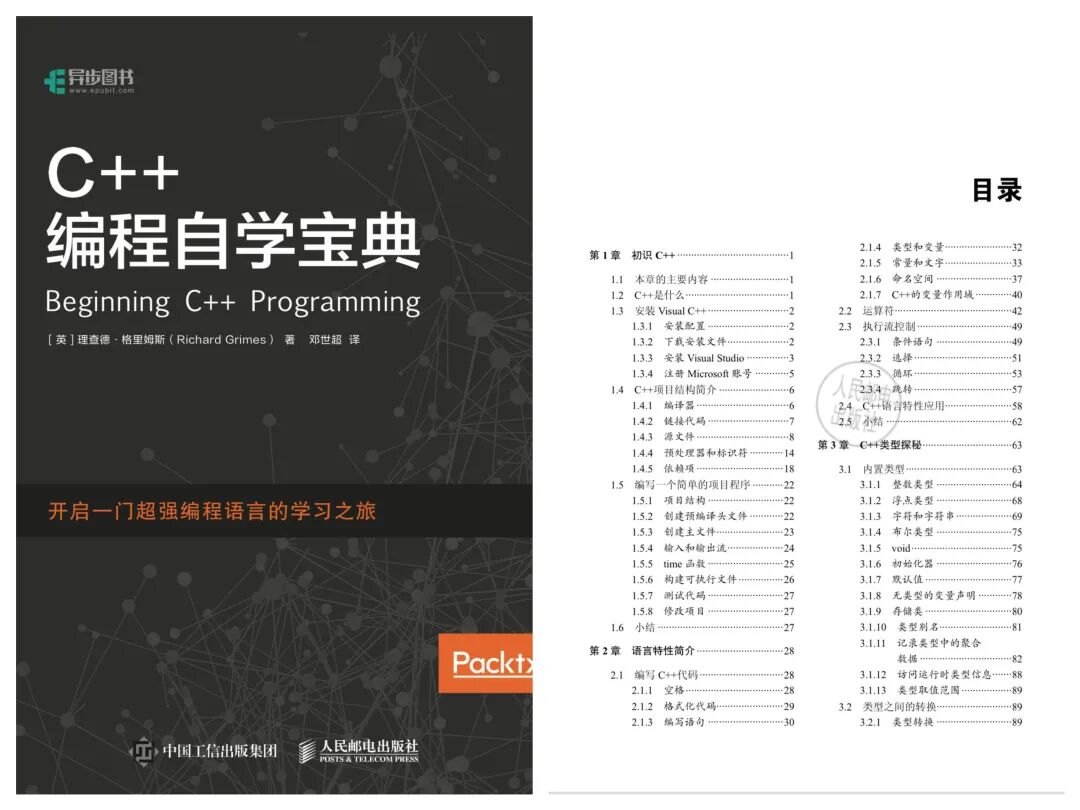
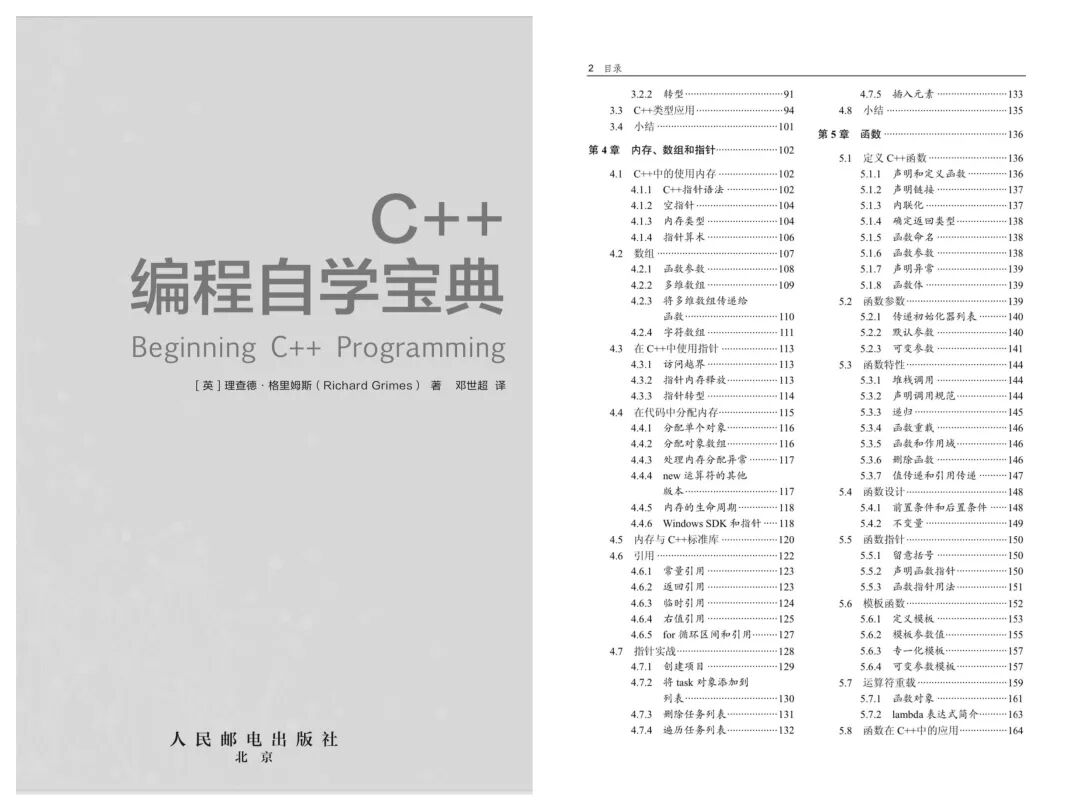
3. Learning Websites
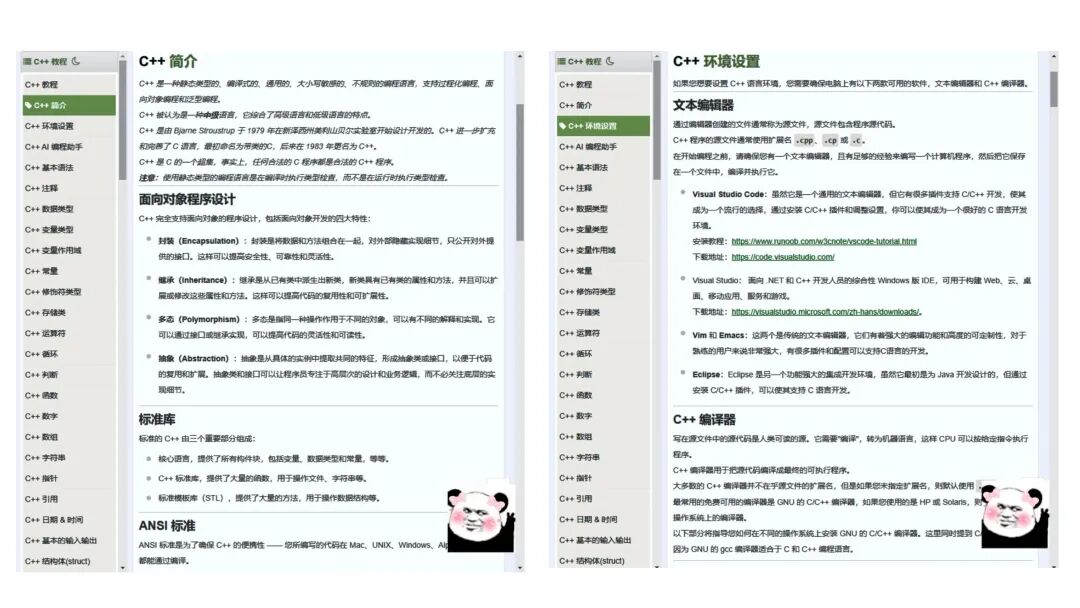
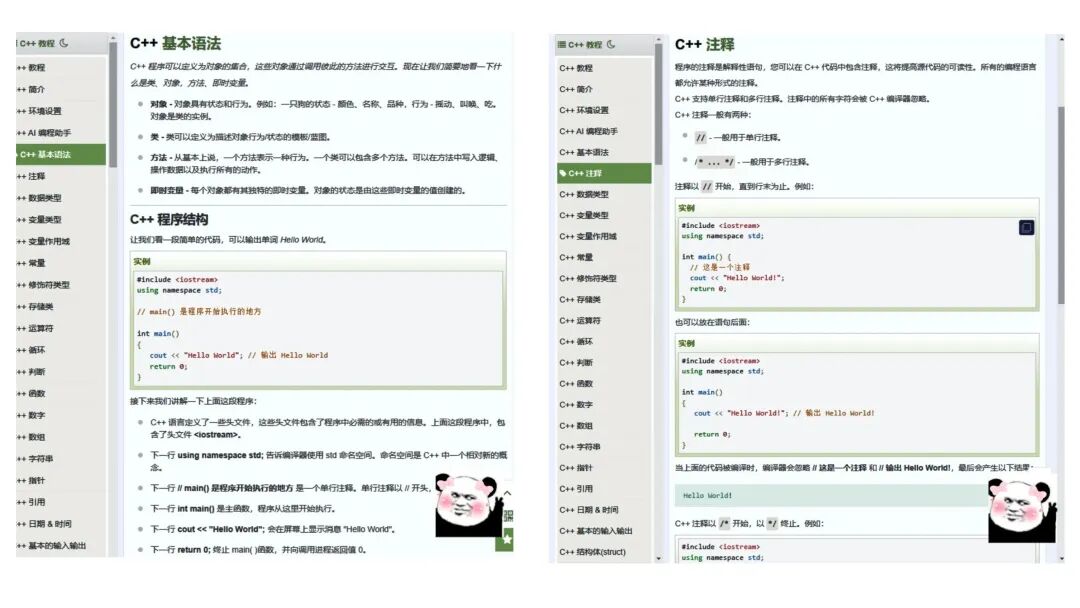
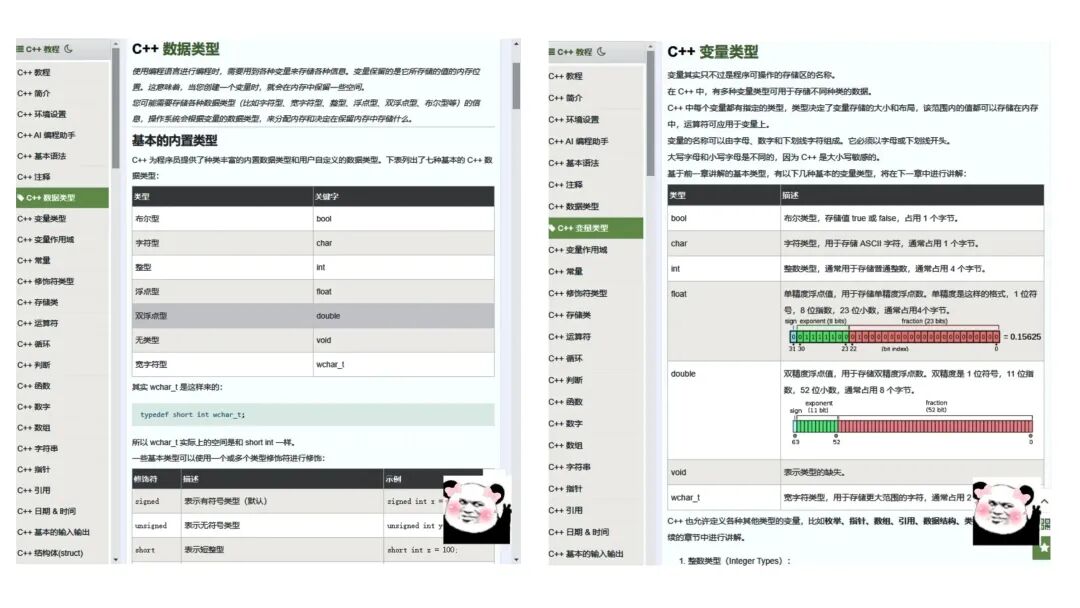
How to obtain the complete set of materials:
1. Like + View
2. Follow the public account and reply with the keyword【Materials】 to receive