Comprehensive Guide to Linux Commands – pwd Command
Comprehensive Guide to Linux Commands - pwd Command

Click the blue text to follow us 1. Introduction The pwd (print working directory) command is used to display the full path of the current user’s working directory. Executing the pwd command allows you to know the absolute path name of your current working directory, facilitating subsequent work. 2. Syntax Syntax: pwd [OPTION] Parameter Description: … Read more


Understanding Linux Redirection

Understanding Linux Redirection

Understanding Linux Redirection In Linux systems, redirection is one of the core functionalities of shell scripts and command-line operations. It allows users to flexibly control the flow of standard input (stdin), standard output (stdout), and standard error (stderr) of commands, enabling powerful features such as data piping, logging, and error handling. Redirection not only simplifies … Read more

Differences Between source xxx.sh and ./xxx.sh in Linux

Differences Between source xxx.sh and ./xxx.sh in Linux

Both source xxx.sh and ./xxx.sh are common methods for executing Shell scripts in Linux/Unix systems, and they have fundamental differences in execution environment, permission requirements, and their impact on the current Shell. The table below summarizes their core differences for easier understanding: Feature Comparison <span>source xxx.sh</span> <span>./xxx.sh</span> Execution Environment Current Shell Process New Sub Shell … Read more

Comprehensive Guide to Linux Shell Scripting

Comprehensive Guide to Linux Shell Scripting

This section shares tutorials on shell scripting programming under Linux. We introduce the content starting from the most basic concepts, allowing beginners to grasp this skill through the tutorials. Each knowledge point is detailed with corresponding code examples. You can access the link below to enter: http://www.mdrsec.com/#/ctoplus_article/e89ae5f7a30c68f5b6d4725feb7a8e1d You can also enter from the official system’s … Read more

Differences Between source xxx.sh and ./xxx.sh in Linux

Differences Between source xxx.sh and ./xxx.sh in Linux

The source xxx.sh and ./xxx.sh commands are two common methods for executing Shell scripts in Linux/Unix systems. They have fundamental differences in execution environment, permission requirements, and their impact on the current Shell. The table below summarizes their core differences for quick understanding: Feature Comparison source xxx.sh ./xxx.sh Execution Environment Current Shell Process New Sub … Read more

One-Click Inspection of Linux Servers and Generation of HTML Reports

One-Click Inspection of Linux Servers and Generation of HTML Reports

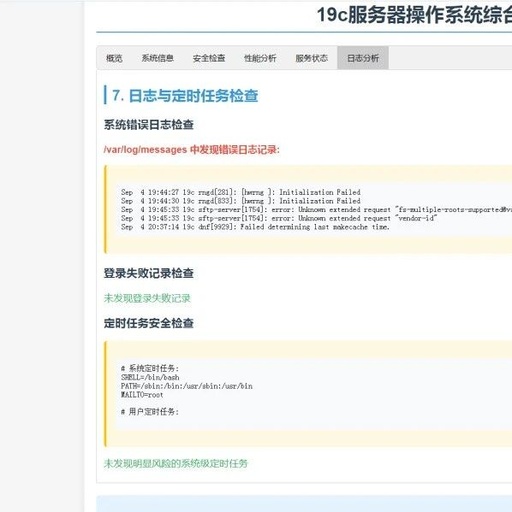
The one-click inspection script (also known as a monitoring script or check script) is a very useful tool that helps administrators quickly check the system’s health, performance metrics, and security configurations. Such scripts can automate a series of commands and checks, saving time and reducing the likelihood of errors. Today, I will share a Shell … Read more

In-Depth Analysis of Linux Command: uname — Your System ‘ID Card’ Viewer

In-Depth Analysis of Linux Command: uname — Your System 'ID Card' Viewer

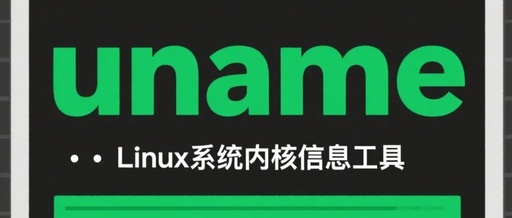
📌 Don’t underestimate this command with just 5 letters; it is the first step in getting to know your Linux system. 1. Applicable Scenarios: When Do You Need It? • ✅ Quickly confirm system type: Is it Linux? macOS? Or another Unix? • ✅ Script cross-platform compatibility check: Determine the runtime environment at the beginning … Read more

Linux System Initialization Scripts

Linux System Initialization Scripts

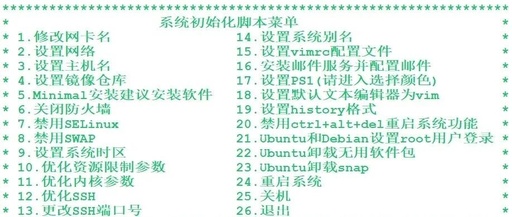
Warm Reminder Reading on WeChat public account may result in poor code formatting, incorrect formatting after code copying, delayed content updates, and advertisement issues. It is strongly recommended to click on the “Read the Original” at the bottom left of the article for viewing. Tips Initialization Scripts for Rocky, AlmaLinux, CentOS, Ubuntu, Debian, openEuler, AnolisOS, … Read more

One-Click Inspection of Linux Servers and Generation of HTML Reports

One-Click Inspection of Linux Servers and Generation of HTML Reports

The one-click inspection script (also known as a monitoring script or check script) is a very useful tool that helps administrators quickly check the health, performance metrics, and security configurations of the system. Such scripts can automate a series of commands and checks, saving time and reducing the possibility of errors. Today, I will share … Read more

Introduction to Linux Shell (Part 14): Modularization and Project Structure Design of Shell Scripts

Introduction to Linux Shell (Part 14): Modularization and Project Structure Design of Shell Scripts

Chapter Objective: Master the structured organization of large Shell projects to enhance script engineering capabilities. 1. Why Modularization and Structuring? As the size of scripts increases: Maintenance of single files becomes difficult Repeated development of different functionalities Lack of reusability and configurability Difficulties in debugging and collaboration Modularization and structuring can solve these problems, allowing … Read more