Memory Management in Embedded Real-Time Systems: Advice from SafeRTOS Experts

Memory Management in Embedded Real-Time Systems: Advice from SafeRTOS Experts

In real-time systems, memory is not just about efficiency, but also about predictability and reliability. Poor memory management can lead to missed deadlines, instability, and even become a barrier to safety certification. Here are some proven best practices: • Prefer static allocation → predictable and controllable. • Correctly size tasks and system stacks → cover … Read more
Real-Time Scheduling Algorithms for Safe Autonomous Driving

Real-Time Scheduling Algorithms for Safe Autonomous Driving

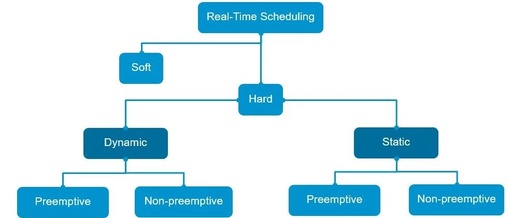
“Scheduling” refers to arranging tasks in a certain order. According toMindtools‘ casual definition, it considers scheduling in daily life, which is the art of planning your activities so that you can achieve your goals and priorities within the available time. In other words, scheduling ensures that there is enough time to handle the most important … Read more

Research on Continuous Control of Safety-Critical Multi-Agent Systems Based on Quadratic Programming under Uncertainty

Research on Continuous Control of Safety-Critical Multi-Agent Systems Based on Quadratic Programming under Uncertainty

[Image]Gift to Readers[Image] Conducting research involves a profound system of thought, requiring researchers to be logical, meticulous, and diligent. However, mere effort is not enough; often leveraging resources is more important than hard work. Additionally, one must have innovative ideas and inspirations that look up to the stars. It is recommended that readers browse through … Read more

Virtualization and Hard Isolation for Safety in Intelligent Cockpit Computing

Virtualization and Hard Isolation for Safety in Intelligent Cockpit Computing

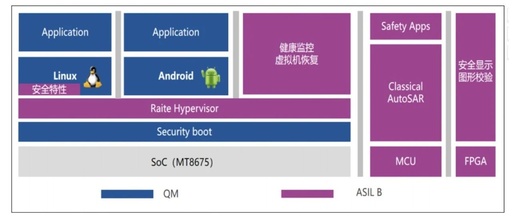
Virtualization technology improves resource utilization and flexibility by allowing multiple virtual machines (VMs) to share underlying physical resources, but it also brings challenges in security and isolation. Hard isolation is a key mechanism to ensure that VMs do not interfere with each other, preventing malicious attacks or accidental failures from spreading from one VM to … Read more

Formal Methods Based on SCADE Models

Formal Methods Based on SCADE Models

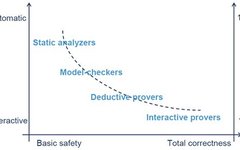
In the previous issue of the embedded systems special, we provided a detailed overview of the birth, development, and application of Ansys SCADE (See: Embedded Systems | A Retrospective on Ansys SCADE). This article will focus on “Formal Methods Based on SCADE Models”. To put it simply, formal methods abstract a program into a mathematical … Read more