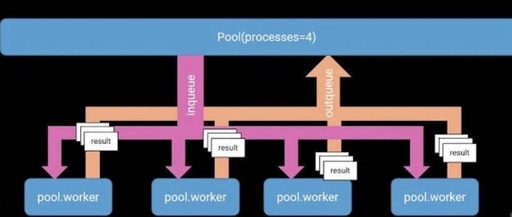
A Comprehensive Guide to Python Multiprocessing Programming

Limitations of GIL (Global Interpreter Lock) The GIL in Python is a mechanism in the CPython interpreter that ensures only one thread executes Python bytecode at a time. This is a bottleneck for CPU-bound pure Python programs, as true parallel execution cannot be achieved even with multiple CPU cores. Advantages of Multiprocessing Using multiprocessing can … Read more

Practical Use of Python Standard Library: Multiprocessing for Parallel Processing

IntroductionIn the field of meteorological data science, the explosive growth of data poses a severe challenge to computational efficiency. Data generated from global climate model outputs, high-resolution satellite remote sensing, and dense observation networks can easily reach TB or even PB levels. Traditional single-process Python scripts often run slowly when handling these CPU-intensive tasks (such … Read more

Multithreading and Multiprocessing in Python Concurrency Programming

Concurrency refers to the ability of a program to handle multiple tasks simultaneously. In Python, the two core methods for achieving concurrency are multithreading and multiprocessing. Although both can execute tasks “in parallel”, their underlying implementations and applicable scenarios are quite different, with the key difference being the memory space isolation between processes and threads.Multithreading … Read more

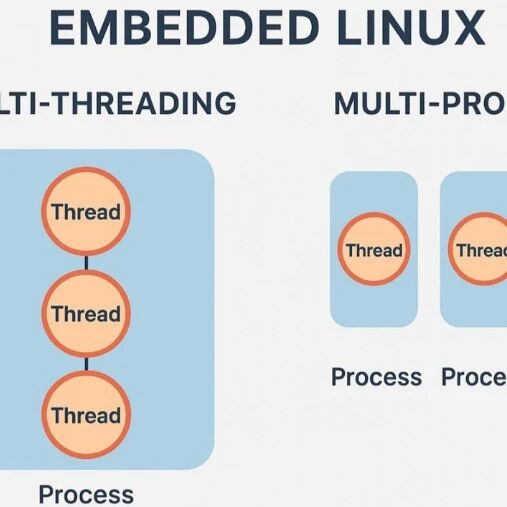
What is the Difference Between Multithreading and Multiprocessing in Embedded Linux?

What is the Difference Between Multithreading and Multiprocessing in Embedded Linux?

Multiprocessing Multiprocessing, also known as processes, refers to independent programs running in their own memory space. Each process has its own address space, code, data, and stack. Communication between processes requires IPC mechanisms (pipes, message queues, shared memory, sockets). When to Use? You want isolation (one process crashing does not affect other processes). Embedded example: … Read more

Python Multithreading Programming (Alternatives to Threads)

Python Multithreading Programming (Alternatives to Threads)

Alternatives to Threads Before starting to write multithreaded applications, let’s do a quick review: generally speaking, multithreading is a good thing. However, due to the limitations of Python’s GIL, multithreading is more suitable for I/O-bound applications (I/O releases the GIL, allowing for more concurrency) rather than CPU-bound applications. For the latter case, to achieve better … Read more

Mastering Parallel Tasks with Multiprocessing in Python

Mastering Parallel Tasks with Multiprocessing in Python

In Python, the `multiprocessing` module is part of the standard library, designed to support parallel computing and multi-process programming. Unlike threading, `multiprocessing` achieves task parallelization by creating independent processes, which not only bypasses the limitations of Python’s Global Interpreter Lock (GIL) but also fully utilizes multi-core CPUs to improve program execution efficiency.Today, we will briefly … Read more

Parallel Computing: Implementing Parallelism with Multiprocessing Module

Parallel Computing: Implementing Parallelism with Multiprocessing Module

Parallel Computing: Implementing Parallelism with Multiprocessing Module In modern computing, when processing large amounts of data or performing complex calculations, a single-threaded approach often fails to meet performance demands. To address this issue, we can leverage parallel computing to enhance program efficiency. In Python, the multiprocessing module provides a simple yet powerful interface that allows … Read more

Parallel Computing in Python: A Detailed Guide to the Multiprocessing Library

Parallel Computing in Python: A Detailed Guide to the Multiprocessing Library

Today, we will explore a very powerful library in Python – the Multiprocessing library. Imagine if you are handling a task that requires a lot of computation, such as analyzing large datasets or running complex simulations, but your computer has multiple CPU cores and can only use one. Isn’t that a waste? The Multiprocessing library … Read more

Self-Assessment for Junior Python Developer Interview Questions (Issue 15)

Self-Assessment for Junior Python Developer Interview Questions (Issue 15)

Keywords for this issue: multithreading, multiprocessing, coroutines, performance tuning, debugging Difficulty: Beginner → Intermediate Practical 1. Basic Concurrency 1. Short Answer: What is the core difference between <span>threading</span> and <span>multiprocessing</span>? 2. Coding Question: Start a thread to execute a print task import threading def worker(): print("Worker thread is running") # Complete the thread creation and … Read more

Guide to Python Multiprocessing Programming

Guide to Python Multiprocessing Programming

multiprocessing is a standard library module in Python that supports multiprocessing programming. It allows programs to execute in parallel across multiple processes, thereby fully utilizing the computational power of multi-core CPUs and improving program execution efficiency. Unlike threads (threading), processes are the basic units scheduled independently by the operating system, possessing their own memory space. … Read more