The Principle of Displacement in Assembly Language Jump Instructions
The Principle of Displacement in Assembly Language Jump Instructions

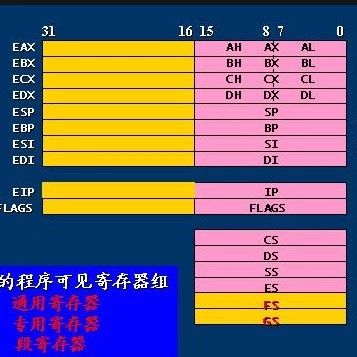
The Mechanism of Displacement in Jump Instructions In 8086 assembly language, various jump instructions use relative displacement instead of absolute addresses to achieve jumps, providing great flexibility for the program’s memory layout. Core Principle The machine code of jump instructions contains the offset of the target address from the current instruction position, rather than the … Read more

Assembly Language: Chapter 1 – Basic Hardware Knowledge

Assembly Language: Chapter 1 - Basic Hardware Knowledge

This series will explain the book “Assembly Language”. This section covers Chapter 1 – Basic Hardware Knowledge. Overview of This Section 1. Machine Language and Assembly Language 2. Components of Assembly Language 3. Instructions and Data 4. Memory Units 5. CPU Read/Write Operations on Memory (Three Lines) 6. Transmission of Address, Data, and Control Information … Read more

Fundamentals of Assembly Language

Fundamentals of Assembly Language

0x00 This article is dedicated to daily learning and note sharing to help everyone learn assembly language. Why learn assembly language? Because in red-blue confrontations, our tools are often detected and eliminated by AV/EDR systems. Therefore, we need to counter AV, which involves evasion techniques. To learn evasion techniques, we must start from the basics. … Read more

What is the Purpose of Microcontroller Programs? How to Write Them? How to Upload to a Microcontroller?

What is the Purpose of Microcontroller Programs? How to Write Them? How to Upload to a Microcontroller?

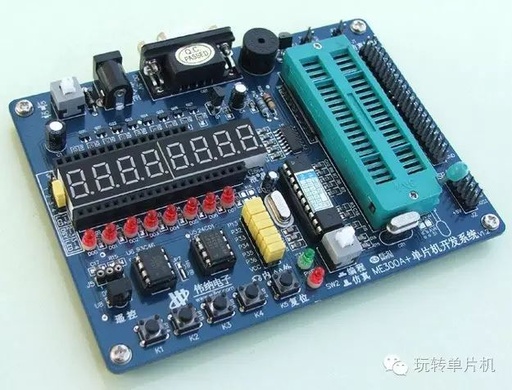
The purpose of a microcontroller program is to make the microcontroller “obey” and perform a series of actions as designed by humans to achieve a specific function. For example, using a microcontroller to control a running light: after powering on, the first light turns on, then after a delay, the second light turns on, followed … Read more

Difference Between Assembly Language Pseudo Instructions and Assembly Instructions

Difference Between Assembly Language Pseudo Instructions and Assembly Instructions

Instructions control the operation of machine code during program execution and are the basis for CPU execution, making programming, compiling, and execution effective.Pseudo instructions do not directly control the runtime machine but guide the translation program on how to generate machine instruction code. Instruction Statements Each instruction statement generates executable instruction code (i.e., target code) … Read more