A Deep Dive into Browser Cache Keys Triggered by HTTP Strong Cache Failure

A Deep Dive into Browser Cache Keys Triggered by HTTP Strong Cache Failure

Author: Xu Sang 1. Introduction In front-end development, performance optimization has always been a key focus. HTTP caching, as an important means to improve page loading speed, can significantly reduce network requests. However, while developing an image processing feature recently, I encountered a puzzling issue: even though the images were preloaded, they did not hit … Read more

Frontend Performance Optimization: HTTP Caching Mechanism

Frontend Performance Optimization: HTTP Caching Mechanism

Introduction When a user enters a URL in the browser, the server returns resource files such as HTML, JS, CSS, and images. The process from initiating the request to rendering the page involves CPU computation, page rendering, and network requests. Among these, CPU computation and page rendering can usually be completed quickly, while the speed … Read more

ETag and HTTP Caching

ETag and HTTP Caching

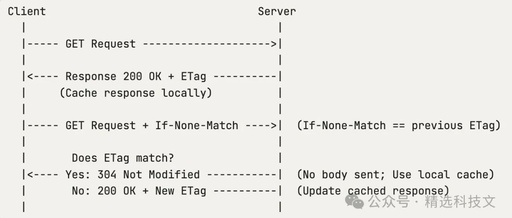
A practical scenario for the HTTP ETag header is for client HTTP caching of GET requests. Additionally, the caching workflow also requires handling other conditional HTTP headers, such as If-Match or If-None-Match. However, the interaction of these headers can sometimes seem a bit complex. Whenever I need to deal with this issue, I always spend … Read more

Go Language Static Resource Service: HTTP Cache Control and ETag Validation Mechanism

Go Language Static Resource Service: HTTP Cache Control and ETag Validation Mechanism

Click the above“blue text” to follow us “Encountering this problem again?” When images on the website load slowly, users start complaining, and the operations team looks confused at the server monitoring. This scene is too familiar, right? In fact, this may be due to improper caching of static resources. In Go language development, correctly implementing … Read more