Implementation Methods and Examples of Polymorphism in C Language

Implementation Methods and Examples of Polymorphism in C Language

Implementation Methods and Examples of Polymorphism in C Language In object-oriented programming, polymorphism is an important concept that allows the same method to be called in different forms through various means. In C language, although there is no direct syntax support for polymorphism, we can achieve similar effects through the following methods: function pointers, combinations … Read more


Decorator Pattern: Implementation and Advantages in C Language

Decorator Pattern: Implementation and Advantages in C Language

Decorator Pattern: Implementation and Advantages in C Language The Decorator Pattern is a structural design pattern that allows adding new functionality to existing objects without altering their structure. This flexible design enables programmers to dynamically add additional responsibilities or behaviors to an object at runtime. The decorator pattern is particularly important when there is a … Read more

Learning C Language: Part Eight

Learning C Language: Part Eight

Three Essential Elements of a Function Functionality, Parameters, Return Value. 1. Function Exercises 1. Define four functions to implement the operations of two integers: +, -, *, / my_add my_sub my_mul my_div After writing, test the functionality yourself. #include <stdio.h> int my_add(int x, int y); int my_sub(int x, int y); int my_mul(int x, int y); … Read more

C Language Basics – Using Function Pointer Arrays for String Cleaning

C Language Basics - Using Function Pointer Arrays for String Cleaning

#include <stdio.h> #include <string.h> #include <ctype.h> typedef void (*funcPtr)(char *); // 1. Remove leading and trailing whitespace (similar to Python's strip) void trim(char *str) { int i = 0, j; int len = strlen(str); // Remove leading whitespace while (isspace(str[i])) i++; // Remove trailing whitespace j = len – 1; while (j >= 0 && … Read more

C Language Struct Encapsulation Functions: From Error Examples to Engineering-Level Code Design (A Must-Read for Embedded Development)

C Language Struct Encapsulation Functions: From Error Examples to Engineering-Level Code Design (A Must-Read for Embedded Development)

In embedded development, struct encapsulation function pointers are powerful tools for improving code quality, but a flawed design can lead to disaster. This article guides you through correcting typical error cases and mastering engineering-level implementation solutions. 1. Analysis of Typical Error Cases The code provided by the developer has three fatal issues: // Problematic code … Read more

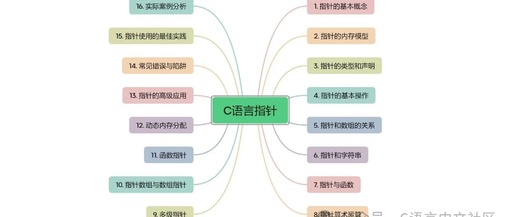
C Language Pointers: From Beginner to Mastery – A Comprehensive Guide

C Language Pointers: From Beginner to Mastery - A Comprehensive Guide

Recent Hot Articles 2025 Latest C Language Learning Path | Beginner, Intermediate, PracticalC Language Learning Guide: Have You Mastered These Core Knowledge Points?C Language Functions: From Beginner to Mastery – A Comprehensive GuideBeginner’s Guide to Avoiding Pitfalls in C Language: Avoid These 12 Devilish Details for Double Efficiency!C Language Examples | Creating, Inserting, and Traversing … Read more

Essential Knowledge Summary for Embedded C Programming

Essential Knowledge Summary for Embedded C Programming

1. A pipeline can achieve maximum efficiency only when it is filled with instructions, meaning that one instruction is executed per clock cycle (this refers only to single-cycle instructions). If a jump occurs in the program, the pipeline will be cleared, and it will take several clock cycles to refill the pipeline. Therefore, minimizing the … Read more

Sharing an Embedded Programming Template

Sharing an Embedded Programming Template

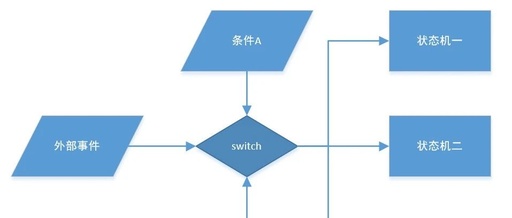
Input Events to State Machine #include "stdio.h" #define EXECUTE_VOID(func) {if((func)!=NULL) (func());} typedef void (*select_machine_t)(void); typedef enum _event_index{ event_index_1 = 0, event_index_2, event_index_3, event_index_end} event_index_e; typedef enum _status_index{ status_index_1 = 0, status_index_2, status_index_end} status_index_e; void machine_1(void);void machine_2(void);void machine_3(void);void machine_4(void); select_machine_t select_machine[event_index_end][status_index_end] = { {machine_1, machine_2}, {NULL, machine_3}, {machine_4, NULL}}; void machine_1(void){ printf("machine_1\r\n");} void machine_2(void){ printf("machine_2\r\n");} void … Read more

How to Write Maintainable Embedded Programming Code?

How to Write Maintainable Embedded Programming Code?

1 Object-Oriented C Object-oriented languages are closer to human thinking patterns, significantly reducing code complexity while enhancing code readability and maintainability. Traditional C code can also be designed to be readable, maintainable, and of lower complexity. This article will illustrate this through a practical example. 2 Basic Knowledge 2.1 Structures In addition to providing basic … Read more

How to Use Complex Pointers in Embedded Programming

How to Use Complex Pointers in Embedded Programming

1. Introduction In C programming, pointers are one of the most error-prone areas, especially when multiple pointers are involved, which can be quite confusing. This article analyzes the commonly used complex pointers in embedded systems to clarify the common pitfalls in using pointers in C language. 2. Function Pointers and Pointer Functions In C language, … Read more