C++ Learning Manual – Differences Between References (int& ref) and Pointers
C++ Learning Manual - Differences Between References (int& ref) and Pointers

In C++, both pointers and references are powerful tools for indirectly accessing and manipulating data. Although they share similarities, their design philosophies and usage are quite different. Understanding these differences is crucial for writing efficient and safe C++ code. Let us delve into the key distinctions between references (int& ref) and pointers. Basic Concept Analysis … Read more
A Comprehensive Guide to C Language Pointers: Easy to Understand and Detailed!

A Comprehensive Guide to C Language Pointers: Easy to Understand and Detailed!

Today, I will explain pointers. From basic to advanced, this article will combine practical applications to help you learn pointers while understanding what experts use pointers for!Long article warning! The entire text is about 5200 words, and this article is enough to learn pointers!Many people, like me when I first learned C language, are afraid … Read more

Essential for Beginners! A Quick Guide to C Language Structures in Embedded Development: From Data Packing to Memory Alignment

Essential for Beginners! A Quick Guide to C Language Structures in Embedded Development: From Data Packing to Memory Alignment

In the vast realm of embedded development, the C language shines like a brilliant star, holding a crucial position. For beginners with no background in embedded systems, mastering the core syntax of C is undoubtedly the key to unlocking this technical door. Today, we will focus on the extremely important structure part of the C … Read more

Summary of the Interchangeability of Arrays and Pointers in C Language

Summary of the Interchangeability of Arrays and Pointers in C Language

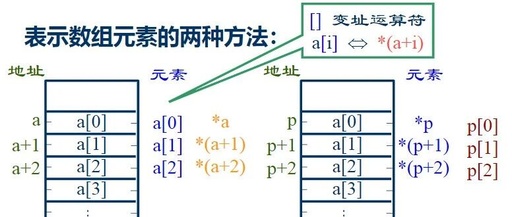
In the C language, the “interchangeability” of arrays and pointers refers to the high consistency in syntax and behavior between the two in specific scenarios. However, this consistency does not stem from their inherent similarity, but is determined by the array name decay rules, syntax design, and compiler processing logic in C language. This article … Read more

Understanding C Language Pointers: The Love-Hate Relationship with “Pointing”

Understanding C Language Pointers: The Love-Hate Relationship with "Pointing"

Scan the QR code to follow Chip Dynamics, and say goodbye to “chip” blockage! Search WeChatChip Dynamics Hello everyone! Today we are going to talk about that love-hate character in C language — pointers! Some say that pointers are the soul of C language; if you haven’t learned pointers, you haven’t learned C. Others say … Read more

Core of Embedded C Language: In-Depth Analysis of Pointers

Core of Embedded C Language: In-Depth Analysis of Pointers

In embedded development, pointers are the “core engine” for directly manipulating hardware and optimizing memory usage. From register operations to data transmission, the flexible use of pointers allows for more efficient code that is closer to the essence of hardware. 1. Basics of Pointers: The “Connection Link” Between Addresses and Variables 1. A pointer is … Read more

Practical Insights on C Language: Understanding Addresses and Pointers

Practical Insights on C Language: Understanding Addresses and Pointers

Scan the code to follow Chip Dynamics and say goodbye to “chip” congestion! Search WeChatChip Dynamics Dear C language enthusiasts, have you ever been confused? Your teacher says, “Pointers are the soul of C language,” but when you stare at the line of code int* p = &a;, it feels like reading a foreign language—what … Read more

How to Directly Control Hardware with C Language? Pointers, Memory, and Registers

How to Directly Control Hardware with C Language? Pointers, Memory, and Registers

The Design Philosophy of C Language The design philosophy of C language can be summarized as “Trust the Programmer“. Unlike many modern programming languages, C language imposes very few restrictions on the behavior of programmers, assuming that programmers know what they are doing. Thus, C language is actually a language that demands a lot from … Read more

C Language Exercise Class – Day 20

C Language Exercise Class - Day 20

01 (Multiple Choice) The basic data types in C language include A) Integer B) Floating-point C) Logical D) Character Answer: ABD Analysis: For option C: Logical type is not a basic data type in C language. In standard C (C89/C90), there is no native boolean type, which is usually replaced by int (0 represents false, … Read more

Optimization of Function Return Values and Register Usage in C Language

Optimization of Function Return Values and Register Usage in C Language

Optimization of Function Return Values and Register Usage in C Language In C language, functions are one of the fundamental building blocks of a program. Understanding how to effectively handle function return values and how to utilize registers for optimization is crucial for improving program performance. This article will detail these concepts and provide code … Read more