Six Common Data Structures in Embedded Programming
Six Common Data Structures in Embedded Programming

Today, embedded systems are increasingly applied in various fields, including smart homes, smart healthcare, industrial automation, and intelligent transportation. In the development of embedded systems, data structures are an essential knowledge point. This article will introduce several common data structures in embedded programming, including arrays, stacks, queues, heaps, hash tables, and linked lists. 1. Array … Read more


ACROVIEW Programmer Supports Nuvoton’s Low-Power Microcontroller M483SGCA

ACROVIEW Programmer Supports Nuvoton's Low-Power Microcontroller M483SGCA

ACROVIEW, a leader in the chip programming field, announced the expansion of its compatible chip model list alongside the release of its new programming software. Among the newly added models is Nuvoton’s low-power microcontroller M483SGCA, which is now supported by the ACROVIEW universal programming platform AP8000. The M483SGCA is a high-performance, low-power microcontroller based on … Read more

ABB Robot RS232 Serial Communication Setup and Programming

ABB Robot RS232 Serial Communication Setup and Programming

For more content, please click on the above Automation Tips to follow. If you need to reprint, please leave a message in the background. This public account aims to share tips and experiences encountered in automation control. If you need help or want to discuss, you can leave a message in the background to contact … Read more

Stop Using print()! The Python Logging Library is the Ultimate Debugging Tool

Stop Using print()! The Python Logging Library is the Ultimate Debugging Tool

Hello everyone, today we are going to talk about a tool that can directly save you a few strands of hair—the Python logging library. Do you often find yourself in a situation where: halfway through writing code, the logic gets a bit messy, and you accidentally type the familiar <span>print("debug…")</span>? As a result, the more … Read more

Learning C++ from Scratch Day 3 (if Statement) – The Most Comprehensive and Easy-to-Understand Guide

Learning C++ from Scratch Day 3 (if Statement) - The Most Comprehensive and Easy-to-Understand Guide

In C++, the if statement is a conditional statement used to choose whether to execute a specific block of code based on the result of an expression. The basic syntax of the if statement is as follows: if (condition) { code; } If the condition inside the parentheses is true, the code will be executed; … Read more

C++ Namespaces: Say Goodbye to Naming Conflicts

C++ Namespaces: Say Goodbye to Naming Conflicts

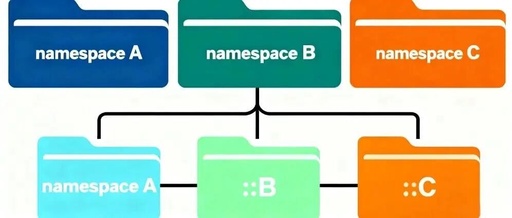
When developing projects in a company, team collaboration is common. Sometimes, while writing code, you define a function called test for testing purposes, but when you pull your colleague’s code, it throws an error because they also defined a test function. This kind of awkward situation, where ‘great minds think alike’, is easily encountered in … Read more

C++ Practice Problem – Collatz Conjecture

C++ Practice Problem - Collatz Conjecture

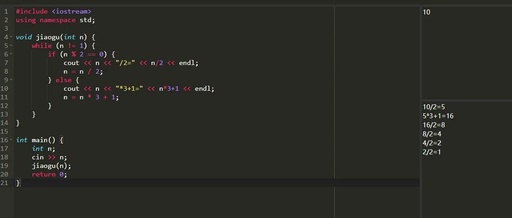
Time Limit: 2s Memory Limit: 192MB Problem Description Collatz Conjecture: A Japanese middle school student discovered a fascinating “theorem” and asked Professor Kakutani to prove it, but the professor was unable to do so, leading to the Collatz conjecture. The conjecture states that for any natural number, if it is even, divide it by 2; … Read more

Chapter 5: Data Type Conversion in C Language

Chapter 5: Data Type Conversion in C Language

Chapter 5: Data Type Conversion in C Language In C language, data type conversion (also known as type conversion) is the process of converting a value of one data type to another data type. C language provides two types of conversions:implicit type conversion and explicit type conversion. Understanding these conversion methods is crucial for writing … Read more

Essential Knowledge Points for C Language Beginners: Summary of Character Arrays and String Usage Techniques

Essential Knowledge Points for C Language Beginners: Summary of Character Arrays and String Usage Techniques

“From today on, study hard and make progress every day” Repetition is the best method for memory; spend one minute every day to remember the basics of C language. “Essential Knowledge Points for C Language Beginners: 100 Articles Series“ The following notes finally enter the practical series, which is also the most important and difficult … Read more

Summary of Basic Knowledge Points in C Language

Summary of Basic Knowledge Points in C Language

Introduction to C Language Program: Hello World #include <stdio.h> int main(){/* Enter Hello World between double quotes */ printf("Hello World"); // Print Hello World on the screen return 0; } Note: In the latest C standard, the type before the main function is int instead of void. Specific Structure of C Language In simple terms, … Read more