This year, Texas Instruments’ price adjustments have become a hot topic in the industry. In March and again in August, two rounds of increases have already covered a range from thousands to tens of thousands of models.
Many people are concerned—will prices continue to rise?
My judgment is: Yes, prices will continue to rise!
Let me share my personal thoughts:
1. The pace of price increases will continue, and the intensity may be greater.
2. The focus of price increases is on the “Book Price”.
3. High inventory levels will not slow down the pace of price increases.
4. Impact on the trade market: mild in the short term, beneficial in the long term.
1. The pace of price increases will continue, and the intensity may be greater.
Why is Texas Instruments raising prices?
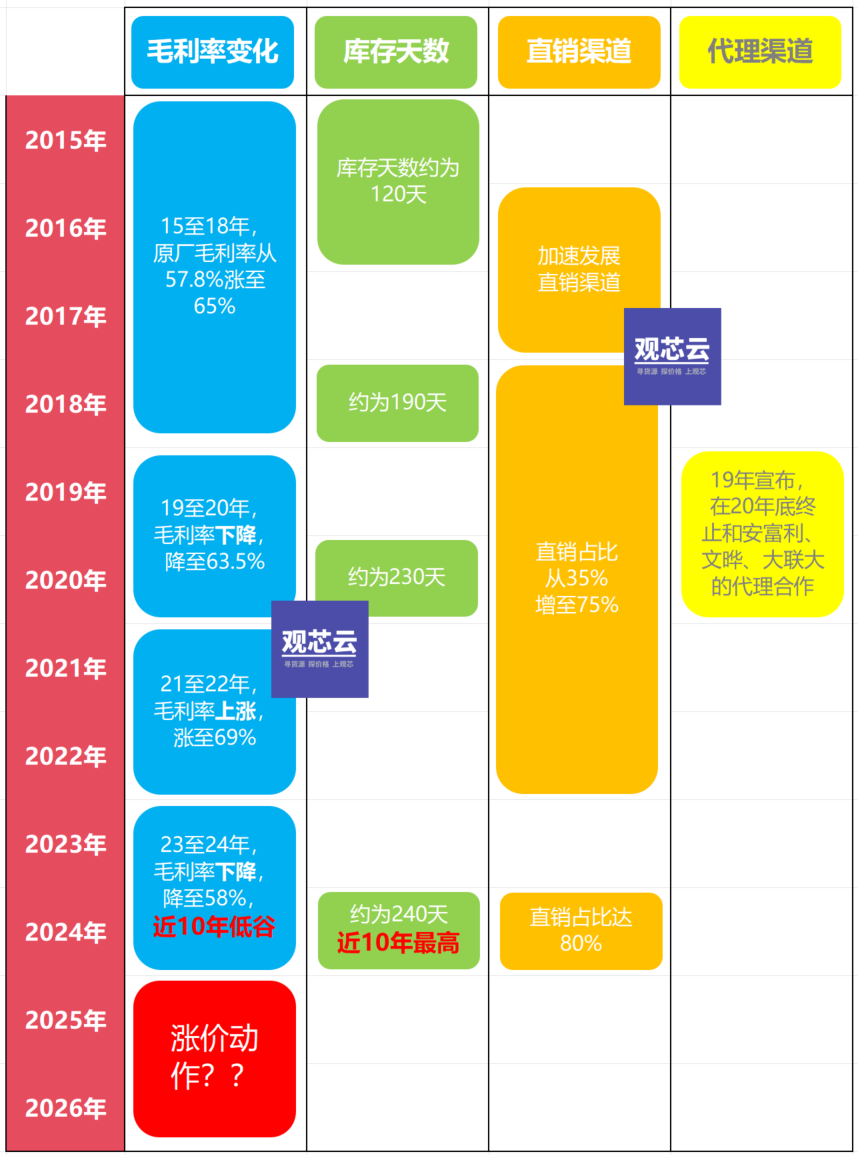
The gross margin is too low! From its financial reports, it can be seen that TI’s gross margin has been declining since 2023, currently around 58%, which is the lowest point in the past decade.
So what is the target gross margin?
Based on historical data, the target gross margin is at least 65%.
Clearly, these two rounds of price increases are not enough. TI will continuously test prices to gauge customer tolerance before deciding on the next round of increases and their scope.
Therefore, it should not be surprising if there is another more aggressive price increase in the future. After all, improving gross margin is a long-term project!
2. The focus of price increases is on the “Book Price”.
This round of price increases primarily targets the Book Price, while the impact on the Contract Price signed with major customers is limited.
The reason is simple: major customers account for a large portion of revenue, and the price negotiation lock-in period is long, making it difficult to change easily.
In contrast, the prices for small retail customers are more flexible and represent a breakthrough for improving gross margins.
In the future, it is possible that TI will further increase direct sales and e-commerce collaborations, leveraging e-commerce platform traffic to capture more small orders, and with TI’s endorsement, create a win-win situation!
3. High inventory levels will not slow down the pace of price increases.
Some may think that increasing inventory days will cool down manufacturers. However, from TI’s actions, the situation is quite the opposite.
Since accelerating direct sales in 2016 and cutting out agents in 2019, they have long anticipated changes in inventory.
For TI, gross margin is the core KPI, and inventory is just a controllable variable.
4. Impact on the trade market: mild in the short term, beneficial in the long term.
In the short term, the price increase does not have a significant impact on the Open Market.
The market in 2025 is expected to be better than in 2024, but terminal demand has not significantly rebounded, and spot supply remains ample.
However, in the long term, the rise in Book Prices will create a larger price difference for channels that secure Contract Prices, which is a real benefit for some special channels.
Conclusion
TI’s pricing strategy is a long-term, gradual profit recovery battle. Whether you are an end user or a trader, you need to adapt to this rhythm in advance, as this “price increase cycle” may last longer than you think.