You might think that robots lack faces because engineers have poor aesthetics or manufacturers cut corners. Wake up! When you see humanoid robots in short videos that run faster than Bolt and can punch like a taekwondo champion, have you noticed a strange commonality among them? Most of them sport a smooth “iron head” without even a drawn eyebrow or nose.
Don’t rush to criticize “looks are justice”; behind this lies a technological competition, market calculations, and insights into human nature that are more thrilling than science fiction movies. Today, let’s peel back the “skull cap” of robots and see what black technology is hidden inside this “faceless” head and what industry secrets are concealed.
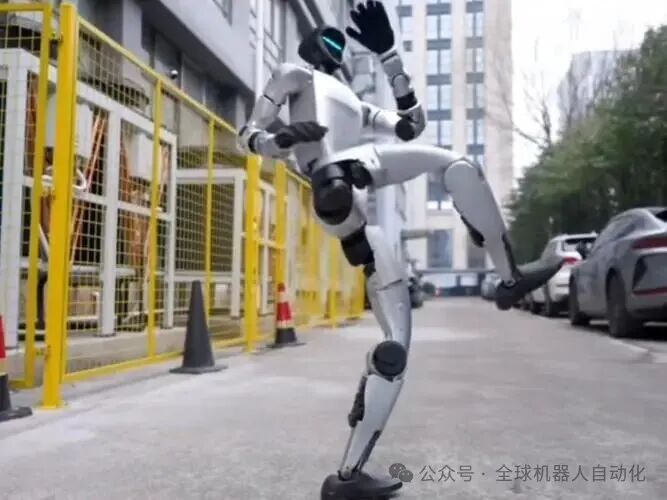
1. “Faceless” is Hardcore Technology: When Robots Start to Disdain Human Features
“Humans need facial features primarily for visual and auditory capabilities; robots can just install a camera and microphone.” This may sound like a quibble, but Wu Changzheng, CEO of Magic Atom, is speaking the truth. Think about it: human eyes are located at the front of the face, with a maximum field of view of 180 degrees, and to see the back of one’s head, one has to turn around. However, if robots hide cameras on top of their heads, behind their ears, or even at the “back of their heads,” they can achieve 360-degree monitoring without blind spots, which is more effective than two eyeballs. It’s like giving robots a “third eye of Erlang Shen” without the worry of dark circles from being punched.
Even more absurd is that human facial features are practically “anti-human design”—the nose obstructs vision, ears hide the side of the face, and the mouth takes up space. Engineers have calculated: if a robot has a human face, the camera can only fit in the “eye sockets,” losing at least 30% of the field of view; if they want to create expressions, they have to cram in a bunch of motors and gears, increasing weight by 200 grams and power consumption by 40%. The result is that a robot that could run 10 kilometers can only run 6 kilometers with a face, and it might even be complained about by users for “facial paralysis.” If you were the engineer, would you choose the “fast-running faceless warrior” or the “Lin Daiyu-style beautiful girl robot”?
This isn’t even the worst part. Last year, a company launched a “celebrity robot” that, to mimic humans, had a piece of silicone skin attached to its face. However, it would get oily in the sun and crack in the winter, leading maintenance workers to complain: “It’s more troublesome than doing makeup for a celebrity!” Now, there’s a saying in the industrial world: “Giving a robot a face is like putting a trunk on a sports car—looks useful, but is actually a burden.”
2. The Uncanny Valley Effect: When Robots Smile at You, You Want to Call the Police
You might think engineers don’t want to create handsome robots? They have tried! In 2019, a company launched a “beautiful robot,” but the online comments exploded: “Its eyes look like dead fish, its mouth like a machine gun, and its smile resembles a horror movie villain!” This is known as the “uncanny valley effect” in psychology—when a robot looks 90% human but is just a bit off, it creates a strong sense of discomfort in humans. It’s like seeing a “human-shaped shadow” at night, only to find out it’s a plastic mannequin, which scares you to death.
Zhao Weichen, Vice President of Accelerated Evolution, shared a true story: they installed a “smile program” on a robot, and when a group of elderly women in a mall saw it, they collectively stepped back, thinking it was a “living mannequin.” Later, the team worked overnight to remove the expression function and replaced it with an LED screen displaying “😊”; the elderly women instead gathered to take pictures, saying, “This robot is so cute!” You see, sometimes a simple emoji is 100 times more effective than a meticulously crafted lifelike face.
Ironically, humans themselves can’t stand “perfect mimicry.” Last year, during a live stream of a bionic robot, it was reported for “mental pollution” due to its “smile lasting too long”; another robot was criticized for having a “blinking frequency that differed from humans by 0.5 seconds,” being called “disgustingly fake.” The current industry rule is: either go for a completely mechanical style, like a cool Transformer; or simply create a cartoon character, like Fourier’s new GR-3 robot, which has big eyes like a cute pet in cartoons, and has gained countless fans.
3. The Bionic Gamble: When the Li Bai Robot Starts Telling Jokes
Of course, some people refuse to believe this. Engineers at EX Company have bet their entire fortune on it—they created a Li Bai robot that not only recites Tang poetry but can also raise its eyebrows, frown, and squint based on the content of the verses. Last year, when it was exhibited in a museum, a student asked, “Grandpa Li Bai, why don’t you wear glasses?” The robot playfully blinked and replied, “Because I don’t need glasses when I drink!” This melted the audience’s hearts on the spot.
This is based on another business logic: in some scenarios, a “face” is more important than life itself. For example, in nursing homes, if a companion robot lacks expressions, the elderly might say, “I’d rather have a dog!” If an educational robot can’t smile, children might fall asleep in class. EX’s CEO, Li Boyang, calculated that robots with expressions can command a 300% premium in the emotional companionship market. Just like today’s smartphones, which only need a receiver and microphone for calls, why do they still make full screens and curved screens? Because the “aesthetic economy” itself is a big business.
But making that money isn’t easy. Giving robots faces is like conquering three mountains of materials science, mechanics, and AI at the same time. Engineers at Daxiang Antai complain: “Applying bionic skin to robots is harder than coating a rocket with thermal tiles!” If the skin is too hard, the expressions are stiff; if it’s too soft, it can easily be scratched by fingernails. Even worse is the cost: a robot head capable of making 10 different expressions costs as much as a Tesla. So the current industry situation is: either make a “beggar version of a faceless robot” and sell it for 100,000; or create a “top-spec bionic robot” and sell it for 10 million. Mid-range? Sorry, no one dares to touch it.
4. The Future Battlefield: When the “Faceless Faction” and “Faced Faction” Start Learning from Each Other
Don’t think these two factions are mortal enemies; in fact, they have long been secretly copying each other’s homework. The newly released K1 robot from Accelerated Evolution still lacks a face, but its camera is intentionally designed to look like “cartoon big eyes,” instantly increasing its cuteness; Fourier’s GR-3 hides three cameras in its eyes, balancing aesthetics and functionality. It’s like the smartphone industry, which initially had “full screen vs. notch screen,” only to find that “punch-hole screens” are the way to go.
Even more exciting are the technological breakthroughs. Last year, a university developed “electronic skin” that is 0.1 millimeters thick, can stretch like human skin, and can sense temperature and humidity; AI companies have also created “expression prediction algorithms” that allow robots to automatically match expressions based on your tone, understanding you better than your partner. Now, engineers’ ambition is: in the next five years, to create a robot that has both 360-degree vision and can smile with eight-pack abs.
But what ordinary people care about might be more practical questions: will supermarket robots have faces? Will delivery robots smile at me? Experts predict that in the next three years, service robots will first take the “cute cartoon face” route, like round eyes + LED screens, which are low-cost and appealing; industrial robots will stick to “pragmatism,” at most installing a light on top to indicate “I am not frozen.” As for bionic robots like those in “Westworld”? Sorry, you might need to save enough to buy a house first.
5. Ultimate Reflection: Do We Really Need Robots to Have Faces?
This question has been debated for ten years, and now there is finally an answer: it depends on whether you see robots as tools or companions. If you just want them to move bricks, clean, or deliver, then “faceless” is actually more efficient; if you want them to chat with you, care for the elderly, or educate children, then “having a face” is indeed more heartwarming. Just like cars, trucks don’t need leather seats, but sports cars must have starry ceilings—demand determines form.
But the deeper contradiction lies in human “desire for control.” We want robots to be as smart as humans, yet fear they might actually become “humans.” So when robots lack faces, we feel “they are just machines”; when they have faces, we start to panic, “will they replace me?” It’s like raising pets; you want them to be intelligent, but also fear they might be too intelligent.
Lastly, here’s a fun fact: the most popular robots today are not humanoid but Boston Dynamics’ robotic dogs. They have no heads or faces but can do backflips, open doors, and pull cars, garnering more fans than any bionic robot. This perhaps tells us a truth: true black technology never needs to rely on looks to succeed. Will future robots have faces? It might be like whether today’s smartphones have buttons—does it matter? What matters is whether they can help you solve problems.
Recently, Everyone is Watching
1. Core Components of Humanoid Robots: A Review of Related Companies
2. Challenges in the Automation of Robot Polishing Industry
3. Nuclear Explosion-Level Trillion Restructuring! Military Giants May Increase 30 Times, Robots are Just the Appetizer, Hold on to Your Smiles
4. Embodied Intelligence (Taking Humanoid Robots as an Example): Main Components and Development History
5. Humanoid Robots Expected to Become Disruptive Products Following Computers, Smartphones, and New Energy Vehicles
6. Structure of Humanoid Robots
7. Sequoia Capital: AI is Leading a $10 Trillion Revolution, More Grand than the Industrial Revolution
8. Experts from Multiple Countries Praise China’s Achievements in Robot Development
9. Purdue University Research Team Breakthrough: A Magical Method to Let AI “See” the Real Size of Objects
10. Robot Consumption Festival Sales Exceed 330 Million Yuan and Other Hot Topics Analysis, Involving Robots and Other Three Sectors