In today’s wave of intelligent manufacturing sweeping the globe, Programmable Logic Controllers (PLCs) serve as the core components of industrial control systems, and the development of their communication technologies directly impacts the efficiency and flexibility of the entire production system. This article will systematically outline the three major dimensions of PLC communication systems—internal communication, external device communication, and industrial network communication—analyzing key protocol characteristics and forecasting future development trends.
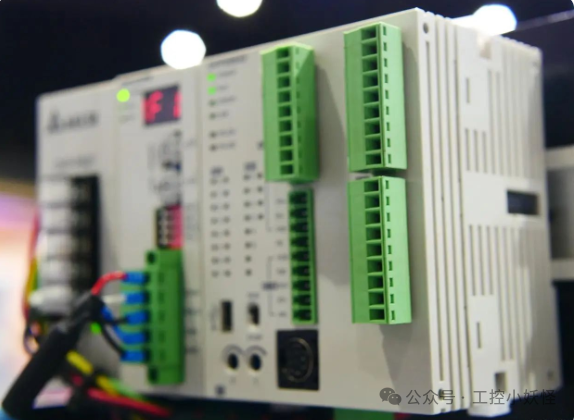
1. Internal Communication: Building the Neural Network of PLCs
Internal communication in PLCs is the foundation for the collaborative operation of various functional modules, and its technological evolution reflects the trajectory of integration in industrial controllers. Modern PLCs establish high-speed data channels through backplane buses, breaking the physical limitations of traditional centralized architectures and enabling modular expansion.
Siemens S7 series PLCs utilize PROFIBUS backplane technology to achieve real-time data exchange between the CPU and digital/analog modules via a token ring protocol, with transmission rates reaching 12 Mbps. Its upgraded PROFINET IO technology further reduces latency to microsecond levels, supporting isochronous synchronization modes, laying the groundwork for motion control applications. Mitsubishi Electric’s FX series employs CC-Link IE Field Basic bus to achieve triple transmission of power, communication, and control signals over a single cable, significantly reducing the complexity of field wiring.
Notably, the communication bandwidth of modular PLCs is experiencing exponential growth. For instance, Rockwell’s ControlLogix series has achieved a ControlNet backplane bandwidth of 5 Mbps, while the next-generation Logix 5580 controller enhances internal communication rates to 1 Gbps through a PCIe bus architecture, providing hardware support for edge deployment of artificial intelligence algorithms.
2. External Device Communication: Bridging Interfaces to the Physical World
In industrial settings, PLCs need to establish reliable connections with devices such as sensors, actuators, and HMIs to form a complete control loop. The communication technologies at this level exhibit diverse development characteristics, with each protocol optimized for specific application scenarios.
1. Serial Communication: A Modern Interpretation of Classic Technology
RS-232/RS-485 interfaces remain active in industrial environments, particularly in equipment debugging and simple data acquisition scenarios. The Modbus RTU protocol maintains over 80% market share in fields such as variable frequency drives and smart instruments due to its stable master-slave architecture. Mitsubishi’s MC protocol in ASCII mode achieves high-speed serial communication at 921.6 Kbps on FX3U series PLCs through a variable frame length design, breaking the traditional RS-485 speed bottleneck.
2. Ethernet Communication: Transformation from Office to Industry
The maturity of industrial Ethernet technology has fundamentally changed the communication landscape of PLCs. The Modbus TCP protocol encapsulates the TCP/IP protocol stack, allowing traditional Modbus devices to seamlessly connect to enterprise networks. Siemens’ Profinet protocol takes it a step further by integrating IRT (Isochronous Real-Time) technology, achieving 1μs cycle jitter control at a bandwidth of 100 Mbps, meeting the demands of high-precision scenarios such as semiconductor manufacturing.
The emergence of EtherCAT technology marks a substantial leap from fieldbus to Ethernet. Its unique “Processing on the Fly” mechanism allows data to be processed directly as it passes through each node without the need for storage and forwarding, compressing bus cycle times to the 30μs level. This feature has led to widespread application in electronic manufacturing equipment (SMT pick-and-place machines), with a single EtherCAT network supporting up to 65,535 nodes.
3. Fieldbus: Continuous Evolution in Specialized Domains
The PROFIBUS DP protocol achieves real-time control at 12 Mbps on automotive welding production lines by optimizing the token-passing mechanism. Its PA variant has successfully entered hazardous environments such as petrochemicals through intrinsically safe design. The CANopen protocol has formed unique advantages in mobile machinery, with its PDO (Process Data Object) mechanism enabling real-time communication with a 1ms cycle, widely used in AGV carts and port lifting equipment.
3. Industrial Network Communication: Building the Foundation for Digital Twins
When a single PLC upgrades to a Distributed Control System (DCS), its communication requirements leap from device-level to system-level. Communication technologies at this level need to address complex issues such as cross-platform integration, remote monitoring, and big data transmission.
1. Innovative Integration of Industrial Ethernet Protocols
The Profinet IO protocol achieves nanosecond-level synchronization across geographically distributed PLCs through DC (Distributed Clock) technology, providing a control foundation for ultra-large systems such as automotive assembly lines. EtherCAT G branch technology breaks the physical limitations of traditional ring topologies with 10 Gbps bandwidth and star topology, supporting a single network covering the entire factory.
2. The Rise of Industrial IoT Protocols
The combination of OPC UA over TSN (Time-Sensitive Networking) is reshaping industrial communication architecture. The OPC UA information model endows device data with semantics, while TSN provides deterministic transmission guarantees, enabling true interoperability among devices from different manufacturers for the first time. In the food and beverage industry, OPC UA-based MES systems can simultaneously collect data from Siemens, Schneider, and Rockwell PLCs, constructing a unified digital twin model.
The MQTT protocol demonstrates unique value in industrial remote operation and maintenance. A major wind power giant integrated an MQTT client into the wind turbine PLC, uploading operational data to Alibaba Cloud at a frequency of 0.5 Hz, achieving centralized monitoring of over 2000 wind farms globally. Coupled with edge computing gateways, fault diagnosis response time was reduced from the traditional SCADA system’s 15 minutes to 30 seconds.
4. Wireless Communication: Breaking the Shackles of Physical Space
The integration of 5G and the industrial internet has given rise to a new paradigm of wireless communication for PLCs. A certain automotive parts manufacturer deployed a 5G private network in the stamping workshop, achieving wireless collaboration between AGVs and stamping machines through the 5G module of Siemens S7-1500 PLC, reducing wiring costs by 70% and shortening the production line reconstruction cycle from 2 weeks to 2 days.
LoRa technology has found a new position in process industries. A chemical park utilized a LoRaWAN network to connect dispersed valve status monitoring nodes to the control system, achieving minute-level data refresh while ensuring a 10-year battery life. This low-power wide-area network (LPWAN) integration with PLCs is opening a new chapter in the industrial internet of things.
5. Communication Selection Methodology: From Scenario-Driven to Value Creation
When selecting PLC communication solutions, a multi-dimensional evaluation model should be established:
-
Performance Triangle: The art of balancing real-time performance (jitter), bandwidth, and node count
-
Ecological Compatibility: The game between protocol openness and vendor lock-in risks
-
Total Lifecycle Cost: Comprehensive consideration of initial investment, operational complexity, and upgrade potential
-
Security Redundancy: From physical isolation to encryption and authentication for deep defense
A certain 3C electronics company’s practice is enlightening: using EtherCAT to ensure core control precision on SMT pick-and-place lines, employing Modbus TCP for cost reduction on auxiliary devices, and deploying MQTT+5G for remote monitoring. This layered architecture improved OEE (Overall Equipment Effectiveness) by 18% while reducing TCO (Total Cost of Ownership) by 25%.
6. Future Outlook: Fusion Innovation in Communication Technology
PLC communication technology is exhibiting three major development trends:
-
Protocol Fusion: The deep integration of TSN and OPC UA promotes vertical continuity from the field layer to the cloud
-
AI Empowerment: The combination of edge computing and deterministic networks enables PLCs to possess real-time decision-making capabilities
-
Autonomous Control: The rise of domestic industrial buses (such as EPA, WIA-PA) is reshaping the industrial security landscape
In a certain semiconductor factory, a new generation architecture based on Time-Sensitive Networking (TSN) has been put into use: Profinet IRT controls the motion of robotic arms, OPC UA transmits process parameters, and 5G carries visual inspection data, with all communications achieving nanosecond-level synchronization through TSN switches. This technological fusion has enabled wafer cutting precision to break through the 1μm barrier, with equipment utilization rising to 92%.
The evolution of PLC communication technology is essentially a history of the industrial control field’s pursuit of higher efficiency, better quality, and lower costs. From backplane buses to 5G private networks, from Modbus to OPC UA, each technological breakthrough is reshaping the DNA of manufacturing. Looking towards smart manufacturing 2030, PLC communication will no longer be limited to data transmission but will become the neural hub connecting the physical world and digital twins, creating new industrial value in the fusion of the virtual and real.
Remember to follow and like!!!