Source: Fresh Date Classroom
Original Author: Little Date Jun
This article introduces what scaled networking is.
Today, let me briefly introduce an interesting concept—scaled networking.
We all know that the mobile communication we use every day is also called cellular communication.

In the 1930s and 1940s, when wireless mobile communication was just starting, similar to wireless broadcast stations, a wireless communication tower was established at the highest point in the city, using low-frequency, high-power signals (long wavelength, good diffraction ability, and long coverage distance) for wide-area coverage.
This method is called “central excitation”.
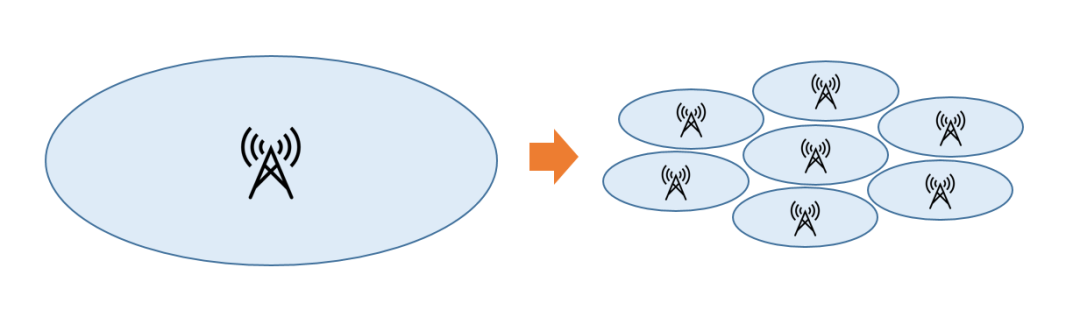
Later, with the explosive growth of users, the capacity and performance of this covering method could no longer meet the requirements. Thus, in 1947, Bell Labs in the United States first proposed the concept of “cellular”.
In other words, countless small power base stations replace large base stations to achieve seamless signal coverage.
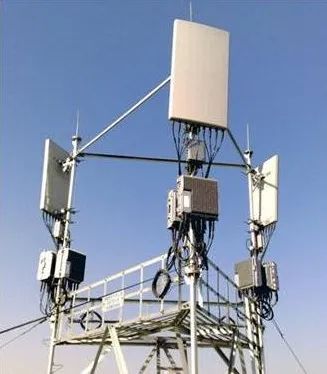
At the same time, experts further divided each base station, replacing omnidirectional antennas with directional antennas to enhance coverage performance.
Experts calculated that using three antennas (each covering 120°) was the most cost-effective and effective method, leading to the design of three sectors per base station.
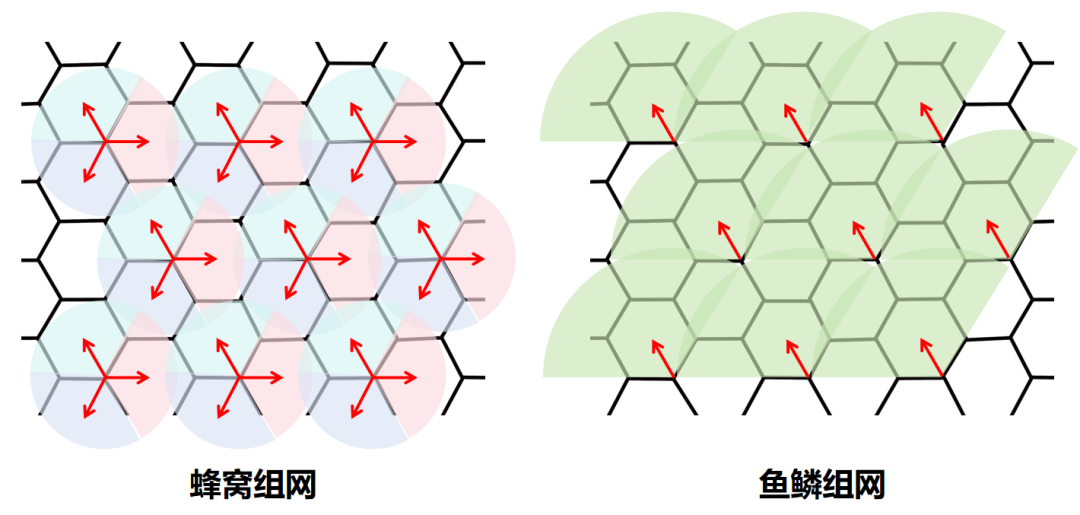
From the diagram below, it can be seen that the base stations are set at the three vertices of each hexagon in the cell, with each base station using three directional antennas covering one-third of the area of three adjacent cells.
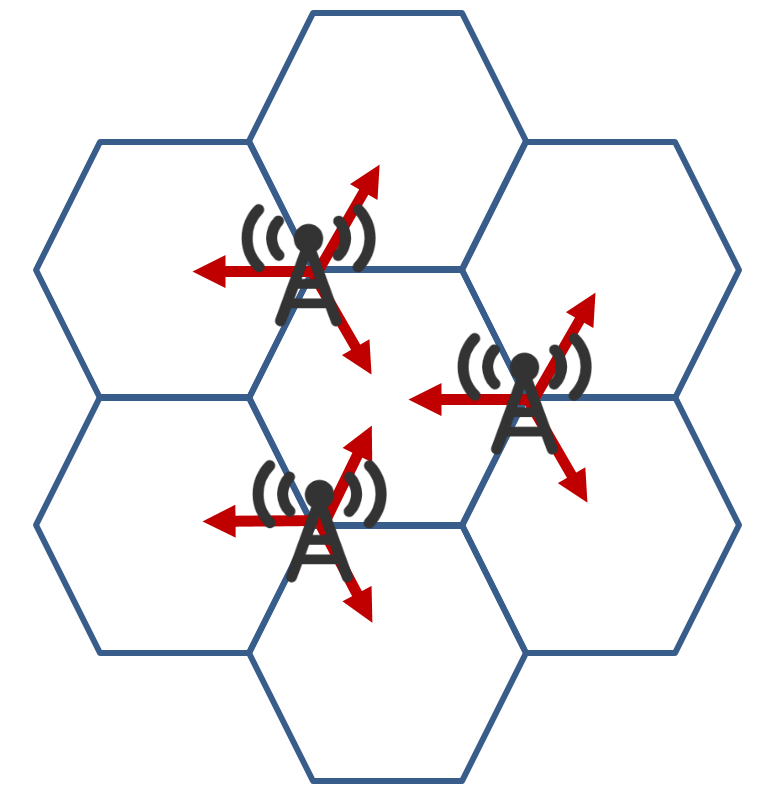
This method is called the “vertex excitation” method.
The “vertex excitation” method is currently the main networking method for our mobile communication networks. Because it looks like a honeycomb, cellular mobile communication is also called cellular mobile communication.

So, what is scaled networking?
Scaled networking is a new type of networking method proposed for the “low-altitude intelligent network”.
The state is vigorously promoting the low-altitude economy, and the new “integrated sensing” technology launched in the communication industry allows base stations to have the capability of “radar” to perceive and detect the position, altitude, speed, etc., of unmanned aerial vehicles.
The integrated sensing experimental network and supporting platforms aimed at the low-altitude economy are packaged into the “low-altitude intelligent network” technology system. Scaled networking is one of the contents of this technology system.
Scaled networking is significantly different from traditional cellular networking, as shown in the diagram below:
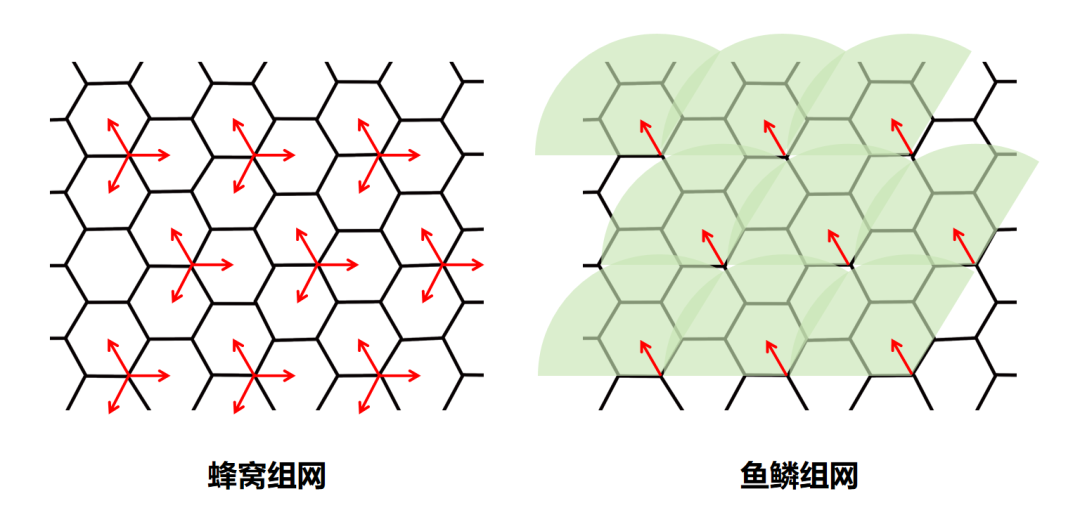
As you can see, in scaled networking, all base station sectors face the same direction, just like the scales of a fish.

Upon careful comparison of the two networking methods, we find:
1. The traditional three sectors have transformed into a single sector, all facing the same direction.
2. The coverage distance of the scaled sector is significantly greater than that of the traditional base station.
Let’s first talk about the distance issue.
The coverage distance can increase because the waveform design of the 5G integrated sensing base station differs from that of traditional 5G base stations.
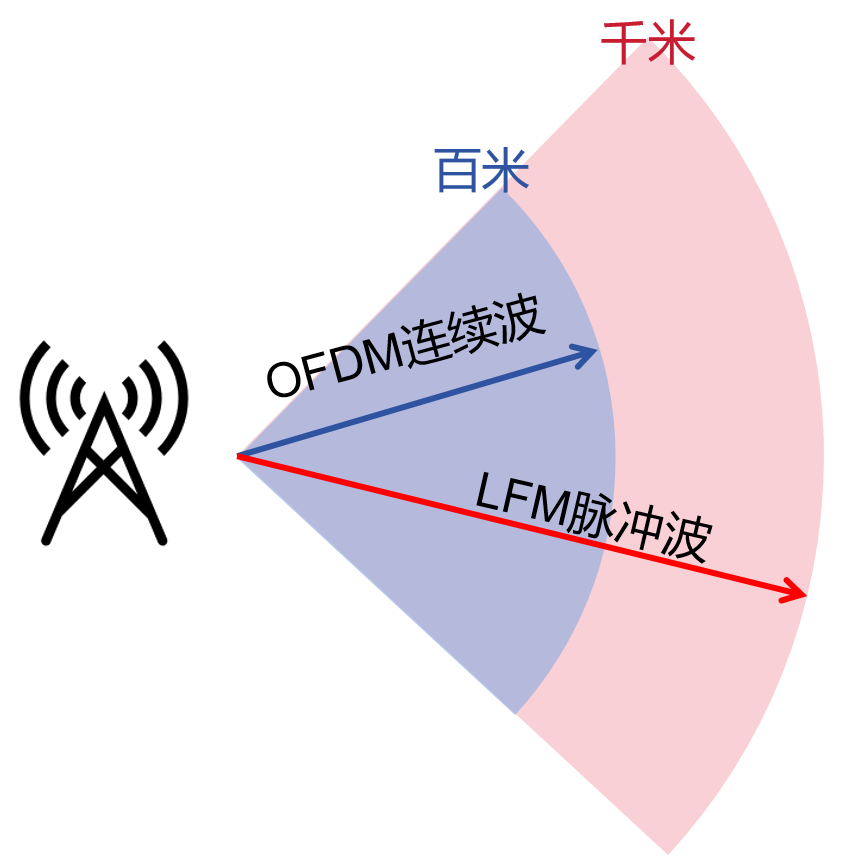
In the self-transmission and reception working mode of the base station, the OFDM (Orthogonal Frequency Division Multiplexing) signal of the 5G base station is transmitted and received simultaneously, requiring high isolation. At the current level of technology, the transmission power cannot be too high (otherwise it will affect reception), so it can only achieve coverage of about 300 meters.
In contrast, the LFM (Linear Frequency Modulation) waveform commonly used in radar systems sends and receives at different times. Thus, there are no isolation constraints, and the transmission power can be higher, resulting in longer coverage distances.
By combining continuous wave OFDM and pulse wave LFM into a hybrid waveform, the advantages of both can be leveraged—using continuous wave OFDM for near-end coverage and pulse wave LFM for far-end coverage, enhancing the overall system’s coverage capacity from hundreds of meters to kilometers.
Next, let’s look at why the three sectors have changed to a single sector.
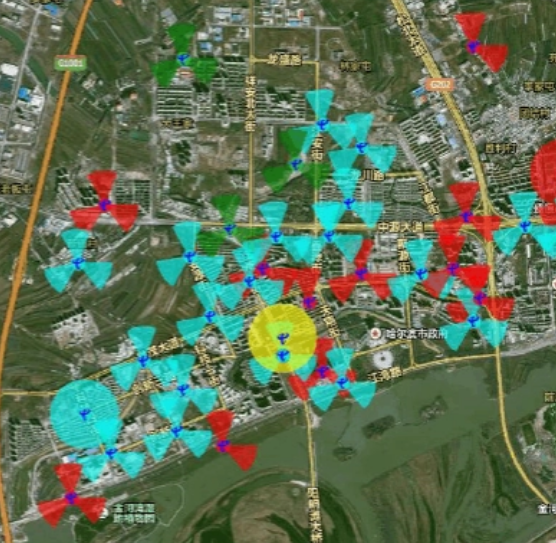
Traditionally, ground mobile networks use three sectors to flexibly cope with the complex environment of urban areas where buildings and trees are common, helping to eliminate coverage blind spots as much as possible. Reasonable use of frequency space reuse technology can also efficiently utilize spectrum resources and increase network capacity.
Low-altitude unmanned aerial vehicles will use three networks: the traditional ground network (reuse), the low-altitude network (new construction), and the satellite network (supplementary, backup).
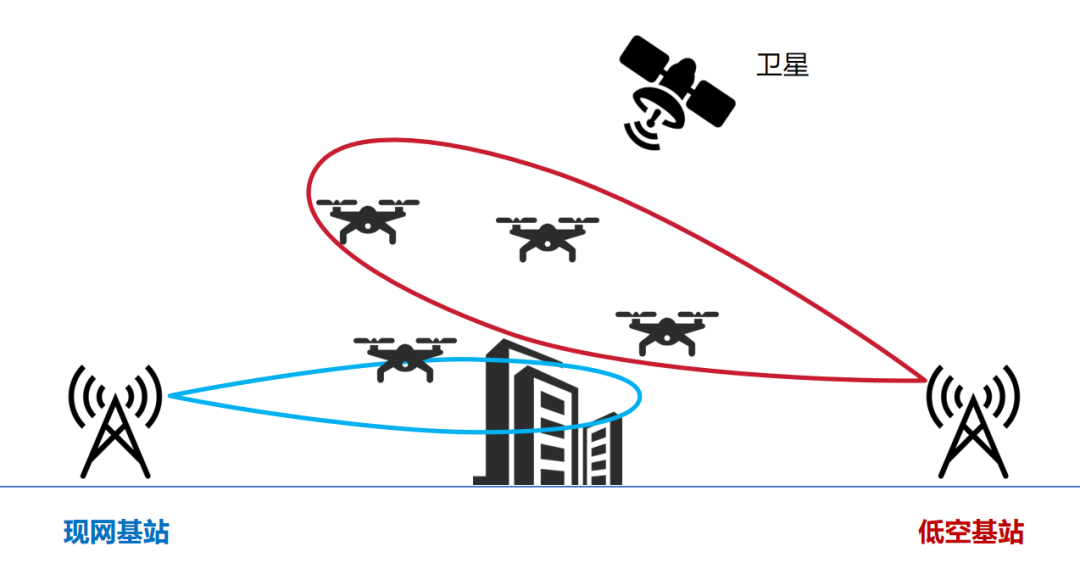
During flight, the primary network used is the low-altitude network. This network is newly constructed, employing integrated sensing base stations with perception capabilities, covering a large height range. (The integrated sensing base stations are specially designed, with vertical and horizontal angles larger than traditional 5G base stations. The vertical angle increases from 24° to over 60°. The coverage height increases from 100 meters to 300 meters.)
Covering the unobstructed low-altitude airspace requires larger sector areas, and the networking should be simpler to minimize the frequency of unmanned aerial vehicles switching cells, thereby saving costs.
Scaled networking evidently possesses such advantages, making it suitable for covering large open areas.
It is worth mentioning that there will be coordination and interference issues between the newly constructed low-altitude network and the existing ground network.
Traditional mobile phones work on the ground, and due to various obstructions, the transmission between them and the base station is mainly non-line-of-sight (NLOS), resulting in minimal interference from surrounding neighboring areas.
However, unmanned aerial vehicles flying in the sky, although not at high altitudes, have fewer obstructions between them and the base stations, primarily relying on line-of-sight transmission. This makes them more susceptible to downlink interference from surrounding neighboring areas and can also interfere with the uplink of surrounding areas.
To address this issue, on one hand, more coordinated scheduling between low-altitude network base stations and ground network base stations is needed, allocating different frequency points, limiting the frequency of unmanned aerial vehicles switching between low-altitude and ground networks, and reducing co-frequency interference (similar to high-speed rail special networks).
On the other hand, a differentiated power control strategy for unmanned aerial vehicles is necessary to reduce their transmission power and avoid interference with neighboring areas.
That’s all for the introduction to scaled networking.