1. What is PCB?
PCB (Printed Circuit Board) is the carrier for the electrical interconnection of electronic components, serving as a relay for transmission, and is thus referred to as the “mother of electronic products.”
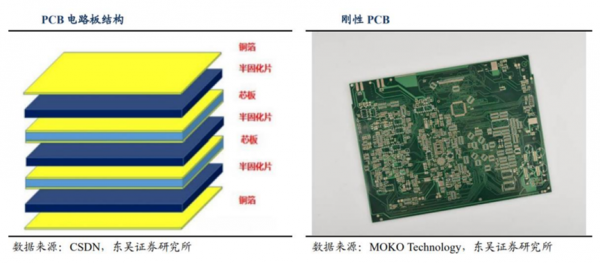
2. Composition of PCB
The materials of PCB mainly consist of two parts: PP semi-solid sheets and Core substrates, along with circuits and components, forming the circuit board. The PP semi-solid sheet is made of semi-solid resin material and glass fiber, which together primarily serve as a filler, acting as the adhesive and insulating material for the inner conductive patterns of multilayer printed boards. The Core substrate is composed of copper foil, solid resin material, and glass fiber, generally pressed together from PP and copper foil.
3. Classification of PCB
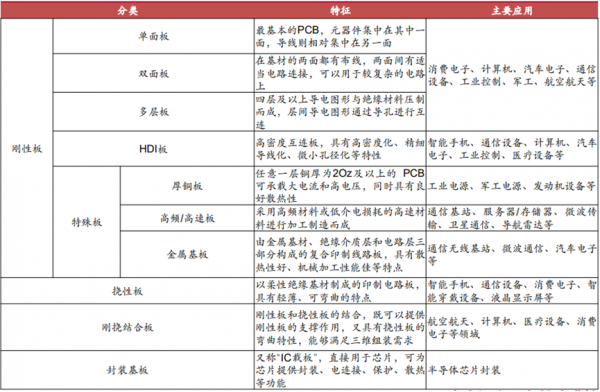
PCBs can be classified based on structure into rigid boards, flexible boards, rigid-flex boards, and packaging substrates. Based on the number of layers, they can be classified into single-sided boards, double-sided boards, and multilayer boards.
Industry Investment Logic
1. AI servers drive PCB industry growth
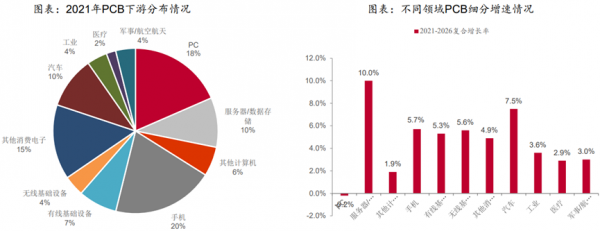
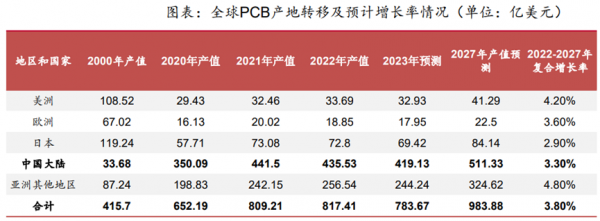
As a carrier supporting and connecting electronic components, PCBs are expected to experience an upward cycle driven by four different demand phases. The next round of overall growth in the PCB industry is anticipated to be propelled by servers and data centers, with the global PCB output value expected to reach $98.4 billion by 2027, and a CAGR of 3.8% from 2022 to 2027.
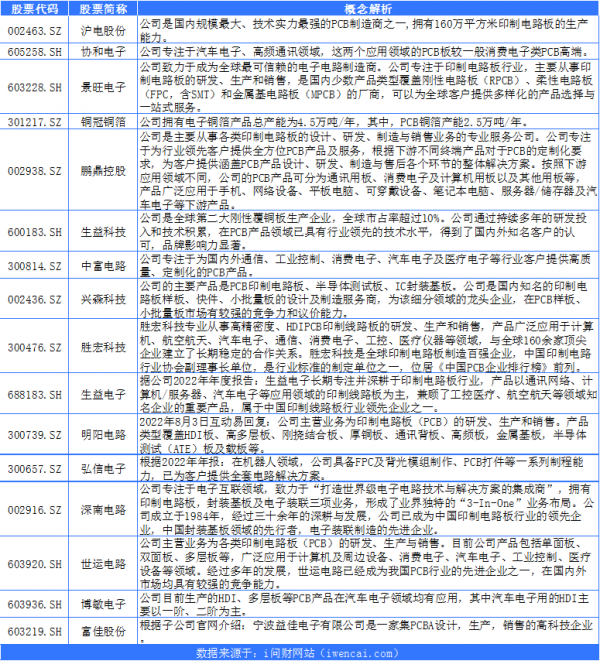
Related Listed Companies