
OpenAI’s robot is making a strong comeback, which is a necessary step towards achieving AGI.


Written byTian Nan
The two articles combined total 9,000 words, requiring 10-20 minutes to read.It is highly recommended to bookmark this.
A recent revelation from a domestic robot screw manufacturing company has dropped a bombshell for the humanoid robot sector in 2025:
OpenAI is currently coordinating with its robot-related effect testing and order matters, and the internal robot project at OpenAI is progressing smoothly, with a prototype expected to be unveiled soon.
If OpenAI enters the robot market, it will surely be a significant event. OpenAI is currently the most powerful brain, which may bring very different changes to the entire humanoid robot market.
This marks OpenAI’s “strong return” to the field of robotics.
Nearly four years have passed since the team was disbanded due to the “data problem”.This restart is not a temporary decision but rather a long-planned “comeback”.
OpenAI’s entry will also bring significant changes to this sector, not to mention the two major players already in the game:
On one side is Tesla’s Optimus, led by Musk, which has a rapid iteration speed and a strong media presence;
On the other side is the newcomer Figure AI, which takes a “quietly doing great things” approach, having swiftly integrated robots into BMW’s production line, leading the market to believe this would be a duel between the “Iron Man” and the “pragmatist”.
This signifies that the ultimate showdown among overseas AI giants has shifted from the virtual digital world to the real world, where practical skills are required.
Now, everyone is pondering several core questions:
- How did they come back? Wasn’t it said that data was too difficult to manage, and they were out of the game? What has given them the courage and confidence to return to the table? Have they found some secret technique?
- What do they plan to do this time? How does OpenAI intend to realize its long-held dream of “embodied intelligence” (giving AI a body)? How will it use its unparalleled language model to inject “soul” into cold, lifeless robots?
- What makes them different from others? Compared to Tesla’s approach of “putting the car’s brain into the robot” and Figure AI’s strategy of “working in factories to earn money”, what are OpenAI’s methods, ideas for building robots, and ultimate dreams?
Today, we will discuss these questions.
We will analyze OpenAI’s robot plans from three perspectives: “brain” (how AI models think), “body” (how robots are built), and “future” (what they plan to do next), and compare them with Tesla and Figure AI.
In this first part, we will mainly discuss what OpenAI has done in the robotics industry in the past and compare the brain technology of Tesla and Figure AI with OpenAI.
The second part this week will cover the hardware differences between OpenAI, Tesla, and Figure AI, as well as possible application directions and scenarios.
I hope this helps you understand what makes this robot war, which will determine the future, so exciting.

The Data Dilemma and the Gamble on “CoT”
To understand why OpenAI is making a comeback in 2025, we need to look back at the past and see how it first entered and then exited the field.
This is actually a significant transformation in AI technology thinking and a risky move by OpenAI.
Historical Review: The First Attempt Failed
Before disbanding the team in 2020, OpenAI’s robotics department was quite prominent.Their most notable achievement was a robot hand called Dactyl.
This hand learned to solve a Rubik’s Cube with one hand in the real world by practicing extensively in a simulated environment similar to a computer game.
This was big news at the time because it solved a longstanding problem in robotics: how to transfer skills learned in a virtual world to the real world.
This proved that reinforcement learning was a viable path for mastering complex operations.
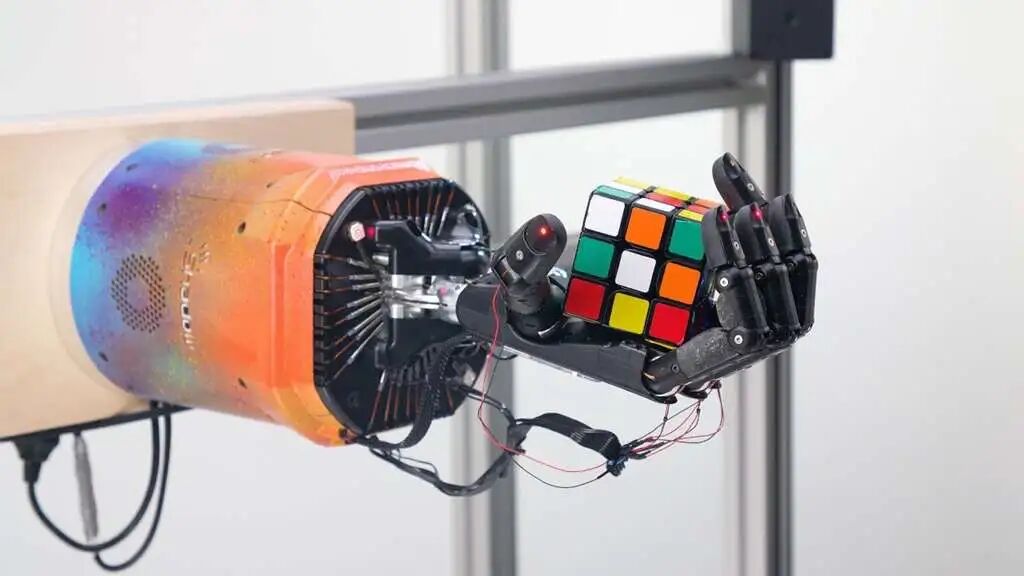
However, behind the glory were financial losses and bottlenecks.
OpenAI’s co-founders later admitted that the biggest hurdle at that time was data.Back then, the AI approach was “big efforts yield miracles”, and the intelligence of the model depended entirely on the amount of data fed to it.
Language models could feast on the entire internet; image models had vast libraries of images.
But robots were different—to learn, they had to physically touch and try things, and every action’s data had to be collected by expensive and slow real robots.
Relying on this method to gather enough data for robots to learn to handle the diverse realities of the world was nearly an impossible task.
Thus, in 2020, OpenAI made a rational decision:to put robotics hardware on hold and focus on developing their strongest asset, the large language model.
The rest is history; this decision led to the creation of GPT-3 and ChatGPT, igniting a global AI frenzy.
So, that “exit” was not a retreat but a wait for a better opportunity.
The Confidence to Return: GPT
Four years later, the AI landscape has changed dramatically.
The confidence that allows OpenAI to return is rooted in the technological revolution it has led. In simple terms, AI problem-solving no longer relies solely on “rote memorization” (massive training data) but increasingly on “on-the-spot thinking” (calculations during reasoning).
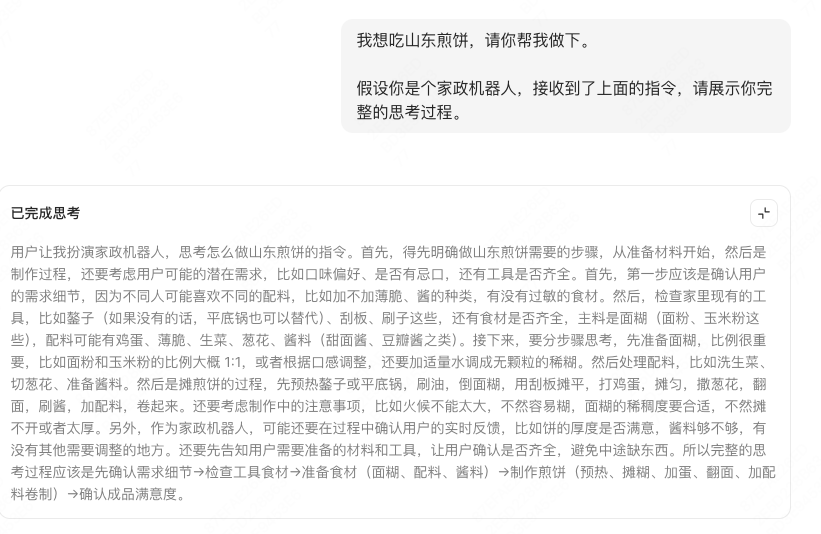 Demonstration of the reasoning chain by Doubao, consistent with the future reasoning of robots
The principle is quite simple: just like when we solve math problems, simple calculations can be done mentally, but for difficult problems, we need to use scratch paper to work through them multiple times and think carefully. Now, AI has learned this trick; when faced with a complex task, it will spend more “brainpower” to ponder, reason, and even self-correct, rather than relying solely on previously memorized “question banks”.
This change is crucial for robots.
It means that even without having seen an identical scene, a sufficiently intelligent large model can come up with solutions on-site through “thinking”.
The data scarcity problem has, to some extent, been circumvented by powerful real-time thinking capabilities.OpenAI’s confidence stems from having the world’s most capable “thinking” brain—the GPT series models.
New Vision: The Path to AGI
As large models become increasingly intelligent, OpenAI’s ultimate dream—Artificial General Intelligence (AGI)—seems to be within reach. However, a super brain that only exists on servers still feels somewhat “virtual”.
OpenAI’s CEO Sam Altman and the entire company believe that true AGI must be able to interact with the real world, to see, hear, touch, and change the world. This idea of embedding intelligence into a physical body is called “embodied intelligence”.
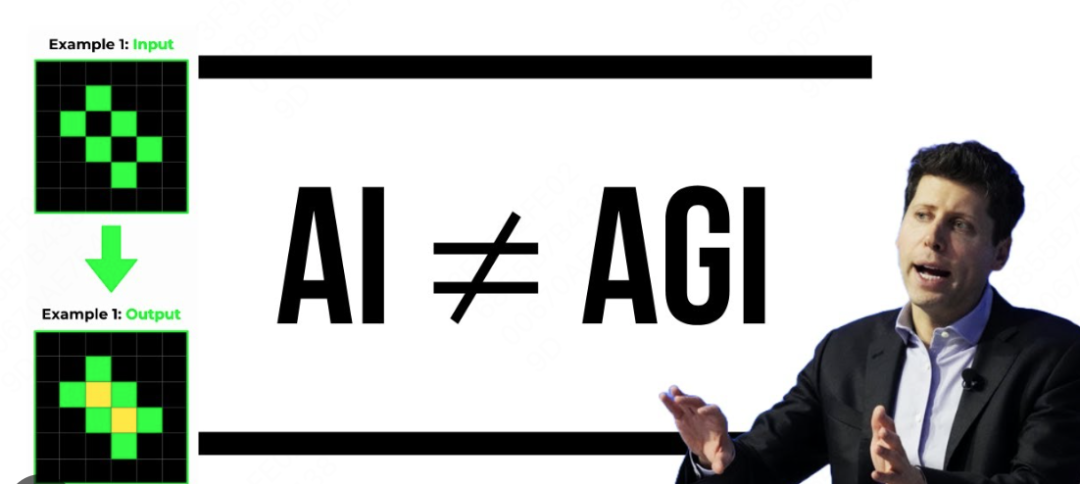
Many studies suggest that “embodied intelligence” is the only bridge connecting current AI and future AGI.
Through the cycle of “seeing-thinking-doing-feeling feedback”, AI can truly learn the laws of the physical world, causal relationships, and the common sense that we take for granted. These things cannot be learned solely by reading text and images online.
Therefore, restarting the robotics project is not just about launching a new product line for OpenAI; it is the final and most critical step in their grand blueprint towards AGI. Their goal is to create the “next generation of embodied AI”, with robots being the best “physical body” to carry this super intelligence.
Strategic Layout: The Open Source Model gpt-oss
At the same time as announcing the restart of the robotics project, OpenAI also made a significant move in August 2025—releasing the `gpt-oss` series of open-source models. These models are powerful enough to run on high-end laptops and smartphones.
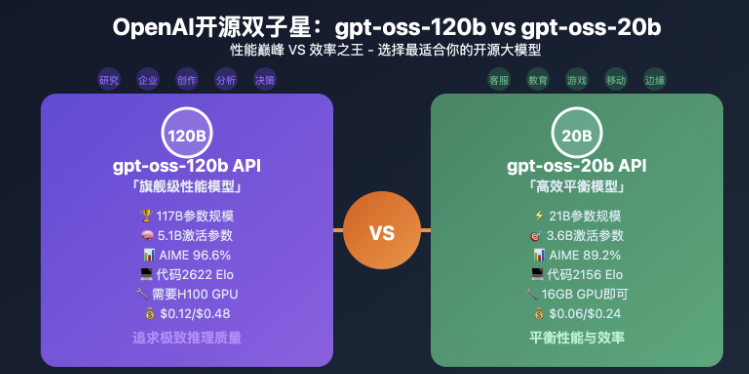 Comparison of GPT open-source interfaces provided by certain APIs
On the surface, this seems to be a move to compete with other open-source models on the market.
However, looking deeper, this is actually part of a larger strategy. OpenAI’s president Greg Brockman stated plainly: “By making the models available for everyone to use, they will use our technology, provide us with feedback and data, helping us improve the models.”
This strategy of “gathering popularity through open source while maintaining an edge through closed source” may also be applied to future robotics strategies.
Imagine if OpenAI could provide an open-source robot base model, allowing developers worldwide to help explore applications and find bugs.
Meanwhile, they could focus on developing the most advanced and core models and hardware, always standing at the top of the food chain. This approach could give them an ecological advantage that others would find hard to match in the future robot empire competition.
Key Points
- Historical Review: OpenAI previously worked on robotics, had impressive technology, but temporarily stepped back due to heavy reliance on massive data that was difficult to obtain.
- Changed Approach: Today’s AI has learned to “think on-site” rather than relying solely on “rote memorization”, giving OpenAI the confidence to return.
- Ultimate Dream: OpenAI believes that true superintelligence (AGI) must have a body and be able to navigate the real world. Robots are the ultimate vehicle for this dream.
- Ecological Layout: By open-sourcing some models, OpenAI aims to have developers worldwide help them “work” together to build the future robot empire.

The Three Giants’ “Brain” Showdown
If hardware is the “body” of the robot, then the AI model is its “brain” and “soul”.
In this decisive showdown over how smart robots can be, OpenAI, Tesla, and Figure AI have taken three completely different paths, each with its own strengths.
OpenAI: General Large Model-Driven “Dimensionality Reduction Strike”
OpenAI’s approach is like that of a top student, thinking “from the top down”. They want to use their most powerful asset—the GPT super large model—as the overall commander of the robots.
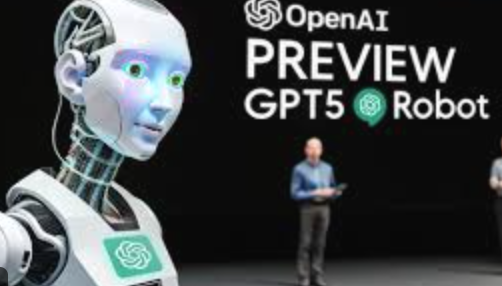
“Soon, there will be something smarter than the smartest person you know, running on a device in your pocket, ready to help you solve problems. This is incredible.” — OpenAI CEO Sam Altman
While this statement refers to the new model, it perfectly embodies OpenAI’s philosophy: as long as the brain is smart enough, any problem can be solved. Applied to robots, this means:
Core Technology: Able to understand, see, and act
OpenAI’s goal is to enable robots to deeply understand human language. For example, if you tell it to “put the apple on the table into the basket”, it should not only recognize the “apple” and “basket” but also understand how to perform the action of “putting” and plan a series of precise movements: grasping, lifting, moving, and releasing.
Greatest Advantage: Knowledgeable and adaptable
The GPT model has read half the internet and understands a lot of common sense. This gives the robot the potential to comprehend vague instructions and perform tasks it hasn’t been specifically trained for. In theory, a powerful brain can command various “bodies”, whether humanoid robots or robotic arms, and quickly adapt.
Strategic Shift: From “selling brains” to “creating humans”. Initially, OpenAI collaborated with Figure AI, successfully proving that connecting a large model to a robot was feasible. However, Figure AI later decided to develop its own AI.This made OpenAI realize that merely providing a general “brain” API might not be sufficient; to achieve the best results, they needed to handle everything from hardware to software, from models to simulation environments, achieving perfect integration of software and hardware.
Tesla: End-to-End Data Flywheel Based on “FSD”
Tesla’s approach is a continuation of its successful car manufacturing experience, centered around two key concepts:“Reuse” and “data”.
“It’s like our car, just with arms and legs instead of wheels.” — Elon Musk
Musk’s statement clearly articulates Tesla’s technical route. They have essentially transferred the technology developed for their Full Self-Driving (FSD) to the Optimus robot.
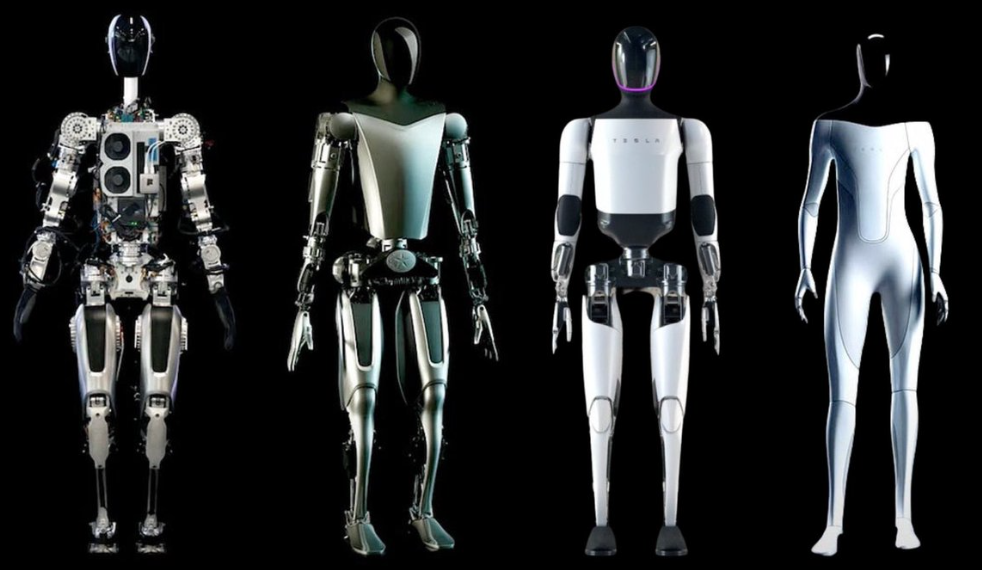 Core Technology: “Seeing is Believing” Neural NetworksTesla’s approach is quite “brutal”; unlike traditional robots that take a step-by-step approach (first see, then think, then act), they use a massive neural network to directly output commands for how the arms and legs should move based on what the cameras see.This vision-based solution eliminates the need for expensive components like LiDAR and reduces errors in intermediate steps.Greatest Advantage: Unique Real-World DataThis is Tesla’s most difficult-to-replicate “moat”.Millions of Tesla cars are on the road daily, acting as countless data collectors, continuously feeding back various road conditions. This vast amount of real-world data has produced an extremely powerful “experienced driver” AI.Once this “data flywheel” starts turning, it becomes hard to stop: the more data, the better the model; the better the model, the more cars sold; the more cars, the more data.Challenges Faced: Bridging the Gap from “Driving” to “Working” While the advantages are clear, the challenges are significant. Driving primarily involves navigating flat surfaces and avoiding obstacles, while humanoid robots must perform intricate tasks in three-dimensional space, such as twisting bottle caps and folding clothes. The difficulty of these two tasks is not on the same level.How to efficiently apply the “physical knowledge” learned from driving to dexterous operations is key to determining whether Optimus can evolve from a “walking camera” to a “working laborer”.
Figure AI: “Vertical Integration” Driven by Commercial Applications
Compared to the grand narratives of the previous two giants, Figure AI is much more pragmatic, resembling a diligent “pragmatist”. Its technical route is entirely market-driven, with a core strategy of “vertical integration”.
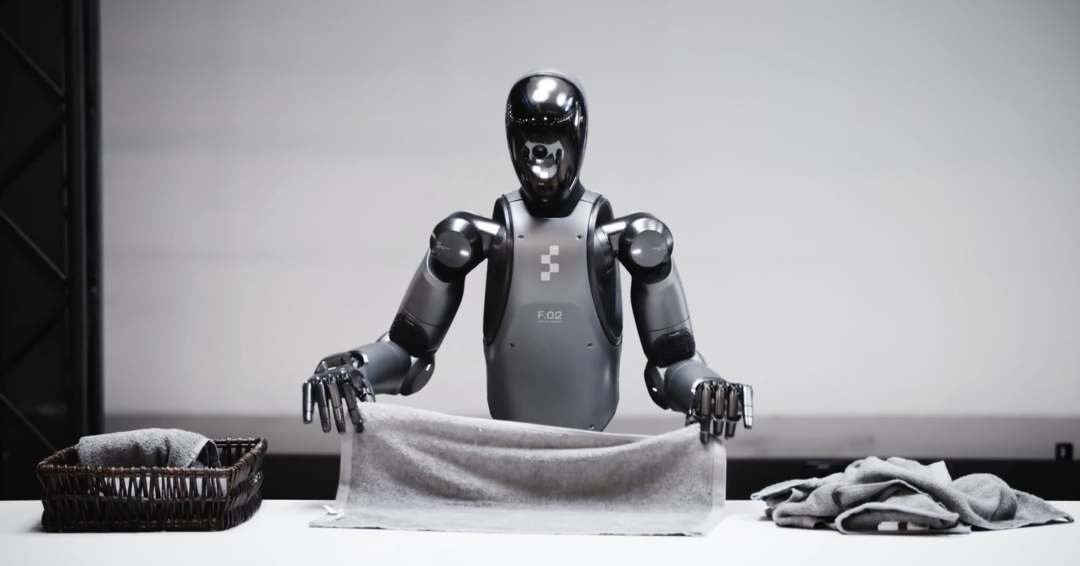 Core Technology: Custom-Brain for Specific ScenariosFigure AI’s approach is very clear. Initially, they leveraged OpenAI’s mature models to quickly create impressive demonstrations capable of conversing and passing apples, successfully attracting attention and investment. However, their ambitions extend beyond this.After validating their product direction, they decisively shifted to self-development, launching AI models tailored for robots (such as Helix), aiming for deep integration of software and hardware to achieve optimal performance.Greatest Advantage: Focused and High-Quality DataFigure AI’s AI models directly serve its commercial objectives. By deploying robots in real scenarios like BMW’s production line, they can quickly gather a large amount of high-quality, targeted training data.While this data may not match Tesla’s breadth, it may surpass it in depth and quality for specific tasks. This creates a “small but beautiful” data cycle: solving customer problems → obtaining high-quality data → training better models → solving more complex problems.Strategic Insight: Revealing Industry ConsensusThe split between Figure AI and OpenAI actually reveals an emerging consensus in the industry: while general language models are intelligent, they may only serve as “smart consultants” rather than “reliable workers” in the physical world, which demands high reliability and low latency.
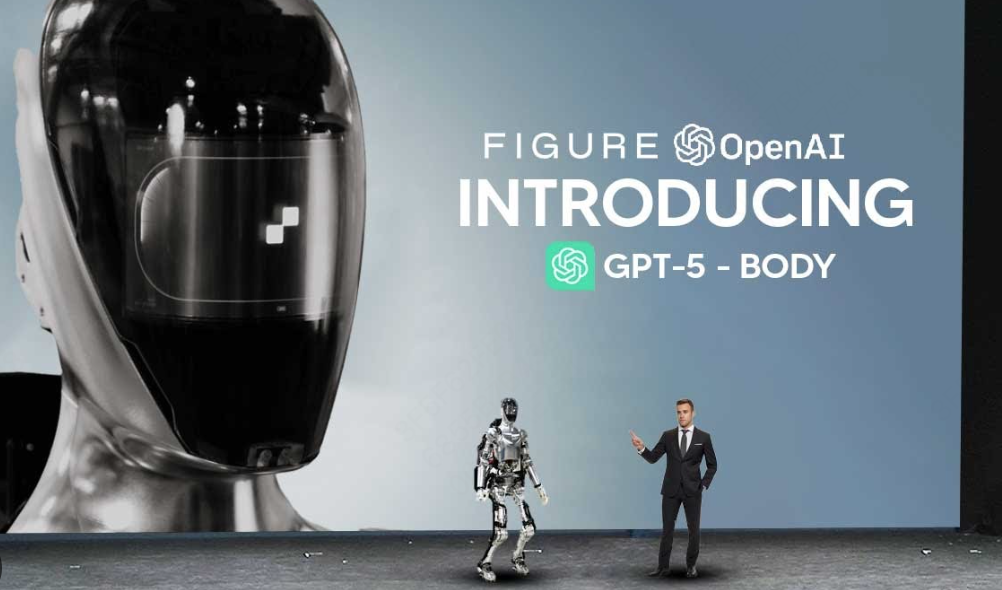 OpenAI and FigureAI’s previous press conferenceTo create commercially viable robots, it is essential to develop dedicated AI models that are deeply integrated with hardware.
Key Points from the Second Part
- OpenAI follows a “top-down design” approach, aiming to use a super general brain to command everything, embodying the idea of “AI defining hardware”.
- Tesla reuses its successful autonomous driving experience, feeding intelligence with vast amounts of real data, embodying the idea of “data defining intelligence”.
- Figure AI is very pragmatic, quickly iterating from solving specific commercial problems to developing dedicated AI deeply integrated with hardware, embodying the idea of “application defining products”.
….The hardware section in the next part is also densely packed with information, such as the completely different design philosophies of Tesla and FigureAI in different scenarios. Feel free to follow, star, and stay tuned for more this week.


If you enjoy Tian Nan’s articles, please “click to follow” and “like” to explore the future of robotics together.
Feel free to leave your thoughts in the comments!