The concept of artificial intelligence was born at the Dartmouth Conference in 1956. At this conference, McCarthy formally proposed the concept of artificial intelligence. After more than half a century of development, artificial intelligence has now been applied in fields such as robotics, speech recognition, image recognition, natural language processing, and expert systems.
Of course, there is also the rapidly growing chip design field in recent years, with domestic AI chip companies emerging like mushrooms after rain. Horizon Robotics, Suin Technology, Tenstorrent, Cambricon, Bitmain… each has launched its own chip products.
Currently, there is no clear and unified definition of AI chips in the market, but broadly speaking, all chips aimed at artificial intelligence (AI), including Training and Inference applications, can be referred to as AI chips.

There are currently too many types of AI chips on the market, with various processing units (PUs) emerging, from the most common CPU, GPU, to the now popular BPU, DPU, VPU, NPU, etc. (Of course, some PUs do not strictly qualify as AI chips). It seems that the 26 letters of the alphabet are almost exhausted in naming; today, we will sort out the common PUs and see how they function in their respective fields.
APU (Accelerated Processing Units)
In Chinese, it is called an accelerated processor, a product launched by AMD in 2011 under the concept of Fusion Future. It was the first to integrate the processor and discrete graphics core on a single chip, enabling collaborative computing and mutual acceleration, allowing tasks to be flexibly allocated between the CPU and GPU, thus improving efficiency.
Last June, Su Ma appeared at a launch event themed “AMD Accelerating – The High-Performance Computing Ecosystem,” where two APUs were released: the R7-5700G and R5-5600.

Of course, APU can also refer to Audio Processing Unit, a unit specifically for processing sound data.
BPU (Brain Processing Unit)
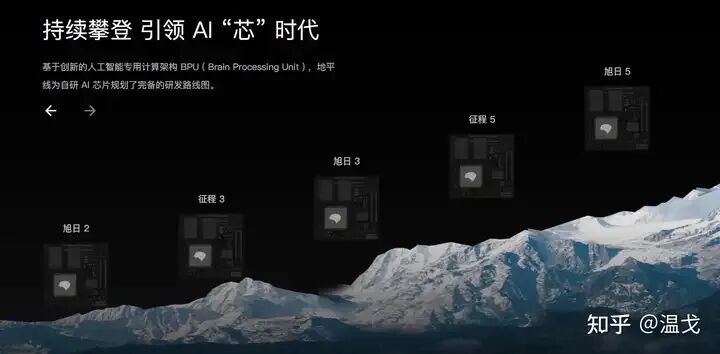
BPU is an AI chip developed by a company specializing in autonomous driving chips and solutions. Based on an innovative AI-specific computing architecture, BPU, Horizon Robotics has successfully mass-produced China’s first edge AI chip—focusing on intelligent driving, the Journey, and focusing on AIoT, the Sunrise; in 2019, Horizon launched China’s first automotive-grade AI chip, Journey 2, and the next-generation AIoT intelligent application acceleration engine, Sunrise 2; in 2020, Horizon further accelerated the iteration of AI chips, launching the new generation of high-performance automotive intelligent chip, Journey 3, and the new generation of AIoT edge AI chip platform, Sunrise 3.
The 2021 Ideal ONE car is equipped with dual “Journey 3” chips, and Horizon’s AI chips have been widely recognized by industry automotive companies.
CPU (Central Processing Unit)
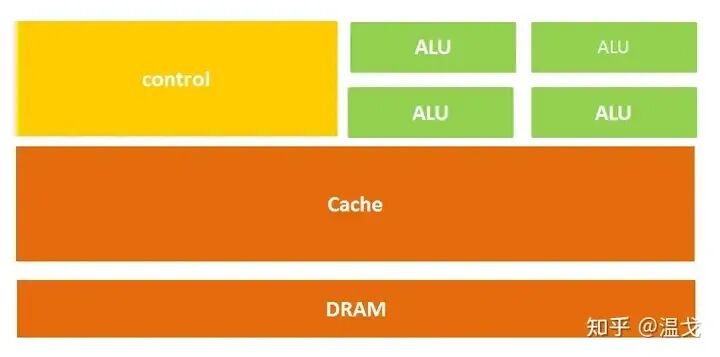
This is something everyone is familiar with. The structure of the CPU mainly includes the Arithmetic Logic Unit (ALU), Control Unit (CU), Registers, Cache, and the buses for data, control, and status communication between them.
DPU (Deep-Learning Processing Unit)
The concept of DPU was first proposed by Deep Vision Technology, founded in 2016. Its product is an FPGA-based processing unit with industry-leading machine learning capabilities, focusing on neural network pruning, deep compression technology, and system-level optimization. It was acquired by Xilinx in 2018.
DPU can also refer to Dataflow Processing Unit, an AI architecture proposed by Wave Computing; Data storage Processing Unit, a smart SSD processor from Shenzhen Dapuwei.
EPU (Emotion Processing Unit)
This is the first time I have heard of the term EPU. EPU was proposed by Emoshape, a company dedicated to providing teachable intelligent machines and human interaction technology. EPU is designed based on microcontrollers (MCUs) and facilitates nearly infinite cognitive processes to produce genuine emotional responses in AI, robotics, and consumer electronics. EPU is an extension of Ekman’s theory, which identifies 12 primary emotions using emotional evolution theory.
Some of the main functions of EPU include:
-
High-performance machine emotional awareness
-
Creating emotional states and synthesizing emotions in intelligent machines
-
Enabling AI or robots to experience 640 trillion different emotional states
-
Transmitting data to other AI technologies to achieve a range of genuine expressions and interactions, and fully understanding language and evaluation
-
Dialogue accuracy rate of up to 98%
FPU (Floating Processing Unit)
A module for performing floating-point operations
GPU (Graphics Processing Unit)
In recent years, GPUs have become extremely popular! Many domestic AI chip companies are focused on GPUs. Five years ago, it was difficult to find companies in China working on GPUs, but now many startups have entered the GPU field, such as Tenstorrent, Muxi, and Jingjia Micro.
GPUs are widely used in embedded systems, mobile phones, personal computers, workstations, and gaming solutions. Modern GPUs are highly efficient for image and graphics processing because they are designed with a highly parallel architecture, making them more advantageous than general-purpose processors (CPUs) for parallel processing algorithms on large data blocks.
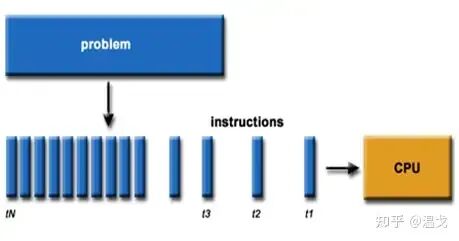
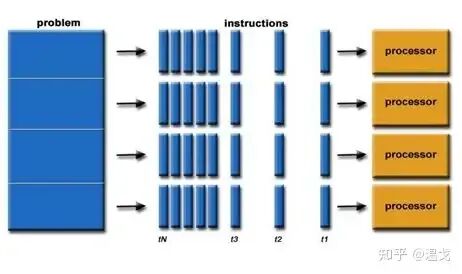
From a hardware design perspective, CPUs consist of several cores optimized for sequential serial processing. In contrast, GPUs consist of thousands of smaller, more efficient cores designed for simultaneous multitasking.
Serial computation diagram
Parallel computation diagram
Therefore, GPUs have a significant advantage in tasks such as image processing, making them the new favorite in the chip industry, especially in applications like autonomous driving.
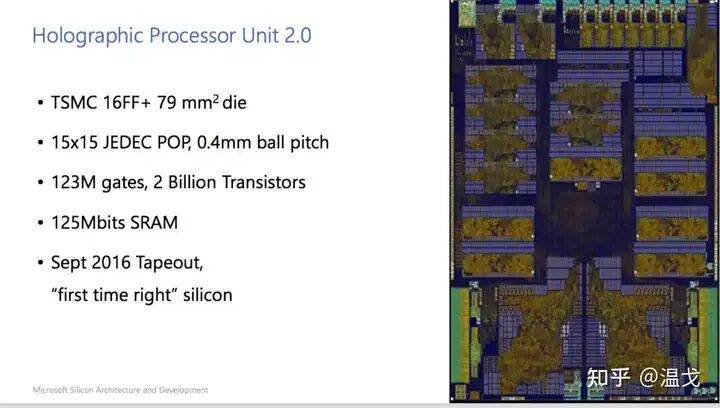
HPU (Holographic Processing Unit)
A holographic processor. Microsoft’s HoloLens is the world’s first standalone holographic computing device, capable of providing high-definition holographic images. Its secret lies in the Holographic Processing Unit (HPU) integrated into HoloLens, a custom chip that can process and interact with data streams from various sensors and Intel Atom.
IPU (Intelligence Processing Unit)
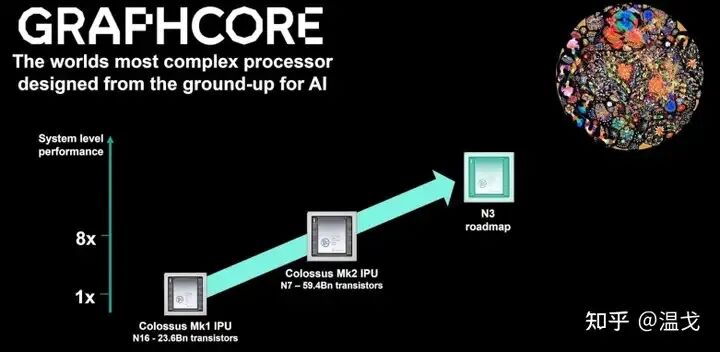
A concept first proposed by the UK AI chip startup Graphcore, referring to intelligent processors. Founded in 2016 and headquartered in Bristol, UK, Graphcore’s main business is designing processors for AI applications, providing product support for cloud services and other applications.
At the fifth World Intelligence Conference, Graphcore’s MK2 IPU was officially unveiled, with a 7nm process, integrating 59.4 billion transistors and featuring 1472 truly independent processing cores. The IPU-M2000 is a plug-and-play machine intelligence blade computing unit, integrating four MK2 IPUs, capable of providing 1 petaFLOPS of machine intelligence computing.
JPU
Currently, there is no clear concept for JPU, with one claim being Job Processing Unit, which has no distinctive features.
KPU (Knowledge Processing Unit)
The K210 from Canaan Creative is a KPU based on self-developed neural networks and RISC-V architecture, currently applied in various fields.
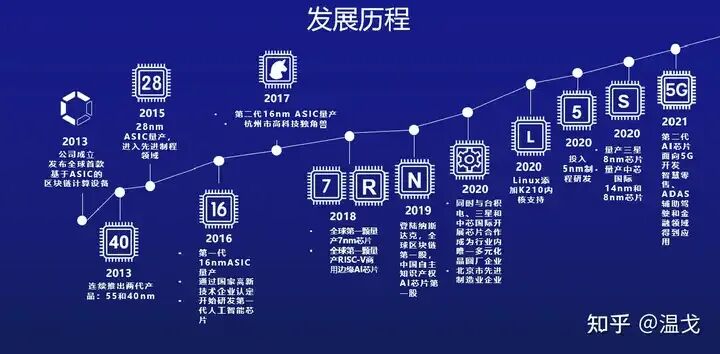
Additionally, the Chinese Academy of Sciences has also proposed the KPU concept, which is a co-processor architecture designed to accelerate core functional computations in specific fields, abstracting and synthesizing high-level computations for computation-intensive applications, effectively addressing the massive data processing issues in specific domains.
LPU
Currently, there is no definition for LPU in the industry; everyone should hurry to claim it!
MPU (Micro Processing Unit)
A microprocessor, similar in concept to a CPU, will not be elaborated further.
NPU (Neural-Network Processing Unit)
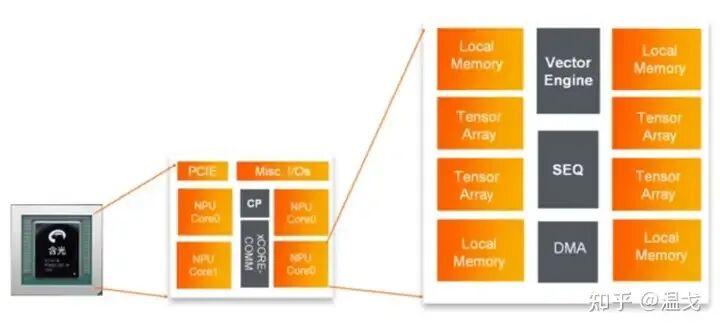
There are several companies producing NPUs; here we introduce the Han Guang NPU from T-Head. In September 2019, T-Head released its first data center chip, Han Guang 800. Han Guang 800 is a high-performance AI inference chip built on a 12nm process, integrating 17 billion transistors and achieving a peak computing power of 820 TOPS. In the industry-standard ResNet-50 test, it achieved an inference performance of 78,563 IPS and an energy efficiency ratio of 500 IPS/W.
OPU
Currently, there is no clear concept for OPU in the industry; those with ideas should act quickly.
PPU (Physics Processing Unit)
A processor for performing simulated physical calculations. While CPUs aim for faster computation speeds and GPUs aim for better image quality, PPUs are used to bridge the virtual electronic world and the universally existing physical reality, making images more realistic and closer to reality. The concept of PPU was first proposed at GDC 2005.
QPU (Quantum Processing Unit)
A quantum processor that uses quantum superposition to quickly traverse various possibilities of a problem and find the correct answer. The computational power of QPU grows exponentially with the number of bits n, at a rate of 2^n. Currently, both domestically and internationally, the field of quantum computing is still in the exploratory stage.
RPU
Radio Processing Unit? Resistive Processing Unit? Currently, RPU is rarely mentioned in the industry, and these two concepts are seldom heard.
SPU
Service Processing Unit? Standard Product Unit? Streaming Processing Unit? None of these are particularly compelling!
TPU (Tensor Processing Unit)
A tensor processor, it is a chip specifically designed for computing neural networks, launched by Google at the I/O developer conference in June 2015, optimized for its TensorFlow machine learning framework, primarily used in systems like AlphaGo, as well as Google Maps, Google Photos, and Google Translate for processing search, image, voice, and other models and technologies.
To date, Google has released four generations of TPUs.

UPU (Unified Processor Unit)
A concept proposed by Shenzhen Zhongwei Electronics Co., Ltd. (ICube). The feature is to unify CPU and GPU heterogeneous cores within a single core, using a unique multithreading technology that does not sacrifice efficiency.
Zhongwei Electronics not only provides UPU IP but also offers chips; its IC1 is the first mobile system chip based on UPU, which was launched last year as an engineering sample, with a frequency of 600MHz, dual-core – 8 threads. The IC2 chip, expected to be launched by the end of next year, will have a frequency of 1GHz, quad-core – 16 threads.
VPU (Vector Processing Unit)
Referring to a vector processor, it is the acceleration computing core of image processing and AI chips launched by Movidius, acquired by Intel. It is also known as Vision Processing Unit, Video Processing Unit, and is similar in function to GPU.
WPU
Referring to Wearable Processing Unit, a wearable SoC product launched by Ineda Systems, which currently has no news. It can also refer to Web Processing Unit.
XPU
X represents the unknown, symbolizing infinity; any processor that has not yet been developed can be considered an X processor! Currently, if one must choose, then Xilinx-XPU would be the choice.
YPU
This one truly does not exist…
ZPU (Zylin Processing Unit)
Zylin is a Norwegian company, and ZPU is a 32-bit open-source processor it launched. We can still see its open-source code on GitHub.

In an era where concepts like artificial intelligence and deep learning are fully integrated into chip design, various AI chip companies have emerged, and various concepts are also emerging. The 26 letters of the alphabet are facing exhaustion. No worries, if necessary, we can use two letters! In the future wave of AI chips, how many can truly turn concepts into products and promote them to the market remains unknown. The chip industry has a long profit cycle and requires significant investment; when the tide recedes, we will know which companies are swimming naked.
AI chip design in China is flourishing, and compared to abroad, we are not lagging behind, which is what we hope to see. We also hope that AI chips can bring us more imaginative application scenarios.
Reference: ^https://www.graphcore.ai/posts/machine-learning-processors-for-both-training-and-inference
Recommended Reading




Click to read the original text to learn about the 22nm NPU tape-out project