Do you remember being captivated by games like Dance Dance Revolution, Super Mario, and Contra when you were a child? Back then, I was always curious about how these amazing games were created, even secretly fantasizing about making my own game one day.
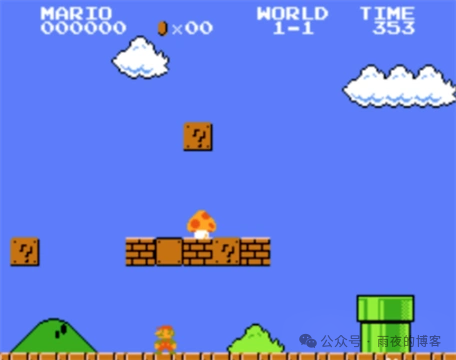
Time flies, and now I am a husband and a father, with my days filled with work. Those childhood programming dreams have long been buried in the depths of my memory. Until one day, my child in elementary school told me they started learning programming and earnestly asked for my thoughts and learning methods. As a seasoned programmer, I suddenly realized this was a fantastic opportunity — not only to guide my child in understanding the significance of programming but also to teach them how to use programming to solve real-life problems and expand their thinking boundaries. Why not start now and rediscover programming together with the kids!

To understand programming, one must first recognize programming languages. There are many types of programming languages, which can be divided into compiled and interpreted languages. Today, let’s start with a simple, user-friendly, and easy-to-learn language — Python.
What is Python?
Python is an interpreted, object-oriented programming language that comes with a rich library of functions, helping developers easily accomplish many common tasks.
The characteristic of interpreted languages is that the written code can be executed line by line directly through an interpreter, without needing to be converted into machine code like compiled languages, making it particularly friendly for beginners.
Interestingly, Python was created by Guido van Rossum, who designed this language to pass the time. As a ‘descendant’ of the ABC language, he named it ‘Python’ after his obsession with Monty Python’s Flying Circus. Isn’t that fascinating?
What can Python do?
The reason Python is suitable for beginners and has become a common tool for children’s programming education abroad is that it is powerful yet easy to learn. Here are some amazing application scenarios:
Designing animated games (who knows, your child might create something cooler than Super Mario)
Developing graphical interfaces (for example, designing a dedicated control interface for smart devices at home)
Handling databases and building websites (they could even try making a library management system for their school)
Performing scientific calculations and big data analysis (helping teachers easily tally class grades)
Major companies like Baidu, Tencent, and Alibaba are extensively using Python
It can also be used for web scraping and studying network security
In today’s AI-driven era, programming is no longer a skill exclusive to programmers; it has become a fundamental ability, akin to reading and writing. Teaching children Python not only equips them with a practical tool but also cultivates logical thinking and problem-solving skills — perhaps this is the most precious value of programming.