Introduction: Recently, a certain country has imposed a series of restrictions and suppressions on us, such as banning the maintenance of semiconductor equipment and prohibiting the sale of high-end chips. This undoubtedly aims to hinder the innovative development of our AI and high-tech industries. As long as our artificial intelligence is integrated into manufacturing equipment and human life, the AI products and brands we create will reach the world and refresh global concepts. In this context, I will analyze the knowledge in this area, hoping to inspire innovation for those of us who are ambitious or engaged in this field; without further ado, let’s get started:
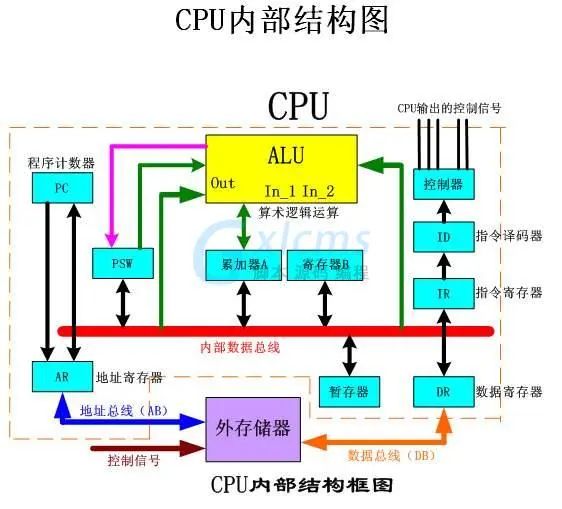
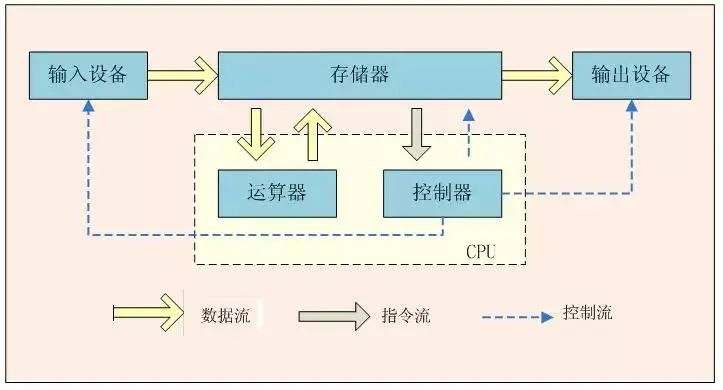
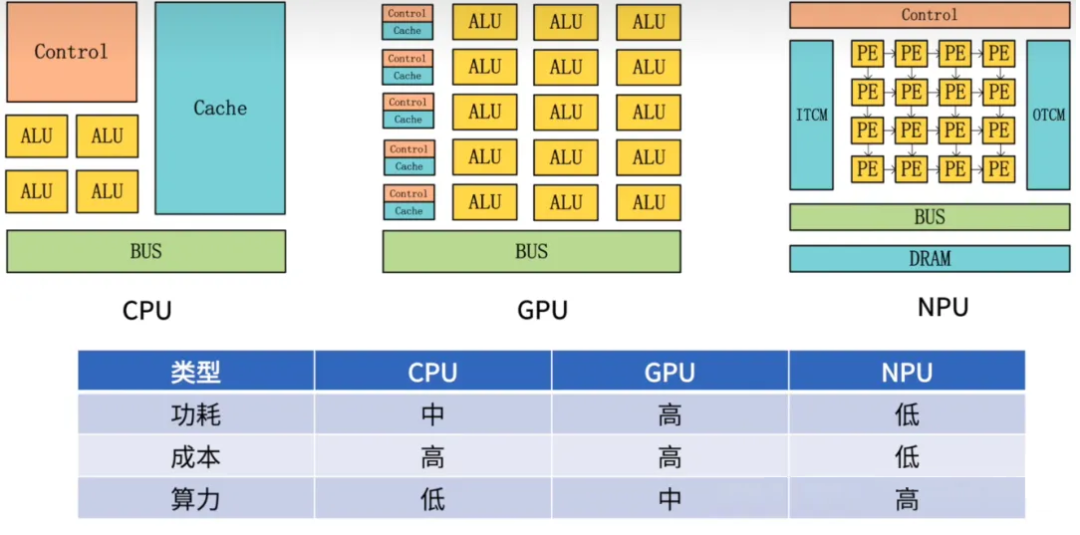
1. CPU (Central Processing Unit):The Central Processing Unit (CPU) is one of the main components of electronic computers and is the core part of a computer. Its primary function is to interpret computer instructions and process data in computer software. The CPU is the core component responsible for reading instructions, decoding them, and executing them. The central processor mainly consists of two parts: the controller and the arithmetic unit, which also includes the cache memory and the buses that connect them for data and control.
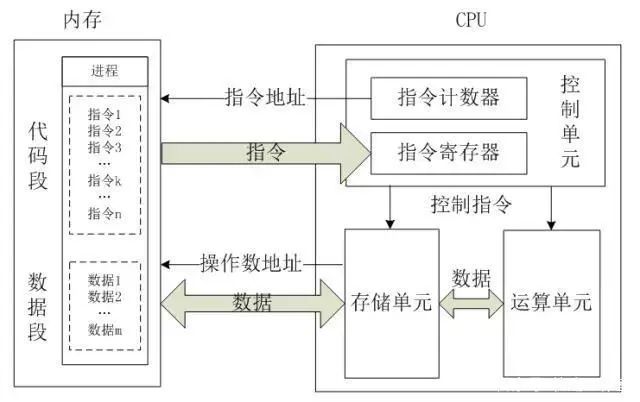
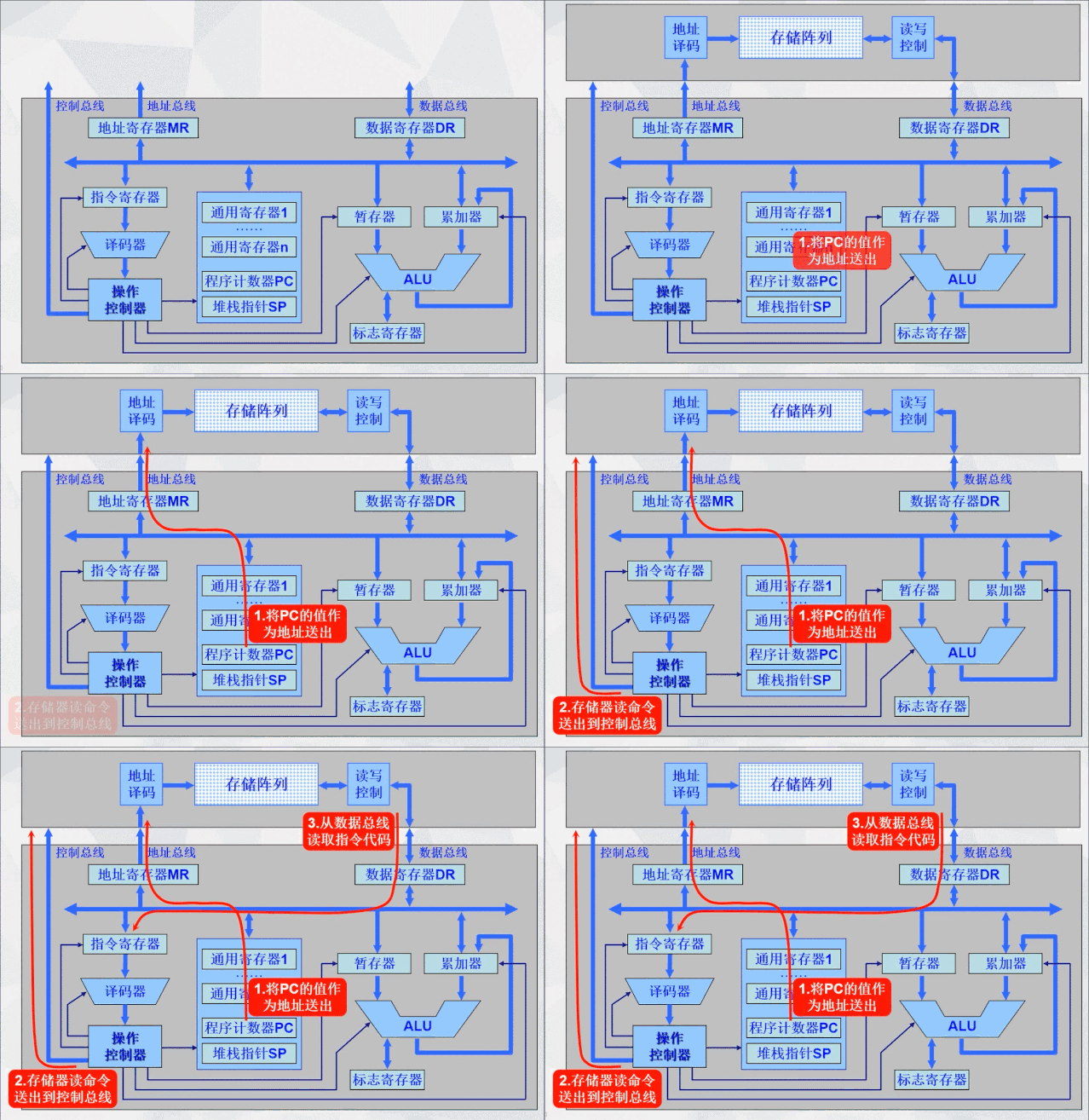
The von Neumann architecture is the foundation of modern computers. Under this architecture, programs and data are stored uniformly, and instructions and data need to be accessed from the same storage space and transmitted via the same bus, which cannot be executed simultaneously. According to the von Neumann architecture, the CPU’s work is divided into the following five stages: instruction fetch, instruction decode, instruction execution, memory access, and result write-back. The structure of the CPU:
2. GPU (Graphics Processing Unit):
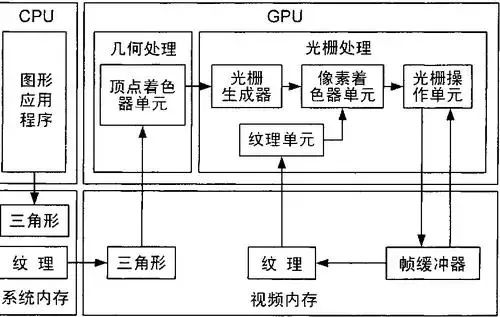
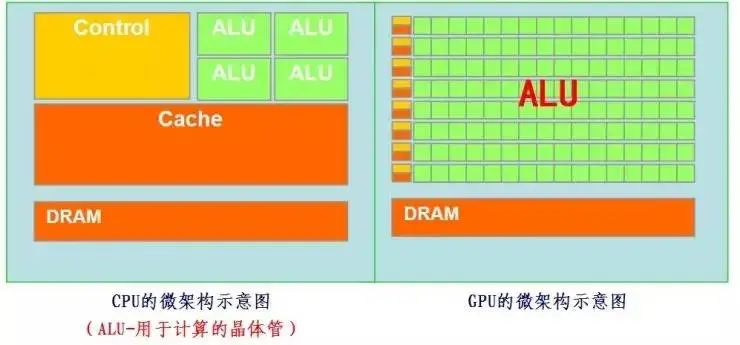
The Graphics Processing Unit (GPU), also known as the display core or visual processor, is a microprocessor specifically designed to perform image and graphics-related computations on personal computers, workstations, gaming consoles, and some mobile devices (such as tablets and smartphones).
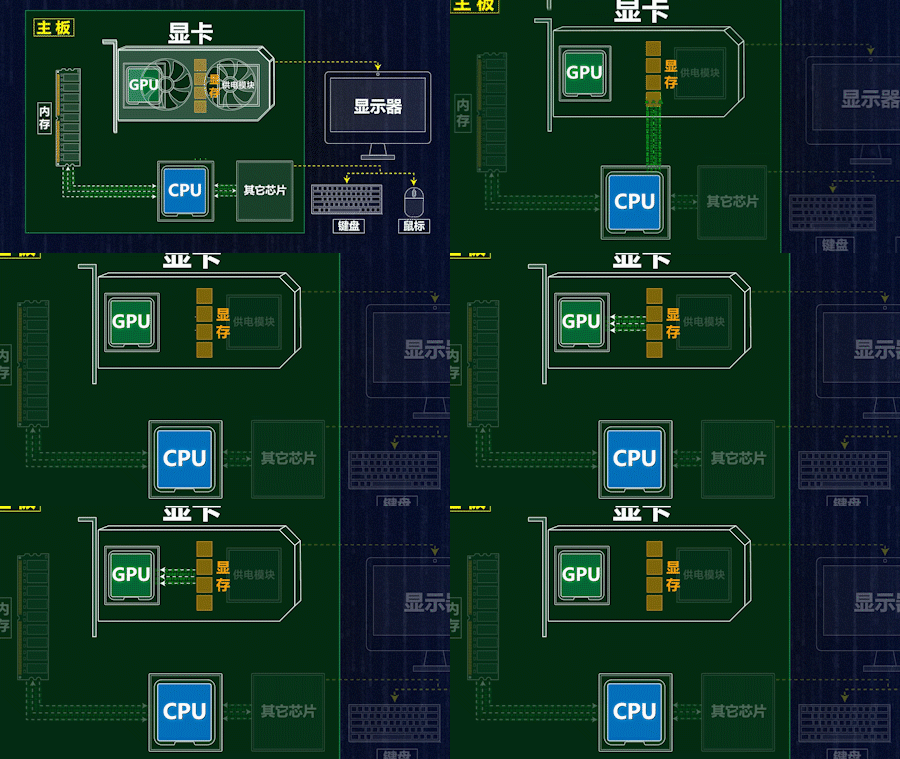
Working mechanism: The host bus interface module receives read and write operations from the PCI bus, including read and write operations to registers and display memory. After initializing the registers, the basic graphics mode can output display correctly. By opening the video capture register, it can capture the display video image window in real-time.
3. NPU (Neural Network Processing Unit):
The NPU is a processor specifically designed for neural network computations. It is primarily used to accelerate artificial intelligence and machine learning tasks, including image recognition, speech recognition, and natural language processing. NPUs typically feature high parallelism, low latency, and high energy efficiency, making them particularly suitable for real-time AI computation tasks in edge computing, autonomous driving, robotics, and smartphones.
4.TPU (Tensor Processing Unit):
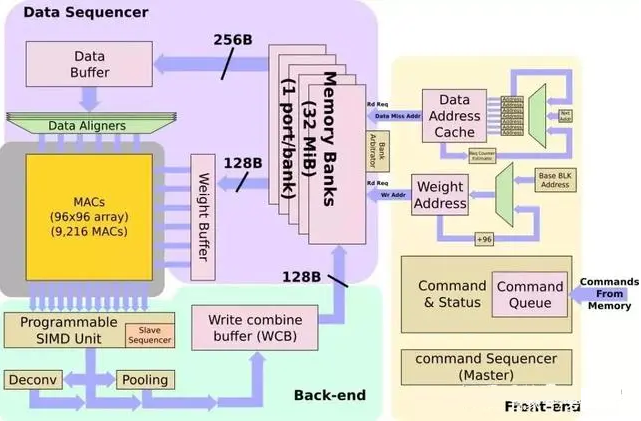
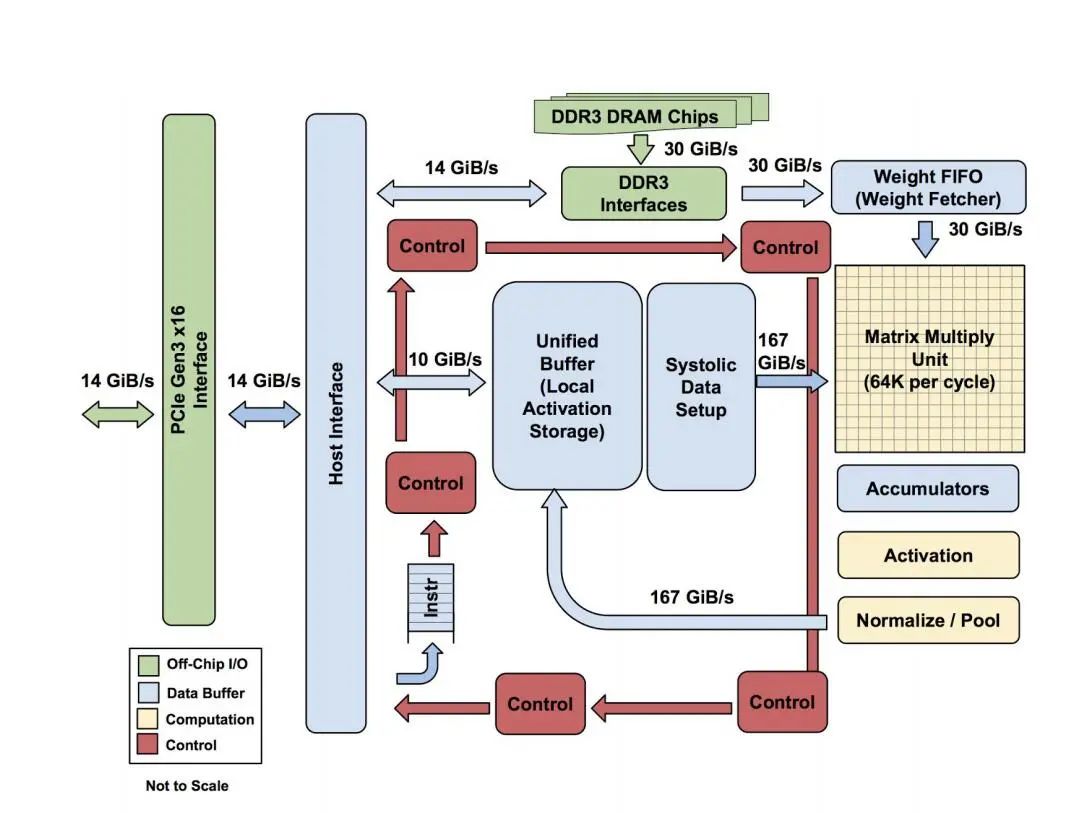
Compared to the GPU, the TPU uses low precision (8-bit) calculations to reduce the number of transistors used in each operation. Lower precision has minimal impact on the accuracy of deep learning but can significantly reduce power consumption and increase computational speed. Additionally, the TPU employs a pulsed array design to optimize matrix multiplication and convolution operations, reducing I/O operations. Moreover, the TPU features larger on-chip memory to minimize DRAM access, thereby enhancing performance. The TPU is also a processor specifically designed for artificial intelligence computations, focusing on large-scale tensor computations, especially suitable for deep learning tasks. The TPU utilizes a custom hardware architecture and optimized instruction set to provide highly parallelized and efficient computing capabilities. TPUs are typically used to accelerate training and inference processes, significantly shortening the computation time for deep learning models.
4. DPU (Data Processing Unit):
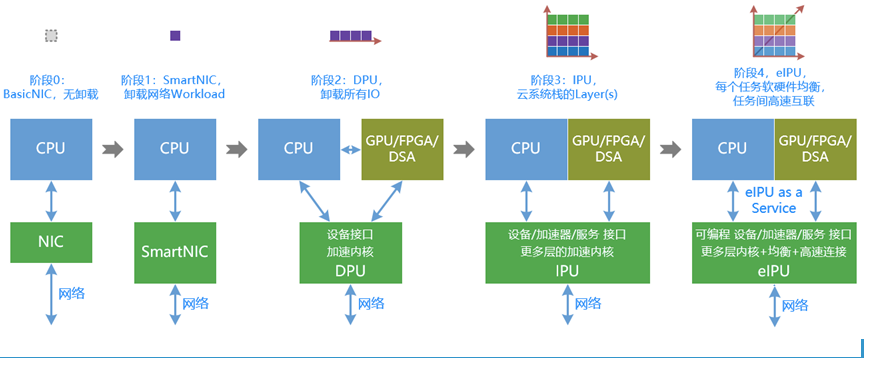
The DPU is a new type of programmable multi-core processor, a System On Chip (SoC). It meets industry standards, possesses high computational power, and features high-performance network interfaces, allowing for fast parsing, processing of data, and efficient data transmission to the CPU and GPU. The main difference between DPU and CPU is that the CPU excels at general-purpose computing tasks (capable of handling various tasks, relatively “general”), while the DPU is better suited for foundational application tasks (focused on specific tasks, relatively “specialized”), such as network protocol processing, switching routing calculations, encryption and decryption, data compression, and other “dirty work”.
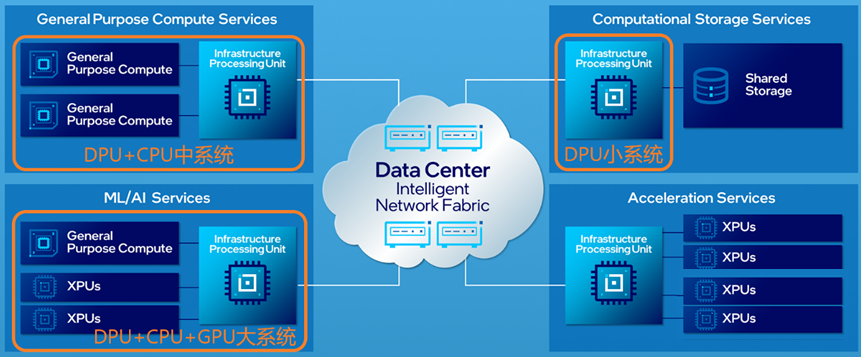
 Large systems. DPU + CPU + GPU. For example, in AI training scenarios, such as some applications that require acceleration and need separation of business and infrastructure. In such cases, DPU + CPU + DPU becomes a necessary choice.
5. IPU (Infrastructure Processing Unit):
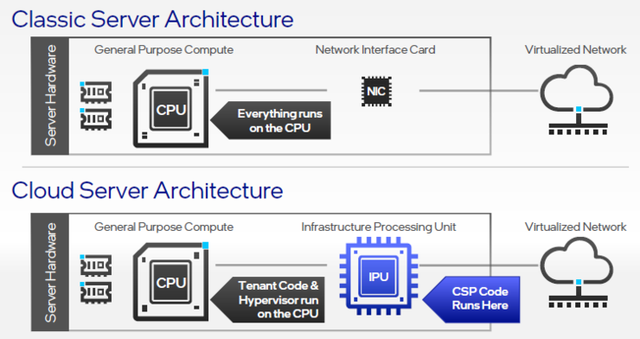
The IPU is a hardware device used to connect multiple processors. Its role is to facilitate communication and coordination between different processors in a multi-processor system, thereby improving performance. The Infrastructure Processing Unit (IPU) can accelerate network infrastructure, freeing up CPU cores and enhancing application performance. The IPU allows cloud service providers to customize infrastructure functionality deployment at software speed while improving data center utilization by allowing flexible workload scheduling. The IPU is often used in high-performance computing fields, such as supercomputers and servers. It can connect different types of processors, such as CPUs and GPUs, and provide high-speed data transmission and coordination functions. In modern computers, the IPU has become an essential component.
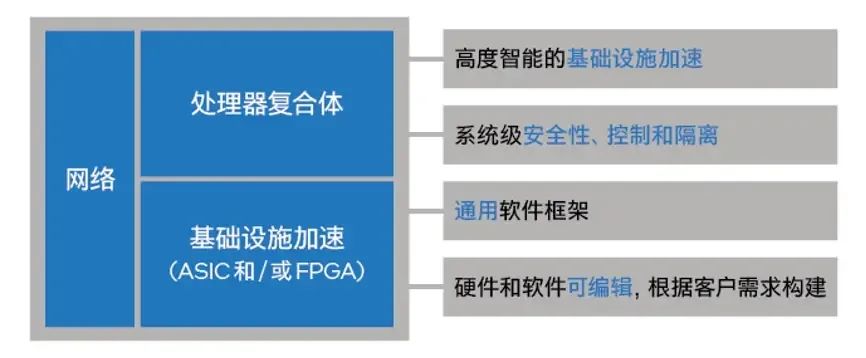 The IPU is also a processor specifically designed for artificial intelligence computations, also known as the AI processor. It integrates highly optimized hardware and software to achieve efficient AI computation. The IPU has outstanding performance in deep learning, machine learning, and natural language processing, capable of accelerating various AI-related tasks.
With the above understanding, we can summarize the functional characteristics:
-
CPU (Central Processing Unit): The central processing unit is the core of computation and control in a computer, responsible for executing programs, processing data, and coordinating other components of the computer system.
-
GPU (Graphics Processing Unit): The graphics processor excels in parallel computing, particularly suitable for processing large-scale data sets and graphics rendering tasks.
-
NPU (Neural Processing Unit): The neural network processor is specifically designed for neural network computations and inference, offering high efficiency for AI tasks such as deep learning.
-
TPU (Tensor Processing Unit): The tensor processor is optimized for machine learning tasks, capable of efficiently handling large-scale tensor computations.
-
DPU (Deep Learning Processing Unit): The deep learning processor focuses on accelerating computations for deep learning tasks.
-
IPU (Intelligent Processing Unit): The intelligent processor integrates highly optimized hardware and software for efficient AI computation.
Based on the above introduction, we should consider the following innovative technological directions:
Collaborative computing to form a closed loop: Implementing efficient communication protocols and interfaces to achieve collaborative computing between CPU, GPU, NPU, TPU, DPU, and IPU. This collaboration can fully utilize the advantages of various processors; for example, the CPU can handle complex logic calculations and scheduling tasks, while the GPU and NPU can jointly undertake large-scale parallel computing tasks, and the TPU and DPU focus on accelerating machine learning and deep learning tasks, completing the closed loop.
Unified programming model: Developing a unified programming model that allows developers to easily leverage the computational capabilities of these processors. This programming model should automatically allocate computing tasks to the most suitable processors and enable data sharing and communication between processors.
Intelligent scheduling: Designing an intelligent scheduler that dynamically adjusts the allocation of computing resources based on task characteristics and processor states. This ensures that the performance of various processors can be maximized at any given time.
Memory and storage optimization: Considering how to optimize memory and storage access between these processors. For example, by designing efficient caching strategies or implementing a unified memory pool, the data transfer overhead between different processors can be reduced.
Through exploration of these innovative directions, we hope to develop a new computing architecture that combines the advantages of CPU, GPU, NPU, TPU, DPU, and IPU, providing outstanding performance and efficiency in various computing tasks. However, implementing this technology will involve extensive research and development work and will need to address a series of technical challenges.
In conclusion, I hope that those engaged in this field, whether in software or hardware, will coordinate and combine research to develop our own innovative technologies and comprehensive logic, and then apply them to our practical lives, elevating our innovation and technology to new heights. If there are no ideas, learn to use artificial intelligence for deduction, verification, improvement, and summarization of applications; at the end of the article, I would like to quote the famous saying from Qian Xuesen: “Correct results come from a large number of errors; without a large number of errors as steps, one cannot ascend to the high seat of the final correct result.”